
What’s Observed on July 18
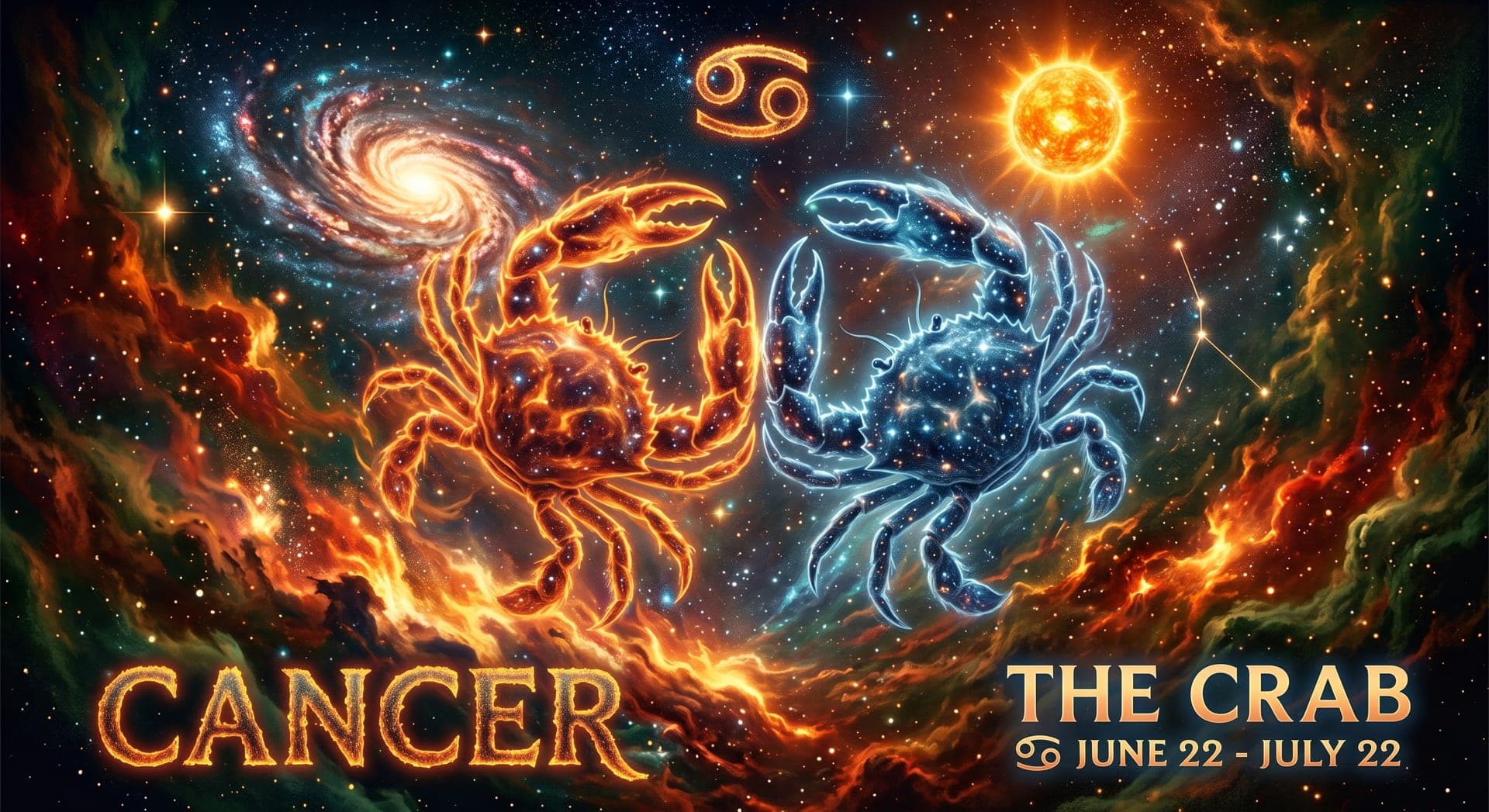
Born on July 18: Cancer ♋
Cancer, the fourth sign of the zodiac, spans June 21 to July 22 and is symbolized by the crab, an animal known for carrying a protective shell while remaining soft and vulnerable underneath. Ruled by the Moon, the celestial body long associated with emotion, intuition, and the subconscious, Cancer is widely regarded as one of the most nurturing and emotionally attuned signs of the zodiac. As a Water sign, Cancer navigates the world through deep feeling, often forming strong emotional bonds and an acute sensitivity to the moods of others. Its Cardinal modality places it at the start of summer, beginning right at the June solstice, reflecting an instinct to initiate and create, especially around home and family. People born under this sign tend to be deeply loyal, protective of loved ones, and drawn to creating a comfortable, secure home environment. Cancer's emotional depth is a genuine strength, but it can also make the sign prone to moodiness or withdrawal when hurt, retreating like a crab into its shell until it feels safe enough to re-emerge.
Personality Traits
Strengths
- Deeply caring and nurturing
- Highly intuitive
- Fiercely loyal and protective
- Strong sense of family and tradition
- Emotionally perceptive
Weaknesses
- Prone to moodiness
- Overly sensitive to criticism
- Can be clingy
- Tends to hold grudges
- Retreats when hurt
Compatible Signs
Fun Facts
- Cancer's crab symbol comes from Greek mythology, where the goddess Hera placed a crab that had fought Hercules among the stars.
- Cancer is ruled by the Moon, the only zodiac sign ruled by a celestial body other than a planet.
- As a Cardinal sign, Cancer initiates summer, beginning at the June solstice, the longest day of the year in the Northern Hemisphere.
- Notable Cancers include Princess Diana, Tom Hanks, Ariana Grande, and Nelson Mandela.
- The crab's hard shell and soft interior are often used as a metaphor for Cancer's protective exterior guarding a deeply sensitive emotional core.
Born on July 18
- 1720
Gilbert White
English naturalist and clergyman whose observational writings, collected in The Natural History of Selborne, made him a pioneering figure in modern ecology.
- 1848
W. G. Grace
English cricketer widely regarded as one of the greatest players in the sport's history, instrumental in shaping the modern game during the Victorian era.
- 1853
Hendrik Lorentz
Dutch physicist and Nobel laureate
- 1864
Philip Snowden
English politician who served as Britain's first Labour Chancellor of the Exchequer.
- 1913
Red Skelton
American comedian and actor
- 1918
Nelson Mandela
South African anti-apartheid leader and president
- 1921
John Glenn
American astronaut and senator
- 1937
Hunter S. Thompson
American journalist known for gonzo journalism
- 1937
Roald Hoffmann
Polish-American chemist and Nobel laureate
- 1938
Ian Stewart
Scottish keyboardist and a founding member of the Rolling Stones, later serving as the band's road manager and pianist.
- 1950
Richard Branson
English entrepreneur and founder of the Virgin Group, whose ventures span music, airlines, and space travel.
- 1957
Nick Faldo
English professional golfer and six-time major champion, widely regarded as one of the greatest European golfers of all time.
- 1975
M.I.A.
English rapper, singer, and producer born Mathangi Arulpragasam, known for genre-blending music addressing politics and immigration.
- 1977
Kelly Reilly
English actress known for her film roles alongside Robert Downey Jr. in the Sherlock Holmes series and for the television series Yellowstone.

On This Day in History
- 387 BCE
Gallic forces defeat Roman troops at the Battle of the Allia, opening the way for the sack of Rome days later.
Gallic warriors under the chieftain Brennus routed a hastily assembled Roman army just north of Rome along the Allia River, a defeat so catastrophic that the date was long remembered in Roman tradition as inauspicious. The victory opened the path for the Gauls to sack Rome itself just days later.
- 452
Attila the Hun's forces sack the strategically vital city of Aquileia in northern Italy.
As the Huns swept through northern Italy under Attila's leadership, his forces besieged and destroyed the prosperous Roman city of Aquileia, one of the largest cities in the empire at the time. Survivors reportedly fled into the surrounding lagoons, and later tradition credits their descendants with founding the city of Venice.
- 1290
King Edward I issues the Edict of Expulsion, banishing England's Jewish population, estimated at around 16,000 people.
King Edward I ordered the expulsion of all Jewish people from England, seizing their property and forcing thousands into exile across the English Channel. The expulsion remained in effect for over 350 years until Jewish resettlement was informally permitted under Oliver Cromwell in the mid-seventeenth century.
- 1290
King Edward I issued the Edict of Expulsion, banishing all Jews, numbering around 16,000, from England.
The edict expelled England's entire Jewish population after centuries of restrictive laws, heavy taxation, and mounting persecution, with their property confiscated by the crown as they departed for continental Europe. It was among the earliest instances of a European monarch expelling an entire religious minority from his kingdom. The expulsion stood for more than 350 years, until Oliver Cromwell informally allowed Jews to resettle in England during the 1650s.
- 1334
The foundation stone is blessed for the bell tower of Florence Cathedral, designed by the artist Giotto.
Construction began on the campanile, or bell tower, of Florence's cathedral complex, designed by the celebrated painter and architect Giotto di Bondone. The tower's colorful marble facade and intricate relief panels made it a defining example of Florentine Gothic architecture, though Giotto died before its completion.
- 1389
England and France agreed to the Truce of Leulinghem, opening a thirteen-year peace, the longest period of sustained calm during the Hundred Years' War.
Negotiated at Leulinghem near Calais during the reign of England's Richard II, the truce paused decades of intermittent warfare between the two kingdoms. It gave both nations a rare extended respite to recover from years of costly campaigning, though underlying tensions persisted. Fighting eventually resumed the following century, and the war did not fully end until 1453.
- 1555
Queen Mary I and King Philip II granted a royal charter reincorporating England's College of Arms.
The College of Arms, responsible for granting and regulating coats of arms and tracing genealogies in England, Wales, and Northern Ireland, had existed since the fifteenth century but was formally reconstituted under this charter. The institution continues to function today as the official heraldic authority for England and much of the Commonwealth. Its officers, known as heralds, still oversee major state ceremonial occasions.
- 1723
Johann Sebastian Bach leads the premiere of one of his cantatas in Leipzig.
As part of his prolific output as Leipzig's director of church music, Bach premiered a new cantata for the day's Lutheran liturgical service, reflecting his systematic practice of composing weekly works for the church calendar. His cantata cycles from this period remain foundational to the Baroque choral repertoire.
- 1812
Britain signed treaties of peace and alliance with Russia and Sweden at Örebro, ending hostilities and aligning the powers against Napoleon.
The Treaties of Örebro concluded Britain's brief wars with Russia and Sweden, conflicts that had arisen largely as a byproduct of those countries' earlier alliances with Napoleonic France. With Napoleon's invasion of Russia underway, the agreements freed Britain, Russia, and Sweden to cooperate against France instead. The treaties marked a turning point in reshaping the coalition that would eventually defeat Napoleon.
- 1870
The First Vatican Council formally declares the doctrine of papal infallibility.
Convened partly in response to challenges to papal power posed by modernizing political movements across Europe, the council declared that the pope, when speaking formally on matters of faith and morals, is preserved from error. The controversial doctrine deepened tensions between the Catholic Church and secular European governments.
- 1870
The First Vatican Council formally proclaimed the doctrine of papal infallibility.
The council declared that the Pope, when speaking officially on matters of faith and morals in his capacity as head of the Church, is preserved from error. The doctrine, championed by Pope Pius IX, provoked significant controversy both within and outside the Catholic Church. It became one of the most consequential and debated definitions issued by any modern church council.
- 1872
The Ballot Act came into force in Britain, introducing the secret ballot for parliamentary and local elections.
Before the act, voters cast their ballots in public, leaving them vulnerable to bribery, intimidation, and social pressure from landlords or employers. The reform, passed by Gladstone's Liberal government, required votes to be cast privately and marked a major step in Britain's democratization. Secret balloting became a model later adopted by many other parliamentary democracies.
- 1925
Adolf Hitler publishes the first volume of "Mein Kampf," outlining his political ideology.
While imprisoned following his failed 1923 Beer Hall Putsch, Hitler dictated the first volume of his political manifesto, blending autobiography with antisemitic and nationalist ideology that would later underpin Nazi policy. Initially a modest seller, the book's sales soared after Hitler's rise to power in 1933.
- 1966
NASA's Gemini 10 spacecraft launches on a mission that includes the first docking with an Agena target vehicle.
NASA's Gemini 10 mission, crewed by astronauts John Young and Michael Collins, launched on a flight that achieved the first docking between two spacecraft in orbit and included a challenging spacewalk. The mission provided crucial operational experience for the rendezvous and docking techniques later required for the Apollo lunar missions.
- 1976
Romanian gymnast Nadia Comaneci scores the first perfect 10 in Olympic gymnastics history at the Montreal Games.
Competing at the Montreal Summer Olympics, fourteen-year-old Romanian gymnast Nadia Comaneci became the first athlete in Olympic history to receive a perfect score of 10, a feat the scoreboard technology wasn't even designed to display, showing 1.00 instead. She went on to earn six more perfect scores during the same Games.
- 1976
Romanian gymnast Nadia Comăneci scored the first perfect 10 in Olympic history at the Montreal Games.
The 14-year-old earned the flawless score for her performance on the uneven bars, a feat the scoreboard technology wasn't even designed to display, so it showed 1.00 instead. She went on to record six more perfect 10s during the Games and won three gold medals. Her performance transformed gymnastics into a global spectacle and made her an instant international star.
- 1994
A car bomb destroyed the AMIA Jewish community center in Buenos Aires, killing 85 people and injuring hundreds more.
The attack targeted the Argentine Israelite Mutual Association building in the heart of the Argentine capital, collapsing the structure and damaging surrounding blocks. It remains the deadliest terrorist attack in Argentine history. Argentine prosecutors later accused Iran and the militant group Hezbollah of orchestrating the bombing, though no one has ever been convicted.
- 2013
The city of Detroit filed for Chapter 9 bankruptcy, the largest municipal bankruptcy filing in United States history.
Decades of population decline, a shrinking tax base, and mounting pension and debt obligations left the city roughly $18 billion in debt. The filing triggered a contentious restructuring process that cut pensions and sold city assets to satisfy creditors. Detroit emerged from bankruptcy about seventeen months later, in one of the most closely watched municipal financial collapses in American history.
- 2019
An arson attack on an animation studio in Kyoto, Japan, kills 36 people.
A man armed with gasoline set fire to the offices of Kyoto Animation, a beloved Japanese animation studio, killing dozens of employees in one of the deadliest mass-casualty attacks in modern Japanese history. The tragedy prompted an outpouring of international grief and support from anime fans and the broader entertainment industry.
- 2019
An arson attack on the Kyoto Animation studio in Japan killed 36 people and injured dozens more.
A man deliberately set fire to the studio building, one of Japan's most respected animation companies, after dousing it with gasoline, trapping many employees inside. It became one of the deadliest mass killings in modern Japanese history and sent shockwaves through the global anime community. The attacker, who survived with severe burns, was later convicted and sentenced to death.