
What’s Observed on July 14
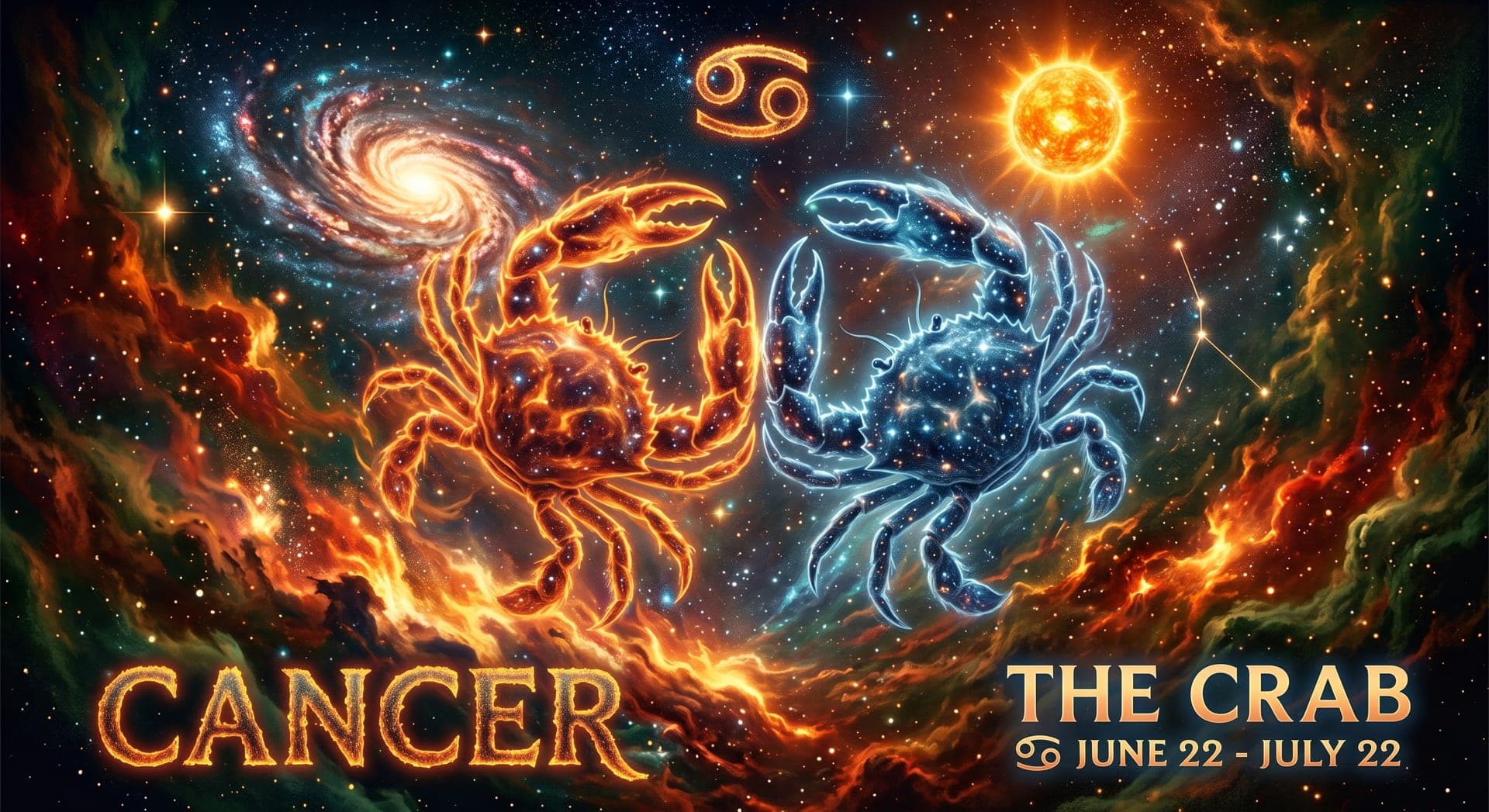
Born on July 14: Cancer ♋
Cancer, the fourth sign of the zodiac, spans June 21 to July 22 and is symbolized by the crab, an animal known for carrying a protective shell while remaining soft and vulnerable underneath. Ruled by the Moon, the celestial body long associated with emotion, intuition, and the subconscious, Cancer is widely regarded as one of the most nurturing and emotionally attuned signs of the zodiac. As a Water sign, Cancer navigates the world through deep feeling, often forming strong emotional bonds and an acute sensitivity to the moods of others. Its Cardinal modality places it at the start of summer, beginning right at the June solstice, reflecting an instinct to initiate and create, especially around home and family. People born under this sign tend to be deeply loyal, protective of loved ones, and drawn to creating a comfortable, secure home environment. Cancer's emotional depth is a genuine strength, but it can also make the sign prone to moodiness or withdrawal when hurt, retreating like a crab into its shell until it feels safe enough to re-emerge.
Personality Traits
Strengths
- Deeply caring and nurturing
- Highly intuitive
- Fiercely loyal and protective
- Strong sense of family and tradition
- Emotionally perceptive
Weaknesses
- Prone to moodiness
- Overly sensitive to criticism
- Can be clingy
- Tends to hold grudges
- Retreats when hurt
Compatible Signs
Fun Facts
- Cancer's crab symbol comes from Greek mythology, where the goddess Hera placed a crab that had fought Hercules among the stars.
- Cancer is ruled by the Moon, the only zodiac sign ruled by a celestial body other than a planet.
- As a Cardinal sign, Cancer initiates summer, beginning at the June solstice, the longest day of the year in the Northern Hemisphere.
- Notable Cancers include Princess Diana, Tom Hanks, Ariana Grande, and Nelson Mandela.
- The crab's hard shell and soft interior are often used as a metaphor for Cancer's protective exterior guarding a deeply sensitive emotional core.
Born on July 14
- 1825
Georgiana Hill
English cookery writer known for her prolific output of Victorian-era recipe books
- 1829
Edward Benson
English clergyman who served as Archbishop of Canterbury and founded the Nine Lessons and Carols service
- 1862
Gustav Klimt
Austrian Art Nouveau painter
- 1868
Gertrude Bell
English archaeologist, writer, and political officer influential in shaping the modern state of Iraq
- 1895
F. R. Leavis
English literary critic known for his influential and rigorous approach to the study of English literature
- 1910
William Hanna
American animator and co-founder of Hanna-Barbera
- 1912
Woody Guthrie
American folk singer-songwriter
- 1913
Gerald Ford
38th President of the United States
- 1918
Ingmar Bergman
Swedish filmmaker
- 1921
Geoffrey Wilkinson
English chemist who won the Nobel Prize in Chemistry for his work on organometallic compounds
- 1928
William Rees-Mogg
English journalist who served as editor of The Times
- 1960
Jane Lynch
American actress and comedian
- 1966
Matthew Fox
American actor known for "Lost"
- 1985
Phoebe Waller-Bridge
English actress and screenwriter who created and starred in the series Fleabag
- 1988
Conor McGregor
Irish mixed martial artist

On This Day in History
- 1223
Louis VIII ascends to the French throne following the death of his father, Philip II.
Following the death of his father, Philip II Augustus, Louis VIII became King of France, ruling for a relatively brief three-year reign. Though his time on the throne was short, he expanded French royal territory notably through campaigns during the Albigensian Crusade in southern France before his early death from illness.
- 1420
Hussite forces under Jan Zizka win a decisive victory over a Crusading army at the Battle of Vitkov Hill.
Hussite forces, followers of the executed reformer Jan Hus, achieved a crucial early victory over a large Crusader army assembled to suppress their religious rebellion near Prague. Led by the skilled military commander Jan Zizka, the Hussites' innovative use of armored wagons as mobile fortifications proved decisive against the numerically superior Catholic forces.
- 1596
English and Dutch forces sack the Spanish port city of Cádiz during the Anglo-Spanish War.
Led by the Earl of Essex and Lord Admiral Charles Howard, the raid destroyed a large part of the Spanish treasure fleet and occupied the city for two weeks before withdrawing. It was one of England's most successful naval operations against Spain during the long conflict.
- 1789
Parisian revolutionaries storm the Bastille fortress and prison, an event marking the symbolic start of the French Revolution and commemorated annually as Bastille Day.
Angered by economic hardship and royal absolutism, a Parisian crowd stormed the Bastille fortress, seeking weapons and gunpowder while also symbolically striking at a hated emblem of monarchical tyranny. Though the prison held only a handful of prisoners at the time, the event became the defining symbol of the French Revolution's outbreak and is celebrated annually as France's national day.
- 1789
Parisian revolutionaries storm the Bastille fortress-prison, a defining moment in the outbreak of the French Revolution.
Though the prison held only a handful of inmates at the time, its fall was a powerful symbolic blow against royal authority and came to represent the uprising of the common people against the old order. The event is commemorated annually in France as Bastille Day.
- 1791
The Priestley Riots break out in Birmingham, targeting the scientist and dissenting minister Joseph Priestley over his sympathy for the French Revolution.
A mob burned Priestley's home, laboratory, and church over several days, destroying years of scientific papers and equipment. Priestley, discoverer of oxygen, fled the city and eventually emigrated to the United States, and the riots became a notorious episode of religious and political intolerance in Georgian England.
- 1865
Edward Whymper completes the first ascent of the Matterhorn, though four members of his climbing party die during the descent.
British mountaineer Edward Whymper led the first successful ascent of the iconic Alpine peak straddling Switzerland and Italy, but tragedy struck during the descent when a rope broke, sending four climbers to their deaths. The disaster shocked Victorian society and marked a somber milestone in the golden age of European mountaineering.
- 1865
English mountaineer Edward Whymper leads the first successful ascent of the Matterhorn, though four of his party die during the descent.
The triumph and tragedy of the climb, in which a rope broke and sent four climbers falling to their deaths, made headlines across Europe and is often cited as marking the end of the 'Golden Age of Alpinism.' Whymper's account of the expedition remains a classic of mountaineering literature.
- 1881
Outlaw Billy the Kid is shot and killed by Sheriff Pat Garrett in Fort Sumner, New Mexico.
Notorious outlaw William H. Bonney, better known as Billy the Kid, was tracked down and shot by Sheriff Pat Garrett at Fort Sumner in the New Mexico Territory. His death, following a dramatic career of gunfights and a jailbreak, cemented his legend as one of the most enduring outlaw figures of the American Old West.
- 1900
Forces of the Eight-Nation Alliance, including British troops, capture Tientsin during the Boxer Rebellion in China.
The multinational force, formed to relieve besieged foreign legations in Beijing, included contingents from Britain, the United States, Japan, Russia, and other powers. Tientsin's capture opened the route toward Beijing, which fell to the alliance the following month.
- 1902
Peruvian farmer Agustin Lizarraga becomes among the first to document the ruins of Machu Picchu, nearly a decade before the site gained international fame.
Decades before Hiram Bingham's internationally publicized 1911 visit, a local farmer explored and left an inscription at the Machu Picchu ruins, evidence that the site was known to local Peruvians well before its supposed rediscovery by Western academia, a fact that has prompted historians to reconsider the framing of Bingham's later expedition.
- 1915
The McMahon–Hussein Correspondence begins, an exchange of letters between British officials and the Sharif of Mecca regarding Arab independence.
Sir Henry McMahon, Britain's High Commissioner in Egypt, corresponded with Hussein bin Ali to encourage an Arab revolt against the Ottoman Empire in exchange for promises of postwar Arab independence. The letters later became a source of lasting controversy, as their terms appeared to conflict with other wartime British commitments.
- 1916
The Battle of Delville Wood begins as part of the wider Battle of the Somme.
South African troops, fighting under British command, endured brutal close-quarters combat to hold the wood against repeated German counterattacks over several weeks. The battle became one of the most costly engagements for South African forces in the First World War.
- 1942
The Indian National Congress approves the 'Quit India' resolution, authorising a mass campaign for immediate independence from British rule.
Led by Mahatma Gandhi, the movement called for an end to British colonial rule in India as the Second World War raged. British authorities responded with mass arrests of Congress leaders, and the ensuing unrest was one of the most significant challenges to British authority in India before independence in 1947.
- 1951
Ferrari wins its first Formula One race at the British Grand Prix, held at Silverstone.
José Froilán González's victory ended the early dominance of Alfa Romeo in the fledgling world championship and marked the beginning of Ferrari's long and storied history in the sport. Silverstone, a former Royal Air Force airfield, remains the home of the British Grand Prix today.
- 1958
Iraq's monarchy is violently overthrown in a military coup led by Abd al-Karim Qasim.
A group of Iraqi army officers led by Abd al-Karim Qasim staged a violent coup that overthrew the Western-backed Hashemite monarchy, killing King Faisal II and much of the royal family. The coup ended decades of monarchy in Iraq and ushered in a period of republican but frequently unstable governance.
- 1965
NASA's Mariner 4 probe completes the first close-up flyby of Mars, transmitting the first photographs taken from another planet.
After a seven-month journey through space, the American Mariner 4 probe passed within about 6,000 miles of the Martian surface, transmitting the first close-up photographs ever taken of another planet. The grainy images revealed a cratered, moon-like landscape that dramatically revised scientific expectations about the possibility of life on Mars.
- 1983
The arcade game "Mario Bros." launches in Japan, introducing characters who would become central to the Super Mario franchise.
Nintendo's arcade platformer introduced Mario and his brother Luigi as plumbers battling creatures in New York City sewers, expanding on the character's earlier appearance in Donkey Kong. The game's cooperative two-player mode proved influential, and the Mario Bros. characters went on to become the centerpiece of one of the best-selling video game franchises in history.
- 2001
British backpacker Peter Falconio is murdered by Bradley John Murdoch during a roadside attack in the Australian outback.
Falconio and his girlfriend, Joanne Lees, were ambushed on a remote highway; Lees escaped and raised the alarm, but Falconio's body was never found. The case, and Murdoch's eventual 2005 conviction, became one of the most widely followed criminal cases in both British and Australian media.
- 2015
NASA's New Horizons spacecraft completes the first close flyby of Pluto, capturing detailed images of the dwarf planet.
After a nine-year journey across the solar system, NASA's New Horizons spacecraft passed within about 7,800 miles of Pluto's surface, capturing the first detailed images of the dwarf planet and its largest moon, Charon. The flyby completed the initial reconnaissance of all the traditionally recognized planets in the solar system.