
What’s Observed on June 8
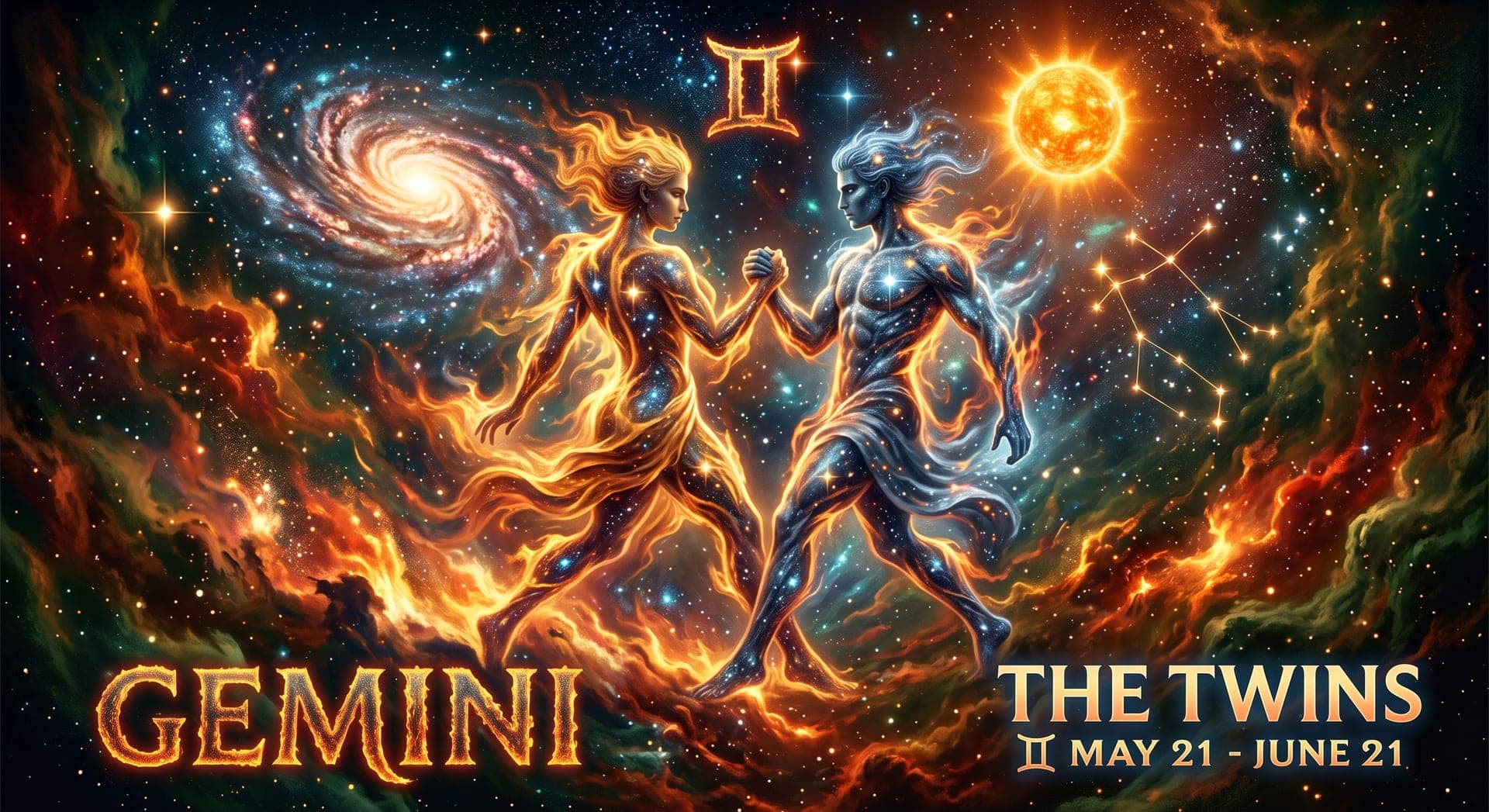
Born on June 8: Gemini ♊
Gemini, the third sign of the zodiac, spans May 21 to June 20 and is symbolized by twins, representing the sign's dual nature and its ability to see multiple sides of any situation at once. Ruled by Mercury, the planet of communication and intellect, Gemini is widely regarded as one of the most talkative, curious, and quick-witted signs of the zodiac, constantly gathering new information and ideas. As an Air sign, Gemini approaches the world primarily through thought and conversation, thriving on mental stimulation and social interaction. Its Mutable modality reflects a restless adaptability, since Gemini tends to resist routine and prefers variety, novelty, and the freedom to change course whenever something more interesting comes along. People born under this sign are often skilled communicators, natural storytellers, and quick learners who can hold their own in nearly any conversation. That same adaptability can also come across as inconsistency, and Gemini's dual nature sometimes earns an unfair reputation for being two-faced, when in reality it simply reflects genuine curiosity about every side of a story.
Personality Traits
Strengths
- Quick-witted and intelligent
- Excellent communicator
- Adaptable to new situations
- Curious and eager to learn
- Charming and sociable
Weaknesses
- Prone to inconsistency
- Can be superficial
- Easily bored
- Indecisive
- Tendency to gossip
Compatible Signs
Fun Facts
- Gemini's twin symbol traces back to the Greek myth of Castor and Pollux, twin brothers placed among the stars as the constellation Gemini.
- Mercury, Gemini's ruling planet, was the swift Roman messenger god, reflecting the sign's associations with communication and quick thinking.
- Gemini is one of only a few zodiac signs represented by human figures rather than animals or objects.
- Notable Geminis include Marilyn Monroe, Kanye West, Angelina Jolie, and John F. Kennedy.
- Gemini season overlaps with the transition from spring to summer in the Northern Hemisphere, reflecting the sign's changeable, in-between nature.
Born on June 8
- 1724
John Smeaton
English engineer regarded as the father of civil engineering, celebrated for building the third Eddystone Lighthouse and coining the term 'civil engineer.'
- 1810
Robert Schumann
German Romantic-era composer
- 1829
John Everett Millais
English painter and illustrator who co-founded the Pre-Raphaelite Brotherhood, known for meticulously detailed works such as Ophelia.
- 1867
Frank Lloyd Wright
American architect known for Fallingwater
- 1912
Wilhelmina Barns-Graham
Scottish abstract painter associated with the St Ives school, known for works inspired by glaciers and the Cornish landscape.
- 1916
Francis Crick
English molecular biologist who co-discovered the double-helix structure of DNA with James Watson, work that earned them the 1962 Nobel Prize.
- 1937
Gillian Clarke
Welsh poet who served as National Poet of Wales, known for verse rooted in the Welsh landscape and rural life.
- 1951
Bonnie Tyler
Welsh singer known for her distinctive husky voice and hits including 'Total Eclipse of the Heart.'
- 1955
Tim Berners-Lee
English computer scientist who invented the World Wide Web in 1989 while working at CERN, transforming global communication.
- 1960
Mick Hucknall
English singer-songwriter and frontman of the soul-pop band Simply Red, known for hits such as 'Holding Back the Years.'
- 1976
Lindsay Davenport
American professional tennis champion
- 1977
Kanye West
American musician and fashion designer

On This Day in History
- 452
Attila the Hun leads an invasion of northern Italy, devastating the region as his forces advance toward Rome.
Attila the Hun led his forces across the Alps into northern Italy, sacking several major cities and devastating the region as his army advanced toward Rome, a campaign ultimately halted not by military defeat but through negotiations, reportedly including intervention by Pope Leo I, that persuaded Attila to withdraw before reaching the city itself.
- 793
Viking raiders attack the monastery at Lindisfarne in Northumbria, an assault widely regarded as marking the beginning of the Viking Age in Britain.
Viking raiders attacked the undefended monastery at Lindisfarne off the coast of Northumbria, killing monks and looting the wealthy religious community's treasures, an assault so shocking to contemporary observers that it is widely regarded by historians as marking the symbolic beginning of the Viking Age of raids and expansion across the British Isles and beyond.
- 793
Vikings raid Lindisfarne monastery in Northumbria, an attack later seen as marking the start of the Viking Age in England.
The raid on the undefended monastery on Holy Island shocked the Christian world; contemporary chronicler Alcuin lamented that 'never before has such a terror appeared in Britain.' Monks were killed or enslaved and treasures plundered. Though Vikings had raided elsewhere earlier, Lindisfarne's prominence made this assault the symbolic beginning of nearly three centuries of Norse incursions into the British Isles.
- 1042
Edward the Confessor becomes King of England.
Edward the Confessor became King of England, beginning a pious and relatively peaceful reign notable for his patronage of Westminster Abbey, though his death without a clear heir over two decades later triggered the succession crisis that culminated in the Norman Conquest of England led by William the Conqueror.
- 1042
Edward the Confessor becomes King of England, succeeding his half-brother Harthacnut.
Edward's accession ended the brief line of Danish kings that had ruled England since Cnut's conquest in 1016, restoring the House of Wessex to the throne. His pious and largely peaceful twenty-four-year reign saw the rebuilding of Westminster Abbey, and his death without an heir in 1066 triggered the succession crisis that led directly to the Norman Conquest.
- 1191
King Richard I of England arrives at Acre to join the siege during the Third Crusade.
King Richard I of England, known as Richard the Lionheart, arrived at the besieged port city of Acre with his forces, joining French and German contingents already engaged in the prolonged siege during the Third Crusade, reinforcements that helped secure the city's eventual capture from Muslim forces weeks later.
- 1191
King Richard I of England's crusader fleet arrives at Acre, joining the siege of the city during the Third Crusade.
Richard 'the Lionheart' arrived with reinforcements and siege equipment after a journey delayed by his conquest of Cyprus, joining French and other Christian forces already besieging the strategically vital port. His arrival helped tip the balance of the siege, which fell to the Crusaders the following month, marking one of the campaign's few lasting successes.
- 1663
Portuguese forces win a decisive victory over Spain at the Battle of Ameixial, securing Portuguese independence.
Portuguese forces decisively defeated a Spanish army at the Battle of Ameixial, a pivotal victory in the Portuguese Restoration War that helped secure Portugal's independence from six decades of Spanish Habsburg rule, ultimately leading to formal Spanish recognition of Portuguese sovereignty the following year.
- 1772
Scottish banker Alexander Fordyce flees to France after failed speculation, triggering a major British credit crisis.
Fordyce's disastrous bets against the East India Company's stock bankrupted his London banking house, setting off a chain reaction of collapsing banks across Britain and its colonies known as the credit crisis of 1772. The resulting credit crunch is thought by some historians to have worsened colonial grievances in America in the years before the Revolution.
- 1789
James Madison introduces a series of constitutional amendments to Congress that eventually become the Bill of Rights.
James Madison introduced a series of proposed constitutional amendments to the newly formed U.S. Congress, addressing concerns raised by Anti-Federalists during the Constitution's ratification debates, a legislative effort that eventually produced the ten amendments known collectively as the Bill of Rights, ratified two years later.
- 1906
President Theodore Roosevelt signs the Antiquities Act, granting presidents authority to protect significant natural and cultural sites as national monuments.
President Theodore Roosevelt signed the Antiquities Act into law, granting the president unilateral authority to designate national monuments on federal land to protect significant natural, cultural, or scientific sites, a power subsequently used by numerous presidents to protect landmarks including the Grand Canyon before it later became a national park.
- 1924
Mountaineers George Mallory and Andrew Irvine disappear high on Mount Everest, their fate a lasting mystery of exploration history.
British mountaineers George Mallory and Andrew Irvine were last seen climbing toward the summit of Mount Everest before disappearing into cloud cover, never to be seen alive again, leaving unresolved for decades the tantalizing question of whether they might have reached the summit nearly three decades before Edmund Hillary and Tenzing Norgay's confirmed 1953 ascent.
- 1924
British mountaineers George Mallory and Andrew Irvine disappear near the summit of Mount Everest.
Climbing without modern equipment during Britain's third expedition to the mountain, the pair were last seen through a break in the clouds 'going strong' for the top before vanishing. Whether they reached the summit twenty-nine years before Edmund Hillary and Tenzing Norgay's confirmed ascent remains one of mountaineering's enduring mysteries; Mallory's body was finally found in 1999.
- 1929
Margaret Bondfield becomes the first woman to serve in a British Cabinet, appointed Minister of Labour.
Appointed by Prime Minister Ramsay MacDonald's second Labour government, Bondfield had risen from shop work and trade union organising to become a pioneering advocate for women workers. Her Cabinet appointment was a landmark for women in British politics, coming less than a year after women won the vote on equal terms with men.
- 1940
The Allied evacuation of Narvik, Operation Alphabet, is completed, withdrawing British, French, and Polish troops from Norway.
Despite recapturing the strategic port of Narvik from German forces weeks earlier, Allied commanders judged the position unsustainable as the Battle of France collapsed. Troops were secretly withdrawn by sea over several nights without German detection, closing the largely successful land campaign of the otherwise disastrous Norwegian campaign of 1940.
- 1961
Prince Edward, Duke of Kent, marries Katharine Worsley at York Minster.
The wedding was the first marriage of a member of the British royal family at York Minster in centuries and one of the great social occasions of the era, drawing large crowds to the historic cathedral. Katharine, later known for her charity work and interest in music, became one of the longest-serving members of the extended royal family.
- 1967
Israeli forces mistakenly attack the American intelligence ship USS Liberty during the Six-Day War, killing 34 sailors.
Israeli aircraft and torpedo boats attacked the American intelligence-gathering ship USS Liberty in international waters off the Sinai coast during the Six-Day War, killing 34 American sailors and wounding 171 others, an incident Israel described as a tragic case of mistaken identity but which has remained a subject of enduring controversy and investigation.
- 1968
James Earl Ray, the assassin of Martin Luther King Jr., is arrested at London's Heathrow Airport.
Ray had fled the United States after King's assassination in Memphis two months earlier, travelling under a false Canadian passport through Canada, Portugal, and Britain. Alerted by an international watch list, immigration officials detained him as he attempted to board a flight to Brussels, allowing his extradition to the United States to face trial.
- 1982
Argentine air attacks on British ships at Bluff Cove during the Falklands War kill 56 servicemen.
Argentine jets struck the landing ships RFA Sir Galahad and Sir Tristram as they unloaded troops near Fitzroy, causing catastrophic fires and the war's heaviest single loss of British life. The attack, days before the conflict's end, remains one of the most painful episodes of the Falklands War and prompted lasting reforms in British military firefighting and medical care.
- 2004
A transit of Venus across the sun occurs, the first visible from Earth in over a century.
A transit of Venus across the face of the sun occurred, visible from parts of Earth for the first time in over a century since the previous transit in 1882, drawing significant scientific and public interest, with a follow-up transit occurring in 2012 before the next pair will not recur until the 22nd century.