
What’s Observed on June 4
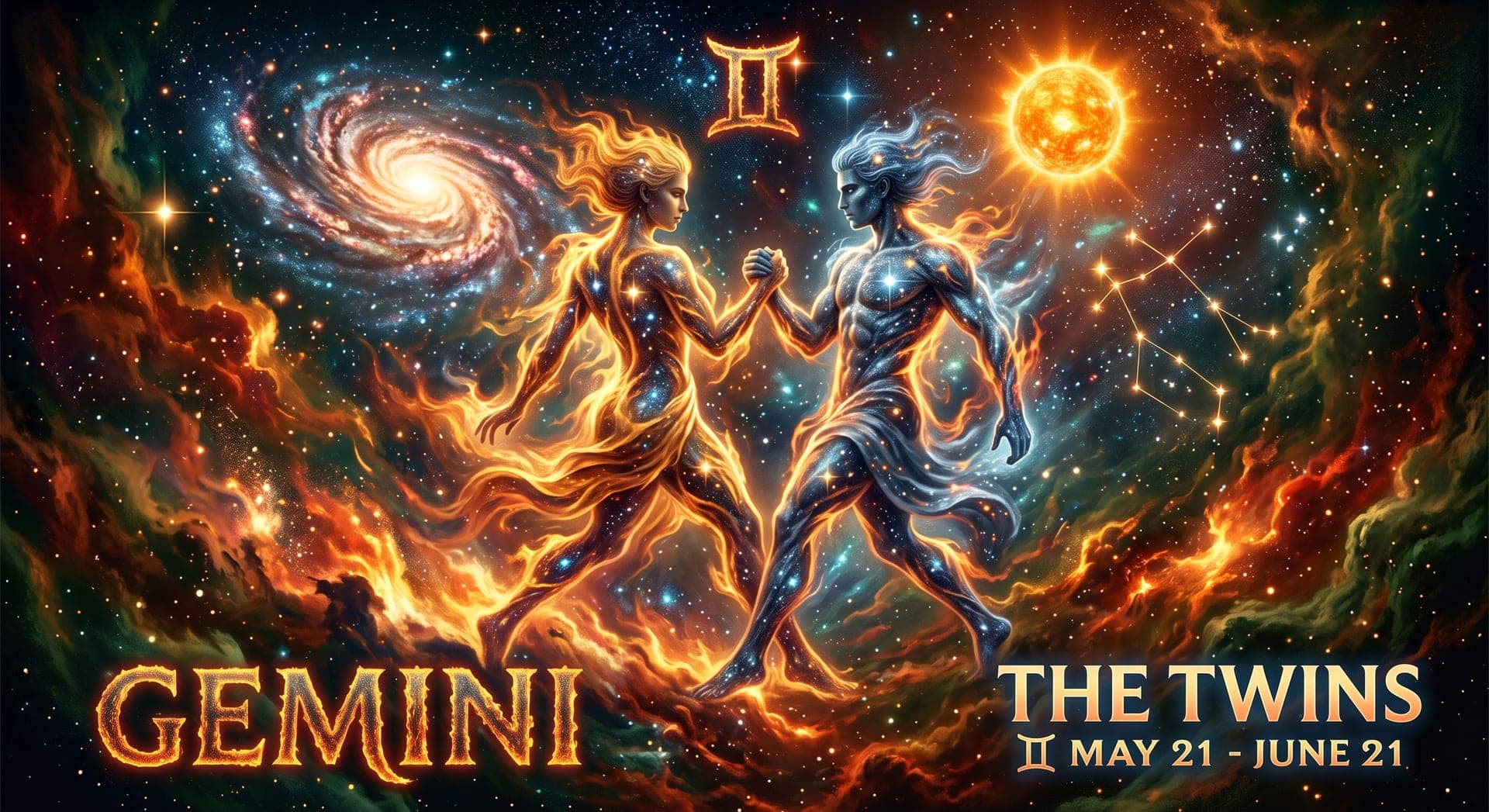
Born on June 4: Gemini ♊
Gemini, the third sign of the zodiac, spans May 21 to June 20 and is symbolized by twins, representing the sign's dual nature and its ability to see multiple sides of any situation at once. Ruled by Mercury, the planet of communication and intellect, Gemini is widely regarded as one of the most talkative, curious, and quick-witted signs of the zodiac, constantly gathering new information and ideas. As an Air sign, Gemini approaches the world primarily through thought and conversation, thriving on mental stimulation and social interaction. Its Mutable modality reflects a restless adaptability, since Gemini tends to resist routine and prefers variety, novelty, and the freedom to change course whenever something more interesting comes along. People born under this sign are often skilled communicators, natural storytellers, and quick learners who can hold their own in nearly any conversation. That same adaptability can also come across as inconsistency, and Gemini's dual nature sometimes earns an unfair reputation for being two-faced, when in reality it simply reflects genuine curiosity about every side of a story.
Personality Traits
Strengths
- Quick-witted and intelligent
- Excellent communicator
- Adaptable to new situations
- Curious and eager to learn
- Charming and sociable
Weaknesses
- Prone to inconsistency
- Can be superficial
- Easily bored
- Indecisive
- Tendency to gossip
Compatible Signs
Fun Facts
- Gemini's twin symbol traces back to the Greek myth of Castor and Pollux, twin brothers placed among the stars as the constellation Gemini.
- Mercury, Gemini's ruling planet, was the swift Roman messenger god, reflecting the sign's associations with communication and quick thinking.
- Gemini is one of only a few zodiac signs represented by human figures rather than animals or objects.
- Notable Geminis include Marilyn Monroe, Kanye West, Angelina Jolie, and John F. Kennedy.
- Gemini season overlaps with the transition from spring to summer in the Northern Hemisphere, reflecting the sign's changeable, in-between nature.
Born on June 4
- 1563
George Heriot
Scottish goldsmith and financier to James VI and I whose fortune founded George Heriot's School in Edinburgh
- 1704
Benjamin Huntsman
English inventor who developed the crucible steel process, transforming the quality of steel production
- 1738
George III
King of the United Kingdom whose long reign spanned the loss of the American colonies and the Napoleonic Wars
- 1867
Carl Gustaf Emil Mannerheim
Finnish military leader and President of Finland
- 1907
Rosalind Russell
American actress of classic Hollywood cinema
- 1910
Christopher Cockerell
English engineer who invented the hovercraft
- 1927
Geoffrey Palmer
English actor known for television roles in Butterflies and As Time Goes By
- 1960
Bradley Walsh
English television presenter and actor best known for hosting the quiz show The Chase
- 1975
Angelina Jolie
American actress and humanitarian
- 1975
Russell Brand
English comedian and actor known for his stand-up work and films including Forgetting Sarah Marshall
- 1976
Alexei Navalny
Russian opposition politician and anti-corruption campaigner
- 1990
Evan Spiegel
American entrepreneur who co-founded Snapchat
On This Day in History
- 1411
King Charles VI of France grants the town of Roquefort-sur-Soulzon an exclusive monopoly on ripening Roquefort cheese.
King Charles VI of France granted the residents of the small town of Roquefort-sur-Soulzon an exclusive legal monopoly on ripening a distinctive blue cheese in the region's natural limestone caves, an early example of what would today be recognized as a protected geographic food designation, formally recognizing a cheesemaking tradition that locals had already practiced for generations.
- 1561
Lightning strikes the spire of Old St Paul's Cathedral in London, destroying it in a fire that also damages much of the roof.
The medieval cathedral's timber spire, one of the tallest structures in Europe at over 400 feet, was never rebuilt, leaving the church with a truncated tower for the rest of its existence. Some contemporaries interpreted the disaster as divine judgment amid the religious upheavals of the English Reformation. The cathedral itself survived until the Great Fire of London in 1666 destroyed it entirely, leading to Christopher Wren's famous rebuilding.
- 1615
Forces loyal to Tokugawa Ieyasu capture Osaka Castle, effectively ending organized resistance to his shogunate in Japan.
Forces loyal to Tokugawa Ieyasu captured Osaka Castle after a prolonged siege, crushing the last significant military resistance to his rule and eliminating the remaining supporters of the Toyotomi clan, an event that secured the Tokugawa shogunate's dominance over Japan and ushered in over two centuries of relative peace and stability known as the Edo period.
- 1745
Prussian forces under Frederick the Great defeat an Austrian-Saxon army at the Battle of Hohenfriedberg.
Prussian forces under King Frederick the Great won a decisive victory over a combined Austrian and Saxon army at the Battle of Hohenfriedberg during the War of the Austrian Succession, a triumph that helped secure Prussia's hold over the recently conquered territory of Silesia and cemented Frederick's early reputation as one of Europe's most capable military commanders.
- 1783
The Montgolfier brothers publicly demonstrate their hot air balloon for the first time in France.
Brothers Joseph-Michel and Jacques-Etienne Montgolfier publicly demonstrated their hot air balloon invention in Annonay, France, launching an unmanned balloon that rose to an altitude of roughly 6,000 feet before landing safely, a pioneering achievement that launched the age of human flight and led to the first manned balloon ascent later that same year.
- 1792
British naval captain George Vancouver claims the Puget Sound region of the Pacific Northwest for the Kingdom of Great Britain.
Vancouver was leading a lengthy expedition to survey the northwestern coastline of North America and negotiate the aftermath of the Nootka Crisis with Spain. His detailed charts of the inlets and islands around what is now Washington State remained in use for generations, and numerous local landmarks, including Vancouver Island and the city of Vancouver, were later named in his honor.
- 1876
The Transcontinental Express train completes its journey from New York to San Francisco in just over four days.
The Transcontinental Express, a specially chartered train, completed a highly publicized journey from New York City to San Francisco in just eighty-three hours and thirty-nine minutes, a demonstration timed to the American centennial celebrating the transformative speed and connectivity the transcontinental railroad had brought to cross-country travel just seven years after its completion.
- 1878
The Ottoman Empire cedes administrative control of Cyprus to the United Kingdom under the terms of the secret Cyprus Convention.
The agreement, negotiated in the aftermath of the Congress of Berlin, gave Britain a strategic naval and military base in the eastern Mediterranean in exchange for a British pledge to help defend Ottoman territory against Russian expansion. Cyprus remained under nominal Ottoman sovereignty until Britain formally annexed it in 1914, and the island stayed a British colony until independence in 1960.
- 1913
Suffragette Emily Davison is trampled by King George V's horse at the Epsom Derby, dying days later, drawing global attention to the women's suffrage movement.
Suffragette Emily Davison stepped in front of King George V's horse during the running of the Epsom Derby, an act many historians believe was intended as a dramatic protest for women's voting rights rather than a suicide attempt, and she died from her injuries four days later, becoming a martyred symbol for the British suffrage movement.
- 1913
Suffragette Emily Davison is fatally injured after stepping in front of King George V's horse during the Epsom Derby.
Davison, a militant campaigner for women's suffrage, ran onto the racecourse as the horses rounded Tattenham Corner, apparently attempting to attach a suffragette scarf to the king's horse, Anmer. She suffered severe head injuries and died four days later without regaining consciousness. Her death, captured on newsreel film, became one of the most enduring and debated images of the British suffrage movement.
- 1940
The Dunkirk evacuation concludes after rescuing roughly 338,000 Allied troops, and Winston Churchill delivers his defiant "we shall fight on the beaches" speech.
The Dunkirk evacuation concluded after successfully rescuing approximately 338,000 Allied troops trapped on the beaches of northern France using a hastily assembled fleet of naval vessels and civilian boats, and Winston Churchill delivered his defiant "we shall fight on the beaches" speech to Parliament, rallying British resolve despite the crushing military defeat the evacuation represented.
- 1940
The Dunkirk evacuation concludes as British forces complete the withdrawal of some 338,000 Allied troops from the beaches of northern France.
Codenamed Operation Dynamo, the evacuation used a hastily assembled fleet of Royal Navy vessels and hundreds of civilian 'little ships' to rescue troops trapped by the rapid German advance. Though it was a military retreat, the scale of the rescue was framed in Britain as a triumph of national resolve, preserving the trained soldiers who would help defend Britain in the battles ahead.
- 1940
Winston Churchill delivers his 'We shall fight on the beaches' speech to the House of Commons, vowing that Britain would never surrender.
Delivered on the same day the Dunkirk evacuation concluded, the speech acknowledged the gravity of the military situation in France while rallying the nation for the fight ahead, famously pledging to fight in the fields, streets, and hills, and to never surrender. Although not broadcast live to the public, its stirring language was later read on the radio and became one of the most quoted speeches of the Second World War.
- 1942
The pivotal Battle of Midway begins in the Pacific, a decisive American naval victory over Japan.
The pivotal Battle of Midway began in the central Pacific as American naval forces, having broken Japanese naval codes, ambushed a Japanese fleet attempting to seize the strategic Midway Atoll, setting in motion a battle that would sink four Japanese aircraft carriers and permanently shift the balance of naval power in the Pacific theater of World War II.
- 1944
The U.S. Fifth Army captures Rome, making it the first Axis capital to fall to Allied forces during the Second World War.
The capture followed months of grinding combat in the Italian campaign, including the costly battles at Monte Cassino and Anzio. German forces withdrew from the city rather than fight amid its historic monuments, and Rome's liberation, though soon overshadowed in the headlines by the D-Day landings in Normandy two days later, marked a significant symbolic victory for the Allies.
- 1967
A Canadair C-4 Argonaut airliner crashes shortly after takeoff at Stockport, England, killing 72 of the 84 people on board.
The aircraft, chartered to carry holidaymakers to Majorca, suffered engine failure after departing Manchester Airport and came down in a residential area near Stockport town centre. It remains one of the deadliest air disasters in British history, and the subsequent inquiry raised serious concerns about the safety of ageing piston-engined airliners still in charter service at the time.
- 1989
Chinese authorities violently suppress the Tiananmen Square protests, resulting in significant civilian casualties.
Chinese authorities intensified their violent crackdown on pro-democracy demonstrators in and around Tiananmen Square, deploying additional troops and armored vehicles to fully clear the area after the previous night's initial assault, resulting in continued civilian casualties as the government moved decisively to suppress the seven-week-old protest movement.
- 1989
Chinese troops storm Tiananmen Square in Beijing, forcibly ending seven weeks of pro-democracy protests with a violent military crackdown.
Tanks and armed soldiers cleared the square and surrounding streets overnight, and estimates of the death toll, which the Chinese government has never fully disclosed, range from several hundred to well over a thousand. The crackdown drew international condemnation and remains one of the most sensitive and censored topics within China to this day.
- 1989
Poland's Solidarity movement wins a landslide victory in the country's first partly free parliamentary elections since the Second World War.
The election, negotiated as part of the Round Table Agreement between the Communist government and the Solidarity opposition, saw Solidarity-backed candidates sweep nearly every contested seat. The result helped trigger a wave of peaceful revolutions across Central and Eastern Europe later that year, contributing to the collapse of Communist rule across the region.
- 2010
SpaceX's Falcon 9 rocket completes its maiden flight, a milestone for the private spaceflight industry.
SpaceX's Falcon 9 rocket completed its maiden flight from Cape Canaveral, successfully reaching orbit on its first attempt, a milestone that validated the company's engineering approach and helped launch the broader era of private commercial spaceflight that would eventually include reusable rocket boosters and crewed missions to the International Space Station.