
What’s Observed on June 3
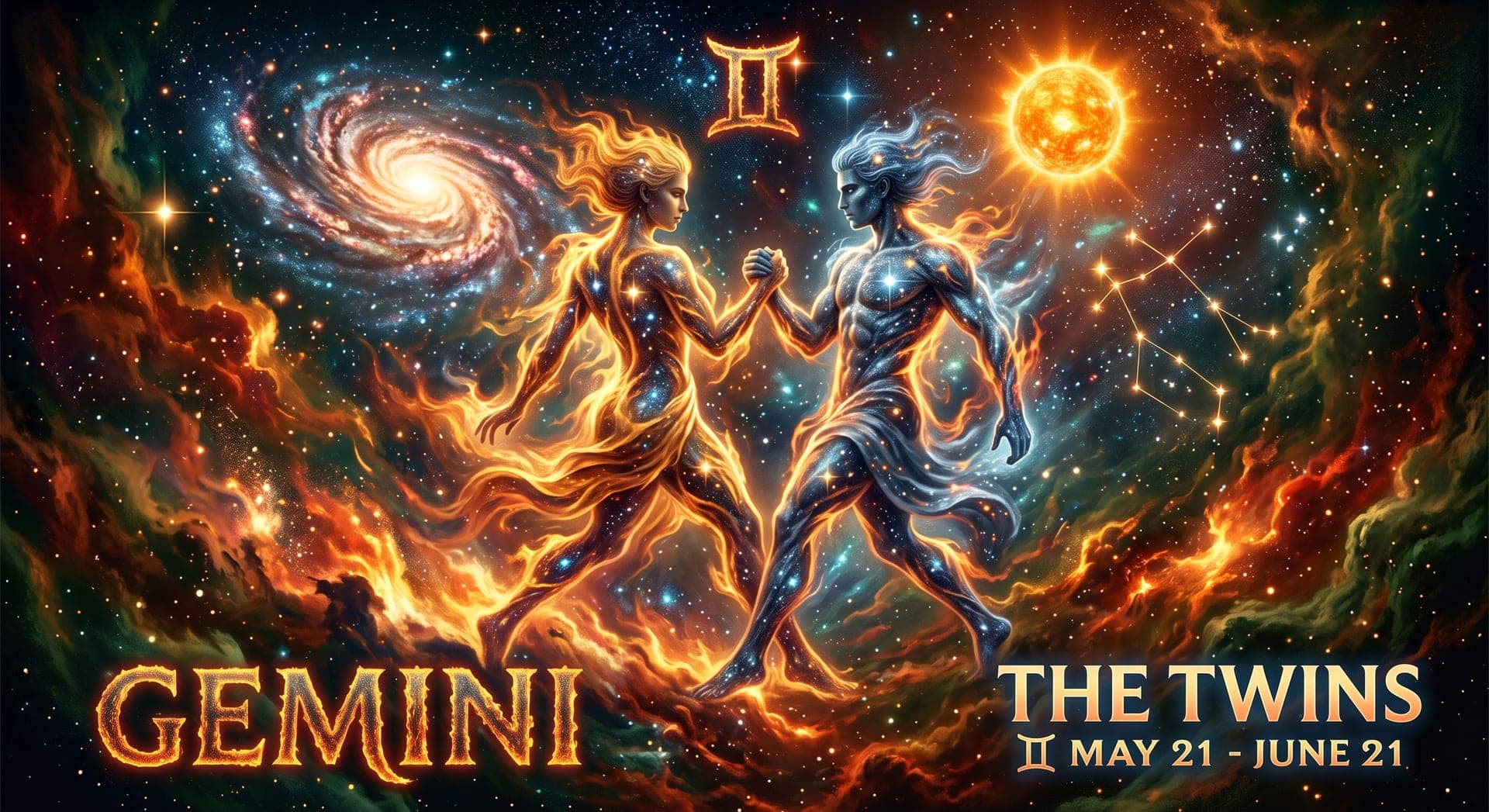
Born on June 3: Gemini ♊
Gemini, the third sign of the zodiac, spans May 21 to June 20 and is symbolized by twins, representing the sign's dual nature and its ability to see multiple sides of any situation at once. Ruled by Mercury, the planet of communication and intellect, Gemini is widely regarded as one of the most talkative, curious, and quick-witted signs of the zodiac, constantly gathering new information and ideas. As an Air sign, Gemini approaches the world primarily through thought and conversation, thriving on mental stimulation and social interaction. Its Mutable modality reflects a restless adaptability, since Gemini tends to resist routine and prefers variety, novelty, and the freedom to change course whenever something more interesting comes along. People born under this sign are often skilled communicators, natural storytellers, and quick learners who can hold their own in nearly any conversation. That same adaptability can also come across as inconsistency, and Gemini's dual nature sometimes earns an unfair reputation for being two-faced, when in reality it simply reflects genuine curiosity about every side of a story.
Personality Traits
Strengths
- Quick-witted and intelligent
- Excellent communicator
- Adaptable to new situations
- Curious and eager to learn
- Charming and sociable
Weaknesses
- Prone to inconsistency
- Can be superficial
- Easily bored
- Indecisive
- Tendency to gossip
Compatible Signs
Fun Facts
- Gemini's twin symbol traces back to the Greek myth of Castor and Pollux, twin brothers placed among the stars as the constellation Gemini.
- Mercury, Gemini's ruling planet, was the swift Roman messenger god, reflecting the sign's associations with communication and quick thinking.
- Gemini is one of only a few zodiac signs represented by human figures rather than animals or objects.
- Notable Geminis include Marilyn Monroe, Kanye West, Angelina Jolie, and John F. Kennedy.
- Gemini season overlaps with the transition from spring to summer in the Northern Hemisphere, reflecting the sign's changeable, in-between nature.
Born on June 3
- 1659
David Gregory
Scottish mathematician and astronomer who helped popularize Newtonian physics through his teaching and writing
- 1726
James Hutton
Scottish geologist regarded as the father of modern geology for his theory of uniformitarianism
- 1853
Flinders Petrie
English archaeologist whose meticulous excavation methods transformed the study of ancient Egypt
- 1865
George V
King of the United Kingdom who reigned through the First World War and renamed the royal house Windsor
- 1906
Josephine Baker
French-American entertainer and World War II resistance fighter
- 1910
Wilfred Thesiger
British explorer and writer known for his journeys across Arabia's Empty Quarter, chronicled in Arabian Sands
- 1925
Tony Curtis
American actor known for classic Hollywood films
- 1926
Allen Ginsberg
American poet of the Beat Generation
- 1945
Bill Paterson
Scottish actor known for stage work and television roles including Auf Wiedersehen, Pet
- 1946
Penelope Wilton
English actress known for roles in Downton Abbey, Doctor Who, and Shaun of the Dead
- 1951
Jill Biden
American educator and First Lady of the United States
- 1967
Anderson Cooper
American journalist and television anchor
- 1986
Rafael Nadal
Spanish professional tennis champion
On This Day in History
- 1539
Spanish explorer Hernando de Soto lands in Florida and claims the territory for Spain.
Spanish explorer Hernando de Soto's expedition landed on the Gulf coast of Florida, formally claiming the territory for the Spanish crown before setting off on a grueling four-year overland journey through the American Southeast in search of gold, during which de Soto's forces became the first documented Europeans to encounter the Mississippi River.
- 1602
English naval forces defeat Spanish galleys and capture a Portuguese carrack at Sesimbra Bay.
An English naval squadron intercepted and defeated a fleet of Spanish galleys off the coast of Portugal at Sesimbra Bay, capturing a richly laden Portuguese carrack in the process, part of the broader undeclared maritime conflict between England and Spain during the reign of Elizabeth I that included privateering raids against Spanish shipping and colonial interests.
- 1602
An English naval squadron defeats a Spanish force and captures a Portuguese carrack at the Battle of Sesimbra Bay off the coast of Portugal.
Commanded by Sir Richard Leveson and Sir William Monson, the English fleet attacked Spanish galleys sheltering under the guns of Sesimbra Castle and seized the Portuguese treasure ship Nossa Senhora de Cinco Chagas after fierce fighting. The action was part of the long naval war between England and Spain during the reign of Elizabeth I, aimed at disrupting Spanish and Portuguese trade with the East Indies.
- 1665
English naval forces under the Duke of York defeat the Dutch fleet at the Battle of Lowestoft.
An English fleet commanded by James, Duke of York, later King James II, decisively defeated the Dutch navy at the Battle of Lowestoft during the Second Anglo-Dutch War, sinking or capturing numerous Dutch ships in one of the largest naval engagements of the era, though England ultimately failed to translate the victory into a decisive strategic advantage in the broader war.
- 1665
An English fleet commanded by James, Duke of York, defeats the Dutch navy off Lowestoft in the opening major battle of the Second Anglo-Dutch War.
The engagement was one of the largest naval battles of the age of sail, involving over a hundred ships on each side. The Dutch flagship exploded during the fighting, killing commander Jacob van Wassenaer Obdam, and English forces sank or captured numerous vessels. Despite the victory, England failed to press its advantage decisively, and the war dragged on for two more years.
- 1839
Chinese official Lin Zexu destroys over a million kilograms of confiscated opium, a defining act that helped trigger the First Opium War with Britain.
Chinese imperial commissioner Lin Zexu ordered the destruction of over a million kilograms of confiscated British opium at Humen, dissolving it with lime and salt before flushing it into the sea, a decisive anti-opium enforcement action that directly provoked British military retaliation and triggered the First Opium War, a conflict that ended in humiliating Chinese defeat and forced trade concessions.
- 1839
Chinese official Lin Zexu orders the destruction of over a thousand tons of confiscated opium at Humen, an act that helped trigger the First Opium War with Britain.
Lin had been sent by the Qing government to suppress the illegal opium trade British merchants were running into China, and the destruction of the stockpiles at Humen was a defiant show of force. Britain responded by sending a military expedition, and the resulting First Opium War ended in Chinese defeat and the 1842 Treaty of Nanking, which ceded Hong Kong to Britain and opened Chinese ports to foreign trade.
- 1844
The last known breeding pair of great auks is killed off the coast of Iceland, driving the flightless seabird to extinction.
The last confirmed breeding pair of great auks, a large flightless seabird once abundant across the North Atlantic, was killed by fishermen on a remote Icelandic island who had been hired to collect specimens for a museum collector, and their single egg was crushed in the process, marking the effective extinction of the species through relentless historical hunting for feathers, meat, and eggs.
- 1863
Confederate General Robert E. Lee begins marching his army north, launching the campaign that culminated in the Battle of Gettysburg.
Confederate General Robert E. Lee began moving his Army of Northern Virginia northward from its positions near Fredericksburg, launching the ambitious Gettysburg Campaign intended to carry the war onto Union soil, relieve pressure on war-ravaged Virginia, and potentially win a decisive victory that might convince the North to negotiate peace, a campaign that would culminate a month later in catastrophic Confederate defeat.
- 1863
Confederate General Robert E. Lee begins marching his Army of Northern Virginia north, launching the Gettysburg campaign.
Lee hoped a second invasion of the North would relieve pressure on Virginia's farmland, weaken Northern morale, and possibly force a negotiated end to the American Civil War. The campaign culminated a month later in the Battle of Gettysburg, a decisive Union victory that halted Lee's advance and is often regarded as the war's turning point.
- 1937
The former King Edward VIII, now Duke of Windsor, marries American divorcee Wallis Simpson in France.
The former King Edward VIII of Britain, who had abdicated the throne months earlier specifically to marry her, wed the twice-divorced American socialite Wallis Simpson at a chateau in France in a small, largely boycotted ceremony that most of the British royal family pointedly declined to attend, cementing his controversial exile as the Duke of Windsor.
- 1937
The Duke of Windsor, formerly King Edward VIII, marries the American divorcee Wallis Simpson in France.
Edward had abdicated the British throne the previous December rather than give up his relationship with Simpson, whose two divorces made her an unacceptable royal spouse under the constitutional and religious norms of the time. The couple married privately at the Château de Candé, with almost no members of the royal family in attendance, and lived much of the rest of their lives in exile in France.
- 1940
German aircraft bomb Paris for the first time during the Battle of France, striking factories and killing civilians.
The raid came as German forces pushed rapidly through northern France following the Dunkirk evacuation, signaling that the French capital itself was now within reach of the advancing Wehrmacht. Paris fell to German occupation less than two weeks later, on 14 June 1940, prompting the French government to relocate south.
- 1950
French climbers Maurice Herzog and Louis Lachenal become the first people to reach the summit of Annapurna, the first ascent of any peak over 8,000 metres.
The expedition's success came at enormous cost: both climbers suffered severe frostbite during the descent, resulting in the amputation of most of Herzog's fingers and toes. Achieved without modern equipment or prior reconnaissance of the route, their ascent is regarded as one of the great feats in mountaineering history and predated the first ascent of Everest by three years.
- 1965
NASA launches Gemini 4, during which astronaut Ed White performs the first American spacewalk.
NASA launched the Gemini 4 mission carrying astronauts James McDivitt and Ed White, during which White stepped outside the capsule and became the first American to walk in space, spending roughly 20 minutes tethered outside the spacecraft in a milestone that demonstrated critical extravehicular activity capabilities needed for the planned Apollo Moon landing missions.
- 1982
Shlomo Argov, Israel's ambassador to the United Kingdom, is shot and seriously wounded outside a London hotel.
The attack, carried out by a Palestinian splinter group, left Argov permanently paralysed. Israel cited the shooting as justification for its invasion of Lebanon just days later, though the group responsible was actually a rival of the PLO, whose forces in Lebanon bore the brunt of the subsequent Israeli offensive.
- 1989
Chinese troops forcibly clear pro-democracy protesters from Tiananmen Square after weeks of occupation, in a violent crackdown.
Chinese military and police forces violently cleared pro-democracy demonstrators who had occupied Beijing's Tiananmen Square for seven weeks, using tanks and armed troops in an operation that continued into the following day and resulted in a significant, still-disputed number of civilian deaths, an event that remains heavily censored within China but internationally symbolizes the suppression of the 1989 democracy movement.
- 1989
Chinese authorities move to forcibly clear pro-democracy protesters who had occupied Tiananmen Square in Beijing for seven weeks.
The government's crackdown, which escalated into a deadly military assault the following day, ended weeks of student-led demonstrations calling for political reform and greater freedoms. The events of June 3–4, 1989, remain one of the most heavily censored subjects in China, with the government suppressing public discussion of the death toll to this day.
- 2006
Montenegro formally declares independence, dissolving its union with Serbia.
Montenegro's parliament formally declared independence from its loose state union with Serbia, following a referendum weeks earlier in which a narrow majority of Montenegrin voters chose separation, completing the final dissolution of the former Yugoslav federation and establishing Montenegro as Europe's newest independent nation at the time.
- 2006
Montenegro formally declares independence from its union with Serbia, dissolving the last remnant of the former Yugoslavia.
The declaration followed a closely contested referendum in May 2006, in which just over 55 percent of voters backed independence, narrowly clearing the threshold set by the European Union for recognition. The split ended the State Union of Serbia and Montenegro peacefully, and both countries subsequently pursued separate paths toward European Union membership.