
What’s Observed on June 2
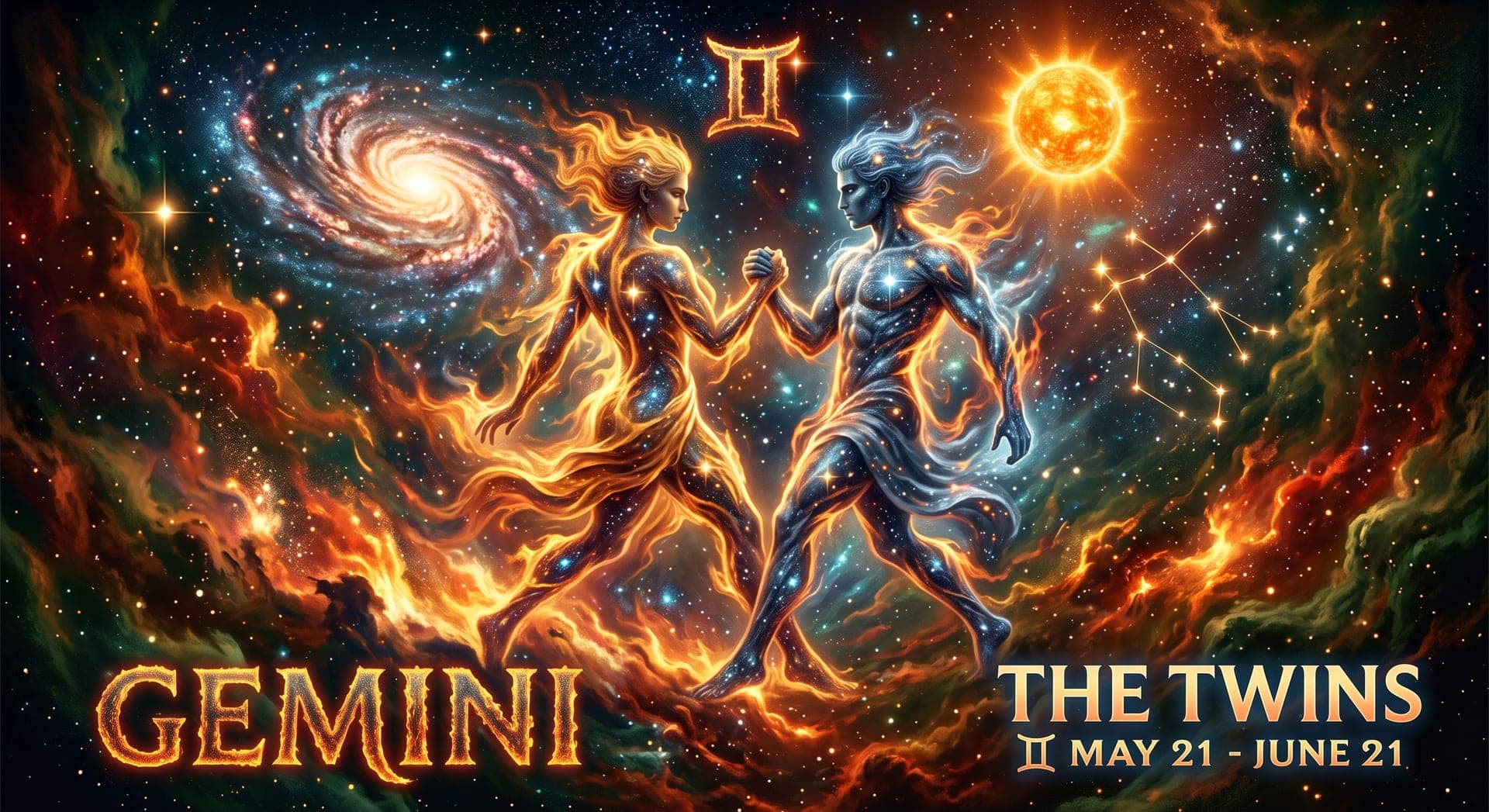
Born on June 2: Gemini ♊
Gemini, the third sign of the zodiac, spans May 21 to June 20 and is symbolized by twins, representing the sign's dual nature and its ability to see multiple sides of any situation at once. Ruled by Mercury, the planet of communication and intellect, Gemini is widely regarded as one of the most talkative, curious, and quick-witted signs of the zodiac, constantly gathering new information and ideas. As an Air sign, Gemini approaches the world primarily through thought and conversation, thriving on mental stimulation and social interaction. Its Mutable modality reflects a restless adaptability, since Gemini tends to resist routine and prefers variety, novelty, and the freedom to change course whenever something more interesting comes along. People born under this sign are often skilled communicators, natural storytellers, and quick learners who can hold their own in nearly any conversation. That same adaptability can also come across as inconsistency, and Gemini's dual nature sometimes earns an unfair reputation for being two-faced, when in reality it simply reflects genuine curiosity about every side of a story.
Personality Traits
Strengths
- Quick-witted and intelligent
- Excellent communicator
- Adaptable to new situations
- Curious and eager to learn
- Charming and sociable
Weaknesses
- Prone to inconsistency
- Can be superficial
- Easily bored
- Indecisive
- Tendency to gossip
Compatible Signs
Fun Facts
- Gemini's twin symbol traces back to the Greek myth of Castor and Pollux, twin brothers placed among the stars as the constellation Gemini.
- Mercury, Gemini's ruling planet, was the swift Roman messenger god, reflecting the sign's associations with communication and quick thinking.
- Gemini is one of only a few zodiac signs represented by human figures rather than animals or objects.
- Notable Geminis include Marilyn Monroe, Kanye West, Angelina Jolie, and John F. Kennedy.
- Gemini season overlaps with the transition from spring to summer in the Northern Hemisphere, reflecting the sign's changeable, in-between nature.
Born on June 2
- 1731
Martha Washington
First Lady of the United States
- 1840
Thomas Hardy
English novelist and poet known for works including Tess of the d'Urbervilles and Far from the Madding Crowd
- 1857
Edward Elgar
English composer best known for the Enigma Variations and the Pomp and Circumstance marches
- 1878
Wallace Hartley
English violinist and bandleader who led the band that famously kept playing as the Titanic sank
- 1904
Johnny Weissmuller
Hungarian-American Olympic swimmer and actor who played Tarzan
- 1941
Charlie Watts
English drummer who was a founding member of the Rolling Stones
- 1945
Richard Long
English sculptor and photographer known for land art created by walking through and rearranging natural landscapes
- 1955
Dana Carvey
American comedian and actor
- 1957
Mark Lawrenson
English footballer and manager who won league titles with Liverpool and later became a television pundit
- 1977
Zachary Quinto
American actor known for "Star Trek"
- 1978
Dominic Cooper
English actor known for roles in Mamma Mia!, Preacher, and The History Boys

On This Day in History
- 455
Vandal forces under King Gaiseric plunder Rome for roughly two weeks, giving rise to the modern term "vandalism."
Vandal forces under King Gaiseric sailed from North Africa and plundered Rome for roughly two weeks, systematically looting the city's wealth, including treasures and imperial artifacts, though sparing much of the population from mass violence at the request of Pope Leo I. The thoroughness of the looting gave rise to the modern English word "vandalism," derived from the Vandals' name, to describe wanton destruction of property.
- 1098
Crusader forces capture the city of Antioch after a lengthy siege during the First Crusade.
Crusader forces besieging the strategically vital city of Antioch finally captured it through a bribed insider who opened a gate, after a grueling eight-month siege during the First Crusade that had left the attackers themselves starving. The victory proved short-lived in its relief, however, as a massive relieving Muslim army arrived days later, trapping the exhausted Crusaders inside the city they had just conquered.
- 1608
Virginia's colonial charter is expanded, extending its claimed territory from the Atlantic toward the Pacific.
King James I issued a revised royal charter for the Virginia Company, dramatically expanding the colony's claimed territorial boundaries to stretch theoretically from the Atlantic Ocean all the way to the Pacific, reflecting the vague and often wildly optimistic geographic understanding early English colonizers held about the extent of the North American continent they were attempting to settle and govern.
- 1763
Ojibwe warriors capture Fort Michilimackinac from the British by staging a distracting lacrosse match outside its gates.
Ojibwe warriors staged a game of baaga'adowe, an early form of lacrosse, outside the walls of British-held Fort Michilimackinac in present-day Michigan, luring soldiers out to watch before suddenly turning the game into a surprise attack that overwhelmed the garrison. The ruse, part of the broader Pontiac's War against British expansion, succeeded in capturing the fort with minimal resistance.
- 1763
Ojibwe warriors capture the British-held Fort Michilimackinac during Pontiac's War, using a game of lacrosse as a ruse to breach its gates.
The fort, at the strategic straits between Lakes Huron and Michigan, had passed to British control after the French and Indian War. Ojibwe players staged a lacrosse match outside the walls, luring off-guard soldiers to watch, then rushed the open gate with weapons smuggled in by women hiding them under blankets. Most of the garrison was killed or captured in one of the most dramatic episodes of the wider uprising against British rule in the Great Lakes.
- 1774
The British Parliament enacts the Quartering Act of 1774, allowing colonial governors to house soldiers in unoccupied buildings in the American colonies.
The act was one of four measures Americans called the Intolerable Acts, passed to reassert royal authority over Massachusetts after the Boston Tea Party. Unlike the earlier 1765 Quartering Act, it applied across all thirteen colonies and let governors commandeer empty structures rather than requiring colonists to house troops in their homes. Resentment over the acts helped push the colonies toward convening the First Continental Congress that autumn.
- 1780
Anti-Catholic mobs led by Lord George Gordon riot across London, leaving hundreds dead in one of the most destructive civil disturbances in the city's history.
The riots erupted after Parliament passed the Papists Act of 1778, easing restrictions on Catholics; Gordon's Protestant Association organized a mass petition against it that spiraled into looting, arson, and attacks on Catholic homes, chapels, and prisons. Troops eventually restored order after nearly a week of chaos, and the unrest later inspired scenes in Charles Dickens's novel Barnaby Rudge.
- 1793
Radical Jacobins arrest moderate Girondist leaders in Paris, a turning point that helped usher in the French Revolution's Reign of Terror.
Radical Jacobin forces, backed by an armed Parisian mob, arrested the more moderate Girondist leaders of the French National Convention, eliminating a key political rival faction and consolidating power under Maximilien Robespierre and his allies. The purge marked a decisive turning point toward the increasingly violent and repressive phase of the French Revolution known as the Reign of Terror.
- 1805
French forces recapture Diamond Rock, a small fortified islet off Martinique, ending nearly eighteen months of British occupation.
The Royal Navy had garrisoned the rock in 1804 and formally commissioned it as HMS Diamond Rock, using its guns to harass French shipping approaching Fort-de-France. A French squadron besieged and starved out the small British garrison, forcing its surrender. The episode remains one of the few instances in naval history of a bare rock being commissioned as a warship.
- 1896
Guglielmo Marconi files the world's first patent application for a wireless telegraphy system in London.
Marconi had brought his radio apparatus to Britain after struggling to gain support in his native Italy, and the patent, granted the following year, laid the legal foundation for the wireless communications industry. He went on to found the Wireless Telegraph and Signal Company in London and demonstrated transatlantic radio transmission in 1901, work that later earned him a share of the Nobel Prize in Physics.
- 1910
British aviator Charles Rolls completes the first non-stop double crossing of the English Channel by aeroplane, flying from Dover to France and back.
Rolls, co-founder of Rolls-Royce, made the flight in a Wright Flyer, covering the round trip in just over an hour and a half without landing. It followed Louis Blériot's single crossing the previous year and demonstrated growing confidence in aircraft reliability. Rolls died a month later in a flying accident at an air show, becoming the first Briton killed in an aeroplane crash.
- 1946
Italians vote in a referendum to abolish the monarchy and establish a republic, sending King Umberto II into exile.
Italian voters chose in a national referendum to abolish the monarchy and establish a republic, a decision driven partly by the royal family's association with the fallen Fascist regime of Benito Mussolini. King Umberto II, who had reigned for just over a month, went into permanent exile in Portugal, and Italy's modern republican constitution took effect the following year.
- 1946
Italians vote in a referendum to abolish the monarchy and establish the Italian Republic.
The vote followed the fall of Fascism and the Second World War, with King Umberto II going into exile after a narrow result that split the country between a more republican north and a more monarchist south. Held alongside elections for a Constituent Assembly, the referendum marked the end of the Savoy dynasty's reign and the beginning of Italy's postwar democratic constitution.
- 1953
Queen Elizabeth II's coronation becomes the first British coronation ever televised, watched by millions.
Queen Elizabeth II's coronation at Westminster Abbey became the first British coronation ever broadcast live on television, a decision the young queen personally insisted upon despite objections from some traditionalist advisors who worried about the solemnity of the sacred ceremony being diminished. An estimated 20 million people in Britain alone watched the broadcast, dramatically accelerating television's adoption nationwide.
- 1953
Queen Elizabeth II is crowned at Westminster Abbey in a ceremony broadcast live on television to millions of viewers.
The coronation, conducted by the Archbishop of Canterbury, followed centuries-old ritual dating back to that of King Edgar in 973. Despite objections from officials worried about exposing the ceremony's solemnity to cameras, the decision to televise it proved hugely popular, driving a surge in television ownership across Britain and marking one of the first major events experienced collectively by a mass television audience.
- 1966
NASA's Surveyor 1 probe achieves the first successful soft landing of an American spacecraft on the Moon.
NASA's uncrewed Surveyor 1 probe achieved the first successful soft landing of an American spacecraft on the lunar surface, transmitting thousands of detailed photographs back to Earth and providing crucial data confirming the Moon's surface could support the weight of a future crewed lander, directly informing planning for the Apollo program's eventual human landings three years later.
- 1966
The American Surveyor 1 probe makes the first soft landing by a U.S. spacecraft on the Moon.
Surveyor 1 touched down in Oceanus Procellarum and immediately began transmitting thousands of photographs of the lunar surface back to Earth. The mission was designed to test landing technology and assess the Moon's surface for the later crewed Apollo landings, and its early success reassured NASA engineers that a soft landing on the lunar surface was achievable.
- 1979
Pope John Paul II visits his native Poland, the first papal visit to a Communist-led country.
Pope John Paul II, the first Polish pope in history, made an emotional homecoming visit to his native Poland, becoming the first papal visit ever to a Communist-governed country. The massive, enthusiastic crowds that greeted him are widely credited by historians with emboldening the Solidarity labor movement and contributing significantly to the eventual collapse of Communist rule across Eastern Europe a decade later.
- 1979
Pope John Paul II begins his first papal visit to his native Poland, the first-ever papal trip to a Communist country.
The nine-day visit drew enormous crowds and is widely credited with galvanizing opposition to Communist rule, helping inspire the formation of the Solidarity trade union movement the following year. Polish authorities had reluctantly allowed the visit, unable to refuse a native son who had become the first non-Italian pope in over four centuries.
- 2023
A three-train collision in Odisha, India, kills nearly 300 people and injures well over a thousand.
Three trains collided in a chain-reaction crash in Odisha, India, after a signaling error routed a passenger train onto an occupied track, killing nearly 300 people and injuring well over a thousand in one of the deadliest railway disasters in India's history, prompting nationwide grief and renewed scrutiny of aging railway signal infrastructure and safety standards.