
What’s Observed on June 1
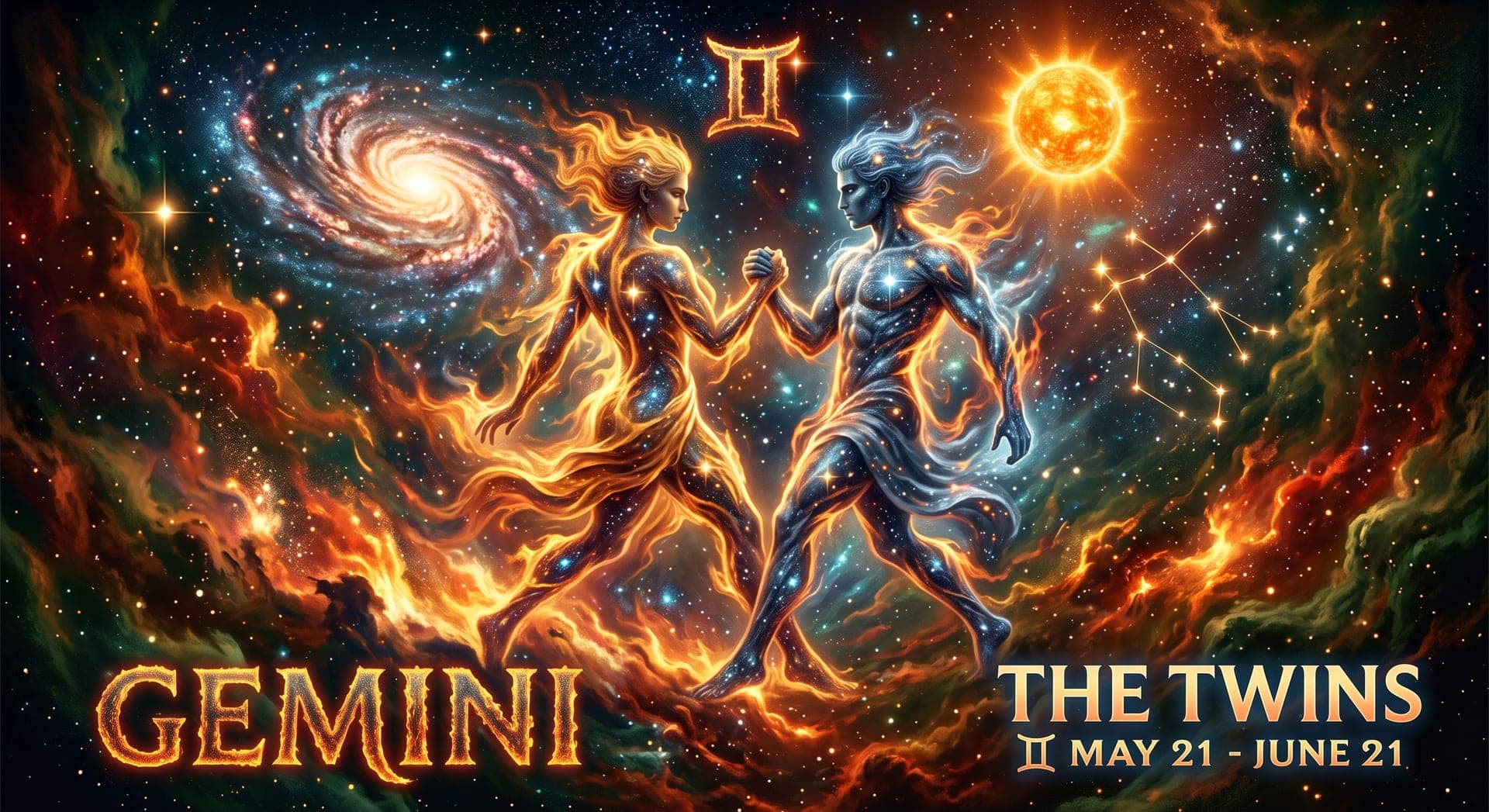
Born on June 1: Gemini ♊
Gemini, the third sign of the zodiac, spans May 21 to June 20 and is symbolized by twins, representing the sign's dual nature and its ability to see multiple sides of any situation at once. Ruled by Mercury, the planet of communication and intellect, Gemini is widely regarded as one of the most talkative, curious, and quick-witted signs of the zodiac, constantly gathering new information and ideas. As an Air sign, Gemini approaches the world primarily through thought and conversation, thriving on mental stimulation and social interaction. Its Mutable modality reflects a restless adaptability, since Gemini tends to resist routine and prefers variety, novelty, and the freedom to change course whenever something more interesting comes along. People born under this sign are often skilled communicators, natural storytellers, and quick learners who can hold their own in nearly any conversation. That same adaptability can also come across as inconsistency, and Gemini's dual nature sometimes earns an unfair reputation for being two-faced, when in reality it simply reflects genuine curiosity about every side of a story.
Personality Traits
Strengths
- Quick-witted and intelligent
- Excellent communicator
- Adaptable to new situations
- Curious and eager to learn
- Charming and sociable
Weaknesses
- Prone to inconsistency
- Can be superficial
- Easily bored
- Indecisive
- Tendency to gossip
Compatible Signs
Fun Facts
- Gemini's twin symbol traces back to the Greek myth of Castor and Pollux, twin brothers placed among the stars as the constellation Gemini.
- Mercury, Gemini's ruling planet, was the swift Roman messenger god, reflecting the sign's associations with communication and quick thinking.
- Gemini is one of only a few zodiac signs represented by human figures rather than animals or objects.
- Notable Geminis include Marilyn Monroe, Kanye West, Angelina Jolie, and John F. Kennedy.
- Gemini season overlaps with the transition from spring to summer in the Northern Hemisphere, reflecting the sign's changeable, in-between nature.
Born on June 1
- 1563
Robert Cecil
English statesman who served as chief minister to Elizabeth I and James I and helped engineer the peaceful union of the English and Scottish crowns
- 1843
Henry Faulds
Scottish physician who pioneered the use of fingerprints for identifying criminals
- 1878
John Masefield
English poet and novelist who served as Poet Laureate and wrote 'Sea-Fever'
- 1907
Frank Whittle
English Royal Air Force engineer who invented and patented the turbojet engine
- 1926
Marilyn Monroe
American actress and cultural icon
- 1926
Andy Griffith
American actor known for "The Andy Griffith Show"
- 1937
Morgan Freeman
American actor and producer
- 1946
Brian Cox
Scottish actor known for stage work and screen roles including Logan Roy in Succession
- 1947
Jonathan Pryce
Welsh actor known for roles in Miss Saigon, Brazil, and Game of Thrones
- 1947
Ronnie Wood
English guitarist best known as a longtime member of the Rolling Stones
- 1973
Heidi Klum
German-American model and television producer
- 1974
Alanis Morissette
Canadian-American singer-songwriter
- 1981
Amy Schumer
American comedian and actress
- 1996
Tom Holland
English actor known for playing Spider-Man in the Marvel Cinematic Universe

On This Day in History
- 1533
Anne Boleyn is crowned Queen of England at Westminster Abbey, becoming King Henry VIII's second wife.
Anne Boleyn was crowned Queen of England in an elaborate ceremony at Westminster Abbey, having already secretly married King Henry VIII months earlier while his first marriage to Catherine of Aragon remained legally contested. Her coronation followed the English church's break from Rome, which Henry pursued specifically to secure an annulment allowing this marriage. Anne would give birth to the future Elizabeth I later that year, though she herself was executed just three years later on fabricated charges.
- 1533
Anne Boleyn is crowned Queen of England at Westminster Abbey, following her marriage to King Henry VIII.
Henry VIII had broken with the Roman Catholic Church and annulled his marriage to Catherine of Aragon in order to marry Anne, setting off the English Reformation. Her coronation was a lavish affair intended to cement her status, but she failed to produce the male heir Henry desperately wanted. Within three years she was arrested, tried, and executed on charges of treason and adultery that historians now regard as fabricated.
- 1648
Parliamentary forces defeat Royalist troops at the Battle of Maidstone during the Second English Civil War.
Parliamentary forces under Sir Thomas Fairfax decisively defeated a Royalist uprising at the Battle of Maidstone in Kent, crushing a significant rebellion during the Second English Civil War, a renewed conflict sparked by Royalist sympathizers and disaffected former Parliamentarians seeking to restore King Charles I to full power. The victory helped consolidate Parliamentary control and paved the way toward the king's eventual trial and execution the following year.
- 1648
Parliamentarian forces defeat the Royalists at the Battle of Maidstone in Kent during the Second English Civil War.
The battle was one of the decisive engagements of the brief Royalist uprising of 1648, which sought to restore King Charles I to full power after his defeat in the First Civil War. Sir Thomas Fairfax led the New Model Army to a hard-fought victory in the streets of Maidstone, crushing the Kentish rebellion and helping secure southeast England for Parliament. The war ended the following year with Charles I's execution.
- 1670
Charles II of England and Louis XIV of France sign the secret Treaty of Dover, a clandestine alliance against the Dutch Republic.
Under the treaty's hidden terms, Charles agreed to convert to Catholicism and support France against the Dutch in exchange for subsidies that would free him from dependence on Parliament for money. Only a handful of his ministers knew its full contents. The alliance helped trigger the Third Anglo-Dutch War in 1672, though Charles never publicly announced his conversion, doing so only on his deathbed in 1685.
- 1679
Covenanter rebels defeat government forces under John Graham of Claverhouse at the Battle of Drumclog in Scotland.
The clash arose from the Crown's suppression of Presbyterian field preaching known as conventicles, held in defiance of laws imposing episcopacy on the Church of Scotland. The Covenanters' victory at Drumclog was short-lived: royal forces under the Duke of Monmouth crushed the rebellion three weeks later at the Battle of Bothwell Bridge. The episode became a touchstone of Scottish Presbyterian memory, later dramatized in Walter Scott's novel Old Mortality.
- 1792
Kentucky is admitted to the Union as the fifteenth U.S. state.
Kentucky, formed from land that had been part of Virginia, became the fifteenth U.S. state, the first admitted after the original thirteen colonies. Its statehood reflected the young nation's rapid westward expansion beyond the Appalachian Mountains, driven by settlers seeking fertile farmland along the Ohio River valley, and it set an early precedent for how new territories would be incorporated into the growing union.
- 1794
The Royal Navy defeats the French fleet at the Battle of the Glorious First of June, the first major naval clash of the French Revolutionary Wars.
Fought roughly 400 miles out in the Atlantic, the battle saw Admiral Lord Howe's fleet capture or sink several French ships of the line, though the grain convoy the French were escorting reached Brest safely. It was hailed in Britain as a great victory that boosted wartime morale, even as France claimed a strategic success for saving the convoy that helped avert famine at home.
- 1796
Tennessee is admitted to the Union as the sixteenth U.S. state.
Tennessee became the sixteenth U.S. state, carved from western North Carolina territory that had briefly existed as the short-lived, unrecognized state of Franklin. Its admission continued the pattern of westward American expansion following Kentucky's statehood four years earlier, and the state's strategic position along the Cumberland and Tennessee Rivers made it an important corridor for continued settlement further into the frontier.
- 1812
President James Madison asks Congress to declare war on the United Kingdom, leading to the War of 1812.
President James Madison sent a message to Congress detailing grievances against Britain, including the impressment of American sailors, trade restrictions, and alleged British incitement of Native American hostilities on the frontier, effectively requesting a declaration of war. Congress approved the declaration weeks later, beginning the War of 1812, a conflict that would include the burning of Washington and ultimately end in a stalemate formalized by the Treaty of Ghent.
- 1812
U.S. President James Madison asks Congress to declare war on the United Kingdom, setting in motion the War of 1812.
Madison's message cited British interference with American trade, the impressment of American sailors into the Royal Navy, and British support for Native American resistance on the frontier. Congress approved the declaration later that month. The ensuing conflict, fought largely along the Canadian border and the Atlantic coast, ended in stalemate with the 1814 Treaty of Ghent restoring the prewar status quo.
- 1813
The Royal Navy frigate HMS Shannon captures the American frigate USS Chesapeake off Boston in one of the most famous single-ship duels of the War of 1812.
The battle lasted barely fifteen minutes but was fiercely fought, with heavy casualties on both sides, including the mortal wounding of Chesapeake's captain, James Lawrence, whose dying words 'Don't give up the ship' became a rallying cry for the U.S. Navy. Shannon's crew boarded and seized the American vessel, which was towed to Halifax as a prize, marking a rare British single-ship triumph in the war.
- 1831
British explorer James Clark Ross locates the North Magnetic Pole on the Boothia Peninsula in the Canadian Arctic.
Ross made the discovery while serving on an expedition led by his uncle, Sir John Ross, aboard the ship Victory. Using a dip needle to confirm the magnetic field pointed straight down, he became the first person to pinpoint the pole's location, a landmark achievement in the study of terrestrial magnetism. Ross later led further Antarctic and Arctic expeditions that mapped large stretches of previously unknown polar coastline.
- 1879
Napoleon Eugene, the last Bonaparte dynastic heir, is killed while serving with British forces during the Anglo-Zulu War.
Napoleon Eugene, the only son of the deposed French Emperor Napoleon III and the last direct heir of the Bonaparte dynasty, was killed by Zulu warriors while serving as a volunteer officer with British forces during the Anglo-Zulu War in South Africa. His death, considered a needless loss given his sheltered upbringing and inexperience, effectively extinguished any realistic hope of a Bonapartist restoration to the French throne.
- 1916
Louis Brandeis is confirmed as the first Jewish Associate Justice of the U.S. Supreme Court.
Louis Brandeis was confirmed by the U.S. Senate as the first Jewish justice to serve on the Supreme Court, following a bruising four-month confirmation battle marked by significant antisemitic opposition from some senators and legal figures. Brandeis went on to become one of the most influential justices in American legal history, known for his progressive views on privacy rights, free speech, and economic regulation.
- 1941
The Battle of Crete ends as the island's British, Commonwealth, and Greek defenders are forced to surrender to invading German airborne forces.
The German assault, launched on 20 May 1941, was the first major airborne invasion in military history and inflicted such heavy losses on Hitler's paratroopers that he largely abandoned large-scale airborne operations afterward. British and Commonwealth troops, though ultimately outmatched, were evacuated by the Royal Navy under constant air attack, with thousands captured or killed in the campaign.
- 1943
BOAC Flight 777 is shot down over the Bay of Biscay by German Junkers Ju 88 fighters, killing all aboard including British actor Leslie Howard.
The civilian airliner was flying from Lisbon to Bristol when it was intercepted, despite Portugal's neutral status and markings identifying it as a non-combatant aircraft. Howard, star of Gone with the Wind and Pygmalion, was one of seventeen people killed. His death fueled longstanding speculation that German intelligence believed Winston Churchill might have been aboard, though this theory remains unproven.
- 1962
Adolf Eichmann, a chief architect of the Holocaust, is executed in Israel following his conviction for crimes against humanity.
Adolf Eichmann, a senior SS officer who had organized the logistics of deporting millions of Jews to Nazi extermination camps during the Holocaust, was executed by hanging in Israel following his conviction at a highly publicized 1961 trial. Eichmann had been captured by Israeli intelligence agents in Argentina in 1960, and his trial brought unprecedented public attention to the mechanics and scale of the Holocaust.
- 1980
Cable News Network, the first 24-hour cable news channel, begins broadcasting.
Ted Turner launched Cable News Network, the world's first television channel dedicated to broadcasting news 24 hours a day, a format widely mocked by skeptics at launch who doubted sustained audience interest in continuous news coverage. CNN went on to transform broadcast journalism, particularly demonstrating its impact through live coverage of major events like the 1991 Gulf War, and inspired a wave of competing cable news networks.
- 2009
Air France Flight 447 crashes into the Atlantic Ocean, killing all 228 people aboard.
Air France Flight 447, an Airbus A330 flying from Rio de Janeiro to Paris, crashed into the Atlantic Ocean after its airspeed sensors iced over during a storm, causing the autopilot to disengage and the pilots to lose control, killing all 228 people aboard. The wreckage and flight recorders were not recovered from the ocean floor until nearly two years later, providing crucial data that led to significant aviation safety reforms.