What’s Observed on May 31
Born on May 31: Gemini ♊
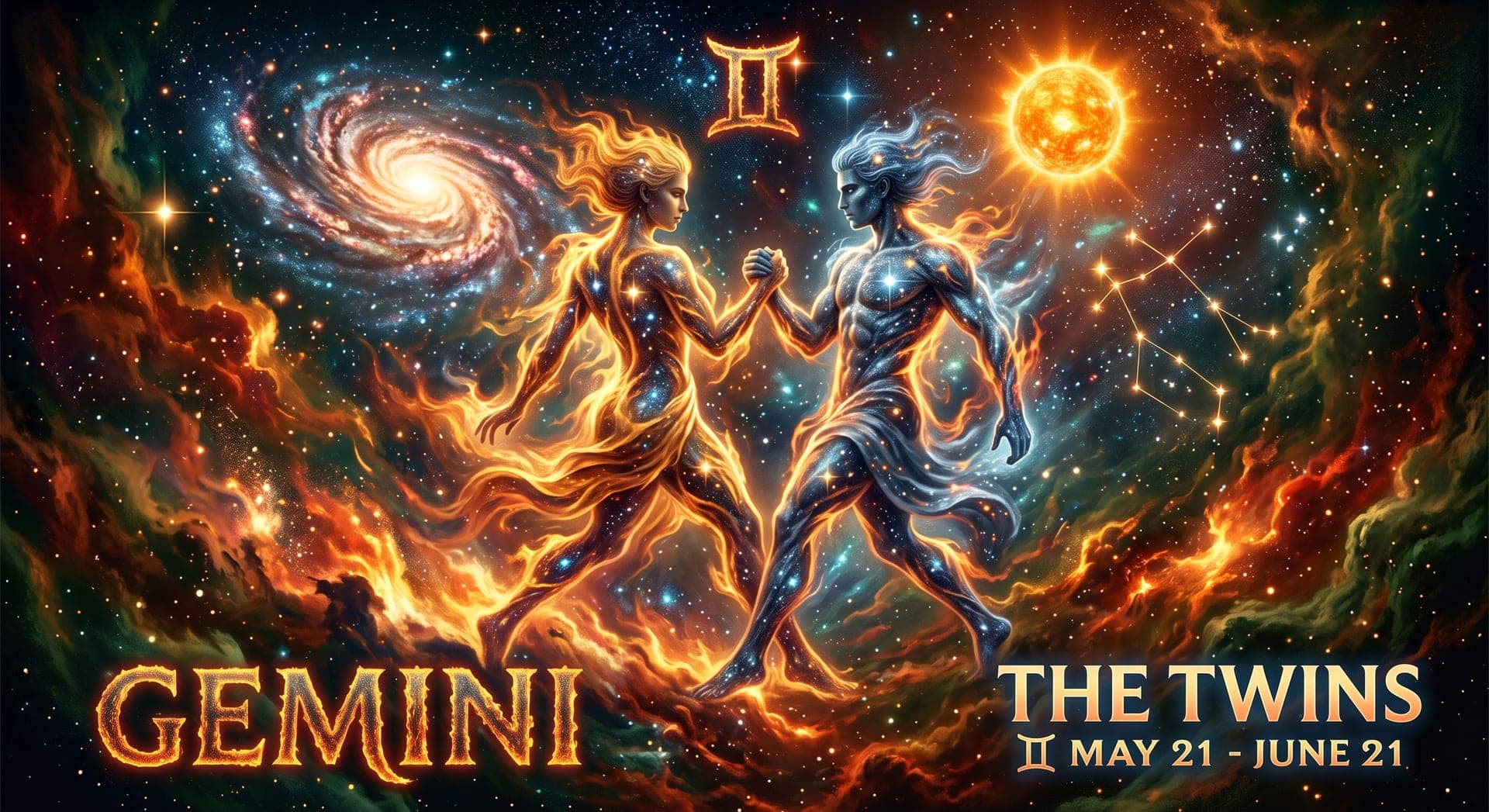
Gemini, the third sign of the zodiac, spans May 21 to June 20 and is symbolized by twins, representing the sign's dual nature and its ability to see multiple sides of any situation at once. Ruled by Mercury, the planet of communication and intellect, Gemini is widely regarded as one of the most talkative, curious, and quick-witted signs of the zodiac, constantly gathering new information and ideas. As an Air sign, Gemini approaches the world primarily through thought and conversation, thriving on mental stimulation and social interaction. Its Mutable modality reflects a restless adaptability, since Gemini tends to resist routine and prefers variety, novelty, and the freedom to change course whenever something more interesting comes along. People born under this sign are often skilled communicators, natural storytellers, and quick learners who can hold their own in nearly any conversation. That same adaptability can also come across as inconsistency, and Gemini's dual nature sometimes earns an unfair reputation for being two-faced, when in reality it simply reflects genuine curiosity about every side of a story.
Personality Traits
Strengths
- Quick-witted and intelligent
- Excellent communicator
- Adaptable to new situations
- Curious and eager to learn
- Charming and sociable
Weaknesses
- Prone to inconsistency
- Can be superficial
- Easily bored
- Indecisive
- Tendency to gossip
Compatible Signs
Fun Facts
- Gemini's twin symbol traces back to the Greek myth of Castor and Pollux, twin brothers placed among the stars as the constellation Gemini.
- Mercury, Gemini's ruling planet, was the swift Roman messenger god, reflecting the sign's associations with communication and quick thinking.
- Gemini is one of only a few zodiac signs represented by human figures rather than animals or objects.
- Notable Geminis include Marilyn Monroe, Kanye West, Angelina Jolie, and John F. Kennedy.
- Gemini season overlaps with the transition from spring to summer in the Northern Hemisphere, reflecting the sign's changeable, in-between nature.
Born on May 31
- 1443
Margaret Beaufort
English noblewoman and mother of King Henry VII, whose political maneuvering helped end the Wars of the Roses.
- 1819
Walt Whitman
American poet known for "Leaves of Grass"
- 1847
William Pirrie
Canadian-born British shipbuilder who chaired Harland & Wolff and oversaw the construction of the RMS Titanic
- 1857
Pope Pius XI
Head of the Catholic Church who established Vatican City as a sovereign state
- 1860
Walter Sickert
German-born British painter and leading figure of the Camden Town Group whose works include "The Camden Town Murder" and "Ennui"
- 1863
Francis Younghusband
British explorer and army officer who led the 1904 British expedition to Tibet and later served as president of the Royal Geographical Society
- 1875
Rosa May Billinghurst
English suffragette known as "the cripple suffragette" for campaigning from a wheeled tricycle.
- 1921
Andrew Grima
Italian-born British jewellery designer who became the foremost modern jewellery designer in 1960s and 1970s London
- 1922
Denholm Elliott
English actor known for roles including Marcus Brody in the Indiana Jones films.
- 1930
Clint Eastwood
American actor and director
- 1938
John Prescott
British politician who served as Deputy Prime Minister under Tony Blair.
- 1939
Terry Waite
English humanitarian who was held hostage in Beirut for nearly five years while negotiating for the release of other captives.
- 1943
Joe Namath
American football quarterback and Super Bowl champion
- 1948
John Bonham
English drummer for the rock band Led Zeppelin, widely regarded as one of the greatest rock drummers.
- 1965
Brooke Shields
American actress and model
- 1972
Archie Panjabi
British actress who won an Emmy Award for her role in The Good Wife.
- 1976
Colin Farrell
Irish actor
- 2001
Iga Świątek
Polish professional tennis champion
On This Day in History
- 1215
Mongol forces under Genghis Khan capture the city of Zhongdu, present-day Beijing, from the Jurchen-ruled Jin dynasty.
Mongol forces under Genghis Khan captured the heavily fortified city of Zhongdu, the capital of the Jurchen-ruled Jin dynasty and the site of present-day Beijing, after a prolonged siege that reportedly left the city's population decimated, a major early conquest in the Mongol Empire's rapid and violent expansion across Asia.
- 1578
King Henry III of France lays the first stone of the Pont Neuf, which becomes the oldest standing bridge across the Seine in Paris.
King Henry III of France laid the ceremonial foundation stone for the Pont Neuf across the Seine River in Paris, a bridge that, despite its name literally meaning "new bridge," and despite construction delays caused by the ongoing French Wars of Religion, remains the oldest standing bridge in the city today.
- 1610
A river pageant titled 'London's Love to Prince Henry' is staged on the Thames to celebrate the young prince's investiture.
The elaborate spectacle, involving decorated barges and mock sea battles, marked Henry Frederick's creation as Prince of Wales. Henry was the eldest son and heir of James I, widely admired for his intelligence and martial enthusiasm, though he would die of typhoid just two years later, leaving his younger brother Charles as heir.
- 1669
Samuel Pepys writes the final entry in his famous diary, citing failing eyesight.
Over nearly a decade, Pepys, a naval administrator, had kept a remarkably candid shorthand diary recording daily life in Restoration London, including the Great Plague and the Great Fire of London. Fearing blindness, he stopped writing regularly, though his eyesight problems proved less severe than he feared. The diary remains one of the richest surviving records of seventeenth-century English life.
- 1859
The Great Clock of Westminster, housed in what is now called Elizabeth Tower, begins operation in London.
The Great Clock of Westminster, housed in the iconic tower now officially named Elizabeth Tower and famously associated with its enormous bell nicknamed Big Ben, began keeping time over the London skyline, becoming one of the most recognizable timepieces and landmarks in the world.
- 1859
The Great Clock of the Palace of Westminster, housing Big Ben, begins keeping time.
The clock, designed by Edmund Beckett Denison with a movement built by Edward John Dent, was installed atop the newly rebuilt Houses of Parliament following the 1834 fire. Its bell, nicknamed Big Ben, first struck the hour weeks later, and the clock tower has since become one of the most recognizable symbols of London and the United Kingdom.
- 1884
Māori King Tāwhiao arrives in Plymouth, England, seeking Queen Victoria's protection for Māori land rights.
Tāwhiao led a delegation across the world to petition the British government directly after years of land confiscation in New Zealand following the New Zealand Wars. Despite the long journey, he was refused an audience with the Queen and referred back to the colonial government in New Zealand, a rebuff that underscored the limits of Māori appeals to the Crown.
- 1889
The catastrophic Johnstown Flood devastates Pennsylvania after a dam failure, killing more than 2,200 people.
A poorly maintained earthen dam above the industrial town of Johnstown, Pennsylvania, catastrophically failed after days of unusually heavy rainfall, unleashing a massive wall of water that destroyed the town below almost instantly and killed more than 2,200 people in one of the deadliest disasters in American history.
- 1902
Britain and the Boer republics sign the Treaty of Vereeniging, ending the Second Boer War.
The treaty brought the Boer republics of the Transvaal and Orange Free State under British sovereignty in exchange for eventual self-government and financial aid for reconstruction. The costly guerrilla war had drawn international criticism of British tactics, including the use of concentration camps, and the settlement set the stage for the eventual formation of the Union of South Africa.
- 1910
The South Africa Act comes into force, establishing the Union of South Africa as a British dominion.
Passed by the British Parliament, the act unified the Cape Colony, Natal, Transvaal, and Orange River Colony into a single self-governing dominion within the British Empire. While granting South Africa considerable autonomy, the constitution entrenched racial discrimination by restricting political rights largely to white voters, laying groundwork for later apartheid policy.
- 1911
The RMS Titanic is launched at the Harland and Wolff shipyard in Belfast, Northern Ireland.
The RMS Titanic, then the largest ship ever built, was ceremonially launched, still unfinished and without engines or interior fittings, from the Harland and Wolff shipyard in Belfast, drawing enormous crowds eager to witness the massive hull slide into the water for the first time.
- 1911
RMS Titanic is launched at the Harland and Wolff shipyard in Belfast.
The hull, built for the White Star Line, slid into the River Lagan before a crowd of onlookers, a routine step that left the ship an empty shell to be fitted out over the following months. The launch drew little special notice at the time, but the vessel's sinking less than a year later would make it one of the most famous ships in history.
- 1916
The Battle of Jutland, the largest naval battle of World War I, begins between the British and German fleets in the North Sea.
The Battle of Jutland began in the North Sea between the British Royal Navy's Grand Fleet and Germany's Imperial High Seas Fleet, becoming the largest and most significant naval battle of World War I, though its tactically inconclusive outcome left overall British strategic naval dominance and the blockade of Germany largely intact.
- 1916
The Battle of Jutland, the largest naval battle of the First World War, begins in the North Sea.
Britain's Grand Fleet under Admiral John Jellicoe clashed with Germany's High Seas Fleet under Admiral Reinhard Scheer off the coast of Denmark. Though the British suffered heavier ship and personnel losses, the German fleet withdrew and never again seriously challenged British control of the North Sea for the remainder of the war.
- 1935
An earthquake measuring 7.7 destroys the city of Quetta, then part of British India, killing an estimated 40,000 people.
The quake struck in the early hours, flattening much of Quetta, an important garrison city near the Afghan frontier. British and Indian troops led rescue and reconstruction efforts, and the disaster prompted the introduction of some of the earliest seismic building codes in the region.
- 1941
British forces complete the re-occupation of Iraq, ending a pro-Axis uprising.
The campaign followed a coup by Rashid Ali al-Gaylani that threatened British access to Iraqi oil and strategic air routes. British and Commonwealth troops, moving from bases in Palestine and India, defeated Iraqi forces besieging the RAF base at Habbaniya and restored a pro-British government, securing the region for the rest of the Second World War.
- 1961
South Africa formally becomes a republic, severing its remaining constitutional ties to the British monarchy.
South Africa formally became an independent republic, severing its remaining constitutional and ceremonial links to the British monarchy following a narrow whites-only referendum, a political transition that occurred even as the country continued imposing its brutal, internationally condemned system of apartheid racial segregation.
- 1977
The Trans-Alaska Pipeline System is completed, enabling the transport of crude oil across the state.
The Trans-Alaska Pipeline System was completed after three grueling years of construction across challenging Arctic permafrost and mountainous terrain, enabling the continuous transport of crude oil roughly 800 miles from Alaska's remote North Slope oil fields to the ice-free southern shipping terminal at Valdez.
- 2003
Air France retires the last of its Concorde supersonic aircraft, ending an era of commercial supersonic passenger travel.
Air France flew its final scheduled commercial Concorde flight, formally retiring the iconic supersonic aircraft from active passenger service due to rising maintenance costs and declining demand following a fatal 2000 crash, effectively ending an era of dedicated commercial supersonic passenger air travel that had begun in the 1970s.
- 2008
Sprinter Usain Bolt sets a new world record in the 100-meter dash with a time of 9.72 seconds.
Jamaican sprinter Usain Bolt set a new world record in the 100-meter dash with a time of 9.72 seconds at a Reebok Grand Prix track meet in New York City, an early, striking sign of the extraordinary sprinting dominance he would go on to display months later at that summer's Beijing Olympics.