What’s Observed on May 30
Born on May 30: Gemini ♊
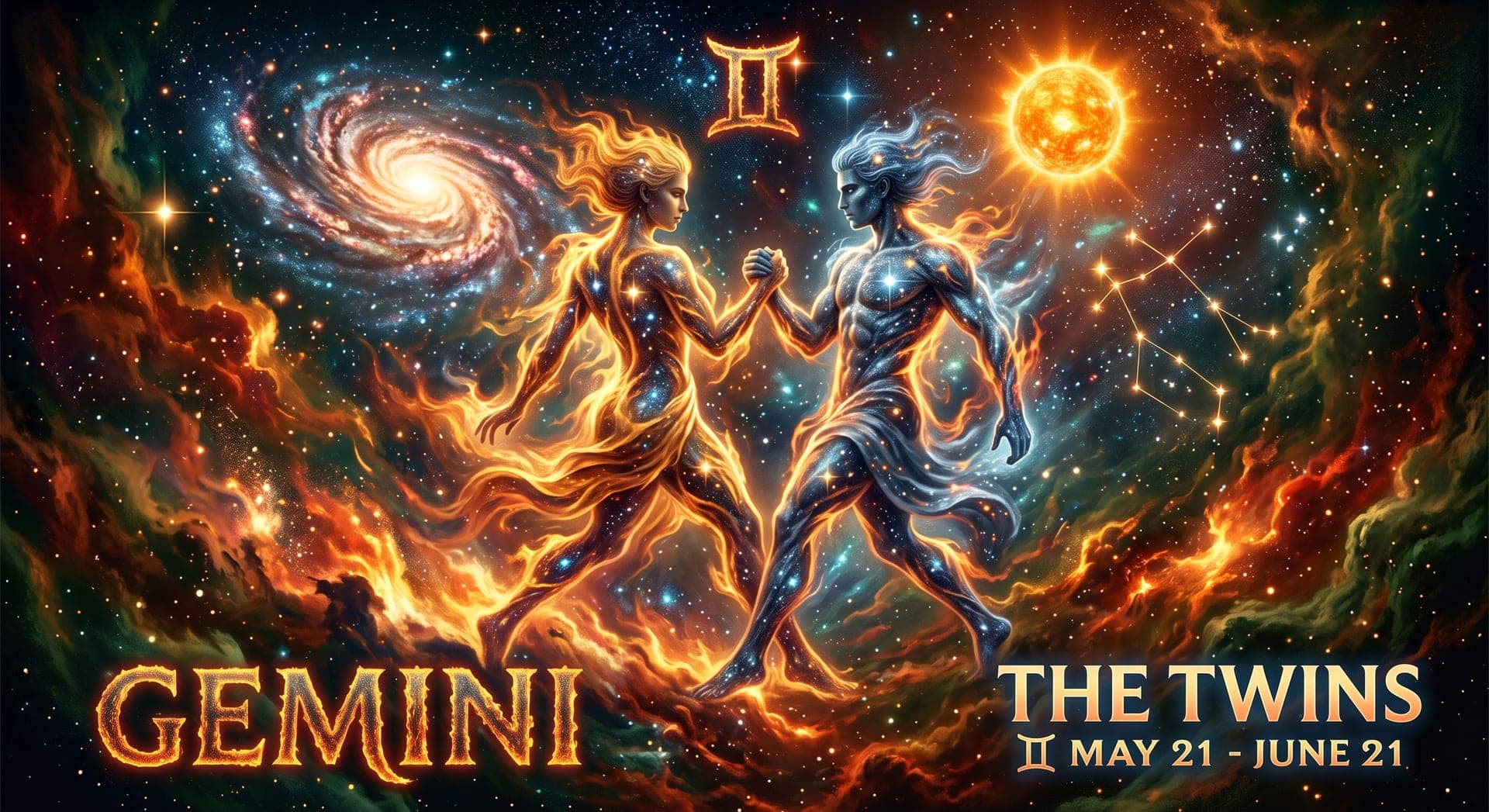
Gemini, the third sign of the zodiac, spans May 21 to June 20 and is symbolized by twins, representing the sign's dual nature and its ability to see multiple sides of any situation at once. Ruled by Mercury, the planet of communication and intellect, Gemini is widely regarded as one of the most talkative, curious, and quick-witted signs of the zodiac, constantly gathering new information and ideas. As an Air sign, Gemini approaches the world primarily through thought and conversation, thriving on mental stimulation and social interaction. Its Mutable modality reflects a restless adaptability, since Gemini tends to resist routine and prefers variety, novelty, and the freedom to change course whenever something more interesting comes along. People born under this sign are often skilled communicators, natural storytellers, and quick learners who can hold their own in nearly any conversation. That same adaptability can also come across as inconsistency, and Gemini's dual nature sometimes earns an unfair reputation for being two-faced, when in reality it simply reflects genuine curiosity about every side of a story.
Personality Traits
Strengths
- Quick-witted and intelligent
- Excellent communicator
- Adaptable to new situations
- Curious and eager to learn
- Charming and sociable
Weaknesses
- Prone to inconsistency
- Can be superficial
- Easily bored
- Indecisive
- Tendency to gossip
Compatible Signs
Fun Facts
- Gemini's twin symbol traces back to the Greek myth of Castor and Pollux, twin brothers placed among the stars as the constellation Gemini.
- Mercury, Gemini's ruling planet, was the swift Roman messenger god, reflecting the sign's associations with communication and quick thinking.
- Gemini is one of only a few zodiac signs represented by human figures rather than animals or objects.
- Notable Geminis include Marilyn Monroe, Kanye West, Angelina Jolie, and John F. Kennedy.
- Gemini season overlaps with the transition from spring to summer in the Northern Hemisphere, reflecting the sign's changeable, in-between nature.
Born on May 30
- 1757
Henry Addington
British politician who served as Prime Minister from 1801 to 1804, negotiating the Treaty of Amiens.
- 1846
Peter Carl Fabergé
Russian jeweler famous for his ornate Fabergé eggs
- 1896
Howard Hawks
American film director of Hollywood's Golden Age
- 1908
Mel Blanc
American voice actor known as "the Man of a Thousand Voices"
- 1909
Benny Goodman
American jazz clarinetist known as the "King of Swing"
- 1912
Julius Axelrod
American biochemist and Nobel Prize laureate
- 1912
Hugh Griffith
Welsh actor who won the Academy Award for Best Supporting Actor for his role in Ben-Hur.
- 1926
Christine Jorgensen
American entertainer and one of the first widely known transgender women
- 1949
Bob Willis
English cricketer who took over 300 Test wickets as a fast bowler and later captained England.
- 1961
Harry Enfield
English comedian and actor known for his sketch shows and a string of catchphrase-driven characters.
- 1963
Helen Sharman
English chemist who became the first Briton to travel to space, aboard a mission to the Mir space station in 1991.
- 1964
Wynonna Judd
American country singer
- 1971
Duncan Jones
English film director known for the science fiction films Moon and Source Code.
- 1980
Steven Gerrard
English footballer who captained Liverpool for over a decade and won 114 caps for England.
On This Day in History
- 1381
The Peasants' Revolt begins in England, a major uprising against oppressive taxation and feudal restrictions.
Rural laborers and townspeople across southeastern England rose up in the widespread Peasants' Revolt, protesting an oppressive new poll tax and lingering feudal restrictions on labor and movement, briefly overwhelming royal authority and even entering London before the rebellion was suppressed and its leaders, including Wat Tyler, were executed.
- 1381
The Peasants' Revolt begins in England.
The uprising, triggered by resentment over a poll tax and long-standing grievances following the Black Death, saw rebels led by Wat Tyler march on London from Kent and Essex. The revolt culminated in a dramatic confrontation with the young King Richard II and, though ultimately crushed, marked a significant challenge to the medieval social order.
- 1431
Joan of Arc is burned at the stake in Rouen, France, after being convicted of heresy.
Joan of Arc, then just nineteen years old, was burned at the stake in the marketplace of Rouen after being convicted of heresy by an English-backed ecclesiastical court, a judgment later formally annulled by the Catholic Church, which eventually canonized her a saint nearly five centuries afterward.
- 1536
King Henry VIII marries his third wife, Jane Seymour, just days after the execution of Anne Boleyn.
King Henry VIII married his third wife, the quiet and demure Jane Seymour, just eleven days after the execution of Anne Boleyn, and Seymour would go on to give birth to Henry's only surviving male heir, the future Edward VI, before dying from complications shortly after childbirth.
- 1536
King Henry VIII marries his third wife, Jane Seymour.
The wedding took place just eleven days after the execution of his second wife, Anne Boleyn, on charges of treason and adultery. Jane Seymour would die the following year shortly after giving birth to Henry's long-desired male heir, the future Edward VI, and was the only one of his six wives buried beside him.
- 1588
The last ship of the Spanish Armada departs Lisbon to join the fleet bound for England.
The departure completed the assembly of Philip II's invasion force of roughly 130 vessels aimed at deposing Elizabeth I. The Armada would be decisively repelled weeks later in the English Channel and scattered by storms while fleeing around the British Isles, a defeat that became a defining moment of Elizabethan national pride.
- 1642
The English Parliament retroactively annuls honours granted by King Charles I.
The measure came amid escalating conflict between Charles and Parliament in the months before the outbreak of the English Civil War. By nullifying titles and appointments the king had made, Parliament asserted its authority over royal patronage, further deepening the constitutional rift that erupted into armed conflict weeks later.
- 1814
Britain and its allies sign the First Treaty of Paris with France.
The treaty, concluded after Napoleon's abdication and exile to Elba, restored the Bourbon monarchy under Louis XVIII and returned France roughly to its 1792 borders. Britain, as one of the principal victorious powers alongside Russia, Austria, and Prussia, secured recognition of its colonial gains and helped set the stage for the wider Congress of Vienna settlement.
- 1815
The British East Indiaman Arniston is wrecked in a storm near Cape Agulhas, South Africa.
The ship was carrying wounded soldiers and civilians home to Britain after the Kandyan Wars in Ceylon when it was driven onto rocks by a gale, having overshot the Cape due to faulty charts. Of the roughly 378 people aboard, only six survived, making it one of the deadliest shipwrecks in South African maritime history.
- 1842
John Francis attempts to assassinate Queen Victoria on Constitution Hill in London.
A day earlier, Francis had aimed a pistol at the Queen's carriage but the weapon failed to fire, and he escaped in the crowd unnoticed. Forewarned, police allowed Victoria to drive out again as bait, and Francis fired again and missed before being seized. He was convicted of treason and had his death sentence commuted to transportation for life.
- 1868
The first Decoration Day, precursor to modern Memorial Day, is observed in the United States following a proclamation by veterans' leader John A. Logan.
Union veterans' organization leader General John A. Logan issued a formal proclamation establishing Decoration Day, the direct precursor to the modern Memorial Day, calling on Americans nationwide to decorate the graves of soldiers who had died during the recently concluded Civil War with flowers and flags.
- 1911
Ray Harroun wins the inaugural Indianapolis 500 automobile race.
Race car driver Ray Harroun won the very first Indianapolis 500 automobile race, driving a car equipped with an early rearview mirror, a then-novel innovation he devised specifically to spot competitors behind him in place of the customary riding relief mechanic other drivers carried.
- 1914
The Cunard ocean liner RMS Aquitania departs on her maiden voyage from Liverpool to New York.
Built on the Clyde in Scotland, the four-funneled liner was the largest ship afloat at the time of her launch and became known as 'the Ship Beautiful' for her opulent interiors. She went on to serve in both World Wars as a troopship and hospital ship and had one of the longest careers of any twentieth-century ocean liner.
- 1922
The Lincoln Memorial is formally dedicated in Washington, D.C.
The Lincoln Memorial was formally dedicated in Washington, D.C., before a large crowd that included the president's own surviving son, though the ceremony itself was conducted under explicitly racially segregated seating arrangements, a bitter irony given the memorial honored the president who signed the Emancipation Proclamation.
- 1942
The RAF launches its first thousand-bomber raid, striking Cologne, Germany.
Operation Millennium assembled over a thousand British bombers, including aircraft drawn from training units, to overwhelm German air defenses in a single massed strike. The raid caused extensive damage to the city and demonstrated RAF Bomber Command's growing capacity for large-scale strategic bombing under Air Marshal Arthur Harris.
- 1967
Nigeria's Eastern Region declares independence as the Republic of Biafra, triggering a devastating civil war.
Nigeria's predominantly Igbo Eastern Region, led by military governor Odumegwu Ojukwu, declared independence as the Republic of Biafra following ethnic violence and political tensions, triggering a brutal three-year civil war marked by a devastating humanitarian famine before the secessionist state was ultimately militarily defeated and reabsorbed.
- 1972
The trial of the Angry Brigade, a British anarchist group accused of a bombing campaign, begins in London.
Eight defendants faced charges over a series of bomb attacks targeting government buildings, embassies, and the homes of politicians and businessmen between 1970 and 1971. The lengthy Old Bailey trial, one of the longest in British criminal history at the time, ended with four defendants convicted and jailed.
- 1989
Chinese student demonstrators unveil the "Goddess of Democracy" statue in Tiananmen Square, days before the square's violent clearing.
Student demonstrators occupying Beijing's Tiananmen Square unveiled a large plaster statue called the "Goddess of Democracy," deliberately modeled in part on the Statue of Liberty, just days before Chinese government authorities violently and forcibly cleared the square of protesters in a bloody military crackdown.
- 2020
SpaceX's Crew Dragon Demo-2 mission launches astronauts from Kennedy Space Center, resuming crewed spaceflight from American soil for the first time since 2011.
SpaceX's Crew Dragon Demo-2 mission launched two NASA astronauts from Kennedy Space Center aboard a Falcon 9 rocket, marking the first crewed orbital spaceflight to launch from American soil since the retirement of NASA's Space Shuttle program nearly a decade earlier in 2011.
- 2024
Donald Trump is convicted on 34 felony counts of falsifying business records, becoming the first former U.S. president found guilty in a criminal trial.
A New York jury unanimously convicted former President Donald Trump on all 34 felony counts of falsifying business records related to a hush money payment made during his 2016 presidential campaign, making him the first former or sitting U.S. president ever found guilty of a crime in a criminal trial.