
What’s Observed on June 25
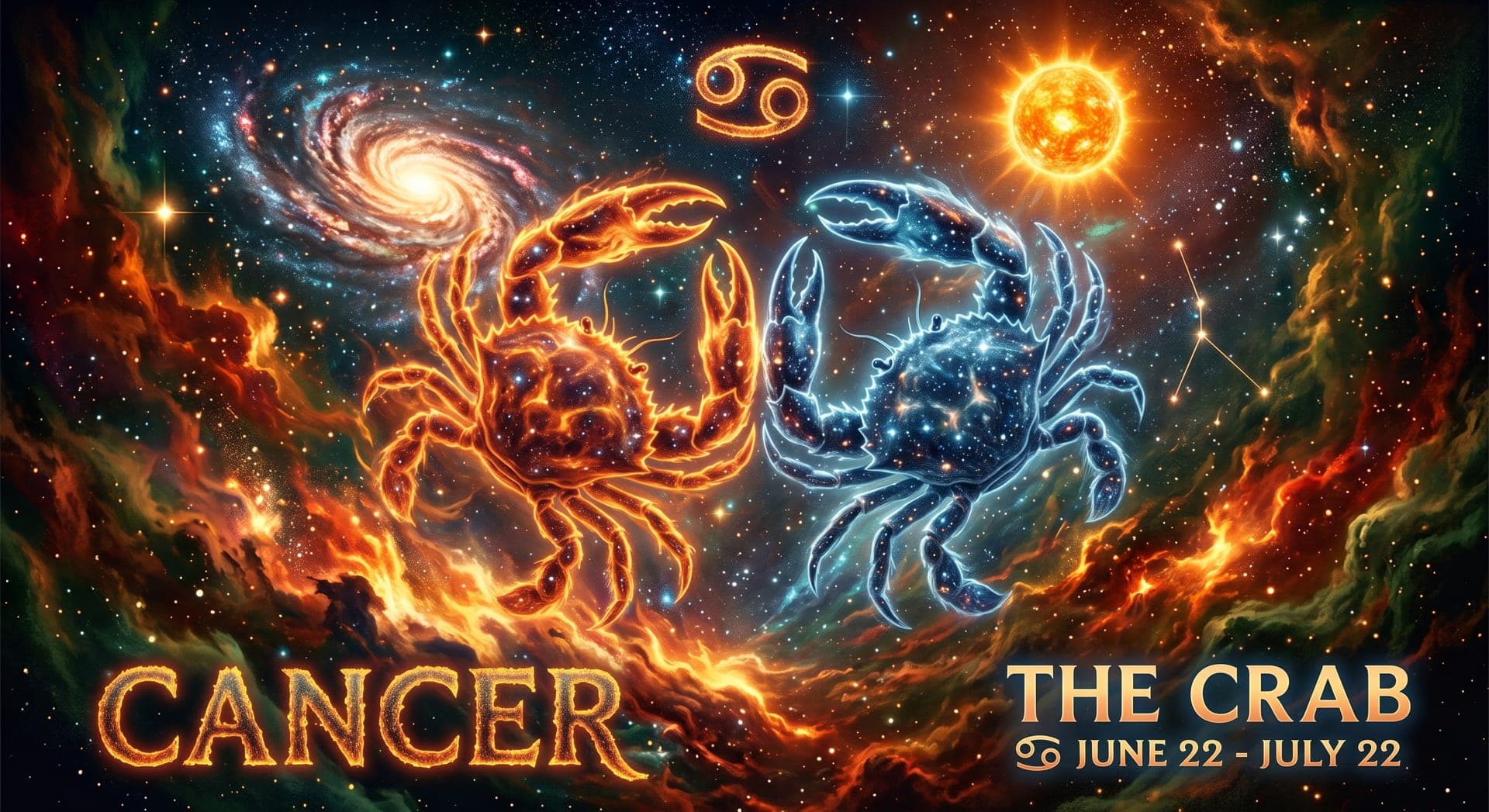
Born on June 25: Cancer ♋
Cancer, the fourth sign of the zodiac, spans June 21 to July 22 and is symbolized by the crab, an animal known for carrying a protective shell while remaining soft and vulnerable underneath. Ruled by the Moon, the celestial body long associated with emotion, intuition, and the subconscious, Cancer is widely regarded as one of the most nurturing and emotionally attuned signs of the zodiac. As a Water sign, Cancer navigates the world through deep feeling, often forming strong emotional bonds and an acute sensitivity to the moods of others. Its Cardinal modality places it at the start of summer, beginning right at the June solstice, reflecting an instinct to initiate and create, especially around home and family. People born under this sign tend to be deeply loyal, protective of loved ones, and drawn to creating a comfortable, secure home environment. Cancer's emotional depth is a genuine strength, but it can also make the sign prone to moodiness or withdrawal when hurt, retreating like a crab into its shell until it feels safe enough to re-emerge.
Personality Traits
Strengths
- Deeply caring and nurturing
- Highly intuitive
- Fiercely loyal and protective
- Strong sense of family and tradition
- Emotionally perceptive
Weaknesses
- Prone to moodiness
- Overly sensitive to criticism
- Can be clingy
- Tends to hold grudges
- Retreats when hurt
Compatible Signs
Fun Facts
- Cancer's crab symbol comes from Greek mythology, where the goddess Hera placed a crab that had fought Hercules among the stars.
- Cancer is ruled by the Moon, the only zodiac sign ruled by a celestial body other than a planet.
- As a Cardinal sign, Cancer initiates summer, beginning at the June solstice, the longest day of the year in the Northern Hemisphere.
- Notable Cancers include Princess Diana, Tom Hanks, Ariana Grande, and Nelson Mandela.
- The crab's hard shell and soft interior are often used as a metaphor for Cancer's protective exterior guarding a deeply sensitive emotional core.
Born on June 25
- 1799
David Douglas
Scottish botanist and explorer who introduced numerous North American plant species to Britain, including the tree that bears his name, the Douglas fir.
- 1852
Antoni Gaudí
Spanish architect known for the Sagrada Família
- 1900
Louis Mountbatten
English admiral and statesman who served as the last Viceroy of India overseeing independence and partition, and later as Chief of the UK Defence Staff.
- 1903
George Orwell
British novelist and essayist best known for the dystopian novel "Nineteen Eighty-Four" and the allegorical novella "Animal Farm"
- 1932
Peter Blake
English pop artist who co-created the iconic cover art for the Beatles' album Sgt. Pepper's Lonely Hearts Club Band.
- 1943
Carly Simon
American singer-songwriter
- 1946
Ian McDonald
English multi-instrumentalist who co-founded both King Crimson and Foreigner, playing a key role in shaping progressive and arena rock.
- 1954
Sonia Sotomayor
Associate Justice of the U.S. Supreme Court
- 1956
Anthony Bourdain
American chef and travel documentarian
- 1961
Ricky Gervais
English comedian, writer and actor who co-created the influential mockumentary sitcom The Office.
- 1963
George Michael
English singer-songwriter who found global fame with the duo Wham! before becoming one of the best-selling solo artists of his era.
- 1971
Neil Lennon
Northern Irish footballer and manager who won trophies as a midfielder and later as manager of Celtic.

On This Day in History
- 1658
A Spanish attempt to retake Jamaica from English forces was defeated at the Battle of Rio Nuevo.
Three years after England seized Jamaica from Spain, a Spanish expeditionary force landed on the island's north coast hoping to reclaim it, building a fort at Rio Nuevo. English troops besieged and overran the position, decisively crushing the last major Spanish attempt to retake the island and securing English control of Jamaica for the remainder of the colonial era.
- 1678
Elena Cornaro Piscopia becomes the first woman awarded a doctoral degree, earning her doctorate in philosophy from the University of Padua.
Venetian scholar Elena Cornaro Piscopia became the first woman in recorded history awarded a doctoral degree, earning her doctorate in philosophy from the University of Padua after church authorities initially blocked her from pursuing a theology degree specifically because of her gender, a landmark moment for women's access to higher education.
- 1786
Russian navigator Gavriil Pribylov discovered St. George Island in the Bering Sea's Pribilof Islands.
Pribylov, sailing in search of the fur seal breeding grounds that Russian traders had heard about from Aleut hunters, located the previously uncharted island and named it after his ship, the St. George. The Pribilof Islands became a major centre of the fur seal trade, and their discovery opened a new chapter of Russian commercial expansion into the North Pacific.
- 1788
Virginia becomes the tenth state to ratify the U.S. Constitution.
Virginia became the tenth state to ratify the United States Constitution, doing so by a narrow margin after intense debate led by prominent figures including James Madison and Patrick Henry, providing crucial political legitimacy to the new federal framework given Virginia's size and influence among the founding states.
- 1876
Lakota, Cheyenne, and Arapaho warriors led by Sitting Bull and Crazy Horse annihilate George Custer's 7th Cavalry detachment at the Battle of the Little Bighorn.
Combined Lakota, Cheyenne, and Arapaho warriors led by Sitting Bull and Crazy Horse annihilated Lieutenant Colonel George Custer and roughly 200 soldiers of the U.S. 7th Cavalry at the Battle of the Little Bighorn, one of the most significant Native American victories during the broader conflicts over westward American expansion.
- 1876
Lakota, Cheyenne and Arapaho warriors annihilated a detachment of the US 7th Cavalry at the Battle of Little Bighorn.
Led by Sitting Bull and Crazy Horse, several thousand Native American warriors overwhelmed the roughly 700-strong cavalry force commanded by George Armstrong Custer in Montana Territory. Custer and all the men under his immediate command were killed. The battle, one of the most notable Native American victories of the Indian Wars, shocked the American public and hastened the US military's campaign against the northern Plains tribes.
- 1906
Renowned architect Stanford White is shot and killed by Harry Thaw in a sensational New York murder case.
Renowned architect Stanford White, designer of numerous prominent New York buildings, was shot and killed atop Madison Square Garden by millionaire Harry Thaw, whose wife had previously been romantically involved with White, a sensational murder and subsequent trial that captivated the American public for years.
- 1938
Douglas Hyde was inaugurated as the first President of Ireland.
A scholar and champion of the Irish language who had co-founded the Gaelic League decades earlier, Hyde took office as a unifying, largely ceremonial head of state under Ireland's new 1937 constitution. His presidency reflected the country's effort to build independent institutions distinct from those of the United Kingdom, from which it had gained independence sixteen years earlier.
- 1941
Finland resumes fighting against the Soviet Union alongside Nazi Germany, beginning the Continuation War.
Finland resumed military hostilities against the Soviet Union in alliance with Nazi Germany, beginning what became known as the Continuation War, an effort by Finland to reclaim territory lost during the earlier Winter War, though the conflict ultimately ended in renewed Finnish territorial concessions.
- 1944
American and British naval forces bombarded German positions at Cherbourg to support the Allied assault on the port.
As Allied troops closed in on the strategically vital Normandy port following the D-Day landings, warships from both navies shelled German coastal defences to weaken resistance ahead of the city's capture. Cherbourg fell to American forces days later, giving the Allies their first major port in liberated France, though German demolition had left its facilities badly damaged.
- 1947
The diary of Anne Frank is published, becoming one of the most widely read personal accounts of the Holocaust.
The diary kept by Anne Frank while hiding from Nazi persecution in Amsterdam was published for the first time, based on her father Otto Frank's decision to share her writings after learning of her death in a concentration camp, a book that became one of the most widely read personal accounts of the Holocaust.
- 1950
North Korean forces invade South Korea, beginning the Korean War.
North Korean forces launched a surprise invasion across the 38th parallel into South Korea, beginning the Korean War, a conflict that drew in United Nations forces led by the United States and later Chinese troops, ultimately ending in an armistice three years later that left the peninsula divided along roughly the same border.
- 1950
North Korean forces invaded South Korea, beginning the Korean War.
Backed by the Soviet Union and China, North Korean troops crossed the 38th parallel in a surprise offensive that quickly overran much of the South. The United Nations, led by the United States, intervened to defend South Korea, drawing in millions of troops over the following three years. The war ended in 1953 with an armistice that left the peninsula divided along roughly the same border.
- 1975
Mozambique achieves independence from Portugal after a lengthy liberation war.
Mozambique achieved full independence from Portugal after a lengthy armed liberation struggle led by the Mozambique Liberation Front, becoming one of several Portuguese African colonies to gain sovereignty following the collapse of Portugal's authoritarian government the previous year in the Carnation Revolution. The new nation soon descended into a prolonged and devastating civil war.
- 1975
Mozambique achieved independence from Portugal after a decade-long war of liberation.
The Mozambique Liberation Front, or FRELIMO, took power as the country's first government following the collapse of Portugal's colonial empire in Africa after the 1974 Carnation Revolution. Independence was followed within two years by a devastating civil war between FRELIMO and rebel forces that lasted until the early 1990s, delaying the young nation's development for a generation.
- 1978
The rainbow flag was flown publicly for the first time, at San Francisco's Gay Freedom Day Parade.
Designed by artist Gilbert Baker at the request of activist Harvey Milk, the flag was intended to give the LGBT movement a unifying symbol of pride distinct from earlier, more negatively coded imagery. The original design had eight colours, later reduced to six for practical production reasons, and the flag went on to become one of the most widely recognised symbols of LGBT identity worldwide.
- 1991
Slovenia and Croatia declare independence from Yugoslavia, setting off the wars that led to the country's violent breakup.
Slovenia and Croatia both declared independence from the Socialist Federal Republic of Yugoslavia on the same day, triggering the violent breakup of the multi-ethnic federation and setting off a series of brutal wars across the Balkans that continued through much of the following decade.
- 1991
Slovenia and Croatia declared independence from Yugoslavia, triggering the country's violent breakup.
The declarations prompted the Yugoslav federal army to intervene, beginning the brief Ten-Day War in Slovenia and setting the stage for the far longer and bloodier conflict in Croatia. The events marked the start of the wars of Yugoslav dissolution, which would ultimately splinter the country into several independent states over the following decade.
- 1993
Kim Campbell is sworn in as Canada's first female prime minister.
Kim Campbell was sworn in as Canada's first female prime minister, succeeding Brian Mulroney within the governing Progressive Conservative Party, though her tenure proved brief, lasting only a few months before her party suffered a historic electoral defeat later that year.
- 1993
Kim Campbell was sworn in as Canada's first female Prime Minister.
Campbell succeeded Brian Mulroney as leader of the Progressive Conservative Party and became prime minister without a general election, taking office through a party leadership contest. Her tenure was brief, lasting only a few months before her party suffered a historic defeat in that autumn's federal election, but she remains Canada's only woman to have held the office.