What’s Observed on June 16
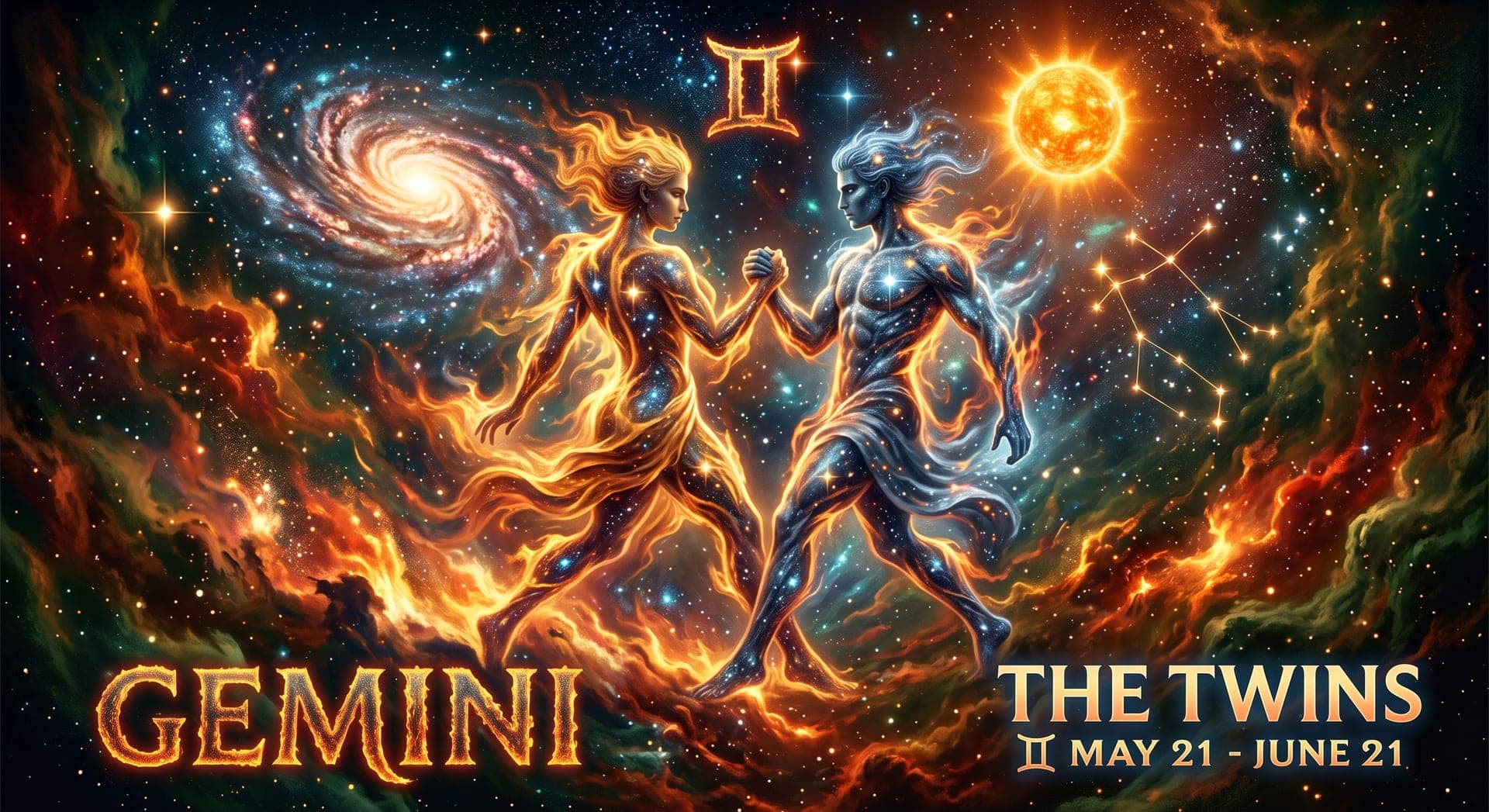
Born on June 16: Gemini ♊
Gemini, the third sign of the zodiac, spans May 21 to June 20 and is symbolized by twins, representing the sign's dual nature and its ability to see multiple sides of any situation at once. Ruled by Mercury, the planet of communication and intellect, Gemini is widely regarded as one of the most talkative, curious, and quick-witted signs of the zodiac, constantly gathering new information and ideas. As an Air sign, Gemini approaches the world primarily through thought and conversation, thriving on mental stimulation and social interaction. Its Mutable modality reflects a restless adaptability, since Gemini tends to resist routine and prefers variety, novelty, and the freedom to change course whenever something more interesting comes along. People born under this sign are often skilled communicators, natural storytellers, and quick learners who can hold their own in nearly any conversation. That same adaptability can also come across as inconsistency, and Gemini's dual nature sometimes earns an unfair reputation for being two-faced, when in reality it simply reflects genuine curiosity about every side of a story.
Personality Traits
Strengths
- Quick-witted and intelligent
- Excellent communicator
- Adaptable to new situations
- Curious and eager to learn
- Charming and sociable
Weaknesses
- Prone to inconsistency
- Can be superficial
- Easily bored
- Indecisive
- Tendency to gossip
Compatible Signs
Fun Facts
- Gemini's twin symbol traces back to the Greek myth of Castor and Pollux, twin brothers placed among the stars as the constellation Gemini.
- Mercury, Gemini's ruling planet, was the swift Roman messenger god, reflecting the sign's associations with communication and quick thinking.
- Gemini is one of only a few zodiac signs represented by human figures rather than animals or objects.
- Notable Geminis include Marilyn Monroe, Kanye West, Angelina Jolie, and John F. Kennedy.
- Gemini season overlaps with the transition from spring to summer in the Northern Hemisphere, reflecting the sign's changeable, in-between nature.
Born on June 16
- 1723
Adam Smith
Scottish philosopher and economist whose work The Wealth of Nations laid the foundations of modern economic theory.
- 1821
Old Tom Morris
Scottish golfer and course designer regarded as one of the founding figures of modern golf, a four-time winner of the Open Championship.
- 1890
Stan Laurel
English comic actor who formed one half of the legendary comedy duo Laurel and Hardy.
- 1902
Barbara McClintock
American geneticist and Nobel Prize laureate
- 1912
Enoch Powell
English classicist and politician, a controversial Conservative MP best remembered for his inflammatory 1968 speech opposing mass immigration.
- 1917
Katharine Graham
American publisher who led The Washington Post
- 1917
Irving Penn
American fashion and portrait photographer
- 1940
Carole Ann Ford
English actress best known for playing Susan Foreman, the first companion of Doctor Who, in the original 1963 series.
- 1946
Noddy Holder
English singer and guitarist, frontman of the glam rock band Slade, known for co-writing the perennial Christmas hit "Merry Xmas Everybody."
- 1946
Neil MacGregor
Scottish art historian and museum director who led the National Gallery and the British Museum, celebrated for the BBC series A History of the World in 100 Objects.
- 1970
Phil Mickelson
American professional golfer
- 1971
Tupac Shakur
American rapper and influential hip-hop artist

On This Day in History
- 632
Yazdegerd III ascends the throne as the final ruler of the Sasanian Persian Empire.
Yazdegerd III ascended the throne as the final ruler of the once-mighty Sasanian Persian Empire, inheriting a fractured and weakened kingdom that would collapse entirely within his lifetime under the rapid Arab Muslim conquests, ending centuries of Persian imperial rule and reshaping the religious and political landscape of the Middle East.
- 1487
Henry VII's forces defeat Yorkist rebels at the Battle of Stoke Field, generally regarded as the last battle of the Wars of the Roses.
King Henry VII's royal forces decisively crushed a Yorkist rebel army supporting a pretender to the throne at the Battle of Stoke Field, a victory generally regarded by historians as the final military engagement of England's decades-long dynastic conflict known as the Wars of the Roses, securing Tudor rule.
- 1487
Henry VII's forces defeat a Yorkist rebellion at the Battle of Stoke Field, ending the last serious military challenge to his throne.
The rebels fought in the name of Lambert Simnel, a boy pretender presented as the Earl of Warwick, backed by Yorkist nobles and Irish and German mercenary troops. Henry's victory near Stoke-on-Trent is often considered the true final battle of the Wars of the Roses, securing the Tudor dynasty's hold on the English crown for generations to come.
- 1745
New England colonial militia capture the French Fortress of Louisbourg during the War of the Austrian Succession.
A combined force of New England colonial militia, with British naval support, captured the powerful French fortress of Louisbourg on Cape Breton Island after a lengthy siege during the War of the Austrian Succession, a significant colonial military achievement later controversially returned to France in a subsequent peace treaty.
- 1755
French forces surrender Fort Beauséjour to the British during the French and Indian War.
Besieged by a British and colonial American force under Robert Monckton, the fort in present-day New Brunswick fell after less than two weeks, opening the way for British control of the Isthmus of Chignecto. The victory was quickly followed by the forced deportation of thousands of Acadian settlers from the region, a defining and tragic episode of the conflict.
- 1779
Spain declares war on Britain and begins the Great Siege of Gibraltar.
Spain formally declared war on Britain and began the Great Siege of Gibraltar, a grueling nearly four-year blockade and bombardment aimed at reclaiming the strategically vital territory, ultimately ending in failure as British defenders successfully held the fortress despite enormous hardship and repeated assaults.
- 1779
Spain declares war on Britain and lays siege to the British fortress of Gibraltar, beginning the Great Siege.
Coordinated with France in support of American independence, Spanish and later French forces attempted to blockade and bombard Gibraltar into submission for nearly four years. Despite severe shortages, the garrison under General George Eliott held out, and the siege's failure preserved British control of the strategic Mediterranean outpost, which Britain has held ever since.
- 1795
A British fleet under Vice-Admiral William Cornwallis fights off a much larger French force in an action known as Cornwallis's Retreat.
Cornwallis's squadron of five ships of the line encountered a French fleet more than twice its size off the coast of Brittany. Through skillful maneuvering and a determined rearguard action, Cornwallis extracted his entire force without losing a ship, an outcome celebrated in Britain as a masterclass in naval seamanship during the French Revolutionary Wars.
- 1815
French and Prussian forces clash at the battles of Ligny and Quatre Bras, immediate preludes to the decisive Battle of Waterloo two days later.
French forces under Napoleon clashed with Prussian and Anglo-allied armies at the closely fought battles of Ligny and Quatre Bras in present-day Belgium, tactical engagements that set the stage for the climactic and decisive Battle of Waterloo fought just two days later, which finally ended Napoleon's rule.
- 1815
Anglo-allied forces under the Duke of Wellington clash with Marshal Ney's French troops at the Battle of Quatre Bras.
Fought two days before Waterloo, the battle was part of the opening moves of the Waterloo campaign, as Napoleon sought to prevent Wellington's army from joining Prussian forces under Blücher. Though the engagement ended inconclusively, it delayed the French advance long enough for Wellington to withdraw in good order and take up his eventual position at Waterloo.
- 1824
A London meeting leads to the founding of what becomes the Royal Society for the Prevention of Cruelty to Animals.
A meeting held at Old Slaughter's Coffee House in London led to the founding of what became the Royal Society for the Prevention of Cruelty to Animals, the world's first animal welfare organization, established to promote kindness toward animals and combat widespread cruelty in Victorian-era Britain.
- 1824
A meeting at Old Slaughter's coffee house in London leads to the founding of what becomes the Royal Society for the Prevention of Cruelty to Animals.
A group of reformers, including William Wilberforce and Richard Martin, gathered to establish the Society for the Prevention of Cruelty to Animals, the world's first animal welfare organization. Queen Victoria granted it royal status in 1840, and the RSPCA went on to inspire similar animal protection societies across Britain and around the world.
- 1836
The London Working Men's Association is formed, giving rise to the Chartist movement.
Founded by William Lovett and other radical artisans, the association drafted the People's Charter the following year, demanding universal male suffrage, secret ballots, and other democratic reforms. Chartism grew into Britain's first mass working-class political movement, and though its immediate demands were rejected by Parliament, most were eventually enacted over the following century.
- 1871
The Universities Tests Act allows students to enter Oxford, Cambridge, and Durham without swearing religious oaths.
Previously, non-Anglicans, including Catholics, Nonconformists, and Jews, were largely barred from taking degrees or holding fellowships at England's ancient universities due to religious tests tied to the Church of England. The Act removed most of these restrictions, opening higher academic life to a far broader range of British society and marking a significant step in religious equality.
- 1883
A crush at the Victoria Hall theatre in Sunderland kills 183 children.
During a variety show for children, an announcement of free prizes caused a stampede for the stairs, where a door had been bolted nearly shut, leaving only a narrow gap. Children were crushed to death trying to get through. The tragedy, one of the worst disasters ever to befall British children, led directly to new laws requiring outward-opening doors in public venues.
- 1884
The Switchback Railway, the first purpose-built roller coaster in America, opens at Coney Island.
The Switchback Railway, widely considered America's first purpose-built roller coaster, opened at Coney Island in Brooklyn, a relatively slow and gentle ride by modern standards that nonetheless proved immediately popular and launched the amusement park industry's enduring fascination with thrill rides.
- 1903
The Ford Motor Company is officially incorporated in Michigan.
Henry Ford and a group of investors formally incorporated the Ford Motor Company in Michigan with modest initial capital, a venture that within just a few years would revolutionize industrial manufacturing through the moving assembly line and transform automobiles from luxury items into mass-market consumer products.
- 1948
Communist guerrillas kill three British plantation managers in Malaya, prompting the colonial government to declare a state of emergency.
The killings in Perak marked the opening act of the Malayan Emergency, a twelve-year insurgency waged by the Malayan Communist Party against British colonial rule. The conflict, fought largely through jungle counter-insurgency tactics, became a formative testing ground for British military strategy and shaped Malaya's eventual path to independence in 1957.
- 1963
Soviet cosmonaut Valentina Tereshkova becomes the first woman in space, launching aboard Vostok 6.
Soviet cosmonaut Valentina Tereshkova launched aboard Vostok 6, becoming the first woman in space and completing 48 orbits of Earth over nearly three days, a milestone achievement for the Soviet space program that remained unmatched by any other woman flying solo for decades afterward.
- 2016
Shanghai Disneyland opens as the Walt Disney Company's first theme park on mainland China.
Shanghai Disneyland opened to the public as the Walt Disney Company's first theme park on mainland China, a massive joint venture with Chinese state-owned partners representing Disney's strategic bet on the country's rapidly growing middle class and its ambitions to expand its global entertainment footprint into the world's most populous market.