
What’s Observed on May 25
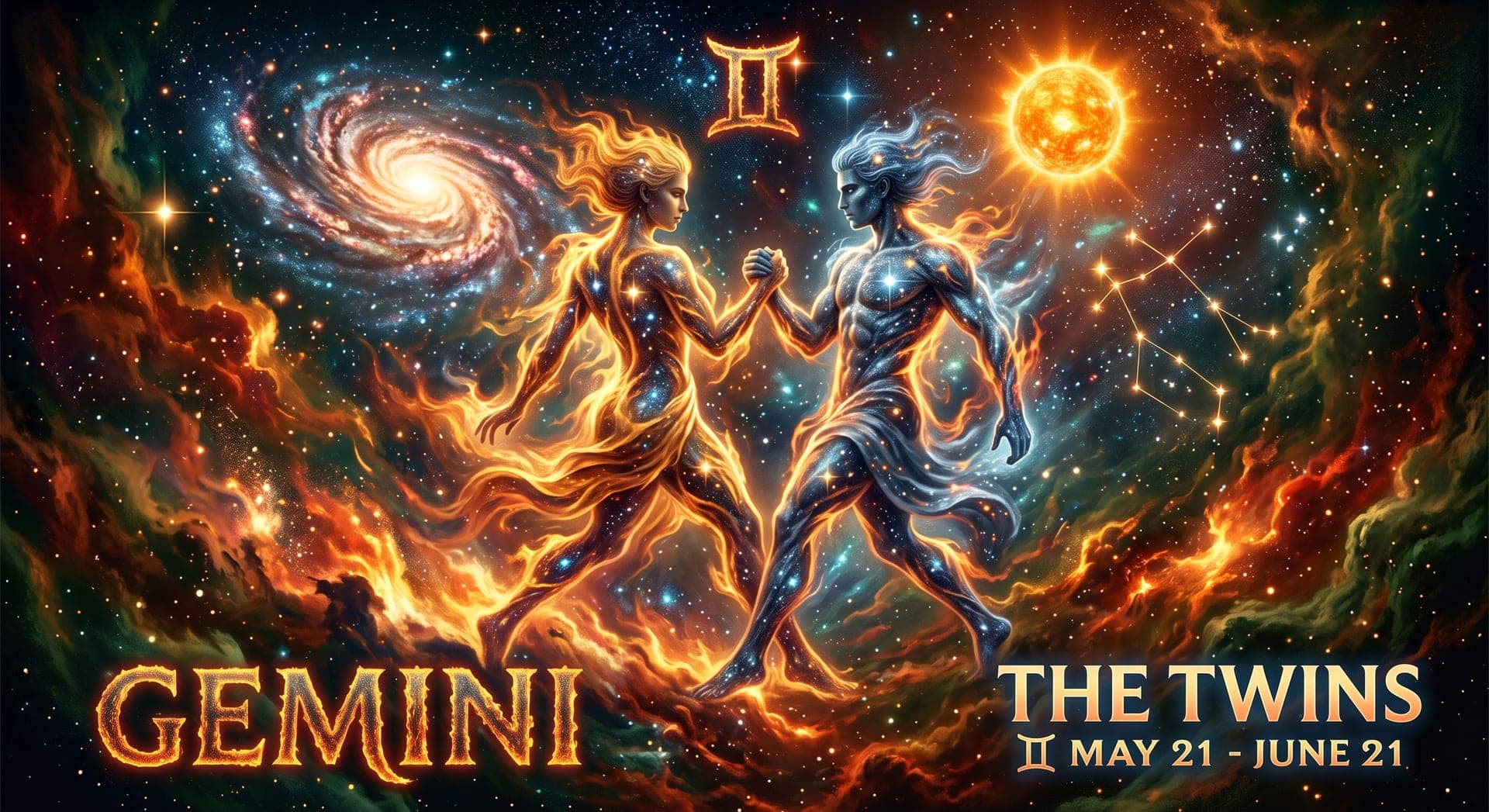
Born on May 25: Gemini ♊
Gemini, the third sign of the zodiac, spans May 21 to June 20 and is symbolized by twins, representing the sign's dual nature and its ability to see multiple sides of any situation at once. Ruled by Mercury, the planet of communication and intellect, Gemini is widely regarded as one of the most talkative, curious, and quick-witted signs of the zodiac, constantly gathering new information and ideas. As an Air sign, Gemini approaches the world primarily through thought and conversation, thriving on mental stimulation and social interaction. Its Mutable modality reflects a restless adaptability, since Gemini tends to resist routine and prefers variety, novelty, and the freedom to change course whenever something more interesting comes along. People born under this sign are often skilled communicators, natural storytellers, and quick learners who can hold their own in nearly any conversation. That same adaptability can also come across as inconsistency, and Gemini's dual nature sometimes earns an unfair reputation for being two-faced, when in reality it simply reflects genuine curiosity about every side of a story.
Personality Traits
Strengths
- Quick-witted and intelligent
- Excellent communicator
- Adaptable to new situations
- Curious and eager to learn
- Charming and sociable
Weaknesses
- Prone to inconsistency
- Can be superficial
- Easily bored
- Indecisive
- Tendency to gossip
Compatible Signs
Fun Facts
- Gemini's twin symbol traces back to the Greek myth of Castor and Pollux, twin brothers placed among the stars as the constellation Gemini.
- Mercury, Gemini's ruling planet, was the swift Roman messenger god, reflecting the sign's associations with communication and quick thinking.
- Gemini is one of only a few zodiac signs represented by human figures rather than animals or objects.
- Notable Geminis include Marilyn Monroe, Kanye West, Angelina Jolie, and John F. Kennedy.
- Gemini season overlaps with the transition from spring to summer in the Northern Hemisphere, reflecting the sign's changeable, in-between nature.
Born on May 25
- 1713
John Stuart, 3rd Earl of Bute
Scottish politician who served as British Prime Minister from 1762 to 1763 and was a close advisor and tutor to the young George III.
- 1803
Ralph Waldo Emerson
American essayist and leader of the Transcendentalist movement
- 1803
Edward Bulwer-Lytton
English novelist and politician remembered for lines including "the pen is mightier than the sword" and the opening "It was a dark and stormy night."
- 1865
Pieter Zeeman
Dutch physicist and Nobel Prize laureate
- 1889
Igor Sikorsky
Russian-American aviation pioneer who founded Sikorsky Aircraft
- 1929
Beverly Sills
American opera soprano
- 1939
Ian McKellen
English actor renowned for stage Shakespeare and film roles including Gandalf in The Lord of the Rings and Magneto in X-Men.
- 1944
Frank Oz
English-born puppeteer and filmmaker who performed Yoda in Star Wars and Miss Piggy and Fozzie Bear for the Muppets.
- 1958
Paul Weller
English singer-songwriter and guitarist who fronted The Jam and the Style Council before a long solo career as the "Modfather" of British rock.
- 1963
Mike Myers
Canadian-American actor and comedian
- 1970
Robert Croft
Welsh cricketer who played as an off-spin bowler for Glamorgan and England.
- 1979
Jonny Wilkinson
English rugby union player whose drop goal won the 2003 Rugby World Cup final for England.

On This Day in History
- 1085
Christian forces under Alfonso VI of Castile recapture the city of Toledo from Moorish rule.
Christian forces under King Alfonso VI of Castile recaptured the ancient city of Toledo from centuries of Moorish rule after the local Muslim ruler agreed to surrender in exchange for guarantees of religious tolerance, a major milestone in the long Reconquista campaign to reclaim the Iberian Peninsula for Christian kingdoms.
- 1521
Holy Roman Emperor Charles V issues the Edict of Worms, formally declaring Martin Luther an outlaw and heretic.
Holy Roman Emperor Charles V issued the Edict of Worms, formally declaring reformer Martin Luther an outlaw and heretic and banning the printing, sale, or reading of his writings throughout the empire, though the decree proved largely unenforceable in practice as Protestant ideas continued spreading rapidly across sympathetic German territories.
- 1644
Ming dynasty general Wu Sangui opens the Shanhaiguan pass in the Great Wall, allowing invading Manchu forces into China and hastening the Ming dynasty's collapse.
Ming dynasty general Wu Sangui, torn between competing loyalties, allowed invading Manchu forces through the strategic Shanhaiguan pass in the Great Wall to help suppress a rival rebel army that had recently captured Beijing, a fateful decision that inadvertently opened the door to the Manchu conquest of China and the establishment of the ruling Qing dynasty.
- 1659
Richard Cromwell resigns as Lord Protector of the Commonwealth of England, Scotland and Ireland.
Richard had succeeded his father Oliver Cromwell in September 1658 but lacked the army's confidence and struggled to manage Parliament. Facing mounting pressure from military officers, he stepped down without a fight, ending the Cromwell family's rule and setting the stage for the eventual restoration of the monarchy the following year.
- 1660
Charles II lands at Dover, formally beginning the Restoration of the English monarchy.
Charles had lived in exile since his father Charles I's execution in 1649. After the Commonwealth and Protectorate collapsed following Richard Cromwell's resignation, Parliament invited him to return. His landing at Dover marked the start of a triumphant journey to London, where he reclaimed the throne and reinstated the House of Lords and the Church of England.
- 1787
The Constitutional Convention formally convenes in Philadelphia after securing a quorum of state delegates, beginning the drafting of the U.S. Constitution.
Delegates from twelve of the thirteen American states formally convened the Constitutional Convention in Philadelphia's State House after finally securing enough attendance for a quorum following weeks of delay, beginning the closed-door, secretive deliberations that produced the United States Constitution over the following four months of debate.
- 1798
British forces crush a rebel stand at the Battle of Carlow while loyalist troops carry out mass killings of suspected rebels at Carnew and Dunlavin Green.
These events occurred during the early days of the Irish Rebellion of 1798, an uprising against British rule inspired by revolutionary ideals from France and America. The defeat at Carlow and the summary killings of prisoners at Carnew and Dunlavin Green were among the harshest episodes of the government's suppression campaign, deepening Irish nationalist resentment for generations.
- 1810
Citizens of Buenos Aires force out the Spanish viceroy in the May Revolution, setting Argentina on the path toward independence.
Citizens of Buenos Aires forced out the Spanish viceroy in a largely peaceful popular uprising known as the May Revolution, establishing a local self-governing junta amid the broader upheaval caused by Napoleon's invasion of Spain, and setting Argentina firmly on the path toward full formal independence declared six years later.
- 1878
Gilbert and Sullivan's comic opera "H.M.S. Pinafore" premieres in London.
Gilbert and Sullivan's comic opera "H.M.S. Pinafore," a satirical send-up of British naval bureaucracy, class snobbery, and romantic melodrama, premiered in London to modest initial reception before becoming an enormous, enduring popular and commercial success on both sides of the Atlantic within the year.
- 1878
Gilbert and Sullivan's comic opera H.M.S. Pinafore opens at the Opera Comique in London.
The naval satire, with music by Arthur Sullivan and lyrics by W. S. Gilbert, became an enormous hit, running for 571 performances and establishing the pair as the leading force in Victorian light opera. Its huge popularity spawned numerous unauthorized productions in the United States, prompting the duo to later tour America to secure their rights.
- 1895
Oscar Wilde is convicted of gross indecency in London and sentenced to two years' hard labour.
The trial stemmed from Wilde's relationship with Lord Alfred Douglas and became one of the most sensational British court cases of the Victorian era. The conviction effectively destroyed Wilde's career and reputation; he served his sentence at Reading Gaol, an experience that inspired his later poem 'The Ballad of Reading Gaol.'
- 1914
The House of Commons passes the Third Home Rule Bill, granting Ireland self-government within the United Kingdom.
The bill aimed to establish a devolved Irish parliament after decades of nationalist campaigning. Its passage triggered furious opposition from Ulster unionists, who threatened armed resistance rather than accept rule from Dublin. Implementation was ultimately suspended with the outbreak of the First World War, and the unresolved tensions contributed to the Easter Rising two years later.
- 1940
German forces capture Boulogne-sur-Mer after British troops defending the port are overwhelmed.
British Guards battalions had held the Channel port for several days against the advancing 2nd Panzer Division, part of the wider Battle of France. Their stubborn defense, alongside similar stands at Calais, helped delay the German advance and bought crucial time for the evacuation of Allied troops from Dunkirk that began the following day.
- 1946
Transjordan becomes independent as the Hashemite Kingdom, ending Britain's League of Nations mandate.
Britain had administered Transjordan as a mandate since 1921. Under the Treaty of London signed that March, Britain ended the mandate and recognized Abdullah I as king. The territory was renamed Jordan in 1949, and its independence marked one of the earliest post-war dissolutions of Britain's Middle Eastern mandates.
- 1961
President John F. Kennedy announces the goal of landing an American on the Moon before the end of the decade.
President John F. Kennedy addressed a joint session of Congress and announced the ambitious national goal of landing an American safely on the Moon and returning him to Earth before the end of the decade, launching the Apollo program at the height of Cold War space competition with the Soviet Union.
- 1977
George Lucas's "Star Wars" premieres in U.S. theaters, launching a cultural phenomenon and one of the highest-grossing film franchises in history.
George Lucas's low-budget science fiction epic "Star Wars," initially expected by studio executives to underperform, premiered in a limited release across American theaters and quickly became an unexpected cultural and commercial phenomenon that revolutionized blockbuster filmmaking and launched one of the most successful entertainment franchises in history.
- 1979
American Airlines Flight 191 crashes shortly after takeoff from Chicago's O'Hare Airport, killing 273 people in the deadliest U.S. aviation disaster.
American Airlines Flight 191 crashed moments after takeoff from Chicago's O'Hare International Airport when an engine and its supporting pylon completely detached from the wing due to improper maintenance procedures, killing all 271 people aboard and two more on the ground in the deadliest single-aircraft aviation accident in U.S. history.
- 1982
The Royal Navy destroyer HMS Coventry is sunk by Argentine aircraft during the Falklands War.
Argentine A-4 Skyhawk jets struck the ship with bombs in the Falkland Sound, killing 19 of her crew, on the same day the supply ship Atlantic Conveyor was also hit. The loss was among the most significant suffered by British forces in the conflict, which nonetheless ended in British victory weeks later with the recapture of the islands.
- 2008
NASA's Phoenix spacecraft successfully lands in the northern polar region of Mars.
Launched in 2007, Phoenix was designed to study the climate and geology of the Martian arctic and search for evidence of past habitability. Unlike earlier rovers, it used retrorockets rather than airbags to touch down. Within days it confirmed the presence of water ice just beneath the surface, a significant discovery for understanding the planet's history.
- 2018
The European Union's General Data Protection Regulation, a sweeping data privacy law, becomes enforceable across member states.
The European Union's General Data Protection Regulation became legally enforceable across all member states, imposing sweeping new requirements on how companies collect, store, and process personal data along with steep potential fines for violations, significantly reshaping global privacy law and corporate data handling practices well beyond Europe's own borders.