What’s Observed on May 24
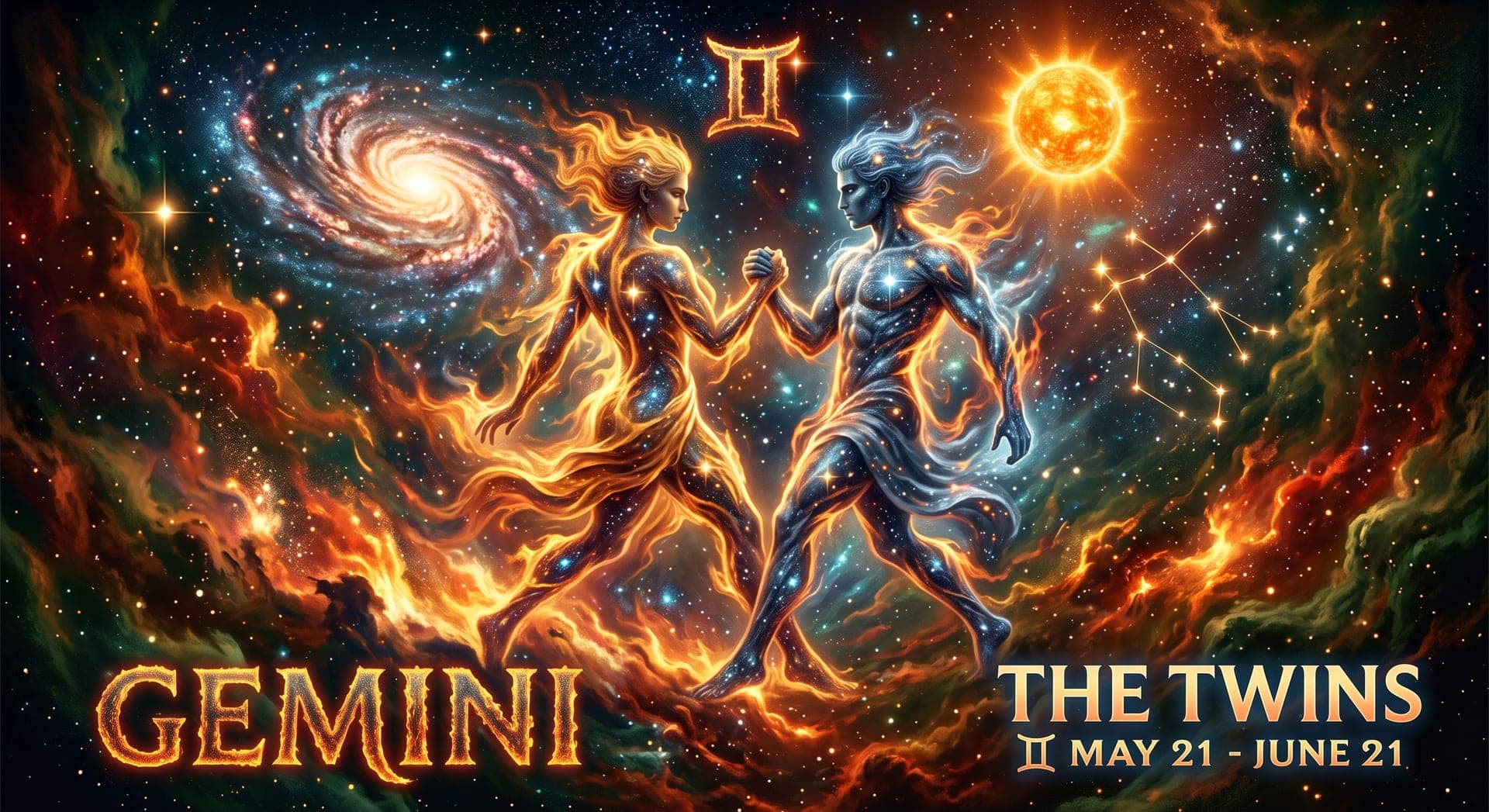
Born on May 24: Gemini ♊
Gemini, the third sign of the zodiac, spans May 21 to June 20 and is symbolized by twins, representing the sign's dual nature and its ability to see multiple sides of any situation at once. Ruled by Mercury, the planet of communication and intellect, Gemini is widely regarded as one of the most talkative, curious, and quick-witted signs of the zodiac, constantly gathering new information and ideas. As an Air sign, Gemini approaches the world primarily through thought and conversation, thriving on mental stimulation and social interaction. Its Mutable modality reflects a restless adaptability, since Gemini tends to resist routine and prefers variety, novelty, and the freedom to change course whenever something more interesting comes along. People born under this sign are often skilled communicators, natural storytellers, and quick learners who can hold their own in nearly any conversation. That same adaptability can also come across as inconsistency, and Gemini's dual nature sometimes earns an unfair reputation for being two-faced, when in reality it simply reflects genuine curiosity about every side of a story.
Personality Traits
Strengths
- Quick-witted and intelligent
- Excellent communicator
- Adaptable to new situations
- Curious and eager to learn
- Charming and sociable
Weaknesses
- Prone to inconsistency
- Can be superficial
- Easily bored
- Indecisive
- Tendency to gossip
Compatible Signs
Fun Facts
- Gemini's twin symbol traces back to the Greek myth of Castor and Pollux, twin brothers placed among the stars as the constellation Gemini.
- Mercury, Gemini's ruling planet, was the swift Roman messenger god, reflecting the sign's associations with communication and quick thinking.
- Gemini is one of only a few zodiac signs represented by human figures rather than animals or objects.
- Notable Geminis include Marilyn Monroe, Kanye West, Angelina Jolie, and John F. Kennedy.
- Gemini season overlaps with the transition from spring to summer in the Northern Hemisphere, reflecting the sign's changeable, in-between nature.
Born on May 24
- 1544
William Gilbert
English physicist and physician who pioneered the scientific study of magnetism and coined the term "electricity."
- 1819
Queen Victoria
Queen of the United Kingdom whose 63-year reign gave its name to the Victorian era and reshaped the British monarchy's public role.
- 1887
Mick Mannock
British-Irish First World War flying ace credited with 61 aerial victories, posthumously awarded the Victoria Cross
- 1905
Mikhail Sholokhov
Russian novelist and Nobel Prize laureate in Literature
- 1926
Stanley Baxter
Scottish comedian and actor celebrated for his television sketch shows and elaborate pantomime performances.
- 1938
Tommy Chong
Canadian-American comedian and actor
- 1941
Bob Dylan
American singer-songwriter and Nobel Prize laureate in Literature
- 1944
Patti LaBelle
American singer
- 1945
Priscilla Presley
American actress and businesswoman
- 1949
Jim Broadbent
English actor known for an extensive career on stage and screen, including an Academy Award-winning performance in Iris.
- 1949
Roger Deakins
English cinematographer whose credits include Fargo, No Country for Old Men, and Blade Runner 2049, earning multiple Academy Awards.
- 1960
Kristin Scott Thomas
English actress known for her roles in Four Weddings and a Funeral and The English Patient.
- 1966
Eric Cantona
French footballer
- 1969
Jacob Rees-Mogg
English politician known for senior UK government roles including Leader of the House of Commons.
- 1991
Aled Davies
Welsh Paralympic athlete who won multiple gold medals in the discus throw.
On This Day in History
- 1487
Ten-year-old pretender Lambert Simnel is crowned 'King Edward VI' in Dublin in a challenge to Henry VII's rule.
Backed by Yorkist sympathizers who claimed he was the imprisoned Earl of Warwick, a nephew of the previous Yorkist kings, Simnel's coronation in Ireland was staged to rally support against the newly established Tudor dynasty. The rebellion collapsed weeks later at the Battle of Stoke Field, and Henry VII, showing unusual mercy, spared the boy and put him to work in the royal kitchens.
- 1607
English colonists establish Jamestown, Virginia, the first permanent English settlement in North America.
Sent by the Virginia Company under a charter from King James I, roughly 100 settlers built a fortified outpost on a swampy peninsula along the James River. Despite disease, starvation, and conflict with local Powhatan peoples that nearly wiped out the colony in its early years, Jamestown survived to become the foundation of England's, and later Britain's, permanent presence in North America.
- 1626
Dutch colonial official Peter Minuit purchases the island of Manhattan from local Native Americans.
Dutch colonial official Peter Minuit is traditionally said to have purchased the island of Manhattan from local Lenape people in exchange for trade goods valued at roughly sixty guilders, a transaction whose exact terms, fairness, and even the identity of the sellers remain genuinely debated and contested by historians today.
- 1683
The Ashmolean Museum opens in Oxford, England, widely regarded as the world's first university museum.
The Ashmolean Museum opened in Oxford, England, purpose-built to house naturalist and antiquarian Elias Ashmole's substantial donated collection of curiosities, specimens, and artifacts, becoming widely recognized by historians as the world's first purpose-built public university museum, predating similar institutions elsewhere by decades.
- 1683
The Ashmolean Museum opens in Oxford, England, as the world's first university museum.
Built to house the collection of curiosities donated by antiquarian Elias Ashmole, the museum was established as part of the University of Oxford to advance the study of natural history and antiquities. It is widely regarded as the first museum in the modern sense to open its doors to the public, setting a template later followed by institutions such as the British Museum.
- 1689
The English Parliament passes the Act of Toleration, granting freedom of worship to nonconformist Protestants.
Enacted in the aftermath of the Glorious Revolution, the law allowed dissenting Protestant groups such as Baptists and Congregationalists to worship freely, provided they swore an oath of allegiance to the crown, though it still excluded Catholics and Unitarians. It marked a significant, if limited, step toward religious pluralism in England after decades of enforced conformity to the established church.
- 1738
John Wesley experiences a profound religious conversion in London, an event that helped launch the Methodist movement.
Anglican clergyman John Wesley experienced a profound personal spiritual conversion at a religious meeting on Aldersgate Street in London, an event he later described in his journal as his "heart strangely warmed," which he and his followers credited as the pivotal spark that launched the evangelical Methodist movement.
- 1738
John Wesley undergoes a profound religious conversion at a meeting in London, an event that launched the Methodist movement.
Attending a Moravian meeting on Aldersgate Street, Wesley described feeling his 'heart strangely warmed' as he gained assurance of his salvation. The experience galvanized his subsequent decades of itinerant preaching across Britain, which grew into Methodism, a movement emphasizing personal faith and social reform that eventually spread worldwide and remains commemorated annually as Aldersgate Day.
- 1798
The Irish Rebellion of 1798 begins as the United Irishmen rise up against British rule.
Inspired by the American and French Revolutions, the United Irishmen, a movement uniting Catholics and Protestants, launched a rebellion aimed at establishing an independent Irish republic. British and loyalist forces suppressed the uprising within months amid brutal fighting and reprisals, with total deaths estimated in the tens of thousands, and the rebellion's failure led directly to the 1801 Act of Union merging Ireland into the United Kingdom.
- 1844
Samuel Morse sends the first long-distance telegraph message, transmitting "What hath God wrought" between Washington and Baltimore.
Inventor Samuel Morse transmitted the first official long-distance telegraph message, the biblical phrase "What hath God wrought," from the U.S. Capitol in Washington, D.C., to a railroad depot in Baltimore, publicly demonstrating the practical viability of a communications technology that soon revolutionized long-distance information exchange worldwide.
- 1883
The Brooklyn Bridge opens to traffic in New York City after fourteen years of construction.
The Brooklyn Bridge, connecting Manhattan and Brooklyn across the East River, opened to traffic in New York City after fourteen years of difficult and dangerous construction that claimed the lives of more than two dozen workers, becoming, at the time of its completion, the longest suspension bridge span in the world.
- 1900
The United Kingdom formally annexes the Orange Free State during the Second Boer War.
British forces occupied the Boer republic's capital, Bloemfontein, the previous March, and the formal annexation, renaming the territory the Orange River Colony, marked a further step in Britain's campaign to bring the Boer republics under imperial control. The war continued for two more years of guerrilla resistance before the Boers finally surrendered in 1902.
- 1930
Aviator Amy Johnson completes the first solo flight by a woman from England to Australia.
British aviator Amy Johnson completed the first solo flight by a woman from England to Australia, flying a small secondhand biplane on a grueling nineteen-day journey covering roughly 11,000 miles through often dangerous and unfamiliar terrain, a feat that made her an instant international celebrity and pioneering figure in aviation history.
- 1930
Aviator Amy Johnson lands in Darwin, Australia, completing the first solo flight from England to Australia by a woman.
Flying a secondhand de Havilland Gipsy Moth biplane she nicknamed 'Jason,' Johnson covered roughly 11,000 miles in just under twenty days, battling sandstorms, engine trouble, and forced landings along the route. The flight made her an instant celebrity in Britain and established her as one of the era's most famous aviators, inspiring a generation of women in aviation.
- 1941
The German battleship Bismarck sinks the British battlecruiser HMS Hood in the North Atlantic, killing all but three of its crew.
The German battleship Bismarck engaged and sank the pride of the British fleet, the battlecruiser HMS Hood, in the North Atlantic after just minutes of exchanged fire, killing all but three of the roughly 1,400 sailors aboard in a devastating blow that triggered an intense, sustained Royal Navy pursuit of the Bismarck.
- 1941
The German battleship Bismarck sinks the British battlecruiser HMS Hood, killing all but three of her crew.
During the Battle of the Denmark Strait, a shell from Bismarck struck Hood's ammunition magazine, causing a catastrophic explosion that broke the ship in two within minutes; of a crew of over 1,400, only three survived. The loss of Hood, long regarded as the pride of the Royal Navy, shocked Britain and triggered an intense manhunt that ended days later with Bismarck's own sinking.
- 1956
The first Eurovision Song Contest is held in Lugano, Switzerland.
The first Eurovision Song Contest was held in the small Swiss town of Lugano, with seven Western European nations competing in a modest television broadcast experiment, launching what became one of the world's longest-running and most-watched annual international television song competitions, now drawing dozens of participating countries.
- 1976
The Judgment of Paris wine competition upends the wine world by ranking California wines above top French labels in a blind tasting.
California wines stunned the international wine establishment by outscoring celebrated top French labels in a blind tasting competition organized by a British wine merchant and later dubbed the Judgment of Paris, a surprising result that firmly established California, particularly the Napa Valley region, as a serious global wine-producing region.
- 1993
Eritrea formally gains independence from Ethiopia following a UN-supervised referendum.
Eritrea formally achieved full independence from Ethiopia following a United Nations-supervised popular referendum in which voters overwhelmingly favored separation by a margin exceeding 99 percent, concluding a grueling three-decade armed independence struggle against successive Ethiopian governments and establishing Africa's newest sovereign nation at the time, though renewed border conflict with Ethiopia erupted just five years later.
- 2019
British Prime Minister Theresa May announces her resignation as leader of the Conservative Party.
May's announcement, delivered in an emotional statement outside 10 Downing Street, came after repeated failures to secure parliamentary approval for her Brexit withdrawal agreement. She remained caretaker prime minister until her successor was chosen, with Boris Johnson subsequently winning the Conservative leadership contest and taking office the following month.