
What’s Observed on May 23
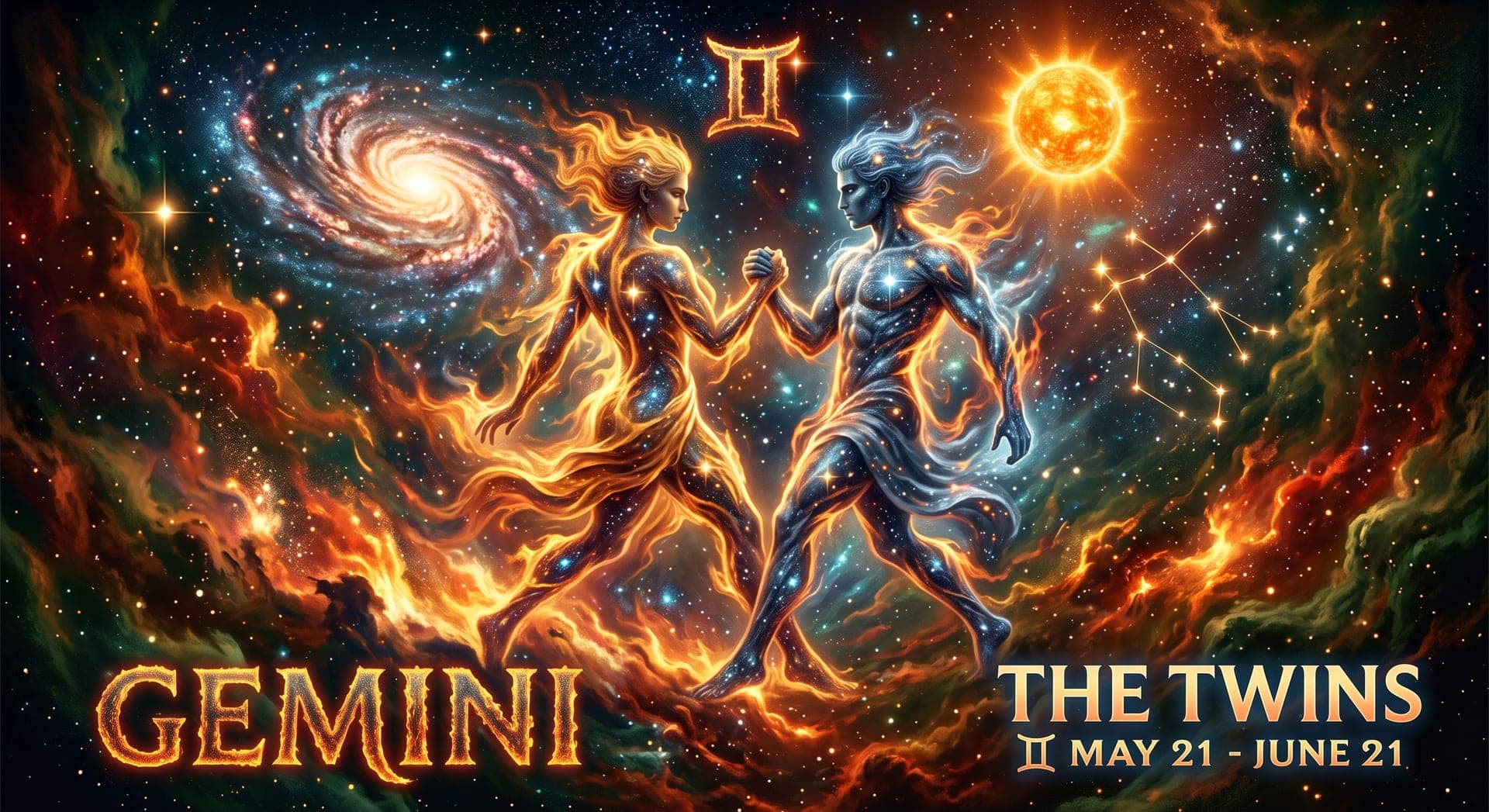
Born on May 23: Gemini ♊
Gemini, the third sign of the zodiac, spans May 21 to June 20 and is symbolized by twins, representing the sign's dual nature and its ability to see multiple sides of any situation at once. Ruled by Mercury, the planet of communication and intellect, Gemini is widely regarded as one of the most talkative, curious, and quick-witted signs of the zodiac, constantly gathering new information and ideas. As an Air sign, Gemini approaches the world primarily through thought and conversation, thriving on mental stimulation and social interaction. Its Mutable modality reflects a restless adaptability, since Gemini tends to resist routine and prefers variety, novelty, and the freedom to change course whenever something more interesting comes along. People born under this sign are often skilled communicators, natural storytellers, and quick learners who can hold their own in nearly any conversation. That same adaptability can also come across as inconsistency, and Gemini's dual nature sometimes earns an unfair reputation for being two-faced, when in reality it simply reflects genuine curiosity about every side of a story.
Personality Traits
Strengths
- Quick-witted and intelligent
- Excellent communicator
- Adaptable to new situations
- Curious and eager to learn
- Charming and sociable
Weaknesses
- Prone to inconsistency
- Can be superficial
- Easily bored
- Indecisive
- Tendency to gossip
Compatible Signs
Fun Facts
- Gemini's twin symbol traces back to the Greek myth of Castor and Pollux, twin brothers placed among the stars as the constellation Gemini.
- Mercury, Gemini's ruling planet, was the swift Roman messenger god, reflecting the sign's associations with communication and quick thinking.
- Gemini is one of only a few zodiac signs represented by human figures rather than animals or objects.
- Notable Geminis include Marilyn Monroe, Kanye West, Angelina Jolie, and John F. Kennedy.
- Gemini season overlaps with the transition from spring to summer in the Northern Hemisphere, reflecting the sign's changeable, in-between nature.
Born on May 23
- 1617
Elias Ashmole
English antiquarian and politician whose collection formed the founding basis of Oxford's Ashmolean Museum, one of the world's first public museums.
- 1707
Carl Linnaeus
Swedish botanist who developed modern taxonomic naming
- 1795
Charles Barry
English architect best known for designing the rebuilt Palace of Westminster, home to the Houses of Parliament, after the 1834 fire.
- 1810
Margaret Fuller
American journalist and women's rights advocate
- 1883
Douglas Fairbanks
American actor, a founding star of Hollywood's silent era
- 1908
John Bardeen
American physicist and two-time Nobel Prize laureate
- 1918
Denis Compton
English cricketer regarded as one of the finest batsmen of his era, playing for Middlesex and England either side of the Second World War.
- 1921
Humphrey Lyttelton
British jazz trumpeter, bandleader, and broadcaster who later hosted the long-running radio comedy panel show I'm Sorry I Haven't a Clue.
- 1928
Rosemary Clooney
American singer and actress
- 1933
Joan Collins
English actress best known for playing Alexis Carrington in the American television soap opera Dynasty.
- 1950
Martin McGuinness
Northern Irish republican politician and former IRA commander who became Deputy First Minister of Northern Ireland as part of the peace process.
- 1951
Anatoly Karpov
Russian chess grandmaster and former World Champion
- 1971
George Osborne
English politician who served as Chancellor of the Exchequer in the UK government from 2010 to 2016.

On This Day in History
- 1040
Seljuk Turks defeat the Ghaznavids at the Battle of Dandanaqan, establishing Seljuk power across a vast region of Central Asia.
Seljuk Turkish forces decisively defeated the rival Ghaznavid Empire at the Battle of Dandanaqan in present-day Turkmenistan, a victory that established Seljuk dominance across a vast swath of Central Asia and Persia and set the stage for their later dramatic expansion westward into Anatolia and the broader Middle East.
- 1308
Robert the Bruce, King of Scots, decisively defeats John Comyn, Earl of Buchan, at the Battle of Inverurie.
The victory came during Robert's campaign to crush his rivals in northeastern Scotland following his seizure of the Scottish crown. It broke the power of the Comyn family, longtime rivals for the throne, and was followed by the brutal 'Herschip of Buchan,' a devastation of Comyn lands that secured Robert's control of the region ahead of his eventual triumph in the Wars of Scottish Independence.
- 1430
Joan of Arc is captured by Burgundian forces at the Siege of Compiègne, later leading to her trial and execution.
Joan of Arc was captured by Burgundian forces allied with the English during a sortie outside the besieged city of Compiègne, when the drawbridge was reportedly raised before she could retreat inside, beginning the chain of custody transfers and legal proceedings that led to her trial for heresy and execution less than a year later.
- 1430
Joan of Arc is captured by Burgundian troops at the Siege of Compiègne.
Fighting to relieve the besieged town, Joan was pulled from her horse and taken prisoner by soldiers loyal to Burgundy, allies of the English in the ongoing Hundred Years' War. She was later sold to the English, who arranged for her trial on charges of heresy, a process that ended with her execution the following year and later cemented her legacy as a French national heroine and saint.
- 1498
Religious reformer Girolamo Savonarola is executed by burning in Florence, Italy.
Religious reformer Girolamo Savonarola, whose fiery apocalyptic preaching had briefly dominated Florentine politics and inspired the famous "Bonfire of the Vanities," was hanged and then burned in the city's main square after being condemned for heresy and defying papal authority following his excommunication.
- 1533
An English church court declares King Henry VIII's marriage to Catherine of Aragon null and void, clearing the way for his marriage to Anne Boleyn.
An English ecclesiastical court presided over by Archbishop Thomas Cranmer declared King Henry VIII's twenty-four-year marriage to Catherine of Aragon null and void, a ruling that cleared the legal path for his subsequent marriage to the already-pregnant Anne Boleyn and further deepened his rupture with the Roman Catholic Church.
- 1533
The marriage of King Henry VIII of England to Catherine of Aragon is formally declared null and void.
Archbishop Thomas Cranmer issued the ruling at a special court in Dunstable, clearing the way for Henry's marriage to Anne Boleyn, whom he had already secretly wed months earlier. The annulment, achieved without papal approval, deepened England's break from Rome and set in motion the English Reformation, as Henry established himself as head of the Church of England the following year.
- 1609
King James I grants the Second Virginia Charter, expanding the Virginia Company's authority over its American colony.
The new charter replaced royal oversight with a governor appointed by the company itself, granted the colony a vastly enlarged territory, and helped fund the venture through a public lottery. It reflected England's growing ambitions in North America and laid administrative groundwork that shaped the early governance of the Jamestown colony during a precarious period of its survival.
- 1706
The Duke of Marlborough leads Allied forces to a decisive victory over France at the Battle of Ramillies.
The Duke of Marlborough led a combined Allied army to a decisive victory over French forces at the Battle of Ramillies during the War of the Spanish Succession, dramatically shifting military momentum in the conflict and enabling the rapid Allied conquest of most of the Spanish Netherlands within weeks.
- 1706
The Duke of Marlborough leads Anglo-Dutch forces to a decisive victory over the French at the Battle of Ramillies.
John Churchill's tactical brilliance shattered a French army under Marshal Villeroy during the War of the Spanish Succession, opening the Spanish Netherlands to Allied control within weeks. The victory, one of Marlborough's four great battlefield triumphs, cemented Britain's emergence as a leading European military power and boosted his reputation as one of history's most accomplished commanders.
- 1788
South Carolina ratifies the U.S. Constitution, becoming the eighth state to join the Union.
South Carolina ratified the newly drafted United States Constitution by a comfortable margin, becoming the eighth state to join the Union under the new stronger federal framework designed to replace the weaker, largely unworkable Articles of Confederation that had governed the young nation since independence.
- 1793
British and Allied forces defeat the French army at the Battle of Famars during the Flanders Campaign.
Commanded by the Duke of York, British and Habsburg troops routed French defenders near Valenciennes, opening the way for an Allied siege of that fortress city. The engagement was part of Britain's early campaigning against Revolutionary France, aimed at containing French expansion in the Low Countries during the opening years of the French Revolutionary Wars.
- 1873
Canada establishes the North-West Mounted Police, the forerunner of the Royal Canadian Mounted Police.
The Canadian federal government established the North-West Mounted Police, a paramilitary force created to maintain law and order and assert Canadian federal authority in the country's vast, sparsely settled western territories, later evolving into the modern Royal Canadian Mounted Police, an enduring symbol of Canadian national identity.
- 1915
Italy enters World War I on the side of the Allied powers.
Italy formally declared war on Austria-Hungary and entered World War I on the side of the Allied powers, having previously been aligned with the opposing Central Powers before negotiating secret territorial promises from Britain and France in exchange for abandoning its earlier alliance commitments.
- 1919
Kurdish sheikh Mahmud Barzanji launches his first revolt against British rule in Iraq.
Barzanji, appointed governor of Sulaymaniyah by British authorities after the Ottoman collapse, turned against them and declared himself ruler of an independent Kurdish government. British forces suppressed the uprising within weeks and exiled him, but it marked the first in a series of Kurdish revolts against British administration of Mandatory Iraq during the interwar period.
- 1945
SS leader Heinrich Himmler dies by suicide while in British custody.
SS leader Heinrich Himmler, one of the chief architects of the Holocaust and head of the Nazi security apparatus, took his own life by swallowing a hidden cyanide capsule shortly after being captured and identified by British forces attempting to interrogate him at the end of World War II.
- 1945
Germany's Flensburg Government under Karl Dönitz is dissolved when British forces arrest its members.
The short-lived provisional government, formed by Dönitz after Hitler's suicide to negotiate Germany's surrender, had continued operating in the town of Flensburg for over three weeks after the war's official end. British troops raided its headquarters and detained Dönitz and his ministers, formally ending any pretense of continuing German state authority.
- 1945
Heinrich Himmler, former head of the SS, commits suicide while held in British custody.
Himmler had been captured by British forces near Bremervörde while attempting to evade capture using a false identity. Once recognized and searched, he bit into a hidden cyanide capsule before interrogators could question him further, cheating the prosecution that awaited many of his fellow Nazi leaders at Nuremberg and denying investigators a firsthand account of his role in the Holocaust.
- 1998
Voters in Northern Ireland approve the Good Friday Agreement in a referendum, with roughly 75 percent in favor.
Voters in Northern Ireland overwhelmingly approved the Good Friday Agreement in a public referendum, with roughly 75 percent voting in favor, formally endorsing the historic power-sharing governmental framework negotiated among the region's political parties that helped bring an end to nearly three decades of sectarian violence known as the Troubles.
- 1998
The Good Friday Agreement is approved by roughly 75 percent of voters in a Northern Ireland referendum.
The referendum, held alongside a companion vote in the Republic of Ireland, ratified the peace accord signed the previous month that established power-sharing government in Northern Ireland and set out mechanisms for cross-border cooperation. The overwhelming endorsement marked a decisive step toward ending three decades of sectarian violence known as the Troubles.