What’s Observed on May 22
Born on May 22: Gemini ♊
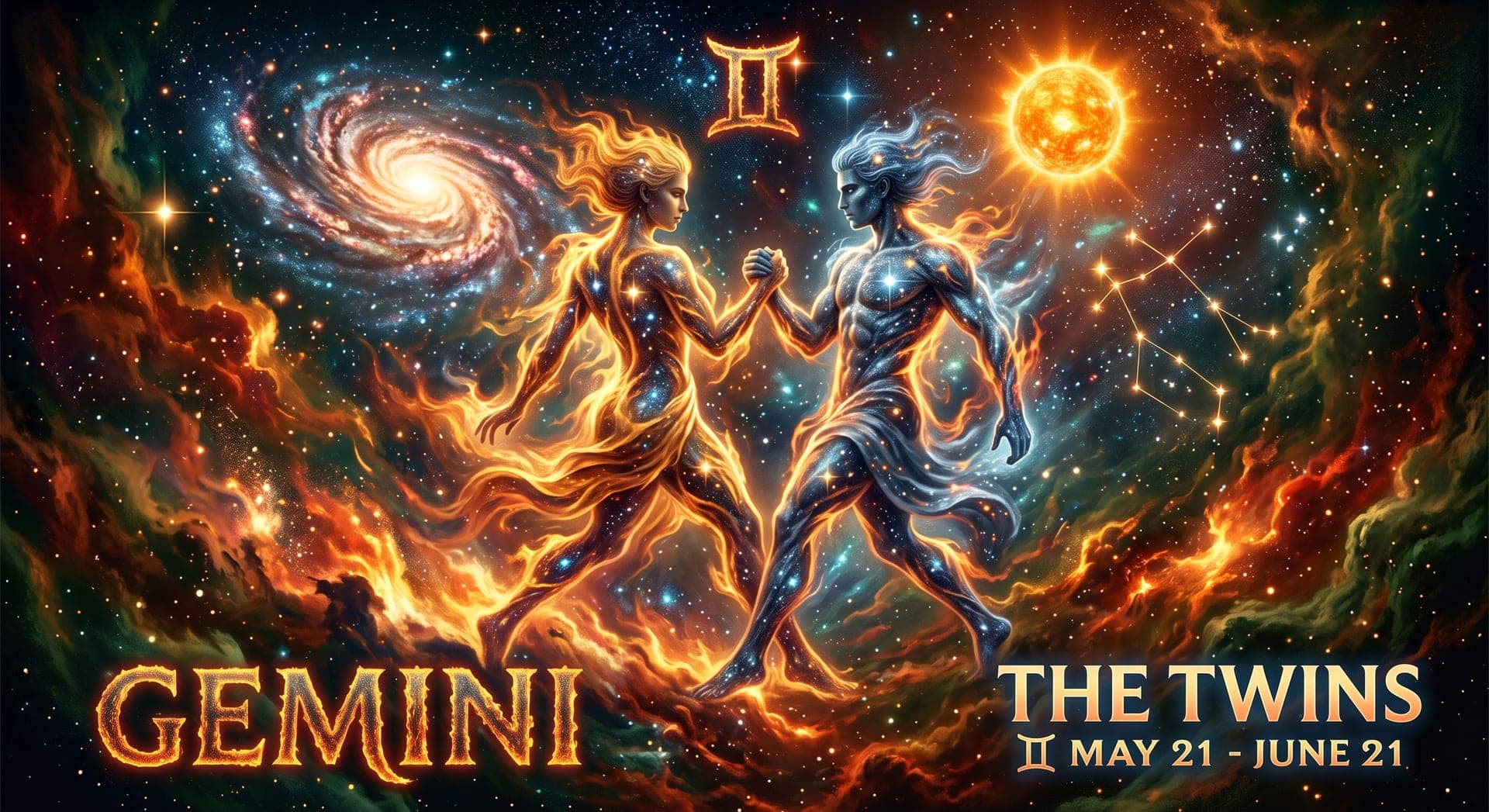
Gemini, the third sign of the zodiac, spans May 21 to June 20 and is symbolized by twins, representing the sign's dual nature and its ability to see multiple sides of any situation at once. Ruled by Mercury, the planet of communication and intellect, Gemini is widely regarded as one of the most talkative, curious, and quick-witted signs of the zodiac, constantly gathering new information and ideas. As an Air sign, Gemini approaches the world primarily through thought and conversation, thriving on mental stimulation and social interaction. Its Mutable modality reflects a restless adaptability, since Gemini tends to resist routine and prefers variety, novelty, and the freedom to change course whenever something more interesting comes along. People born under this sign are often skilled communicators, natural storytellers, and quick learners who can hold their own in nearly any conversation. That same adaptability can also come across as inconsistency, and Gemini's dual nature sometimes earns an unfair reputation for being two-faced, when in reality it simply reflects genuine curiosity about every side of a story.
Personality Traits
Strengths
- Quick-witted and intelligent
- Excellent communicator
- Adaptable to new situations
- Curious and eager to learn
- Charming and sociable
Weaknesses
- Prone to inconsistency
- Can be superficial
- Easily bored
- Indecisive
- Tendency to gossip
Compatible Signs
Fun Facts
- Gemini's twin symbol traces back to the Greek myth of Castor and Pollux, twin brothers placed among the stars as the constellation Gemini.
- Mercury, Gemini's ruling planet, was the swift Roman messenger god, reflecting the sign's associations with communication and quick thinking.
- Gemini is one of only a few zodiac signs represented by human figures rather than animals or objects.
- Notable Geminis include Marilyn Monroe, Kanye West, Angelina Jolie, and John F. Kennedy.
- Gemini season overlaps with the transition from spring to summer in the Northern Hemisphere, reflecting the sign's changeable, in-between nature.
Born on May 22
- 1783
William Sturgeon
English physicist and inventor who built the first practical electromagnet and helped pioneer the study of electromagnetism.
- 1813
Richard Wagner
German composer known for his operas
- 1859
Arthur Conan Doyle
Scottish-born British writer and physician best known for creating the detective Sherlock Holmes.
- 1907
Laurence Olivier
English actor, director, and producer widely regarded as one of the greatest stage and film actors of the twentieth century.
- 1924
Charles Aznavour
French-Armenian singer-songwriter
- 1930
Harvey Milk
American politician and pioneering gay rights activist
- 1943
Betty Williams
Northern Irish peace activist who co-founded the Community of Peace People and won the Nobel Peace Prize for efforts to end violence during the Troubles.
- 1946
George Best
Northern Irish footballer celebrated as one of the greatest players of his generation during his career with Manchester United.
- 1950
Bernie Taupin
English lyricist best known for his decades-long songwriting partnership with Elton John.
- 1959
Morrissey
English singer-songwriter, former frontman of the influential rock band The Smiths.
- 1970
Naomi Campbell
English model who became one of the most prominent supermodels of the late twentieth century.
- 1987
Novak Djokovic
Serbian professional tennis champion
On This Day in History
- 1200
King John of England and King Philip II of France sign the Treaty of Le Goulet.
The treaty settled territorial disputes following the death of Richard I, with Philip recognizing John as the rightful heir to Richard's continental possessions, including Normandy and Anjou, in exchange for John acknowledging Philip as his feudal overlord for those lands. The peace proved short-lived; renewed conflict within a few years eventually stripped John of most of his French territories.
- 1377
Pope Gregory XI issues five papal bulls condemning the teachings of English theologian John Wycliffe.
Wycliffe, an Oxford theologian, had challenged papal authority, church wealth, and doctrines such as transubstantiation, arguing scripture should be accessible in the vernacular. The bulls ordered English authorities to investigate and silence him, but Wycliffe retained influential protectors and continued his work, later inspiring the Lollard movement and an early English translation of the Bible.
- 1455
The First Battle of St Albans opens England's decades-long Wars of the Roses.
The First Battle of St Albans, a brief but bloody armed clash between rival noble factions loyal to the houses of York and Lancaster, opened decades of intermittent and destructive dynastic conflict in England that later became known as the Wars of the Roses.
- 1455
Richard, Duke of York, defeats and captures King Henry VI at the First Battle of St Albans, opening the Wars of the Roses.
The clash in the streets of St Albans was the first pitched battle of the decades-long dynastic struggle between the houses of Lancaster and York for the English throne. Though relatively small in scale, it set a precedent for settling political disputes through armed conflict and began a cycle of civil war that would convulse England for the next thirty years.
- 1520
Spanish forces massacre Aztec nobles during the festival of Tóxcatl in Tenochtitlan, a turning point in the Spanish conquest of Mexico.
Spanish conquistadors under Pedro de Alvarado, acting in Hernán Cortés's temporary absence, massacred unarmed Aztec nobles gathered for a sanctioned religious festival honoring the god Tezcatlipoca in Tenochtitlan, an unprovoked atrocity that shattered any remaining trust between the Spanish and the Aztec Empire and accelerated the conquest's violent final phase.
- 1762
The Trevi Fountain is officially completed and inaugurated in Rome.
The Trevi Fountain, one of Rome's most elaborate and celebrated Baroque monuments, was officially completed and inaugurated after decades of design revisions and construction, drawing its water supply from the ancient Aqua Virgo aqueduct that had continued functioning after over two thousand years of continuous use.
- 1804
The Lewis and Clark Expedition formally departs from St. Charles, Missouri, to explore the newly acquired Louisiana Territory.
The Lewis and Clark Expedition formally departed from St. Charles, Missouri, beginning its ambitious multi-year journey commissioned by President Thomas Jefferson to explore, map, and scientifically catalog the vast, newly acquired Louisiana Territory and search for a practical water route to the Pacific Ocean.
- 1816
A mob in Littleport, Cambridgeshire, England, riots over high unemployment and rising grain prices.
Fueled by post-Napoleonic War economic distress, poor harvests, and unpopular Corn Laws that kept grain prices artificially high, rioters looted homes and attacked property before the unrest spread briefly to nearby Ely. Troops were called in to restore order, and the ensuing trials resulted in five men being hanged, making it one of the harshest responses to rural unrest in Georgian England.
- 1819
The SS Savannah departs Georgia on a voyage that makes it the first steamship to cross the Atlantic Ocean.
The SS Savannah departed the port of Savannah, Georgia, on a voyage that made it the first steam-powered vessel to successfully cross the Atlantic Ocean, though it relied primarily on conventional sail power for the vast majority of the twenty-nine day journey, using its auxiliary steam engine only sparingly.
- 1826
HMS Beagle departs England on its first survey voyage.
Commanded initially by Pringle Stokes, the Royal Navy vessel set out to chart the coastline of South America, part of a broader British effort to survey global waters for navigation and trade. The ship's fame rests chiefly on its second voyage a few years later, when a young naturalist named Charles Darwin sailed aboard and gathered observations that would shape his theory of evolution.
- 1840
The British government abolishes the penal transportation of convicts to the New South Wales colony.
Since 1788, Britain had shipped tens of thousands of convicted criminals to Australia as a means of easing overcrowded prisons and populating its new colony. Growing opposition within both Britain and the colony itself, over the system's social costs and its stigma, led authorities to end transportation to New South Wales, though it continued to other Australian colonies for several more decades.
- 1906
The Wright brothers are granted a U.S. patent for their flying machine.
The Wright brothers, Orville and Wilbur, were formally granted a U.S. patent for their pioneering "Flying-Machine" design after a lengthy application process, officially recognizing the innovative three-axis wing-warping control system that had enabled their historic first successful powered, controlled flights at Kitty Hawk years earlier.
- 1915
Three trains collide in the Quintinshill rail disaster near Gretna Green, Scotland, killing 227 people.
A troop train carrying soldiers of the Royal Scots collided with a stationary local train after signalmen failed to notice it on the line, and the wreckage was then struck by a fast express train, igniting a fire fed by gas lighting in the old wooden carriages. Most of the dead were soldiers bound for Gallipoli, making it the deadliest rail disaster in British history.
- 1941
British troops capture Fallujah during the Anglo-Iraqi War.
The brief conflict erupted after a pro-Axis government seized power in Iraq and besieged the British air base at Habbaniya. British and Commonwealth forces advanced from Palestine and Transjordan, taking Fallujah as a staging point on the road to Baghdad. The campaign's swift success secured Britain's vital oil interests and communications routes in the Middle East during the Second World War.
- 1960
A magnitude 9.5 earthquake strikes Chile, the most powerful earthquake ever recorded.
A magnitude 9.5 earthquake struck off the coast of Chile near Valdivia, the most powerful earthquake ever instrumentally recorded anywhere in the world, triggering devastating tsunamis that caused significant destruction and loss of life not only locally but also as far away across the Pacific in Hawaii, Japan, and the Philippines.
- 1987
The first Rugby World Cup kicks off in New Zealand and Australia.
The first Rugby World Cup kicked off, co-hosted jointly by New Zealand and Australia, with the host All Blacks ultimately winning the inaugural tournament on home soil, launching what became one of the most prestigious and widely watched quadrennial championships in international sport.
- 2013
Fusilier Lee Rigby is murdered by two Islamist extremists near Woolwich Barracks in southeast London.
Rigby, an off-duty British Army soldier, was run down by a car and then attacked with knives and a cleaver on a public street in broad daylight. The perpetrators, who claimed the killing was retaliation for British military action abroad, remained at the scene making statements to bystanders until police arrived. The murder prompted national debate over extremism and security policy in the UK.
- 2015
Ireland becomes the first country to legalize same-sex marriage through a national public referendum.
Ireland became the first country in the world to legalize same-sex marriage through a direct national popular referendum rather than legislative or judicial action, with citizens voting decisively in favor by a wide margin in a result celebrated internationally as a landmark, culturally significant moment for LGBTQ rights.
- 2017
A suicide bombing at an Ariana Grande concert in Manchester, England, kills 22 people.
A suicide bomber detonated an improvised explosive device packed with shrapnel in the foyer of Manchester Arena following an Ariana Grande concert, killing 22 people, many of them children and teenagers along with their parents, in one of the deadliest terrorist attacks in recent British history.
- 2017
A suicide bomber kills 22 people at an Ariana Grande concert in the Manchester Arena bombing.
The attacker detonated a homemade explosive packed with shrapnel in the arena's foyer as concertgoers, many of them children and teenagers, were leaving the show. It was the deadliest terrorist attack in the UK since the 2005 London bombings, prompting a nationwide security review and an outpouring of solidarity across Manchester and the country.