What’s Observed on May 26
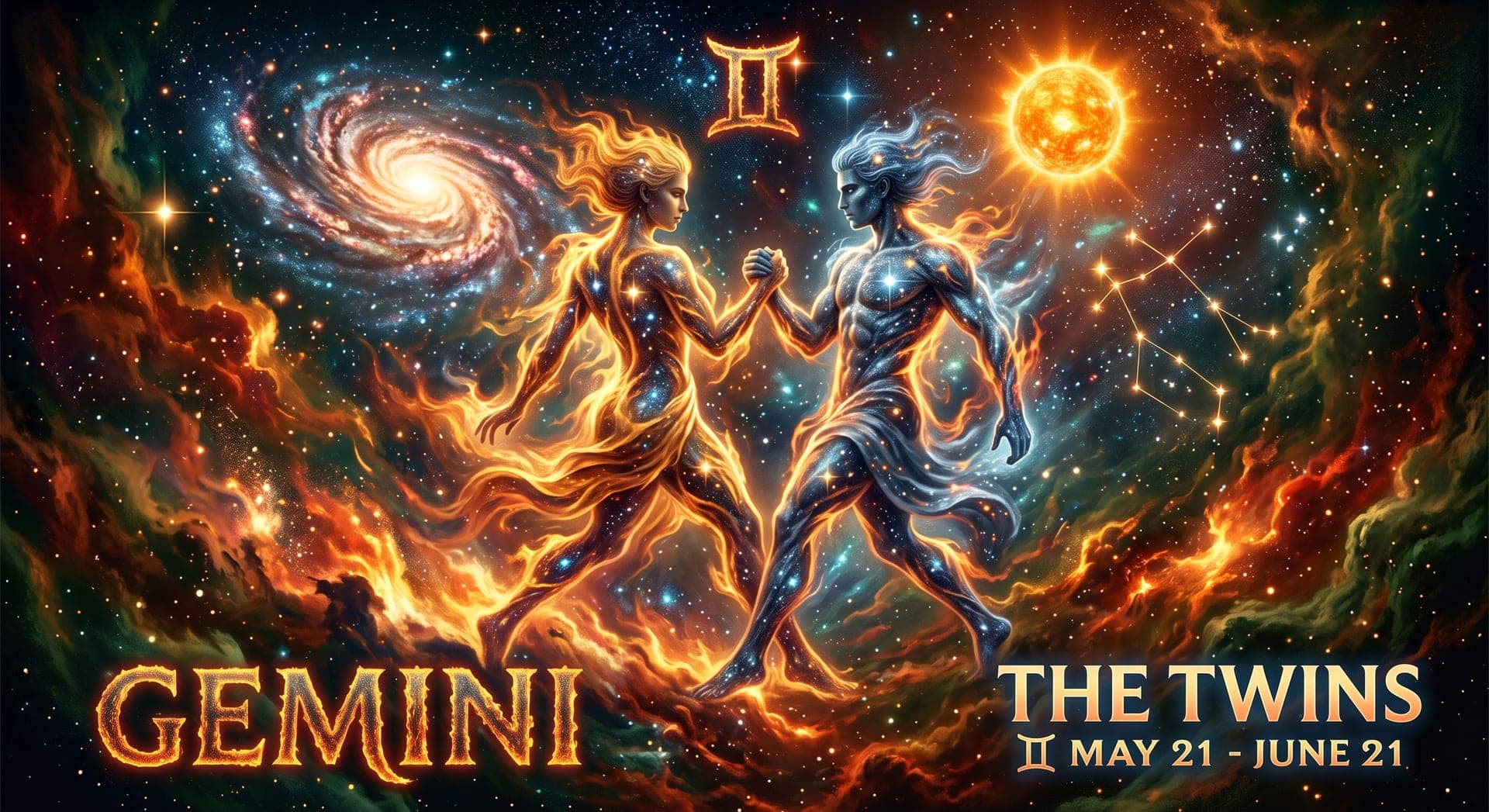
Born on May 26: Gemini ♊
Gemini, the third sign of the zodiac, spans May 21 to June 20 and is symbolized by twins, representing the sign's dual nature and its ability to see multiple sides of any situation at once. Ruled by Mercury, the planet of communication and intellect, Gemini is widely regarded as one of the most talkative, curious, and quick-witted signs of the zodiac, constantly gathering new information and ideas. As an Air sign, Gemini approaches the world primarily through thought and conversation, thriving on mental stimulation and social interaction. Its Mutable modality reflects a restless adaptability, since Gemini tends to resist routine and prefers variety, novelty, and the freedom to change course whenever something more interesting comes along. People born under this sign are often skilled communicators, natural storytellers, and quick learners who can hold their own in nearly any conversation. That same adaptability can also come across as inconsistency, and Gemini's dual nature sometimes earns an unfair reputation for being two-faced, when in reality it simply reflects genuine curiosity about every side of a story.
Personality Traits
Strengths
- Quick-witted and intelligent
- Excellent communicator
- Adaptable to new situations
- Curious and eager to learn
- Charming and sociable
Weaknesses
- Prone to inconsistency
- Can be superficial
- Easily bored
- Indecisive
- Tendency to gossip
Compatible Signs
Fun Facts
- Gemini's twin symbol traces back to the Greek myth of Castor and Pollux, twin brothers placed among the stars as the constellation Gemini.
- Mercury, Gemini's ruling planet, was the swift Roman messenger god, reflecting the sign's associations with communication and quick thinking.
- Gemini is one of only a few zodiac signs represented by human figures rather than animals or objects.
- Notable Geminis include Marilyn Monroe, Kanye West, Angelina Jolie, and John F. Kennedy.
- Gemini season overlaps with the transition from spring to summer in the Northern Hemisphere, reflecting the sign's changeable, in-between nature.
Born on May 26
- 1650
John Churchill, 1st Duke of Marlborough
English general and statesman whose victories, including at Blenheim, made him one of Britain's greatest military commanders.
- 1904
George Formby
English singer-songwriter, comedian, and actor famous for his ukulele songs and cheerful working-class film persona.
- 1907
John Wayne
American film actor, an icon of classic Hollywood Westerns
- 1909
Matt Busby
Scottish footballer and manager who built Manchester United into a footballing powerhouse, rebuilding the club after the Munich air disaster.
- 1913
Peter Cushing
English actor best known for horror roles in Hammer Films and as Grand Moff Tarkin in Star Wars.
- 1920
Peggy Lee
American singer and songwriter
- 1926
Miles Davis
American jazz trumpeter and composer
- 1948
Stevie Nicks
American singer-songwriter, member of Fleetwood Mac
- 1949
Jeremy Corbyn
English politician who led the Labour Party from 2015 to 2020.
- 1951
Sally Ride
American physicist and first American woman in space
- 1954
Alan Hollinghurst
English novelist awarded the Booker Prize for The Line of Beauty.
- 1964
Lenny Kravitz
American singer-songwriter and musician
- 1966
Helena Bonham Carter
English actress known for roles in Merchant Ivory period dramas and later films including Fight Club and the Harry Potter series.
On This Day in History
- 946
King Edmund I of England is killed, and his brother Eadred assumes the throne.
Edmund had ruled since 939 and continued the unification of England begun by his grandfather Alfred the Great. He was fatally stabbed at Pucklechurch, Gloucestershire, while intervening in a brawl, reportedly by an exiled outlaw named Leofa. As his sons were still children, the crown passed to his brother Eadred, who went on to complete the conquest of Viking-ruled Northumbria.
- 1293
A devastating earthquake strikes Kamakura, Japan, killing an estimated 23,000 people.
A massive earthquake struck the city of Kamakura, Japan, then the de facto political and military center of the country under the ruling Kamakura shogunate, killing an estimated 23,000 people and causing widespread structural destruction throughout the densely populated coastal city.
- 1538
Religious reformer John Calvin is expelled from Geneva amid political and theological disputes, beginning a three-year exile in Strasbourg.
Religious reformer John Calvin was expelled from Geneva along with fellow minister Guillaume Farel following bitter disputes with the city council over church discipline, communion practices, and doctrinal authority, beginning a three-year exile in Strasbourg before city leaders later reconsidered and invited him back to lead Geneva's ongoing Reformation.
- 1805
Napoleon Bonaparte is crowned King of Italy with the Iron Crown of Lombardy in Milan Cathedral.
Napoleon Bonaparte was crowned King of Italy in a grand ceremony at Milan Cathedral using the historic Iron Crown of Lombardy, reportedly placing the crown on his own head while declaring "God gave it to me, woe to whoever touches it," formally extending his direct personal rule over northern Italian territories.
- 1879
Britain and Afghanistan sign the Treaty of Gandamak, ending the first phase of the Second Anglo-Afghan War.
The treaty gave Britain control of Afghan foreign affairs and placed a British resident in Kabul, in exchange for subsidies and support for Emir Yaqub Khan. The arrangement collapsed within months when the British envoy and his escort were massacred in Kabul, reigniting the conflict later that year.
- 1896
Nicholas II is crowned the last Tsar of Imperial Russia.
Nicholas II was crowned the last Tsar of Imperial Russia in an elaborate, lavish ceremony in Moscow's Assumption Cathedral, beginning a reign that would end in revolution, abdication, and his family's brutal execution by Bolshevik forces just over two decades later.
- 1896
Charles Dow publishes the first edition of the Dow Jones Industrial Average, a foundational U.S. stock market index.
Financial journalist Charles Dow published the first edition of the Dow Jones Industrial Average in The Wall Street Journal, an index initially tracking just twelve major American industrial companies that grew over subsequent decades into one of the world's most closely watched and widely cited stock market benchmarks.
- 1896
Nicholas II is crowned the last Tsar of Russia in Moscow.
The lavish coronation ceremony at the Kremlin's Assumption Cathedral was marred days later by the Khodynka Tragedy, a stampede that killed over a thousand people gathered for a public celebration. Nicholas's reign would end in revolution and his execution in 1918, making him Russia's final reigning monarch.
- 1927
The final Ford Model T rolls off the assembly line after the production of more than 15 million vehicles.
The final Ford Model T rolled off the assembly line in Highland Park, Michigan, after nearly two decades of continuous production totaling more than 15 million vehicles worldwide, a manufacturing and mass-production achievement that had helped make personal automobile ownership accessible and affordable to millions of ordinary American families.
- 1936
Independent Unionist MP Tommy Henderson delivers a marathon speech of around ten hours in the Northern Ireland House of Commons.
Sitting for Belfast Shankill, Henderson used the extraordinary filibuster to attack the Unionist government's record on unemployment and poverty relief during the Great Depression. The speech remains one of the longest in the history of the Stormont parliament and cemented his reputation as an outspoken champion of working-class constituents.
- 1940
Allied forces begin the massive evacuation of troops from Dunkirk, France, as German forces close in.
Allied forces began Operation Dynamo, the massive, improvised evacuation of hundreds of thousands of trapped British and French troops from the beaches and harbor of Dunkirk, France, using a hastily assembled fleet of naval vessels and civilian "little ships" as German forces closed in during the disastrous early phase of the Battle of France.
- 1940
The Royal Navy begins Operation Dynamo, the evacuation of Allied troops trapped at Dunkirk.
With British and French forces encircled by advancing German armies, a fleet of naval vessels and hundreds of civilian 'little ships' ferried more than 330,000 soldiers across the English Channel over the following nine days. Hailed as the 'miracle of Dunkirk,' the operation preserved the core of the British Army despite the loss of nearly all its heavy equipment.
- 1940
The Siege of Calais ends with the surrender of the British and French garrison defending the port.
The garrison, which included the British 30th Infantry Brigade, fought for four days to delay advancing German panzer divisions, buying crucial time for the Dunkirk evacuation underway further along the coast. Nearly the entire British force was killed or captured, a sacrifice Winston Churchill later credited with helping save the retreating British Expeditionary Force.
- 1966
The British colony of British Guiana becomes independent, taking the name Guyana.
Located on the northern coast of South America, the territory had been under British control since the early nineteenth century. Independence came under Prime Minister Forbes Burnham after years of political tension between the colony's Afro-Guyanese and Indo-Guyanese communities, and the new nation remained within the Commonwealth.
- 1967
The Beatles release "Sgt. Pepper's Lonely Hearts Club Band," widely regarded as one of the most influential albums in popular music history.
The Beatles released "Sgt. Pepper's Lonely Hearts Club Band," a groundbreaking, elaborately produced concept album featuring innovative studio techniques and a striking cover design, widely credited by critics with elevating popular music's artistic ambitions and profoundly influencing the subsequent creative direction of rock music for decades afterward.
- 1967
The Beatles release their landmark album Sgt. Pepper's Lonely Hearts Club Band in the UK.
Recorded at Abbey Road Studios in London, the album pushed the boundaries of studio production with its use of orchestration, tape effects, and a loose concept-album framing. Widely regarded as one of the most influential records in popular music history, it topped the charts in Britain and the United States and won the Grammy Award for Album of the Year.
- 1972
The United States and Soviet Union sign the Anti-Ballistic Missile Treaty, a landmark Cold War arms control agreement.
The United States and Soviet Union signed the Anti-Ballistic Missile Treaty during a Moscow summit between Presidents Nixon and Brezhnev, a landmark Cold War arms control agreement severely limiting missile defense systems in an effort to preserve mutual strategic nuclear deterrence and reduce incentives for a destabilizing arms race.
- 1972
The United States and the Soviet Union sign the Anti-Ballistic Missile Treaty in Moscow.
Signed by Richard Nixon and Leonid Brezhnev as part of the SALT I negotiations, the treaty limited the deployment of missile defense systems in an effort to preserve mutual deterrence between the two superpowers. It remained a cornerstone of Cold War arms control until the United States withdrew from it in 2002.
- 2020
Protests over the killing of George Floyd erupt in Minneapolis and rapidly spread nationwide and around the world.
Protests erupted in Minneapolis following the killing of George Floyd, a Black man, by a white police officer who knelt on his neck during an arrest the previous day, rapidly spreading into a massive nationwide and eventually international movement demanding police reform, accountability, and broader racial justice.
- 2025
A car is deliberately driven into crowds celebrating Liverpool FC's Premier League title parade, injuring dozens of people.
The incident happened along the parade route in central Liverpool as thousands celebrated the football club's championship win. A man was arrested at the scene, and police said dozens of people, including children, were hurt, while stating the incident was not being treated as terrorism-related.