What’s Observed on May 20
Born on May 20: Taurus ♉
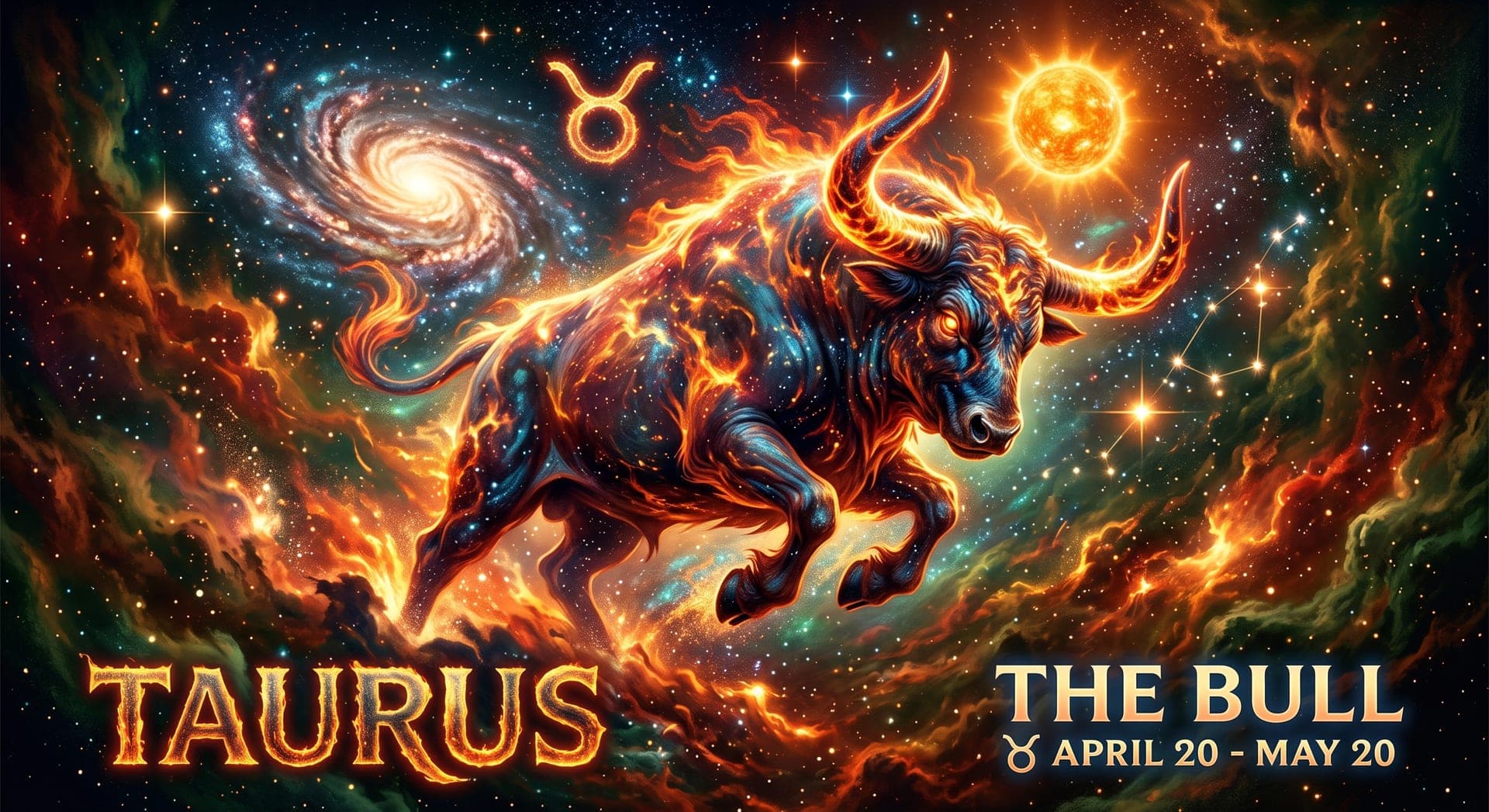
Taurus, the second sign of the zodiac, spans April 20 to May 20 and is symbolized by the bull, an animal prized for its strength, steadiness, and quiet determination. Ruled by Venus, the planet of love, beauty, and material comfort, Taurus is often described as one of the most sensual and pleasure-loving signs, drawn to good food, fine art, and physical comfort. As an Earth sign, Taurus is grounded, practical, and deeply connected to the physical world, valuing stability and tangible security over abstract ideas or sudden change. Its Fixed modality gives Taurus a well-earned reputation for stubbornness, since once a Taurus has settled on a plan or opinion, shifting it can be remarkably difficult. People born under this sign tend to be dependable, loyal, and patient, often the steady presence others rely on during difficult times. While their resistance to change can occasionally frustrate those around them, Taurus's persistence and work ethic make them exceptionally good at seeing long-term goals through to completion.
Personality Traits
Strengths
- Dependable and steady
- Patient and persistent
- Devoted to loved ones
- Appreciates beauty and comfort
- Financially sensible
Weaknesses
- Extremely stubborn
- Resistant to change
- Can be possessive
- Overindulgent
- Slow to forgive
Compatible Signs
Fun Facts
- Taurus's bull symbol connects to the Greek myth of Zeus transforming into a white bull to abduct Europa.
- Venus, Taurus' ruling planet, is the Roman goddess of love and beauty, reflecting the sign's love of comfort, art, and sensory pleasure.
- Taurus is considered by many astrologers to be the most stubborn sign of the zodiac, a trait often attributed to its Fixed modality and bull symbolism.
- Notable Taureans include Queen Elizabeth II, William Shakespeare, Adele, and David Beckham.
- The star cluster known as the Pleiades sits within the constellation Taurus and has been referenced in mythology and literature across many cultures.
Born on May 20
- 1772
Sir William Congreve
English inventor and army officer best known for developing the Congreve rocket, an early military rocket weapon.
- 1799
Honoré de Balzac
French novelist and playwright
- 1806
John Stuart Mill
English philosopher and political economist whose writings on liberty, utilitarianism, and representative government remain foundational to liberal thought.
- 1851
Emile Berliner
German-American inventor of the gramophone record
- 1895
R. J. Mitchell
English aeronautical engineer who designed the Supermarine Spitfire fighter aircraft.
- 1904
Margery Allingham
English author celebrated for her detective fiction featuring the gentleman sleuth Albert Campion.
- 1908
James Stewart
American actor known for classic Hollywood films
- 1913
William Hewlett
American engineer who co-founded Hewlett-Packard
- 1920
John Cruickshank
Scottish Royal Air Force pilot awarded the Victoria Cross for his actions on an anti-submarine patrol during the Second World War.
- 1942
Lynn Davies
Welsh long jumper who won the Olympic gold medal in the event at the 1964 Tokyo Games.
- 1944
Joe Cocker
English singer known for his rendition of "With a Little Help from My Friends"
- 1946
Cher
American singer-songwriter and actress
- 1964
Charles Spencer, 9th Earl Spencer
English writer and broadcaster, brother of Diana, Princess of Wales.
- 1970
Louis Theroux
British-American broadcaster and documentary filmmaker known for his BBC documentaries exploring unusual subcultures
- 1985
Chris Froome
Kenyan-born British road racing cyclist who won four Tours de France, a Giro d'Italia and two Vueltas a España
On This Day in History
- 685
The Picts decisively defeat the Northumbrians at the Battle of Dun Nechtain (Nechtansmere).
King Ecgfrith of Northumbria invaded Pictish territory in what is now Scotland but was ambushed and killed at Dun Nechtain, along with much of his army. The defeat shattered Northumbrian ambitions to dominate northern Britain and secured Pictish independence for generations, marking a turning point in the political map of early medieval Britain.
- 794
King Æthelberht II of East Anglia is beheaded at the court of King Offa of Mercia.
Æthelberht had traveled to Mercia, reportedly to seek marriage to Offa's daughter, when he was seized and executed on Offa's orders, allowing Mercia to absorb East Anglia into its growing sphere of control. The killing, later attributed to the machinations of Offa's wife Cynethryth, became one of the more infamous episodes of Anglo-Saxon dynastic politics.
- 1217
Royalist forces defeat Prince Louis of France's army at the Second Battle of Lincoln.
Fought during the First Barons' War, the battle pitted forces loyal to the young King Henry III, led by William Marshal, against rebel barons and their French ally Louis, who had been invited to take the English throne. The decisive royalist victory helped break the rebellion and secure Henry III's crown, paving the way for Louis's withdrawal from England.
- 1497
John Cabot sets sail from Bristol, England, in search of a westward route to Asia.
Commissioned by King Henry VII, the Italian-born navigator crossed the North Atlantic aboard the small ship Matthew and reached the coast of North America in June, likely present-day Newfoundland. His voyage became the basis for later English claims in North America, laying early groundwork for the British Empire's expansion across the Atlantic.
- 1498
Portuguese explorer Vasco da Gama reaches India, establishing the first direct European sea route to the subcontinent.
Portuguese navigator Vasco da Gama's fleet reached the port city of Calicut on India's southwestern Malabar coast, completing the first known direct sea voyage from Europe to the Indian subcontinent around the southern tip of Africa, opening a lucrative new maritime spice trade route that bypassed Venetian and Ottoman-controlled overland trade routes.
- 1570
Cartographer Abraham Ortelius publishes "Theatrum Orbis Terrarum," widely regarded as the first modern world atlas.
Flemish cartographer Abraham Ortelius published "Theatrum Orbis Terrarum," Latin for "Theatre of the World," a carefully bound and uniformly styled collection of maps widely regarded by historians as the first modern atlas, setting a systematic reference format for geographic works that mapmakers continued to follow for generations afterward.
- 1609
William Shakespeare's collection of sonnets is published in London.
Printed by Thomas Thorpe under the title Shake-speares Sonnets, the volume gathered 154 poems exploring themes of love, beauty, time, and mortality, many addressed to an unnamed 'fair youth' and a 'dark lady.' Though it is unclear whether Shakespeare authorized the publication, the collection is now regarded as among the most significant bodies of poetry in the English language.
- 1741
A British assault on the Spanish port of Cartagena de Indias ends in defeat.
Admiral Edward Vernon led a huge British expeditionary force against the heavily fortified Caribbean city during the War of Jenkins' Ear, but disease and determined Spanish defense under Blas de Lezo repelled the attack with heavy British losses. The costly failure was one of the largest British military disasters of the eighteenth century and dented Britain's colonial ambitions in the Caribbean.
- 1802
Napoleon Bonaparte reinstates slavery in France's colonial possessions.
The decree reversed the abolition enacted during the French Revolution in 1794, restoring the institution across French Caribbean colonies including Guadeloupe and Martinique. The move provoked fierce resistance, most notably in Saint-Domingue, where it fueled the ongoing revolution that led to Haiti's independence in 1804 as the first nation founded by a successful slave revolt.
- 1862
President Abraham Lincoln signs the Homestead Act, opening vast tracts of public land in the American West to settlers.
President Abraham Lincoln signed the Homestead Act into law, offering 160-acre parcels of surveyed public land in the American West essentially free to settlers, including freed slaves and immigrants, willing to live on and actively cultivate the property for five years, dramatically accelerating westward migration and settlement patterns.
- 1873
Levi Strauss and Jacob Davis receive a patent for using copper rivets to strengthen denim work pants, creating modern blue jeans.
Tailor Jacob Davis and dry goods merchant Levi Strauss jointly received a U.S. patent for using copper rivets to reinforce stress points on sturdy denim work trousers designed for miners and laborers, an innovation that created the modern blue jean and eventually launched an enduring, globally recognized American fashion icon.
- 1927
Charles Lindbergh departs New York on his historic nonstop solo flight across the Atlantic Ocean.
Aviator Charles Lindbergh departed from Roosevelt Field on New York's Long Island aboard his custom-built single-engine monoplane, the Spirit of St. Louis, beginning the grueling 33.5-hour flight that would make him the first person to fly solo nonstop across the entire Atlantic Ocean, a feat that instantly made him a global celebrity.
- 1927
Charles Lindbergh takes off from Roosevelt Field, New York, on his solo transatlantic flight to Paris.
Flying the single-engine monoplane Spirit of St. Louis, Lindbergh completed the roughly 3,600-mile nonstop journey in about 33.5 hours, landing at Le Bourget Field to an ecstatic crowd. The flight made him an instant international celebrity and marked a landmark moment in aviation history, proving the feasibility of long-distance transatlantic air travel.
- 1932
Amelia Earhart begins her solo nonstop transatlantic flight, landing safely in Ireland the following day.
Aviator Amelia Earhart took off from Harbour Grace, Newfoundland, on a solo transatlantic flight despite facing severe icing and mechanical problems along the way, successfully landing in a farmer's field near Derry, Northern Ireland, roughly fifteen hours later and becoming the first woman to complete a solo nonstop crossing of the Atlantic.
- 1932
Amelia Earhart begins the first solo transatlantic flight by a woman, landing in Northern Ireland.
Departing from Newfoundland, Earhart flew her single-engine Lockheed Vega across the Atlantic, landing in a pasture near Londonderry, Northern Ireland, roughly fifteen hours later after battling icy conditions and mechanical trouble. The feat made her an aviation icon worldwide and cemented her reputation as one of the era's most celebrated pilots.
- 1940
The first prisoners arrive at the newly established Auschwitz concentration camp in occupied Poland.
The first prisoners, a group of Polish political prisoners transferred from an overcrowded jail, arrived at the newly established Auschwitz concentration camp in occupied Poland, the beginning of what would grow into the largest and deadliest of the Nazi regime's extermination camps during the Holocaust, ultimately killing over a million people.
- 1941
German paratroopers launch a major airborne invasion of British-held Crete.
The assault opened the Battle of Crete, in which German forces suffered devastating casualties among their elite paratroop units despite ultimately overwhelming the island's British, Australian, New Zealand, and Greek defenders. The costly German victory convinced Hitler never to attempt another large-scale airborne operation, while the British evacuation foreshadowed the hard-fought campaigns still to come in the Mediterranean theatre.
- 1964
Astronomers Arno Penzias and Robert Wilson discover cosmic microwave background radiation, key evidence supporting the Big Bang theory.
American astronomers Arno Penzias and Robert Wilson, working at Bell Labs, detected persistent, unexplained faint cosmic microwave background radiation while testing a sensitive radio antenna originally built for satellite communications, an accidental discovery that provided crucial observational evidence supporting the Big Bang theory of the universe's origin and later earned them the Nobel Prize.
- 1983
French researchers publish findings identifying the virus that causes AIDS.
French researchers at the Pasteur Institute led by Luc Montagnier and Françoise Barré-Sinoussi published findings identifying a novel retrovirus they linked to AIDS, a discovery later confirmed and expanded upon by American researcher Robert Gallo, that proved foundational to understanding, testing for, and eventually treating HIV infection worldwide.
- 2002
East Timor formally gains full independence after a UN-supervised transition following Indonesian withdrawal.
East Timor formally achieved full independence and became the first new sovereign nation of the 21st century, ending a lengthy and often violent period of United Nations transitional administration that followed Indonesia's withdrawal after a violent, internationally supervised independence referendum three years earlier.