
What’s Observed on April 9
Born on April 9: Aries ♈
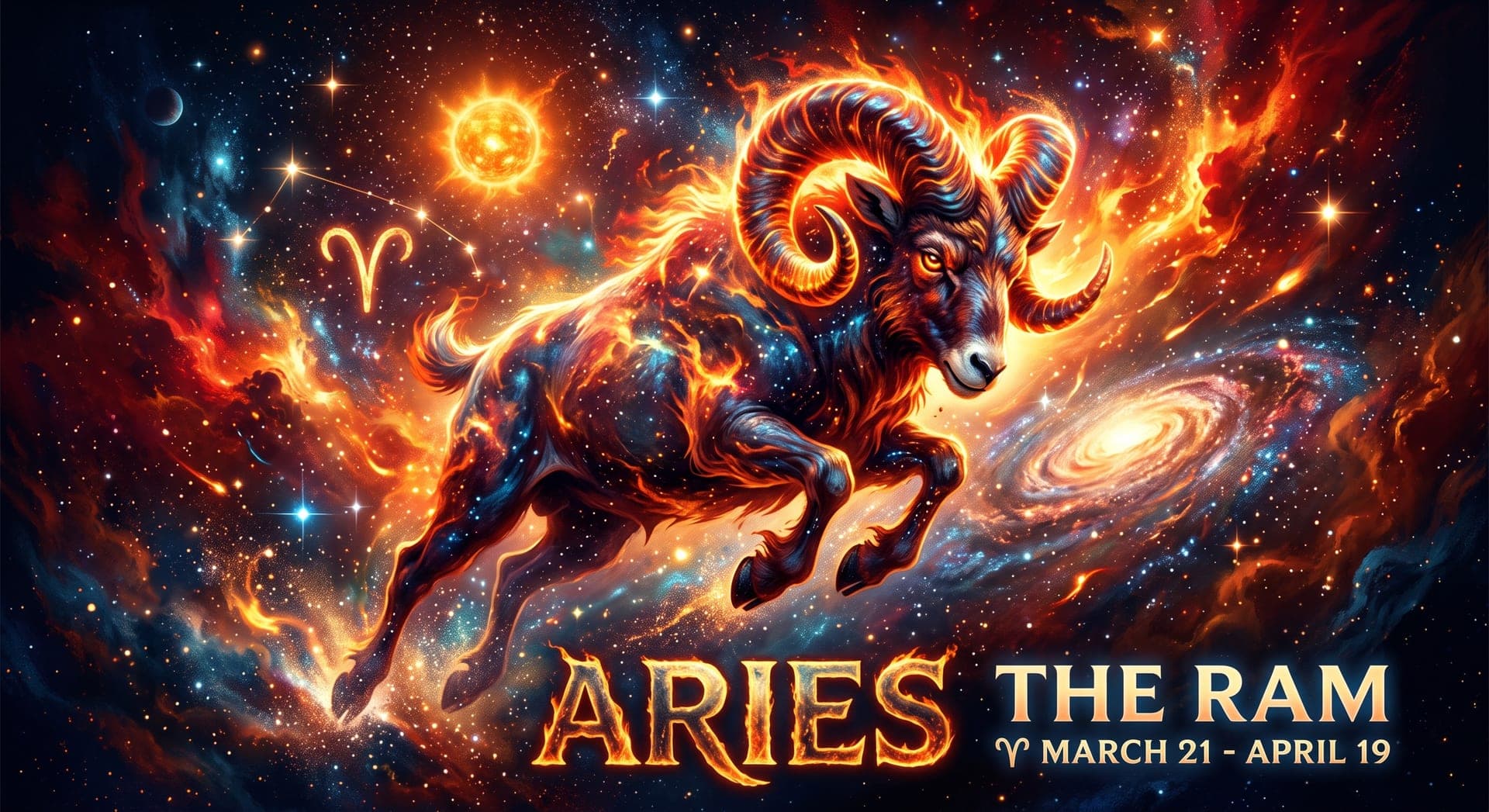
Aries, the first sign of the zodiac, spans March 21 to April 19 and is represented by the ram, an animal known for its boldness, stubborn determination, and willingness to charge forward. Ruled by Mars, the planet of action, drive, and war, Aries is often characterized as one of the most energetic and assertive signs in the zodiac, comfortable taking initiative and leading the way into new territory. As a Fire sign, Aries burns with passion and enthusiasm, approaching life with an instinctive, competitive edge and a low tolerance for hesitation. Its Cardinal modality reflects its role as an initiator, the sign that kicks off the astrological year at the spring equinox and each new season's start. People born under this sign are frequently drawn to leadership roles, sports, entrepreneurship, or any pursuit that rewards courage and quick decision-making. Direct and refreshingly honest, Aries individuals tend to say exactly what they think and rarely shy away from a challenge worth having.
Personality Traits
Strengths
- Courageous and determined
- Natural-born leader
- Honest and direct
- Enthusiastic and optimistic
- Quick to act on opportunities
Weaknesses
- Impatient and quick-tempered
- Impulsive, acts before thinking
- Can be overly competitive
- Struggles with follow-through
- Prone to selfishness
Compatible Signs
Fun Facts
- Aries is the first sign of the zodiac, marking the start of the astrological year at the spring equinox.
- The ram symbol is tied to the Greek myth of the golden-fleeced ram that rescued Phrixus, whose fleece later became the prize sought by Jason and the Argonauts.
- Mars, Aries' ruling planet, was the Roman god of war, reflecting the sign's associations with boldness, drive, and aggression.
- As a Cardinal sign, Aries is one of four signs, along with Cancer, Libra, and Capricorn, that initiate a new season.
- Notable Aries include Lady Gaga, Robert Downey Jr., Mariah Carey, and Leonardo da Vinci.
Born on April 9
- 1806
Isambard Kingdom Brunel
English engineer renowned for designing the Clifton Suspension Bridge, the Great Western Railway, and pioneering steamships
- 1821
Charles Baudelaire
French poet known for "Les Fleurs du mal"
- 1898
Paul Robeson
American singer, actor, and civil rights activist
- 1906
Hugh Gaitskell
British politician who led the Labour Party from 1955 until his death in 1963
- 1926
Hugh Hefner
American publisher who founded Playboy magazine
- 1933
Jean-Paul Belmondo
French film actor of the New Wave era
- 1937
Valerie Singleton
English television presenter best known for hosting the children's programme Blue Peter
- 1946
Alan Knott
English cricketer regarded as one of the finest wicket-keepers of his generation
- 1949
Tony Cragg
English sculptor and winner of the Turner Prize known for his organic, abstract works
- 1954
Dennis Quaid
American actor known for film and television
- 1954
Iain Duncan Smith
British politician who led the Conservative Party and later served as Secretary of State for Work and Pensions
- 1975
Robbie Fowler
English footballer who became one of Liverpool F.C.'s most prolific goalscorers
On This Day in History
- 1682
French explorer René-Robert Cavelier, Sieur de La Salle, reaches the mouth of the Mississippi River and claims the region for France, naming it Louisiana.
French explorer René-Robert Cavelier, Sieur de La Salle, traveled down the Mississippi River to its mouth at the Gulf of Mexico and formally claimed the entire river basin for France, naming the vast territory Louisiana in honor of King Louis XIV. The claim, covering land that would later become parts of more than a dozen U.S. states, shaped French colonial ambitions in North America for the following century.
- 1784
King George III ratifies the Treaty of Paris, formally ending the American Revolutionary War.
King George III ratified the Treaty of Paris, the formal peace agreement ending the American Revolutionary War and recognizing the independence of the thirteen former colonies as the United States of America. The treaty also established generous boundaries for the new nation, stretching to the Mississippi River, and addressed issues including fishing rights, debts, and the treatment of Loyalists.
- 1784
King George III ratifies the Treaty of Paris, formally ending the American Revolutionary War.
The treaty, negotiated in Paris, recognized the independence of the thirteen American colonies and established new boundaries for the fledgling United States, while Britain retained Canada. Its ratification closed a costly war that cost Britain its most populous overseas colonies and forced a fundamental rethinking of British imperial strategy in the decades that followed.
- 1865
Confederate General Robert E. Lee surrenders the Army of Northern Virginia to Union General Ulysses S. Grant at Appomattox Court House, effectively ending the Civil War.
After a grueling four-year war, Confederate General Robert E. Lee surrendered the remnants of his once-formidable Army of Northern Virginia to Union General Ulysses S. Grant at Appomattox Court House, effectively ending the American Civil War. Grant's generous surrender terms, allowing Confederate soldiers to return home without punishment, helped set a tone for reconciliation, even as the deeper work of Reconstruction remained far from resolved.
- 1865
Confederate General Robert E. Lee surrenders the Army of Northern Virginia to Union forces at Appomattox Court House.
The surrender, negotiated with Union General Ulysses S. Grant, effectively ended major fighting in the American Civil War, though scattered Confederate resistance continued for weeks afterward. Grant's generous terms, allowing Confederate soldiers to return home without punishment, helped set the tone for the beginning of national reconciliation.
- 1917
The Battle of Arras begins on the Western Front, including the Canadian Corps' assault on Vimy Ridge.
British and Canadian forces launched the Battle of Arras on the Western Front, including a highly successful assault by the Canadian Corps to capture the heavily fortified German position at Vimy Ridge. The victory, achieved through careful planning and coordinated artillery tactics, came at a heavy cost but is remembered as a defining moment in the development of a distinct Canadian national identity.
- 1917
The Battle of Arras begins on the Western Front, opening with the Canadian Corps' assault on Vimy Ridge.
Part of a broader British-led offensive in northern France, the attack on Vimy Ridge saw all four divisions of the Canadian Corps fighting together for the first time, capturing the heavily fortified ridge from German forces after years of failed Allied attempts. The victory came at a heavy cost but became a defining moment in Canadian national memory.
- 1939
Singer Marian Anderson performs an open-air concert at the Lincoln Memorial after being denied use of Constitution Hall because she was Black.
After the Daughters of the American Revolution refused to let contralto Marian Anderson perform at Constitution Hall because she was Black, First Lady Eleanor Roosevelt helped arrange an alternative open-air concert at the Lincoln Memorial. Anderson performed before a crowd of 75,000 people and a radio audience of millions, in a moment widely remembered as an early landmark of the civil rights movement.
- 1940
Nazi Germany invades Denmark and Norway in Operation Weserübung.
Nazi Germany launched simultaneous invasions of Denmark and Norway under the codename Operation Weserübung, aiming to secure iron ore shipping routes and strategic naval bases in the North Atlantic. Denmark surrendered within hours, while Norway mounted stronger resistance with British and French support before ultimately falling to German occupation after a two-month campaign.
- 1940
Nazi Germany launches Operation Weserübung, invading Denmark and Norway simultaneously in a surprise attack.
The invasion secured German access to Norwegian ports and iron ore supplies from Sweden while forestalling a similar Allied plan to intervene in Scandinavia. Denmark capitulated within hours, but Norwegian resistance, aided by British, French, and Polish troops, held out for two months before Germany secured control of the entire country.
- 1942
During the Indian Ocean raid, Japan's 1st Air Fleet sinks the Royal Navy carrier HMS Hermes and the Australian destroyer HMAS Vampire.
The raid, conducted by the same Japanese carrier force that had attacked Pearl Harbor months earlier, caught the ships off the coast of Ceylon with no air cover. HMS Hermes, the world's first ship purpose-built as an aircraft carrier, was sunk within minutes, underscoring how vulnerable the Royal Navy's Eastern Fleet had become to Japanese naval air power.
- 1945
Lutheran pastor and anti-Nazi dissident Dietrich Bonhoeffer is executed by the Nazis just weeks before Germany's surrender.
Lutheran pastor and theologian Dietrich Bonhoeffer, who had joined a conspiracy to assassinate Adolf Hitler and was imprisoned for his role, was executed by hanging at the Flossenbürg concentration camp just weeks before the camp's liberation by Allied forces. Bonhoeffer's writings on faith and resistance to tyranny have made him one of the most influential Christian theologians of the 20th century.
- 1945
The German cruiser Admiral Scheer is sunk in Kiel harbour by bombers of Britain's Royal Air Force.
The heavy cruiser, one of the German navy's most active surface raiders earlier in the war, was struck during a large RAF Bomber Command raid targeting the port city in the war's final weeks. It capsized after being hit, symbolically ending the career of one of Nazi Germany's most feared warships as the Third Reich collapsed.
- 1957
The Suez Canal is cleared of wreckage and reopens to shipping following the Suez Crisis.
The canal had been blocked after Egypt nationalized it in 1956, prompting a joint British, French, and Israeli military intervention that collapsed under international pressure, particularly from the United States. The episode badly damaged Britain's global standing and is widely seen as marking a symbolic end to its status as a leading world power.
- 1959
NASA introduces the "Mercury Seven," the first group of American astronauts selected for spaceflight.
NASA publicly introduced the "Mercury Seven," the first group of American astronauts selected for the country's fledgling human spaceflight program, at a press conference that made instant national celebrities of the seven military test pilots. Their subsequent missions during Project Mercury, including Alan Shepard's and John Glenn's historic flights, captured the public imagination during the early Space Race with the Soviet Union.
- 1969
The first British-built Concorde, Concorde 002, makes its maiden flight from Filton near Bristol.
Developed jointly by Britain and France, Concorde was the world's first supersonic passenger airliner, capable of crossing the Atlantic in under three and a half hours. The Filton-built prototype's test flight came shortly after the French-assembled Concorde 001 had flown from Toulouse, and the aircraft entered commercial service with British Airways and Air France in 1976.
- 1989
Soviet troops violently disperse a pro-independence demonstration in Tbilisi, Georgia, killing at least 20 people.
Soviet troops violently dispersed a peaceful pro-independence demonstration in Tbilisi, the capital of Soviet Georgia, using sharpened shovels and toxic gas against unarmed protesters, killing at least 20 people, most of them young women. The massacre outraged Georgians and became a significant catalyst for the republic's independence movement as the Soviet Union began to unravel over the following two years.
- 1990
An IRA bomb attack in County Down, Northern Ireland, kills three members of the Ulster Defence Regiment.
The attack was one of many carried out by the Provisional IRA against British security forces during the Troubles, the decades-long sectarian conflict in Northern Ireland. The Ulster Defence Regiment, a locally recruited part-time infantry force of the British Army, was a frequent target of paramilitary violence throughout the conflict.
- 1991
Georgia declares independence from the Soviet Union, becoming one of the first Soviet republics to break away.
The declaration came amid the broader collapse of Soviet authority across Eastern Europe and the USSR's constituent republics, and followed a referendum in which the overwhelming majority of Georgian voters backed independence. The move set the stage for years of political turmoil and conflict within Georgia as it established itself as a sovereign state.
- 2003
American forces capture Baghdad during the Iraq War, symbolized by the toppling of a large statue of Saddam Hussein.
American forces advanced into central Baghdad, and jubilant crowds, assisted by U.S. Marines, toppled a large statue of Saddam Hussein in Firdos Square, an image broadcast worldwide as a symbol of the collapse of his government during the initial invasion phase of the Iraq War. The moment, however, obscured the far longer and more difficult occupation and insurgency period that followed.