What’s Observed on April 10
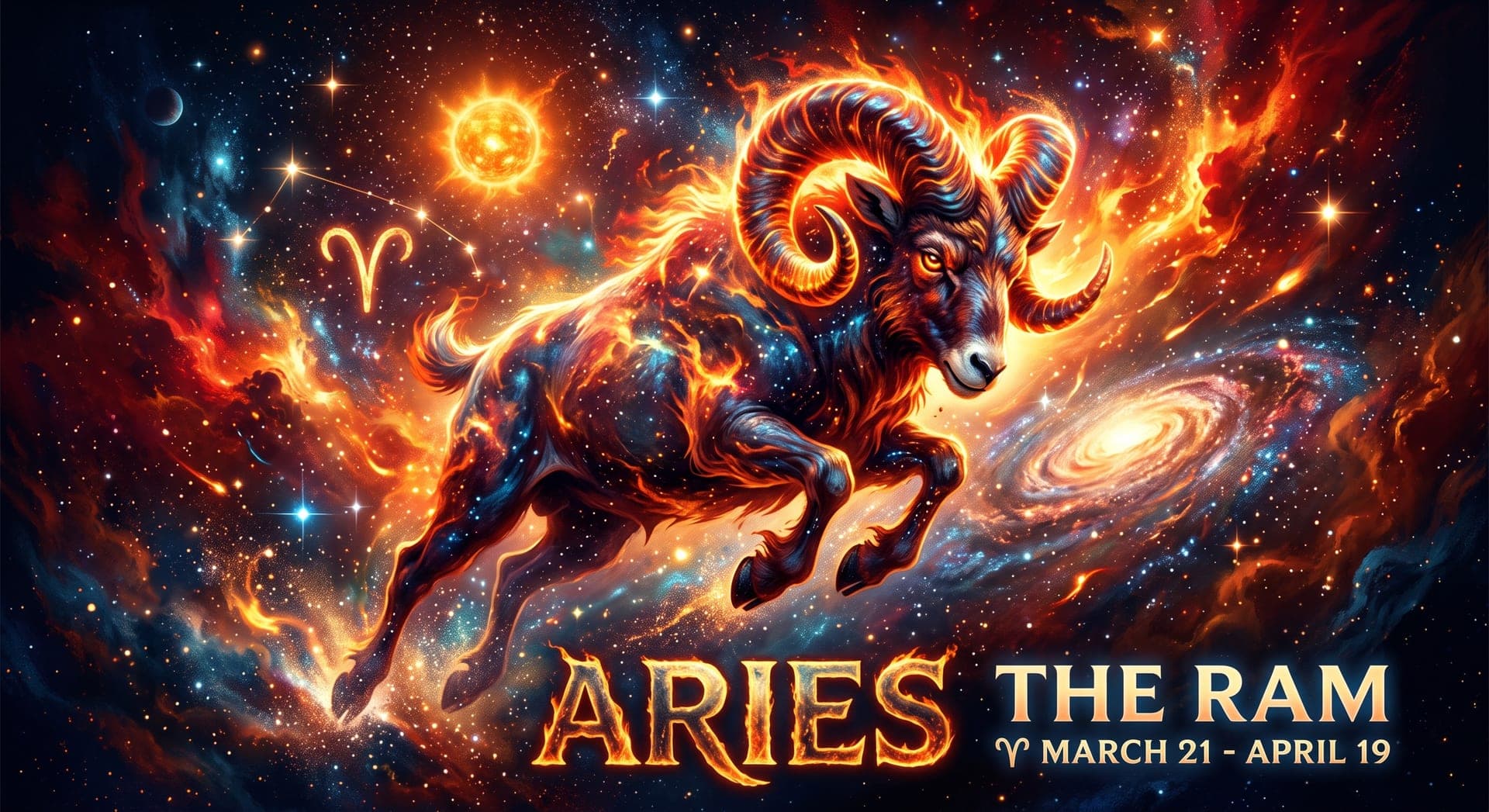
Born on April 10: Aries ♈
Aries, the first sign of the zodiac, spans March 21 to April 19 and is represented by the ram, an animal known for its boldness, stubborn determination, and willingness to charge forward. Ruled by Mars, the planet of action, drive, and war, Aries is often characterized as one of the most energetic and assertive signs in the zodiac, comfortable taking initiative and leading the way into new territory. As a Fire sign, Aries burns with passion and enthusiasm, approaching life with an instinctive, competitive edge and a low tolerance for hesitation. Its Cardinal modality reflects its role as an initiator, the sign that kicks off the astrological year at the spring equinox and each new season's start. People born under this sign are frequently drawn to leadership roles, sports, entrepreneurship, or any pursuit that rewards courage and quick decision-making. Direct and refreshingly honest, Aries individuals tend to say exactly what they think and rarely shy away from a challenge worth having.
Personality Traits
Strengths
- Courageous and determined
- Natural-born leader
- Honest and direct
- Enthusiastic and optimistic
- Quick to act on opportunities
Weaknesses
- Impatient and quick-tempered
- Impulsive, acts before thinking
- Can be overly competitive
- Struggles with follow-through
- Prone to selfishness
Compatible Signs
Fun Facts
- Aries is the first sign of the zodiac, marking the start of the astrological year at the spring equinox.
- The ram symbol is tied to the Greek myth of the golden-fleeced ram that rescued Phrixus, whose fleece later became the prize sought by Jason and the Argonauts.
- Mars, Aries' ruling planet, was the Roman god of war, reflecting the sign's associations with boldness, drive, and aggression.
- As a Cardinal sign, Aries is one of four signs, along with Cancer, Libra, and Capricorn, that initiate a new season.
- Notable Aries include Lady Gaga, Robert Downey Jr., Mariah Carey, and Leonardo da Vinci.
Born on April 10
- 1583
Hugo Grotius
Dutch philosopher and legal theorist, father of international law
- 1778
William Hazlitt
English essayist and literary critic celebrated for his sharp, personal prose style
- 1829
William Booth
English Methodist minister who founded the Salvation Army
- 1847
Joseph Pulitzer
Hungarian-American newspaper publisher for whom the Pulitzer Prize is named
- 1880
Frances Perkins
First female U.S. Cabinet member, Secretary of Labor
- 1894
Ben Nicholson
British painter known for pioneering abstract art in Britain with his geometric reliefs
- 1921
Chuck Connors
American actor and professional baseball player
- 1932
Omar Sharif
Egyptian actor known for "Lawrence of Arabia"
- 1940
Gloria Hunniford
British radio and television broadcaster known for decades of work on the BBC
- 1941
Paul Theroux
American novelist and travel writer
- 1955
Lesley Garrett
English soprano celebrated as one of Britain's leading opera singers
- 1956
Carol V. Robinson
English chemist known for pioneering the use of mass spectrometry to study proteins
- 1990
Daisy Ridley
English actress who rose to fame playing Rey in the Star Wars sequel trilogy

On This Day in History
- 1545
The city of Potosí is founded in present-day Bolivia following the discovery of massive silver deposits nearby.
Spanish colonists founded the city of Potosí in present-day Bolivia following the discovery of the nearby Cerro Rico, a mountain containing what proved to be one of the largest silver deposits ever found. The resulting silver boom made Potosí briefly one of the largest and wealthiest cities in the world, though its mines relied heavily on forced indigenous and enslaved labor under brutal conditions.
- 1606
The Virginia Company of London receives a royal charter to establish colonial settlements in North America.
King James I granted the Virginia Company of London a royal charter authorizing it to establish colonial settlements in North America, leading directly to the founding of Jamestown, the first permanent English colony in the Americas, the following year. The charter reflected England's growing ambitions to compete with Spain and other European powers in colonizing the New World.
- 1606
The Virginia Company of London is established by royal charter of James I of England to found colonial settlements in North America.
The joint-stock company was granted rights to establish colonies along the eastern coast of North America and went on to found Jamestown in 1607, the first permanent English settlement in what became the United States. Its charter set an early template for how England would organize and finance overseas colonization through private investment.
- 1710
The Statute of Anne takes effect in Great Britain, widely regarded as the first law establishing modern copyright.
The Statute of Anne took effect in Great Britain, establishing a fixed term of copyright protection for published works and granting authors, rather than only publishers, legal rights over their creations for the first time. Widely regarded by legal historians as the first true copyright law, it became a foundational model for intellectual property legislation adopted by many other countries in the centuries since.
- 1710
The Statute of Anne, the first law regulating copyright, comes into force in Great Britain.
The statute granted authors, rather than printers or publishers, the initial right to control the reproduction of their own work, for a fixed term of years before it entered the public domain. It marked a fundamental shift in how creative works were legally protected and became the model on which modern copyright law in Britain, the United States, and beyond was later built.
- 1717
Robert Walpole resigns from the British government, triggering a rift within the Whig party known as the Whig Split.
The rift arose from disagreements over foreign policy and personal rivalries within the Whig leadership, and lasted until 1720 when the factions reconciled. Walpole would return to government and eventually become recognized as Britain's first Prime Minister, dominating politics for over two decades from the 1720s onward.
- 1814
Allied forces under the Duke of Wellington attack Toulouse, driving out the French garrison under Marshal Soult.
The battle, fought after Napoleon had already abdicated though news had not yet reached the armies in southern France, was one of the last major engagements of the Peninsular War. Wellington's forces suffered heavy casualties in fighting that proved militarily unnecessary once word of the ceasefire arrived days later.
- 1815
Indonesia's Mount Tambora begins its catastrophic eruption, the most powerful in recorded history, eventually killing an estimated 71,000 people and disrupting global climate for years.
Mount Tambora on the Indonesian island of Sumbawa began the most powerful volcanic eruption in recorded history, ultimately killing tens of thousands of people directly and contributing to the deaths of tens of thousands more from the ensuing global climate disruption. The eruption's massive ash cloud caused 1816 to become known as the "Year Without a Summer" across parts of the Northern Hemisphere.
- 1858
Big Ben's bell is recast by the Whitechapel Bell Foundry after the original cracked during testing.
After the original bell for London's famous clock tower cracked during testing due to a manufacturing flaw, the Whitechapel Bell Foundry recast Big Ben using a modified design intended to prevent a repeat failure. Though the new bell later developed its own smaller crack still audible in its distinctive tone today, it has continued ringing over the Palace of Westminster for well over a century.
- 1858
The cracked original bell intended for the Palace of Westminster's clock tower is recast into the current Big Ben by the Whitechapel Bell Foundry.
The first bell, weighing over fourteen tonnes, had cracked during testing before it was ever installed, so it was broken up and recast into a slightly lighter bell of nearly fourteen tonnes. That bell, known as Big Ben, was hoisted into the clock tower later in 1858 and still rings over the Houses of Parliament today, despite acquiring its own crack soon after installation.
- 1868
British and Indian forces defeat the army of Emperor Tewodros II of Ethiopia at Arogee during the Abyssinian expedition.
The battle came during a British military campaign launched to free European hostages held by Tewodros, and resulted in a lopsided victory, with roughly 700 Ethiopian soldiers killed against only two British and Indian casualties. The expedition culminated weeks later in the storming of Tewodros's fortress at Magdala and his death.
- 1900
British forces suffer a sharp defeat by Boer commandos south of Brandfort during the Second Boer War.
The engagement was part of the broader campaign in the Orange Free State, where mobile Boer units repeatedly outmaneuvered larger but less flexible British columns. Roughly 600 British troops were killed or wounded and 800 more taken prisoner, a reminder of the difficulties Britain faced fighting an unconventional guerrilla-style enemy despite its numerical and material advantages.
- 1912
The RMS Titanic departs Southampton, England, on its ill-fated maiden voyage.
The RMS Titanic, then the largest passenger ship ever built, departed Southampton, England, on its widely publicized maiden voyage bound for New York City, carrying over 2,200 passengers and crew, including many wealthy and prominent travelers. The ship would strike an iceberg and sink four days later, making the voyage one of history's most infamous.
- 1912
RMS Titanic sets sail from Southampton, England, on her maiden and only voyage.
Built in Belfast by Harland and Wolff and marketed as the largest and most luxurious ocean liner afloat, the Titanic was bound for New York with stops in France and Ireland. Just five days later she struck an iceberg in the North Atlantic and sank, killing more than 1,500 of the roughly 2,200 people aboard in one of history's deadliest peacetime maritime disasters.
- 1970
Paul McCartney publicly announces his departure from the Beatles, effectively signaling the band's breakup.
Paul McCartney publicly announced he was leaving the Beatles, releasing a self-interview alongside his debut solo album that effectively confirmed the band's breakup after months of internal tension and legal disputes. Though McCartney's announcement made headlines as the formal end, the group's dissolution had been building for some time amid creative and business disagreements among its members.
- 1981
Imprisoned IRA hunger striker Bobby Sands is elected to the British Parliament as MP for Fermanagh and South Tyrone.
Sands had been on hunger strike in the Maze Prison for weeks, demanding recognition as a political prisoner rather than a criminal, when his by-election victory drew international attention to the cause. He died twenty-six days later, becoming a potent symbol for Irish republicanism, and his death intensified the violence of the Troubles in Northern Ireland.
- 1998
The Good Friday Agreement is signed in Belfast, marking a major step toward peace in Northern Ireland.
Negotiators reached the Good Friday Agreement in Belfast, a landmark accord between the British and Irish governments and most of Northern Ireland's political parties that established a framework for power-sharing government and largely ended three decades of sectarian violence known as the Troubles. The agreement, later approved by referendums in both Northern Ireland and the Republic of Ireland, remains the foundation of the region's peace process.
- 1998
The Good Friday Agreement is signed in Belfast, setting out a political framework to end decades of conflict in Northern Ireland.
Negotiated between the British and Irish governments alongside most of Northern Ireland's political parties, the agreement established a devolved power-sharing government and created new institutions linking Northern Ireland, Ireland, and Britain. Approved by referendums on both sides of the border, it is widely credited with bringing an end to the worst violence of the Troubles.
- 2010
A Polish Air Force jet crashes near Smolensk, Russia, killing all 96 aboard, including President Lech Kaczyński.
A Polish Air Force jet carrying President Lech Kaczyński, his wife, and numerous senior Polish officials crashed in dense fog while attempting to land near Smolensk, Russia, killing all 96 people aboard. The delegation had been traveling to commemorate the 70th anniversary of the Katyn massacre, adding a tragic historical resonance to the disaster, which plunged Poland into national mourning.
- 2023
A mass shooting at Old National Bank in Louisville, Kentucky, kills five people.
A gunman opened fire inside Old National Bank in downtown Louisville, Kentucky, killing five people and wounding several others, including a police officer, before being shot and killed by responding officers. The shooting, livestreamed in part on social media by the perpetrator, added to a wave of mass shootings that intensified debate over gun policy in the United States that year.