What’s Observed on April 5
Born on April 5: Aries ♈
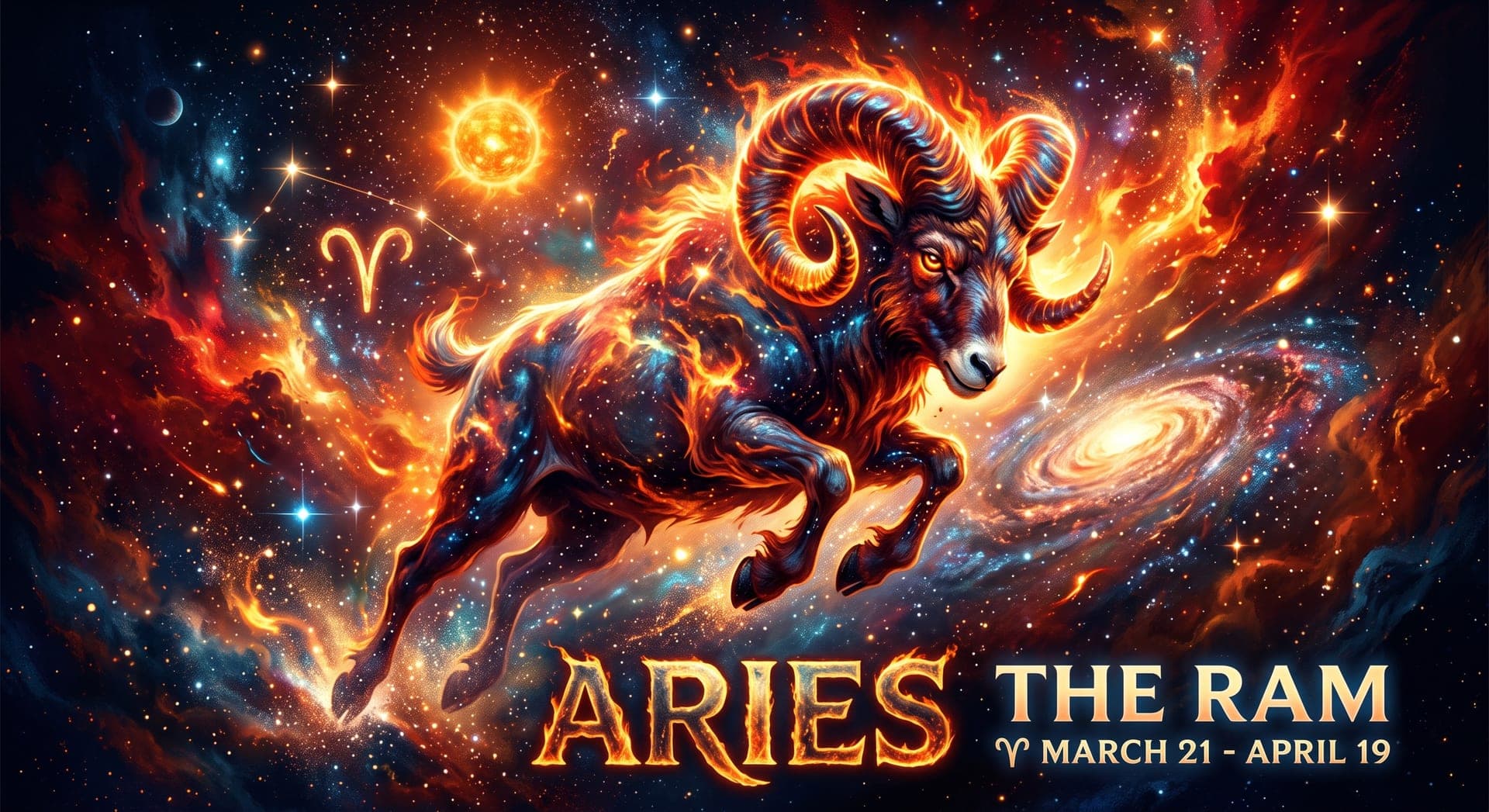
Aries, the first sign of the zodiac, spans March 21 to April 19 and is represented by the ram, an animal known for its boldness, stubborn determination, and willingness to charge forward. Ruled by Mars, the planet of action, drive, and war, Aries is often characterized as one of the most energetic and assertive signs in the zodiac, comfortable taking initiative and leading the way into new territory. As a Fire sign, Aries burns with passion and enthusiasm, approaching life with an instinctive, competitive edge and a low tolerance for hesitation. Its Cardinal modality reflects its role as an initiator, the sign that kicks off the astrological year at the spring equinox and each new season's start. People born under this sign are frequently drawn to leadership roles, sports, entrepreneurship, or any pursuit that rewards courage and quick decision-making. Direct and refreshingly honest, Aries individuals tend to say exactly what they think and rarely shy away from a challenge worth having.
Personality Traits
Strengths
- Courageous and determined
- Natural-born leader
- Honest and direct
- Enthusiastic and optimistic
- Quick to act on opportunities
Weaknesses
- Impatient and quick-tempered
- Impulsive, acts before thinking
- Can be overly competitive
- Struggles with follow-through
- Prone to selfishness
Compatible Signs
Fun Facts
- Aries is the first sign of the zodiac, marking the start of the astrological year at the spring equinox.
- The ram symbol is tied to the Greek myth of the golden-fleeced ram that rescued Phrixus, whose fleece later became the prize sought by Jason and the Argonauts.
- Mars, Aries' ruling planet, was the Roman god of war, reflecting the sign's associations with boldness, drive, and aggression.
- As a Cardinal sign, Aries is one of four signs, along with Cancer, Libra, and Capricorn, that initiate a new season.
- Notable Aries include Lady Gaga, Robert Downey Jr., Mariah Carey, and Leonardo da Vinci.
Born on April 5
- 1588
Thomas Hobbes
English philosopher best known for Leviathan, his foundational work of social contract theory
- 1769
Sir Thomas Hardy
English naval officer who served as Vice-Admiral Nelson's flag captain aboard HMS Victory at Trafalgar
- 1827
Joseph Lister
English surgeon who pioneered antiseptic surgical techniques, dramatically reducing post-operative infections
- 1837
Algernon Charles Swinburne
English poet known for his lyrical, controversial verse and contributions to Victorian literature
- 1856
Booker T. Washington
American educator and founder of Tuskegee Institute
- 1908
Bette Davis
American actress of classic Hollywood cinema
- 1916
Gregory Peck
American actor known for "To Kill a Mockingbird"
- 1922
Tom Finney
English footballer regarded as one of the greatest players in the history of Preston North End and England
- 1926
Roger Corman
American filmmaker known for low-budget cult films
- 1929
Nigel Hawthorne
English actor celebrated for his stage and screen roles, including The Madness of King George
- 1937
Colin Powell
American general and Secretary of State
- 1946
Jane Asher
English actress, author and businesswoman known for her acting career and cake-decorating business
On This Day in History
- 1242
Alexander Nevsky leads Novgorodian forces to victory over the Teutonic Knights at the Battle on the Ice.
Prince Alexander Nevsky led Novgorodian and Vladimir-Suzdal forces to a decisive victory over the Livonian Order, a branch of the Teutonic Knights, on the frozen surface of Lake Peipus, an engagement later dubbed the Battle on the Ice. The victory halted German and Swedish crusading expansion into Orthodox Russian territory and became a celebrated symbol of Russian resistance to foreign invasion, later dramatized in Sergei Eisenstein's classic film.
- 1614
Pocahontas marries English colonist John Rolfe in Virginia, helping ease tensions between English settlers and the Powhatan Confederacy.
Pocahontas, daughter of Powhatan chief Wahunsenacawh, married English tobacco planter John Rolfe in Jamestown, Virginia, in a union that helped establish several years of relative peace between English colonists and the Powhatan Confederacy following earlier violent conflicts. The marriage, along with Pocahontas's earlier conversion to Christianity and adoption of the name Rebecca, later became a heavily mythologized episode in American colonial history.
- 1614
The 'Addled Parliament' opens under King James I, so named because it dissolved without passing a single law.
Tensions between the king and the House of Commons over royal finances and prerogative powers left the session deadlocked from the start. After two unproductive months, James dissolved Parliament in frustration, and it would be seven years before he called another. The episode illustrated the growing constitutional friction between crown and Parliament that would eventually erupt into civil war.
- 1614
Pocahontas, daughter of the Powhatan chief, marries English tobacco planter John Rolfe in the colony of Virginia.
The marriage, following her conversion to Christianity and baptism as Rebecca, helped secure a period of peace between the English settlers at Jamestown and the Powhatan Confederacy known as the Peace of Pocahontas. Rolfe's pioneering cultivation of a milder tobacco strain also helped establish the crop as the economic backbone of the young Virginia colony, an early success of English colonisation in America.
- 1621
The Mayflower departs Plymouth, Massachusetts, to begin her return voyage to England after wintering with the Pilgrim settlers.
The ship had carried the Pilgrims across the Atlantic the previous autumn, arriving in November 1620 after a gruelling crossing. Many passengers died during the harsh first winter, and the Mayflower's crew, also depleted by illness, remained in the New World before finally setting sail back to England once conditions allowed, having played its part in one of the most consequential voyages in colonial history.
- 1792
President George Washington exercises the first presidential veto in U.S. history, rejecting a congressional apportionment bill.
President George Washington vetoed a congressional bill establishing how House of Representatives seats would be apportioned among the states, arguing the formula violated the Constitution's population-based requirements, marking the first use of presidential veto power in American history. Congress ultimately revised the bill to address his objections, establishing an early precedent for how the veto would function as a check on legislative power.
- 1792
US President George Washington exercises the first presidential veto in American history.
Washington rejected a congressional bill on the apportionment of representatives among the states, believing it violated the Constitution's formula for allocating seats. The veto established an important precedent for the use of executive power to check legislation, a tool that later presidents would use far more frequently in the ongoing balance of power between the branches of the federal government.
- 1818
Chilean and Argentine forces win a decisive victory at the Battle of Maipú, securing Chile's independence from Spain.
Combined Chilean and Argentine forces led by José de San Martín and Bernardo O'Higgins won a decisive victory over Spanish royalist troops at the Battle of Maipú near Santiago, effectively securing Chilean independence after years of fighting. The victory is still commemorated in Chile as one of the defining military triumphs of its independence movement from Spanish colonial rule.
- 1862
The Siege of Yorktown begins during the American Civil War's Peninsula Campaign.
Union General George McClellan began a monthlong siege of Confederate defenses at Yorktown, Virginia, as part of his cautious Peninsula Campaign aimed at capturing Richmond. The slow-moving siege, criticized by many for its excessive caution given McClellan's numerical advantage, gave Confederate forces valuable time to reinforce their positions and ultimately contributed to the campaign's eventual failure to take the Confederate capital.
- 1902
A stand collapses at Ibrox Park in Glasgow during a Scotland-England football match, killing 25 spectators.
A packed wooden stand at Ibrox Park in Glasgow collapsed during a heated football match between Scotland and England, sending spectators crashing to the ground below and killing 25 people while injuring hundreds more. The disaster remains one of the deadliest incidents in British sporting history and prompted early efforts to improve stadium safety standards, though further deadly incidents at British stadiums would follow in later decades.
- 1902
A wooden stand collapses during a Scotland-England football international at Ibrox Park in Glasgow, killing 25 spectators and injuring hundreds more.
Heavy rain had weakened the recently built terracing, which gave way under the weight of the crowd partway through the match. The disaster, one of the worst in British sporting history, led to major changes in stadium design and safety regulation, including a shift away from wooden stands toward steel and concrete construction across British football grounds.
- 1936
A powerful F5 tornado tears through Tupelo, Mississippi, killing 233 people in one of the deadliest tornadoes in U.S. history.
An extremely powerful F5 tornado tore through Tupelo, Mississippi, as part of a broader deadly tornado outbreak across the southern United States, destroying entire neighborhoods and killing 233 people, making it one of the deadliest single tornadoes in American history. A young Elvis Presley, then an infant living in Tupelo, survived the storm with his family in a home that was spared significant damage.
- 1936
An F5 tornado tears through Tupelo, Mississippi, killing 233 people in one of the deadliest twisters in US history.
The tornado struck at night, giving residents little warning, and devastated a residential area of the city, flattening homes and leaving thousands homeless. It was part of a broader outbreak of severe storms across the southern United States that week, which caused hundreds more deaths across multiple states, including a similarly destructive tornado in Gainesville, Georgia the following day.
- 1942
The Japanese Navy attacks the British colonial port of Colombo, Ceylon, sinking the Royal Navy cruisers HMS Cornwall and HMS Dorsetshire.
The raid was part of a wider Japanese naval offensive into the Indian Ocean intended to cripple British naval power in the region following their rapid conquest of Southeast Asia. Both cruisers were sunk with heavy loss of life after being caught without air cover. The attack forced the Royal Navy to withdraw its Eastern Fleet to safer bases, marking a low point of British fortunes in the Far East.
- 1951
Julius and Ethel Rosenberg are sentenced to death for conspiracy to commit espionage after passing atomic secrets to the Soviet Union.
The trial and sentencing became one of the most controversial episodes of the early Cold War, with supporters arguing the couple were victims of anti-communist hysteria and inadequate evidence. Despite international appeals for clemency, the Rosenbergs were executed in June 1953, becoming the only American civilians ever put to death for espionage during the Cold War.
- 1956
Fidel Castro formally declares war on the government of Cuban dictator Fulgencio Batista.
Castro had been waging a guerrilla campaign from the Sierra Maestra mountains since landing in Cuba aboard the yacht Granma in late 1956. The formal declaration marked an escalation of the insurgency that would culminate in Batista's overthrow at the start of 1959, bringing Castro to power and beginning decades of communist rule on the island.
- 1965
"My Fair Lady" wins the Academy Award for Best Picture.
"My Fair Lady," the lavish film adaptation of the Lerner and Loewe stage musical starring Audrey Hepburn and Rex Harrison, won the Academy Award for Best Picture at the 37th Oscars ceremony, one of eight awards the film took home that night. The musical's success capped a wave of popular big-budget movie musical adaptations that dominated Hollywood throughout the 1960s.
- 1998
Japan's Akashi Kaikyō Bridge opens, becoming the world's longest suspension bridge span.
Japan's Akashi Kaikyō Bridge, connecting the city of Kobe to Awaji Island across a turbulent strait, officially opened to traffic after a decade of construction, becoming the world's longest suspension bridge with a central span of nearly 2,000 meters. Engineers designed the bridge to withstand powerful earthquakes and typhoons common to the region, and it remained the longest such span in the world for over two decades.
- 1999
Two Libyan suspects in the Lockerbie bombing are handed over for trial before a Scottish court sitting in the Netherlands.
The men were accused of planting the bomb that destroyed Pan Am Flight 103 over Lockerbie, Scotland, in 1988, killing 270 people. After years of UN sanctions against Libya over Colonel Gaddafi's refusal to extradite the suspects, a compromise allowed a Scottish court to convene at a neutral site, Camp Zeist, resulting in the conviction of one defendant, Abdelbaset al-Megrahi.
- 2010
An explosion at the Upper Big Branch coal mine in West Virginia kills 29 miners in the worst U.S. mining disaster in decades.
An explosion caused by a buildup of methane and coal dust ripped through the Upper Big Branch coal mine in West Virginia, killing 29 miners in the worst American coal mining disaster in nearly four decades. A subsequent investigation found the mine's owner, Massey Energy, had a pattern of safety violations, and the disaster prompted congressional hearings and renewed scrutiny of coal mine safety enforcement.