What’s Observed on April 6
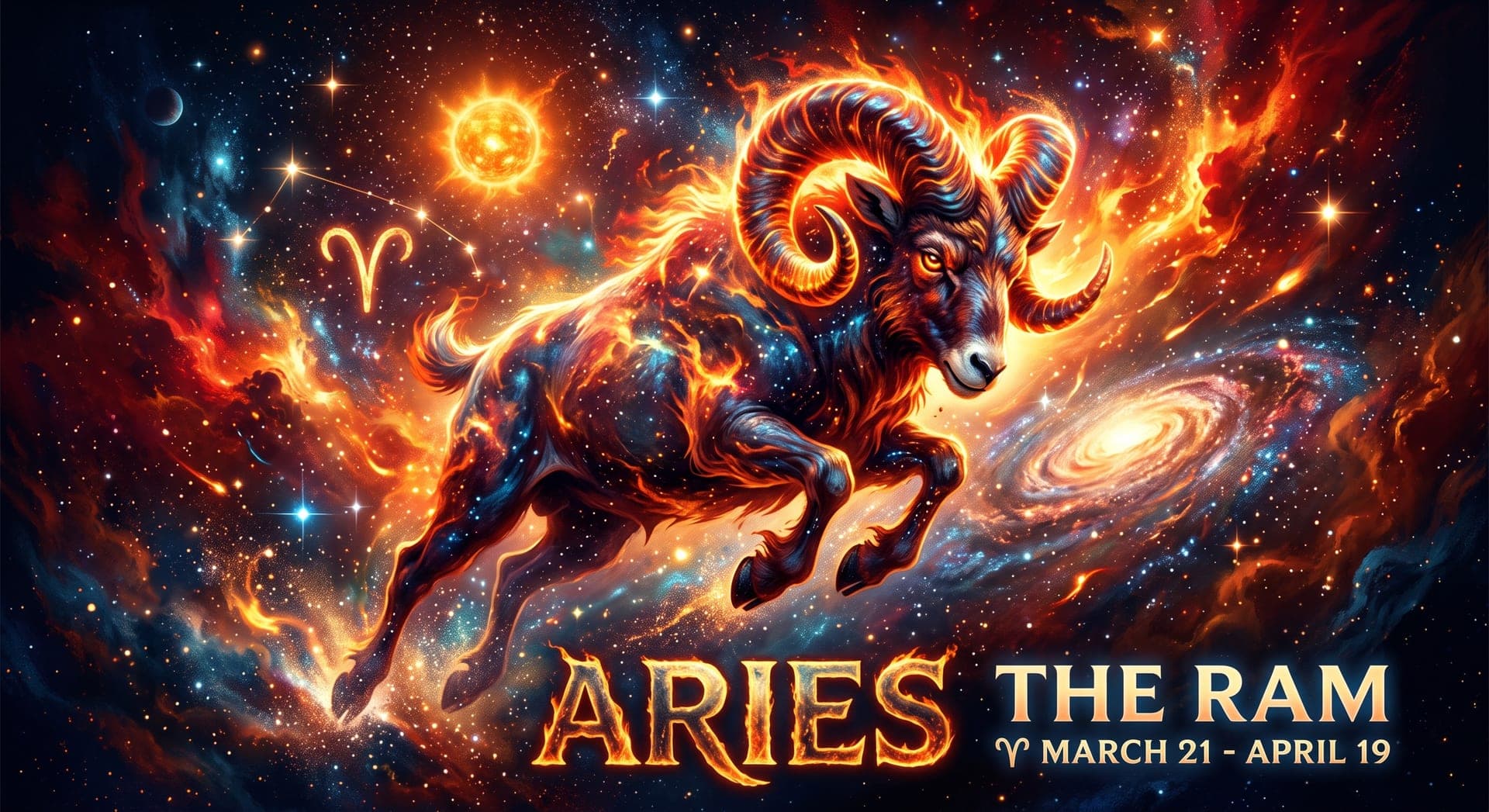
Born on April 6: Aries ♈
Aries, the first sign of the zodiac, spans March 21 to April 19 and is represented by the ram, an animal known for its boldness, stubborn determination, and willingness to charge forward. Ruled by Mars, the planet of action, drive, and war, Aries is often characterized as one of the most energetic and assertive signs in the zodiac, comfortable taking initiative and leading the way into new territory. As a Fire sign, Aries burns with passion and enthusiasm, approaching life with an instinctive, competitive edge and a low tolerance for hesitation. Its Cardinal modality reflects its role as an initiator, the sign that kicks off the astrological year at the spring equinox and each new season's start. People born under this sign are frequently drawn to leadership roles, sports, entrepreneurship, or any pursuit that rewards courage and quick decision-making. Direct and refreshingly honest, Aries individuals tend to say exactly what they think and rarely shy away from a challenge worth having.
Personality Traits
Strengths
- Courageous and determined
- Natural-born leader
- Honest and direct
- Enthusiastic and optimistic
- Quick to act on opportunities
Weaknesses
- Impatient and quick-tempered
- Impulsive, acts before thinking
- Can be overly competitive
- Struggles with follow-through
- Prone to selfishness
Compatible Signs
Fun Facts
- Aries is the first sign of the zodiac, marking the start of the astrological year at the spring equinox.
- The ram symbol is tied to the Greek myth of the golden-fleeced ram that rescued Phrixus, whose fleece later became the prize sought by Jason and the Argonauts.
- Mars, Aries' ruling planet, was the Roman god of war, reflecting the sign's associations with boldness, drive, and aggression.
- As a Cardinal sign, Aries is one of four signs, along with Cancer, Libra, and Capricorn, that initiate a new season.
- Notable Aries include Lady Gaga, Robert Downey Jr., Mariah Carey, and Leonardo da Vinci.
Born on April 6
- 1773
James Mill
Scottish historian, economist and philosopher known for his utilitarian writings and his monumental History of British India
- 1884
J. G. Parry-Thomas
Welsh engineer and racing driver who twice broke the land speed record before his death attempting to reclaim it
- 1890
Anthony Fokker
Dutch aircraft engineer and founder of Fokker Aircraft
- 1926
Ian Paisley
Northern Irish politician and evangelical preacher who became First Minister of Northern Ireland
- 1928
James Watson
American biologist who co-discovered the structure of DNA
- 1937
Merle Haggard
American country music singer-songwriter
- 1937
Billy Dee Williams
American actor known for "Star Wars"
- 1938
Paul Daniels
English magician and television host famous for his long-running BBC magic show
- 1953
Patrick Doyle
Scottish composer renowned for his film scores, including many collaborations with director Kenneth Branagh
- 1961
Rory Bremner
Scottish impressionist and comedian known for his satirical political impersonations
- 1969
Paul Rudd
American actor known for "Ant-Man" and comedy films
- 1978
Myleene Klass
English singer, musician and television presenter who rose to fame with the pop group Hear'Say

On This Day in History
- 46 BCE
Julius Caesar defeats the last significant Pompeian resistance at the Battle of Thapsus in North Africa.
Julius Caesar decisively defeated the combined forces of Metellus Scipio and Numidian King Juba I at the Battle of Thapsus in North Africa, effectively crushing the last major military resistance of the Optimates faction that had opposed him in Rome's civil war. Cato the Younger, a prominent opponent unwilling to accept defeat or Caesar's clemency, took his own life shortly after learning of the outcome.
- 1320
Scottish nobles reaffirm the country's independence in the Declaration of Arbroath.
Scottish nobles and clergy sent a letter to Pope John XXII known as the Declaration of Arbroath, forcefully asserting Scotland's independence from England and defending King Robert the Bruce's authority to rule. The document's eloquent statement that Scots would fight not for glory or wealth but "for freedom alone" has made it one of the most celebrated texts in Scottish history.
- 1320
Scottish nobles sign the Declaration of Arbroath, a letter to Pope John XXII reaffirming Scotland's independence.
Written in the name of King Robert the Bruce and the barons of Scotland, the declaration asserted Scotland's right to self-rule and famously stated that the Scots would never submit to English domination while a hundred of them remained alive. It sought papal recognition of Scottish independence during the ongoing Wars of Scottish Independence and remains a foundational document in Scottish national identity.
- 1453
Ottoman forces under Sultan Mehmed II begin the siege of Constantinople, which would fall weeks later, ending the Byzantine Empire.
Ottoman Sultan Mehmed II positioned his massive army, including powerful new siege cannons, outside the walls of Constantinople, beginning a siege that would last nearly two months. The city's eventual fall on May 29 ended the roughly thousand-year-old Byzantine Empire and gave the Ottomans control of a strategically vital crossroads between Europe and Asia, reshaping the region's political and religious landscape.
- 1580
One of the largest earthquakes ever recorded in England strikes the Dover Straits region, also affecting Flanders and northern France.
The quake caused significant damage in London, Kent and along the English Channel coast, toppling chimneys, cracking church towers and reportedly killing several people, including two children crushed by falling masonry in London. Contemporary accounts describe widespread panic, and the event was later cited by writers, including Shakespeare, as evidence of the era's anxiety about natural disasters as omens.
- 1652
Dutch official Jan van Riebeeck establishes a resupply station at the Cape of Good Hope, the seed of what became Cape Town.
Dutch East India Company official Jan van Riebeeck landed at the Cape of Good Hope and established a small resupply station intended to provision company ships traveling between Europe and Asia. The settlement grew over subsequent decades into Cape Town, becoming the foundation of permanent European colonization in southern Africa, with lasting and often deeply contested consequences for the region's indigenous peoples.
- 1812
British and Portuguese forces under the Duke of Wellington storm the fortress town of Badajoz during the Peninsular War.
After weeks of siege and a costly night assault on the breaches, Wellington's troops captured the strategically vital Spanish border town from its French garrison at heavy cost, suffering roughly 4,800 casualties in a matter of hours. The subsequent sacking of the town by victorious soldiers became one of the darker episodes of the British Army's otherwise celebrated Peninsular campaign against Napoleon.
- 1814
Napoleon Bonaparte abdicates the French throne for the first time, marking the nominal beginning of the Bourbon Restoration.
Facing invasion by the coalition powers, including Britain, Russia, Prussia and Austria, and abandoned by his marshals, Napoleon signed his abdication at Fontainebleau before being exiled to the small Mediterranean island of Elba. Britain had been the most persistent of Napoleon's enemies throughout the wars, funding coalition after coalition against France. His return from exile the following year led to a final defeat at Waterloo.
- 1830
Joseph Smith formally organizes the Church of Christ, the original name of what became the Latter Day Saint movement.
Joseph Smith and a small group of followers formally organized the Church of Christ in Fayette, New York, based on the Book of Mormon, which Smith said he had translated from golden plates revealed to him. The church, later renamed The Church of Jesus Christ of Latter-day Saints, grew despite intense persecution into one of the largest homegrown American religious movements.
- 1896
The first modern Olympic Games open in Athens, Greece, reviving a tradition dormant since antiquity.
The first modern Olympic Games opened in Athens, Greece, reviving a tradition of athletic competition rooted in ancient Greek festivals that had been dormant for over 1,500 years. Organized largely through the efforts of French educator Pierre de Coubertin, the games drew roughly 250 athletes from 14 nations and established the foundation for what became the world's largest international sporting event.
- 1896
The first modern Olympic Games open in Athens, reviving the ancient Greek tradition after a gap of over 1,500 years.
Organised largely through the efforts of French educator Pierre de Coubertin and the newly formed International Olympic Committee, the games featured athletes from 14 nations competing in events including athletics, gymnastics, swimming and cycling. The success of the Athens games launched the modern Olympic movement, which has continued, with interruptions for world wars, as a major global sporting event ever since.
- 1909
American explorer Robert Peary and his expedition, including Matthew Henson, claim to become the first people to reach the North Pole.
Peary's claim, made after a punishing journey across the Arctic ice, was disputed almost immediately by rival explorer Frederick Cook, who asserted he had reached the pole a year earlier. Later analysis has cast doubt on both claims' precision, but Peary's expedition, in which Henson played a crucial role as a skilled navigator, remains a landmark moment in the history of polar exploration.
- 1917
The United States formally declares war on Germany, entering World War I.
Congress formally declared war on Germany after President Woodrow Wilson's request days earlier, officially bringing the United States into World War I on the side of the Allied powers. American troops and industrial capacity, though slow to fully mobilize, ultimately provided a decisive boost that helped tip the exhausted conflict in the Allies' favor by the following year.
- 1917
The United States formally declares war on Germany, entering the First World War on the side of the Allied powers.
The declaration followed President Woodrow Wilson's address to Congress four days earlier, prompted by unrestricted German submarine warfare and the Zimmermann Telegram proposing a German-Mexican alliance. American troops and industrial capacity would prove decisive in tipping the exhausted conflict in the Allies' favour, helping bring about Germany's defeat and surrender in November 1918.
- 1930
Mahatma Gandhi concludes his Salt March by making salt from seawater at Dandi, defying British colonial law and declaring he is shaking the foundations of the British Empire.
The 24-day, 240-mile march from Ahmedabad to the coastal village of Dandi was a direct act of civil disobedience against Britain's salt monopoly and tax, which fell heavily on India's poor. Gandhi's act of illegally producing salt sparked a nationwide campaign of resistance and mass arrests, drawing international attention to the Indian independence movement and marking a turning point in the struggle against British rule.
- 1945
Yugoslav Partisans liberate Sarajevo from Axis occupation.
Yugoslav Partisan forces under Josip Broz Tito liberated the city of Sarajevo from Axis occupation after years of brutal fighting during World War II, part of the broader Partisan campaign that eventually drove German and collaborationist forces from Yugoslav territory. The liberation came at enormous cost, with Yugoslavia suffering some of the highest per-capita casualties of any country during the war.
- 1974
ABBA wins the Eurovision Song Contest with "Waterloo," launching the group to international stardom and securing Sweden's first Eurovision win.
Swedish pop group ABBA won the Eurovision Song Contest with their breakout single "Waterloo," a victory that launched the group to international stardom and gave Sweden its first Eurovision win. The song's catchy, upbeat sound and the group's subsequent string of global hits helped make ABBA one of the best-selling music acts in history.
- 1974
Swedish group ABBA wins the Eurovision Song Contest with 'Waterloo,' held that year in Brighton, England.
The victory launched ABBA to international stardom and remains one of the most celebrated moments in the contest's history. Held at the Brighton Dome on England's south coast, the 1974 contest was broadcast to millions across Europe, and 'Waterloo' went on to top the charts in numerous countries, cementing Eurovision's reputation as a launchpad for pop music careers.
- 1994
The Rwandan genocide begins after a plane carrying President Juvénal Habyarimana is shot down near Kigali.
The assassination, whose perpetrators remain disputed, triggered a campaign of mass killing by Hutu extremists against the Tutsi minority and moderate Hutus, organised with chilling speed and efficiency. Over the following hundred days, an estimated 800,000 people were killed, one of the fastest and deadliest genocides in modern history, while international intervention proved slow and inadequate to stop the violence.
- 2009
A magnitude 6.3 earthquake strikes near L'Aquila, Italy, killing over 300 people.
A magnitude 6.3 earthquake struck the central Italian city of L'Aquila and surrounding villages in the middle of the night, killing over 300 people and leaving tens of thousands homeless. The disaster later became the center of a controversial criminal trial in which several Italian scientists were initially convicted, and later acquitted, of manslaughter for allegedly downplaying earthquake risk in public statements before the quake.