
What’s Observed on April 18
Born on April 18: Aries ♈
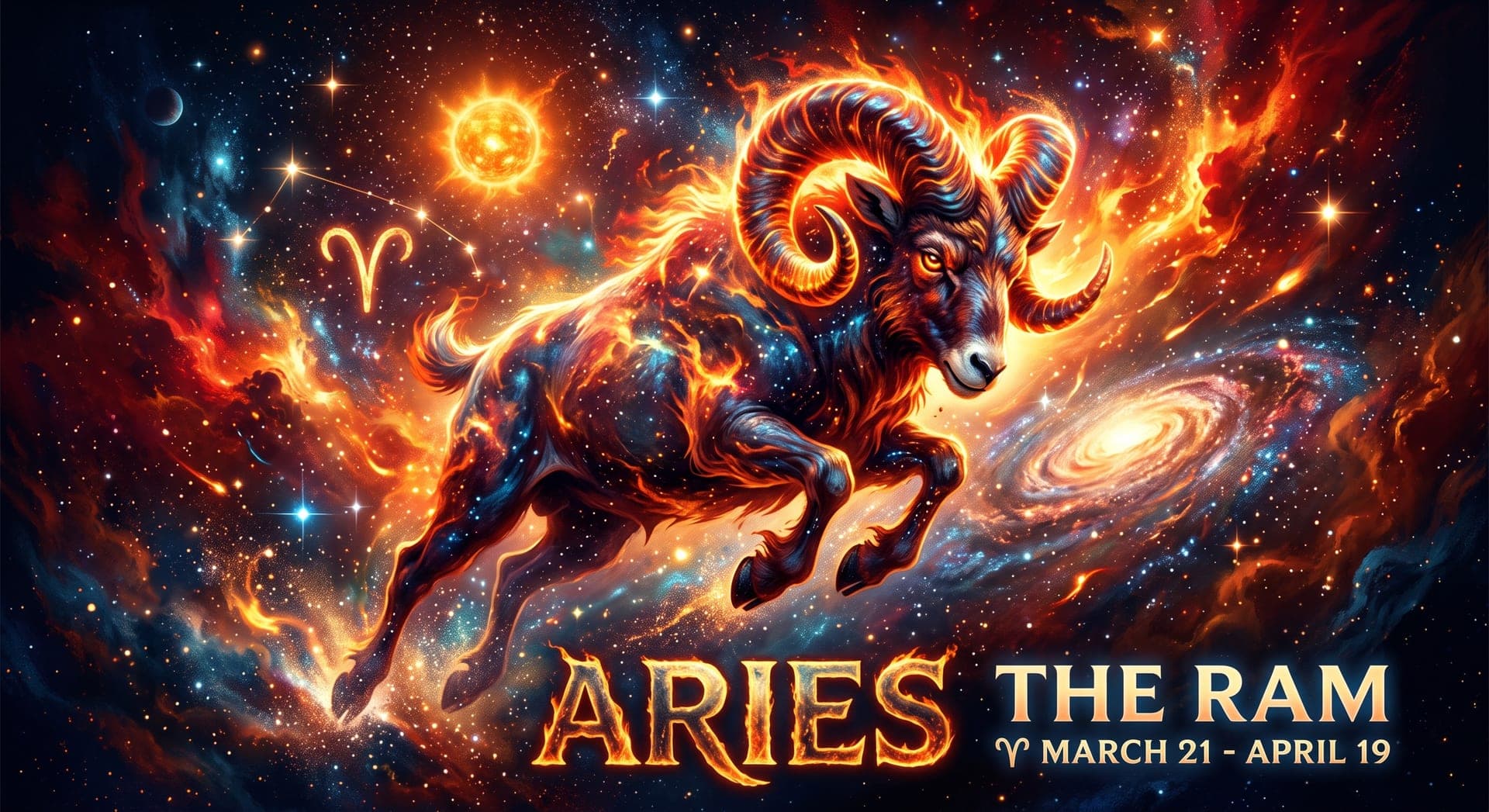
Aries, the first sign of the zodiac, spans March 21 to April 19 and is represented by the ram, an animal known for its boldness, stubborn determination, and willingness to charge forward. Ruled by Mars, the planet of action, drive, and war, Aries is often characterized as one of the most energetic and assertive signs in the zodiac, comfortable taking initiative and leading the way into new territory. As a Fire sign, Aries burns with passion and enthusiasm, approaching life with an instinctive, competitive edge and a low tolerance for hesitation. Its Cardinal modality reflects its role as an initiator, the sign that kicks off the astrological year at the spring equinox and each new season's start. People born under this sign are frequently drawn to leadership roles, sports, entrepreneurship, or any pursuit that rewards courage and quick decision-making. Direct and refreshingly honest, Aries individuals tend to say exactly what they think and rarely shy away from a challenge worth having.
Personality Traits
Strengths
- Courageous and determined
- Natural-born leader
- Honest and direct
- Enthusiastic and optimistic
- Quick to act on opportunities
Weaknesses
- Impatient and quick-tempered
- Impulsive, acts before thinking
- Can be overly competitive
- Struggles with follow-through
- Prone to selfishness
Compatible Signs
Fun Facts
- Aries is the first sign of the zodiac, marking the start of the astrological year at the spring equinox.
- The ram symbol is tied to the Greek myth of the golden-fleeced ram that rescued Phrixus, whose fleece later became the prize sought by Jason and the Argonauts.
- Mars, Aries' ruling planet, was the Roman god of war, reflecting the sign's associations with boldness, drive, and aggression.
- As a Cardinal sign, Aries is one of four signs, along with Cancer, Libra, and Capricorn, that initiate a new season.
- Notable Aries include Lady Gaga, Robert Downey Jr., Mariah Carey, and Leonardo da Vinci.
Born on April 18
- 1580
Thomas Middleton
English Jacobean playwright and poet, one of the era's most prolific and versatile dramatists, known for works including The Changeling and Women Beware Women.
- 1772
David Ricardo
English political economist whose work on comparative advantage, rent, and trade became foundational to classical economics.
- 1794
William Debenham
English businessman who co-founded the drapery business that grew into the Debenhams department store chain.
- 1819
Franz von Suppé
Austrian composer known for operetta overtures
- 1857
Clarence Darrow
American lawyer known for the Scopes "Monkey" Trial
- 1882
Leopold Stokowski
English conductor renowned for his flamboyant style and famed for his collaboration with Walt Disney on the film Fantasia.
- 1907
Miklós Rózsa
Hungarian-American film composer
- 1936
Roger Graef
American-born British documentary filmmaker known for pioneering "fly-on-the-wall" observational documentaries, including "Police" (1982)
- 1946
Hayley Mills
English actress who rose to fame as a child star in films including Pollyanna and The Parent Trap.
- 1963
Conan O'Brien
American television host and comedian
- 1971
David Tennant
Scottish actor best known for playing the Tenth Doctor in the long-running series Doctor Who.
- 1974
Edgar Wright
English filmmaker known for his fast-paced comic style in films including Shaun of the Dead, Hot Fuzz, and Baby Driver.
- 1988
Vanessa Kirby
English actress known for playing a young Princess Margaret in The Crown and for roles in Mission: Impossible and Pieces of a Woman.
On This Day in History
- 796
King Æthelred I of Northumbria is murdered at Corbridge by a faction led by his own ealdormen.
Æthelred's second reign over the Anglo-Saxon kingdom of Northumbria, in what is now northern England, had been marked by repeated instability and rival claims to the throne. His assassination triggered a brief and chaotic succession crisis; the nobleman Osbald was crowned in his place but abdicated within a month. The turmoil reflected the fractured, violence-prone politics of Northumbria in the decades before Viking invasions transformed the kingdom.
- 1506
The cornerstone of the current St. Peter's Basilica is laid in Rome.
Pope Julius II laid the cornerstone for the reconstruction of St. Peter's Basilica in Rome, launching a massive construction project that would take well over a century to complete and involve renowned architects and artists including Michelangelo and Bernini. The finished basilica became the largest church in the world and a defining masterpiece of Renaissance and Baroque architecture.
- 1689
Colonists in Boston rise up and imprison Sir Edmund Andros, the English royal governor of the Dominion of New England.
News of the Glorious Revolution in England, which had deposed the Catholic King James II in favour of William and Mary, emboldened colonists who resented Andros's autocratic rule and his consolidation of New England's colonies under direct royal control. The bloodless uprising ended the unpopular Dominion, restored the old colonial charters, and reasserted a degree of self-government that colonists had lost under Andros's administration.
- 1775
Paul Revere and other riders warn colonial militia of advancing British troops on the eve of the Battles of Lexington and Concord.
Paul Revere and fellow riders William Dawes and Samuel Prescott set out on horseback to warn colonial militia in Massachusetts that British troops were marching to seize weapons stockpiles and arrest revolutionary leaders, a ride immortalized in Henry Wadsworth Longfellow's famous poem. Their warning helped colonial minutemen prepare for the battles at Lexington and Concord the following morning.
- 1775
British troops march out of Boston toward Concord, Massachusetts, to seize colonial military supplies, prompting Paul Revere's famous warning ride.
Alerted to the British column's movement, Revere and fellow riders William Dawes and Samuel Prescott galloped through the Massachusetts countryside overnight to warn local militias that regulars were approaching. Their alarm allowed colonial minutemen to muster in time to confront British troops the next morning at Lexington and Concord, in the opening clashes of the American Revolutionary War.
- 1899
The St. Andrew's Ambulance Association is granted a royal charter by Queen Victoria.
Founded decades earlier to teach first aid and provide ambulance services across Scotland, the association had grown into the country's leading first-aid training body. The royal charter formally recognised its charitable status and public role, cementing its position alongside organisations such as the British Red Cross and St John Ambulance in Britain's voluntary emergency-care tradition.
- 1906
A devastating magnitude 7.9 earthquake and ensuing fires destroy much of San Francisco, killing over 3,000 people.
A massive magnitude 7.9 earthquake struck San Francisco early in the morning, and the resulting fires, which raged largely unchecked for days due to ruptured water mains, ultimately destroyed roughly 80 percent of the city and killed more than 3,000 people. The disaster prompted major advances in earthquake engineering and reshaped the city's development for decades afterward.
- 1906
A massive earthquake and the fires it triggers devastate San Francisco, killing more than 3,000 people.
The magnitude 7.9 quake ruptured the San Andreas Fault and was felt across much of California, but it was the ensuing fires, which burned for days and destroyed much of the city, that caused the greatest damage. Roughly 80 percent of San Francisco was destroyed and hundreds of thousands were left homeless, making it one of the deadliest and costliest natural disasters in American history.
- 1912
The RMS Carpathia arrives in New York City carrying 705 survivors of the Titanic disaster.
The Cunard liner RMS Carpathia, which had raced through icy waters to reach the sinking Titanic's distress call, arrived in New York Harbor carrying the 705 survivors it had rescued. Crowds of anxious family members and journalists gathered at the pier to receive the traumatized survivors and learn the fate of those who had not survived.
- 1912
The Cunard liner RMS Carpathia arrives in New York City carrying 705 survivors of the RMS Titanic.
Carpathia, a British-registered ship, had raced through icy, iceberg-strewn waters after picking up Titanic's distress signal, reaching the scene roughly four hours after the disaster and rescuing all the survivors from the lifeboats. Its arrival in New York, greeted by tens of thousands of onlookers, marked the public's first direct encounter with the scale of the tragedy and the ship's exhausted, grieving survivors.
- 1938
Superman debuts in "Action Comics" No. 1, launching the modern superhero genre.
Superman, created by writers Jerry Siegel and Joe Shuster, made his print debut on the cover of "Action Comics" No. 1, introducing a character whose extraordinary powers and moral code established many of the foundational conventions of the modern superhero genre. The comic, whose surviving original copies now sell for millions of dollars at auction, launched an enduring cultural phenomenon.
- 1938
Superman makes his debut in Action Comics #1, introducing the character that would define the superhero genre.
Created by writer Jerry Siegel and artist Joe Shuster, the alien hero from the planet Krypton captured readers' imaginations and turned Action Comics into a runaway success, spawning countless imitators. Superman's popularity helped establish the superhero as a dominant genre in American comic books and laid the foundation for decades of adaptations across radio, television, and film.
- 1942
The United States carries out the Doolittle Raid, bombing Tokyo and other Japanese cities in a symbolic strike following Pearl Harbor.
Sixteen U.S. Army B-25 bombers, launched from an aircraft carrier under the command of Lieutenant Colonel Jimmy Doolittle, conducted a surprise bombing raid on Tokyo and other Japanese cities, the first direct American strike on the Japanese home islands during World War II. Though causing limited physical damage, the raid delivered a significant morale and propaganda boost following the Pearl Harbor attack.
- 1943
Admiral Isoroku Yamamoto, architect of the Pearl Harbor attack, is killed when American fighters shoot down his aircraft over the Pacific.
American fighter pilots, acting on intelligence intercepted from decoded Japanese naval communications, ambushed and shot down the aircraft carrying Admiral Isoroku Yamamoto, the architect of the Pearl Harbor attack and commander of Japan's Combined Fleet, over Bougainville Island. His death was a significant blow to Japanese military morale and strategic planning.
- 1947
The Royal Navy detonates roughly 6,700 tonnes of surplus explosives on the German island of Heligoland in what was then the largest single non-nuclear man-made explosion.
Operation Big Bang was carried out to permanently destroy the fortifications, U-boat pens, and military installations Germany had built on the strategically placed North Sea island during the war. The controlled demolition, detonated by remote control from a ship offshore, reshaped the island's coastline and ensured Heligoland could never again be used as a German naval or military stronghold.
- 1949
Ireland formally declares itself a republic, severing its remaining ties to the British Commonwealth.
Ireland formally declared itself a republic and severed its remaining constitutional ties to the British Commonwealth, completing a decades-long process of separation from Britain that had begun with the country's partition and partial independence in 1922. The declaration ended the ambiguous dominion status Ireland had held and clarified its full sovereignty.
- 1949
The Republic of Ireland Act comes into force, formally declaring Ireland a republic and ending its association with the Commonwealth of Nations.
The act completed Ireland's long constitutional separation from Britain, removing the last formal role for the British monarch in Irish affairs and replacing the earlier status of the Irish Free State. In response, the British Parliament passed the Ireland Act 1949, which recognised the new republic while affirming that Northern Ireland would remain part of the United Kingdom unless its own parliament chose otherwise.
- 1955
Representatives of 29 nations gather in Bandung, Indonesia, for the first Asian-African Conference, a landmark moment for the Non-Aligned Movement.
Representatives from 29 newly independent Asian and African nations convened in Bandung, Indonesia, for a landmark conference promoting economic and cultural cooperation and opposition to colonialism, laying important groundwork for what later became the Non-Aligned Movement during the Cold War. The gathering marked a significant assertion of political voice by nations recently emerged from colonial rule.
- 1955
Twenty-nine newly independent Asian and African nations meet in Bandung, Indonesia, for the first Asian-African Conference.
Delegates, including leaders such as Sukarno, Jawaharlal Nehru, and Zhou Enlai, sought to promote economic and cultural cooperation and to oppose colonialism and the influence of the era's two superpower blocs. The conference is widely regarded as a foundational moment for the Non-Aligned Movement and a symbol of solidarity among postcolonial nations during the Cold War.
- 1980
Zimbabwe gains full independence from Britain, with Canaan Banana becoming its first president.
Zimbabwe, formerly the British colony of Southern Rhodesia, achieved full independence following a prolonged guerrilla war against white minority rule, with Canaan Banana becoming the country's first president and Robert Mugabe its first prime minister. The transition to Black-majority rule marked the end of one of Africa's most protracted independence struggles.