
What’s Observed on February 28
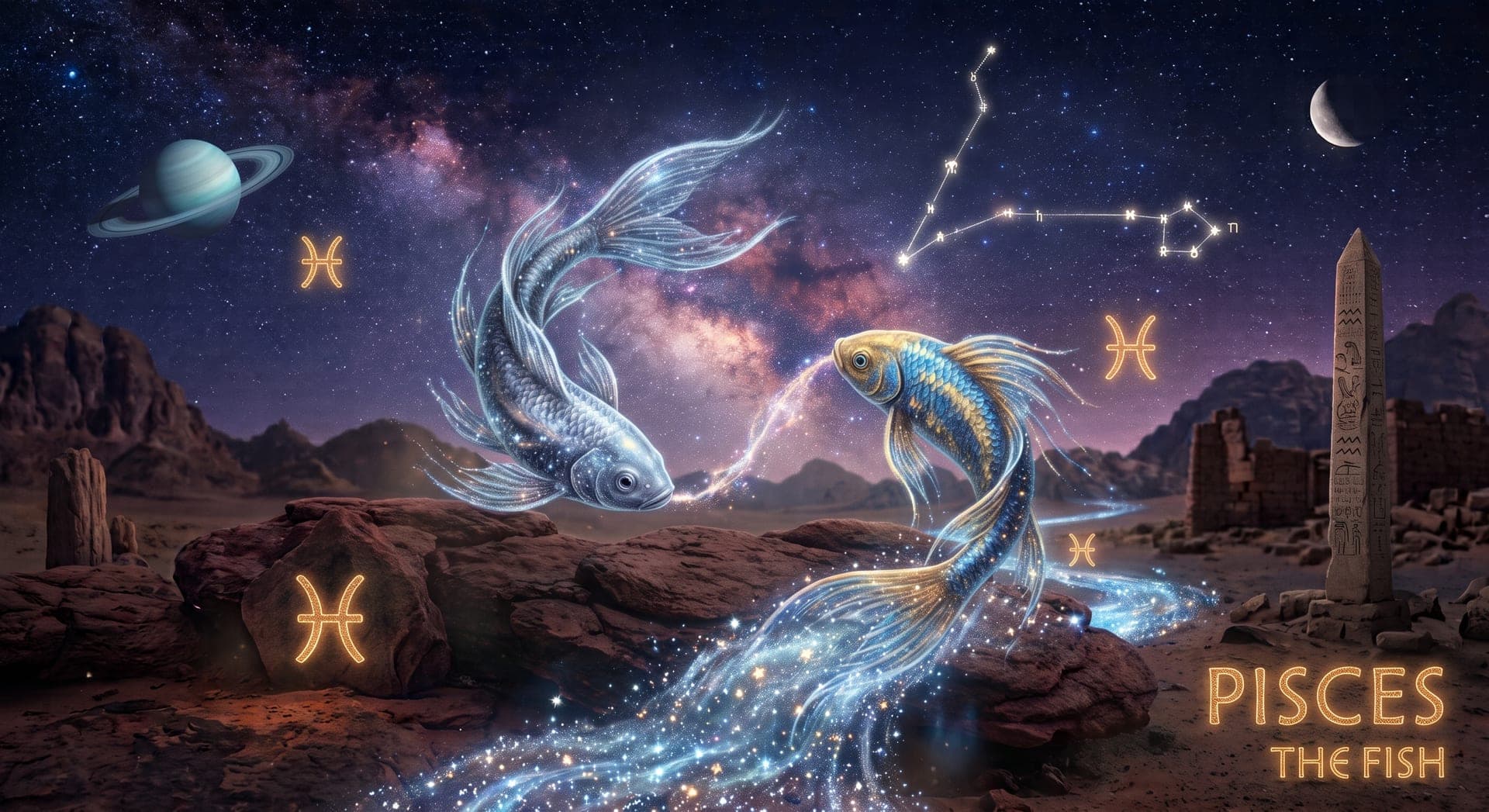
Born on February 28: Pisces ♓
Pisces, the twelfth and final sign of the zodiac, spans February 19 to March 20 and is symbolized by two fish swimming in opposite directions, tied together by a cord, representing the tension between fantasy and reality, or the conscious and subconscious mind. Ruled by Neptune, the planet of dreams, intuition, and illusion, Pisces is widely regarded as the most emotionally sensitive and imaginative sign of the zodiac. As a Water sign, Pisces navigates the world primarily through feeling and empathy, often absorbing the moods of people around it as though they were its own. Its Mutable modality reflects a deep adaptability and fluidity, comfortable going with the flow rather than forcing rigid plans. People born under this sign are often drawn to art, music, and other creative or spiritual pursuits where their vivid imagination can take shape. Compassionate to a fault, Pisces individuals are frequently the ones quietly caring for others, sometimes at the expense of their own boundaries and needs.
Personality Traits
Strengths
- Deeply empathetic and compassionate
- Highly imaginative and artistic
- Intuitive and perceptive
- Selfless and generous
- Adaptable to change
Weaknesses
- Prone to escapism or avoidance
- Overly trusting, can be taken advantage of
- Difficulty setting boundaries
- Tends toward melancholy
- Indecisive
Compatible Signs
Fun Facts
- Pisces' symbol of two fish bound together swimming in opposite directions comes from a Greek myth in which Aphrodite and Eros transformed into fish and tied themselves together to escape the monster Typhon.
- As the twelfth and final sign of the zodiac, Pisces is often described as embodying traits of all the preceding signs, a kind of culmination of the zodiac wheel.
- Neptune, Pisces' modern ruling planet, is the Roman god of the sea, discovered in 1846 and named for its blue, oceanic appearance.
- Notable Pisces include Albert Einstein, Rihanna, Steve Jobs, and Kurt Cobain.
- Classical astrology assigns Jupiter as Pisces' ruler, before Neptune's discovery in the 19th century gave the sign its modern ruling planet.
Born on February 28
- 1901
Linus Pauling
Only person to win two unshared Nobel Prizes
- 1906
Bugsy Siegel
American mobster who helped build Las Vegas
- 1909
Stephen Spender
English poet and essayist associated with the left-wing literary circle that included W. H. Auden in the 1930s
- 1928
Stanley Baker
Welsh actor and film producer known for starring in and co-producing the war film Zulu
- 1931
Peter Alliss
English professional golfer who became a long-serving BBC golf commentator
- 1940
Mario Andretti
Legendary Italian-American racing driver
- 1942
Brian Jones
English guitarist and founding member of the Rolling Stones
- 1944
Storm Thorgerson
English graphic designer who created iconic album covers for Pink Floyd through his design studio Hipgnosis
- 1946
Robin Cook
Scottish politician who served as British Foreign Secretary and resigned from the cabinet over the Iraq War
- 1953
Paul Krugman
Nobel Prize-winning economist and columnist
- 1956
Terry Leahy
English businessman who served as chief executive of the supermarket chain Tesco
- 1969
Robert Sean Leonard
American actor known for "House"
- 1977
Jason Aldean
American country music singer
- 1999
Luka Doncic
Slovenian NBA basketball star

On This Day in History
- 202 BCE
Liu Bang is enthroned as Emperor Gaozu of Han, founding a dynasty that would rule China for the next four centuries and profoundly shape Chinese civilization.
Liu Bang, a former minor official of peasant origins, rose through the chaotic rebellions that toppled the short-lived Qin dynasty to defeat his rivals and found the Han dynasty, whose four-century rule became so influential that "Han" remains the name of China's dominant ethnic group today.
- 202 BCE
Liu Bang is enthroned as Emperor of China, founding the Han dynasty after years of civil war following the collapse of the Qin dynasty.
Liu Bang, a former minor official of peasant origin, defeated his rival Xiang Yu in the Chu-Han Contention to reunify China. As Emperor Gaozu, he established a dynasty that would rule, with one brief interruption, for around four centuries, laying administrative and cultural foundations so enduring that the Chinese ethnic majority still refers to itself as the Han people.
- 1525
Aztec ruler Cuauhtémoc, the last emperor of the Aztec Empire, is executed on the orders of Spanish conquistador Hernán Cortés.
Cuauhtémoc, the last independent Aztec ruler, had continued resisting Spanish authority even after the fall of Tenochtitlan, prompting Cortés to have him executed on suspicion of plotting rebellion during a difficult expedition through the jungles of Central America.
- 1525
Hernán Cortés has Cuauhtémoc, the last Aztec emperor, executed during a Spanish expedition into Central America.
Cuauhtémoc had led Aztec resistance to the Spanish conquest of Tenochtitlan in 1521 before surrendering and being kept as a captive by Cortés. Brought along on an expedition toward Honduras, he was accused of plotting rebellion against the Spanish and hanged, an event that marked the symbolic end of organised Aztec royal authority in Mexico.
- 1638
Scottish nobles and clergy sign the National Covenant in Edinburgh, rejecting attempts to impose English religious reforms and setting the stage for the Wars of the Three Kingdoms.
The National Covenant, signed by Scottish nobles, clergy, and commoners opposed to King Charles I's attempts to impose English-style religious practices on the Scottish church, sparked the Bishops' Wars and helped ignite the broader Wars of the Three Kingdoms that later engulfed England, Scotland, and Ireland.
- 1638
Thousands of Scots sign the National Covenant in Greyfriars Kirkyard, Edinburgh, opposing King Charles I's attempts to impose Anglican forms of worship on the Church of Scotland.
The Covenant asserted the independence of Scottish Presbyterianism against royal religious reforms, particularly the imposition of a new prayer book modelled on the English liturgy. Signed by nobles, clergy, and commoners alike, it became a rallying document for the Covenanter movement and helped trigger the Bishops' Wars, a precursor to the broader Wars of the Three Kingdoms that would soon engulf Scotland, England, and Ireland.
- 1922
The United Kingdom unilaterally ends its protectorate over Egypt, granting the country nominal independence while retaining significant influence.
Britain's declaration granted Egypt nominal independence while reserving significant control over its foreign affairs, military presence, and the Suez Canal, an arrangement that left substantial British influence intact and fueled ongoing Egyptian nationalist movements for decades afterward.
- 1922
The United Kingdom formally ends its protectorate over Egypt, unilaterally declaring the country independent while retaining control over key strategic interests.
Britain had established the protectorate in 1914 after decades of informal control, but rising Egyptian nationalism, led by figures such as Saad Zaghloul, made the arrangement increasingly untenable. The declaration granted Egypt nominal independence under King Fuad I, but Britain retained authority over the Suez Canal, defence, and Sudan, leaving substantial British influence in place for decades until the 1952 revolution.
- 1947
An uprising against Nationalist Chinese rule in Taiwan is violently suppressed, killing an estimated 18,000 to 28,000 civilians in what became known as the February 28 Incident.
The February 28 Incident began when Taiwanese authorities' violent crackdown on a minor dispute with a cigarette vendor triggered a wider popular uprising against corrupt and repressive Nationalist Chinese rule, which was brutally suppressed with mass killings that remained a taboo subject in Taiwan for decades under martial law.
- 1948
Riots break out in Accra, capital of the British colony of the Gold Coast, after police shoot and kill unarmed ex-servicemen marching to petition the colonial governor.
The march, organised by veterans seeking promised benefits, was fired on by police near Christiansborg Castle, killing three and igniting days of rioting and looting across Accra. The unrest led to the arrest of nationalist leaders including Kwame Nkrumah, and to a British commission of inquiry whose findings accelerated the push toward self-government that culminated in Ghanaian independence in 1957.
- 1974
A closely contested British general election produces a hung parliament, ending years of single-party dominance in Westminster.
The hung parliament, in which no party won a clear majority, reflected growing discontent with the Conservative government's handling of labor disputes and economic strain, ultimately leading to a minority Labour government and a second election later that year.
- 1974
A general election in the United Kingdom produces a hung parliament, with the Liberal Party recording its largest share of the vote since 1929.
Prime Minister Edward Heath's Conservative government had called the snap election during a national miners' strike and energy crisis under the slogan 'Who governs Britain?' Labour, under Harold Wilson, won more seats than the Conservatives despite a smaller vote share, and when talks with the Liberals to form a coalition failed, Heath resigned, allowing Wilson to form a minority Labour government.
- 1975
A London Underground train fails to stop at Moorgate station and crashes into the tunnel's dead end, killing 43 people in the deadliest peacetime accident on the Underground.
The southbound train, driven by Leslie Newson, accelerated into the terminus rather than slowing for the platform, ploughing through safety devices and a buffer stop before crushing itself against the tunnel wall. No mechanical fault was found, and the cause of the driver's failure to brake was never conclusively established. The disaster led to the introduction of automatic train protection systems on dead-end platforms across the network.
- 1983
The final episode of the television series M*A*S*H airs to an audience of nearly 106 million viewers, at the time the most-watched television broadcast in U.S. history.
The series finale of M*A*S*H, set during the final days of the Korean War, drew an audience larger than that year's Super Bowl, a viewership record for a scripted television broadcast that stood for decades, reflecting the show's deep cultural resonance during its eleven-season run.
- 1985
The Provisional IRA launches a mortar attack on a Royal Ulster Constabulary station in Newry, Northern Ireland, killing nine police officers.
Homemade mortars fired from a truck struck a temporary canteen at the station during a shift changeover, killing nine officers in the single deadliest attack on the RUC during the Troubles. The attack demonstrated the IRA's growing mortar capability and prompted a major upgrade of security at police and army installations across Northern Ireland in the years that followed.
- 1986
Swedish Prime Minister Olof Palme is assassinated on a Stockholm street in a murder that remains a source of controversy and unresolved theories.
Palme's unsolved assassination, in which he was shot while walking home from a movie theater without bodyguards, shocked a nation unaccustomed to political violence and triggered one of the longest and most controversial criminal investigations in Swedish history, with the case only formally closed decades later.
- 1986
Swedish Prime Minister Olof Palme is shot and killed while walking home from a cinema in central Stockholm.
Palme and his wife were walking unguarded, as was customary for Swedish leaders at the time, when a gunman approached and shot him at close range before fleeing on foot. The assassination shocked Sweden and prompted a decades-long investigation marked by false leads and controversy; a suspect was named by prosecutors in 2020, though he had died years earlier and the case was formally closed without prosecution.
- 2013
Pope Benedict XVI formally resigns the papacy, becoming the first pope to do so voluntarily in nearly 600 years.
Benedict's resignation, the first by a pope in nearly six centuries, cited his declining physical and mental strength for the demands of the papacy. His decision set an unusual precedent of a living "pope emeritus" coexisting alongside his successor, Pope Francis.
- 2013
Pope Benedict XVI formally resigns as head of the Roman Catholic Church, becoming the first pope to do so in nearly 600 years.
Benedict, aged 85, cited declining strength of mind and body as his reason for stepping down, a decision he had announced two and a half weeks earlier. His resignation ended an eight-year papacy and set in motion a conclave that elected Cardinal Jorge Mario Bergoglio of Argentina as his successor, who took the name Pope Francis.
- 2023
Two trains collide head-on near Tempe, Greece, killing at least 57 people in the country's deadliest rail disaster.
The Tempe train collision, involving a passenger train and a freight train on the same track, exposed serious failures in Greece's railway safety infrastructure and signaling systems, sparking widespread public protests over years of underinvestment and mismanagement.