
What’s Observed on February 27
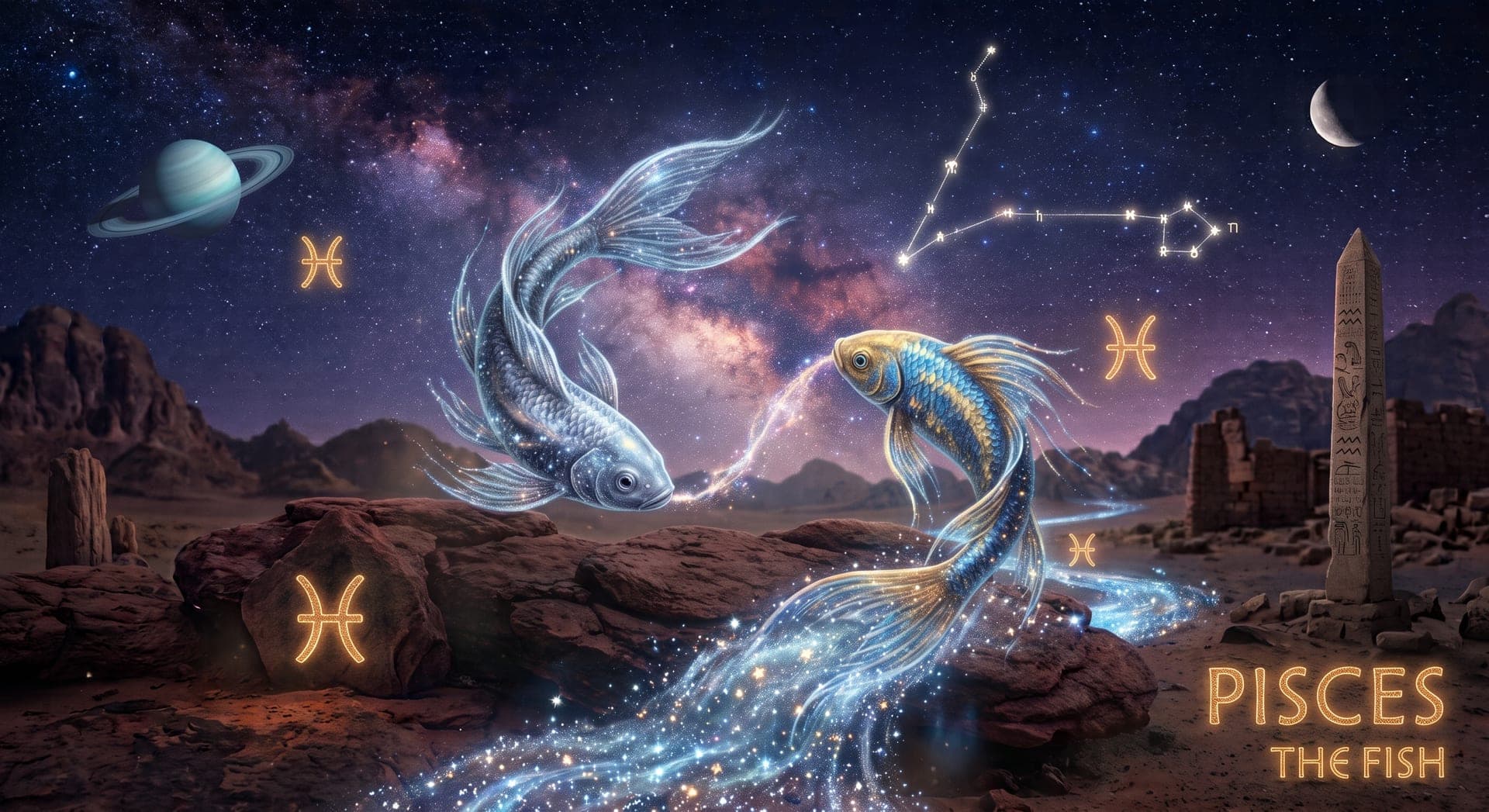
Born on February 27: Pisces ♓
Pisces, the twelfth and final sign of the zodiac, spans February 19 to March 20 and is symbolized by two fish swimming in opposite directions, tied together by a cord, representing the tension between fantasy and reality, or the conscious and subconscious mind. Ruled by Neptune, the planet of dreams, intuition, and illusion, Pisces is widely regarded as the most emotionally sensitive and imaginative sign of the zodiac. As a Water sign, Pisces navigates the world primarily through feeling and empathy, often absorbing the moods of people around it as though they were its own. Its Mutable modality reflects a deep adaptability and fluidity, comfortable going with the flow rather than forcing rigid plans. People born under this sign are often drawn to art, music, and other creative or spiritual pursuits where their vivid imagination can take shape. Compassionate to a fault, Pisces individuals are frequently the ones quietly caring for others, sometimes at the expense of their own boundaries and needs.
Personality Traits
Strengths
- Deeply empathetic and compassionate
- Highly imaginative and artistic
- Intuitive and perceptive
- Selfless and generous
- Adaptable to change
Weaknesses
- Prone to escapism or avoidance
- Overly trusting, can be taken advantage of
- Difficulty setting boundaries
- Tends toward melancholy
- Indecisive
Compatible Signs
Fun Facts
- Pisces' symbol of two fish bound together swimming in opposite directions comes from a Greek myth in which Aphrodite and Eros transformed into fish and tied themselves together to escape the monster Typhon.
- As the twelfth and final sign of the zodiac, Pisces is often described as embodying traits of all the preceding signs, a kind of culmination of the zodiac wheel.
- Neptune, Pisces' modern ruling planet, is the Roman god of the sea, discovered in 1846 and named for its blue, oceanic appearance.
- Notable Pisces include Albert Einstein, Rihanna, Steve Jobs, and Kurt Cobain.
- Classical astrology assigns Jupiter as Pisces' ruler, before Neptune's discovery in the 19th century gave the sign its modern ruling planet.
Born on February 27
- 1807
Henry Wadsworth Longfellow
Celebrated 19th-century American poet
- 1848
Hubert Parry
English composer known for the coronation anthem 'I Was Glad' and the hymn tune 'Jerusalem'
- 1897
Marian Anderson
Groundbreaking American contralto and civil rights figure
- 1902
John Steinbeck
Nobel Prize-winning American novelist
- 1932
Elizabeth Taylor
English-American actress and Hollywood icon known for films including Cleopatra and Who's Afraid of Virginia Woolf?
- 1944
Roger Scruton
English philosopher and writer known for his conservative political thought and writings on aesthetics
- 1947
Alan Guth
Physicist known for the theory of cosmic inflation
- 1957
Timothy Spall
English actor known for character roles in films including Mr Turner and the Harry Potter series
- 1957
Adrian Smith
English guitarist and songwriter for the heavy metal band Iron Maiden
- 1967
Jony Ive
English industrial designer who led product design at Apple, shaping devices including the iMac and iPhone
- 1973
Peter Andre
English singer and television personality known for the hit single 'Mysterious Girl'
- 1981
Josh Groban
American singer-songwriter
On This Day in History
- 380
Roman Emperor Theodosius I issues the Edict of Thessalonica, declaring Nicene Christianity the official state religion of the Roman Empire.
Theodosius's edict, issued jointly with his co-emperors, declared Nicene Christianity the empire's official religion and effectively marginalized other Christian sects and pagan practices, a pivotal step in Christianity's transformation from a persecuted faith into the dominant religious and political force of the late Roman world.
- 1560
England and the Protestant Lords of the Congregation in Scotland sign the Treaty of Berwick, agreeing that English forces will help expel French troops from Scotland.
The treaty formalised an alliance between Elizabeth I's England and Scottish Protestant nobles seeking to end French Catholic influence over the regency of Mary of Guise. English troops subsequently besieged French forces at Leith, leading to the Treaty of Edinburgh later that year and the withdrawal of French troops, a turning point that helped secure the Scottish Reformation and closer Anglo-Scottish relations.
- 1782
The British House of Commons votes against continuing offensive war in North America, a decisive step toward ending the American Revolutionary War.
The motion, put forward by General Henry Seymour Conway, followed the British surrender at Yorktown the previous October and reflected growing war-weariness in Parliament. The vote effectively doomed Lord North's government, which resigned weeks later, and opened the way for peace negotiations that concluded with the Treaty of Paris in 1783, recognising American independence.
- 1812
Manuel Belgrano raises the newly created flag of Argentina for the first time in the city of Rosario.
Belgrano, an Argentine general and statesman, designed the light blue and white flag while leading forces during the war for independence from Spain, drawing inspiration from the colors of the sky. It remains Argentina's national flag today, and Belgrano is honored as a founding father of the nation.
- 1812
Poet Lord Byron delivers his maiden speech in the House of Lords, opposing a bill imposing the death penalty for machine-breaking by Luddite workers.
The Frame-Breaking Act had been introduced after Nottinghamshire textile workers, fearing job losses from mechanisation, smashed stocking frames in protest. Byron, drawing on his own knowledge of the Nottinghamshire weavers, argued passionately against the severity of the proposed punishment, condemning the poverty driving the unrest. The speech won him praise as an orator, though it did little to stop the bill's passage.
- 1860
Abraham Lincoln delivers his influential Cooper Union speech in New York City, a address widely credited with boosting his path to the presidency.
Lincoln's Cooper Union address, delivered to a skeptical New York audience, methodically argued against the expansion of slavery using historical and constitutional reasoning. The speech's reception significantly boosted his national profile among Republicans just months before he secured the party's presidential nomination.
- 1881
Boer forces defeat British troops at the Battle of Majuba Hill in Natal, effectively ending the First Boer War.
British troops under Major-General Sir George Pomeroy Colley occupied the hilltop overnight hoping to command the surrounding Boer positions, but were routed the next morning by Boer marksmen who scaled the slopes and overwhelmed the garrison; Colley himself was killed. The humiliating defeat led Britain to negotiate peace, granting the Transvaal self-government under British suzerainty and leaving lasting bitterness that contributed to the later Second Boer War.
- 1900
The British Labour Party is founded, growing over the following decades into one of the country's two dominant political parties.
The Labour Party emerged from a coalition of trade unions and socialist societies seeking independent political representation for working-class interests, distinct from the existing Liberal and Conservative parties. It grew over subsequent decades into one of Britain's two dominant political forces, forming its first government in the 1920s.
- 1900
Boer general Piet Cronjé surrenders unconditionally to British forces under Lord Roberts at the Battle of Paardeberg during the Second Boer War.
Cronjé's roughly 4,000 troops had been besieged for over a week along the Modder River after British forces trapped them in the open veld. The surrender, coming on the anniversary of the British defeat at Majuba Hill nineteen years earlier, was hailed in Britain as a symbolic reversal and marked a major turning point in the war, opening the road for British forces to advance on Bloemfontein and Pretoria.
- 1900
The Labour Representation Committee, forerunner of the British Labour Party, is founded at a conference of trade unions and socialist societies in London.
Delegates from trade unions, the Independent Labour Party, the Fabian Society, and the Social Democratic Federation met in London to create a body dedicated to securing working-class representation in Parliament. The committee elected Ramsay MacDonald as its secretary and won two seats in that year's general election; it was renamed the Labour Party in 1906 and went on to become one of Britain's two dominant political parties.
- 1916
The P&O liner SS Maloja strikes a mine and sinks off Dover, killing 155 of those aboard.
Maloja was outbound from London to Bombay when she detonated a mine laid by a German submarine near the Dover Strait, one of the busiest and most dangerous shipping lanes of the First World War. The ship capsized quickly in rough seas, and a nearby ship that came to assist also struck a mine and sank, adding to the toll from one of the deadliest maritime disasters of the war's home waters.
- 1933
Germany's parliament building, the Reichstag, is set ablaze; the Nazi regime uses the fire as a pretext to suspend civil liberties and consolidate power.
The Reichstag fire, whose true cause remains debated by historians, was blamed by the Nazi government on Communist agitators and used as justification for an emergency decree suspending civil liberties, a critical step that allowed Hitler to consolidate dictatorial power within weeks.
- 1940
Scientists Martin Kamen and Sam Ruben discover carbon-14, an isotope that would later become essential to radiocarbon dating.
Kamen and Ruben's discovery of carbon-14, a radioactive isotope with a predictable decay rate, later enabled the development of radiocarbon dating by Willard Libby, a technique that revolutionized archaeology and geology by allowing scientists to accurately date organic materials thousands of years old.
- 1942
British Combined Operations forces raid a German radar installation at Bruneval on the French coast, capturing key components of its Würzburg radar.
Airborne troops of the British 1st Parachute Brigade, supported by the Royal Navy, dropped near the German radar station, overpowered its garrison, and dismantled parts of the Würzburg apparatus before evacuating by sea under fire. The captured technology and an accompanying German technician gave British scientists crucial insight into German radar capabilities, informing British countermeasures and electronic warfare for the rest of the war.
- 1951
The Twenty-second Amendment to the U.S. Constitution is ratified, formally limiting presidents to two elected terms.
The Twenty-second Amendment formally codified the two-term presidential tradition that George Washington had voluntarily established, a norm broken only by Franklin D. Roosevelt's four election victories, prompting Congress to enshrine the limit permanently in the Constitution after his death.
- 1973
Members of the American Indian Movement occupy Wounded Knee, South Dakota, beginning a 71-day standoff to protest federal Native American policy.
Members of the American Indian Movement occupied the site of the 1890 Wounded Knee Massacre to protest corruption within tribal leadership and broader federal policy toward Native Americans, resulting in a tense armed standoff with federal agents that lasted over two months before ending in negotiated withdrawal.
- 1991
President George H.W. Bush announces that Kuwait has been liberated, effectively ending major combat operations in the Gulf War.
Bush's announcement came after coalition ground forces rapidly overwhelmed Iraqi defenses in a hundred-hour campaign, expelling Iraqi troops from Kuwait and restoring its government, though Saddam Hussein remained in power in Iraq, a decision that drew later criticism and set the stage for further conflict.
- 2001
Loganair Flight 670A, a small commuter aircraft, ditches in the Firth of Forth off the Scottish coast after suffering engine failure.
The Britten-Norman Islander was on a short domestic flight when its engine failed, forcing the pilot to bring the aircraft down onto the water of the Forth estuary rather than risk a landing on unsuitable ground. All those aboard survived the ditching and were rescued from the water, and the incident remains a notable example of a successful emergency water landing by a UK regional airline.
- 2002
Ryanair Flight 296 catches fire at London Stansted Airport, prompting an emergency evacuation of passengers and crew.
The Boeing 737 had just landed on a scheduled service when the fire broke out, leading cabin crew to evacuate everyone aboard down the aircraft's emergency slides. Airport fire crews extinguished the blaze quickly, and though the scene caused alarm at one of London's busiest airports, injuries among those evacuated were limited to minor ones.
- 2010
A massive magnitude 8.8 earthquake strikes central Chile, one of the most powerful ever recorded, triggering a destructive tsunami.
The Chile earthquake and resulting tsunami struck a region with strict, well-enforced seismic building codes developed after previous major quakes, which significantly limited casualties compared to disasters of similar magnitude elsewhere, offering a widely cited case study in effective earthquake preparedness.