
What’s Observed on December 4
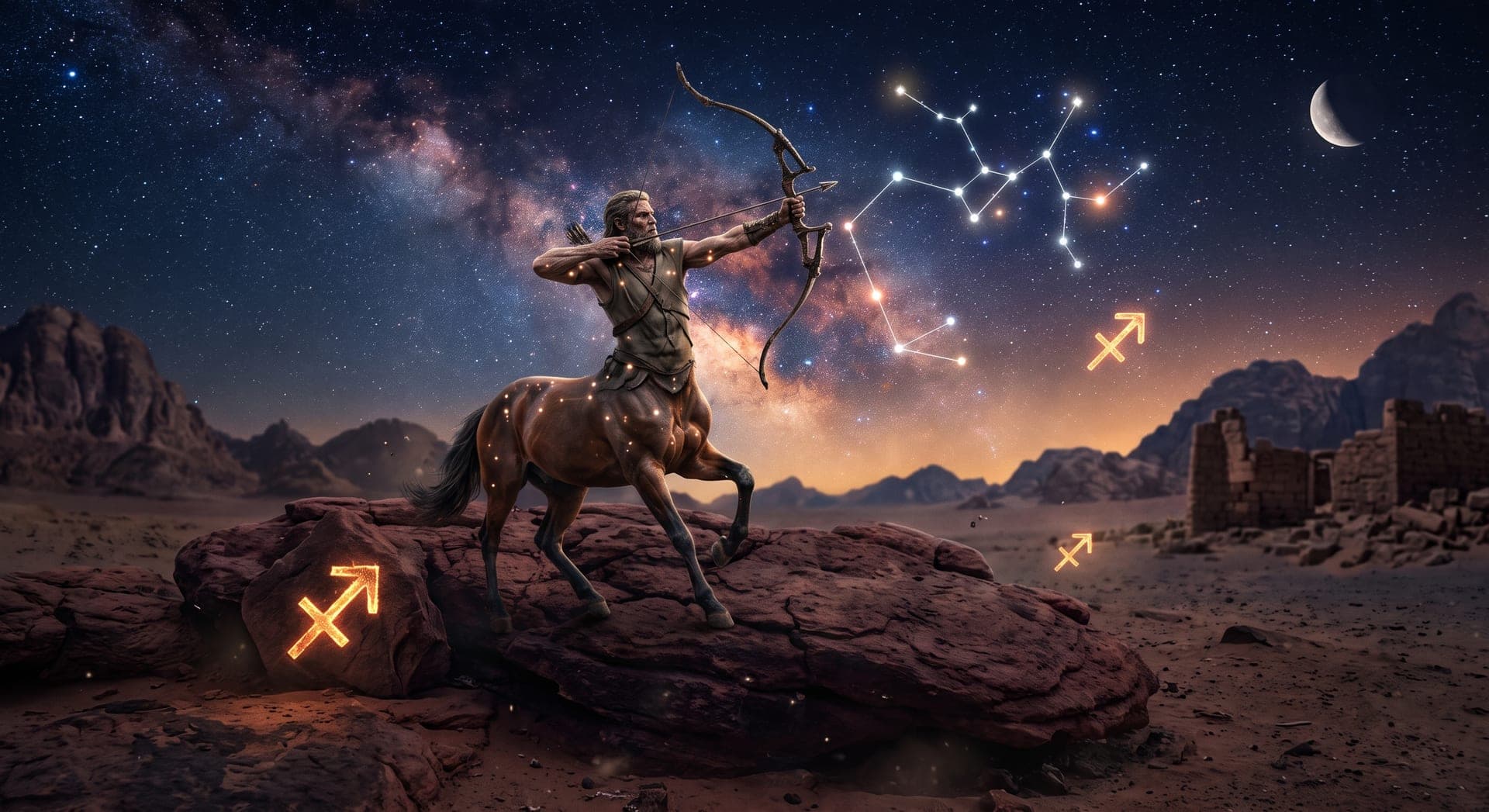
Born on December 4: Sagittarius ♐
Sagittarius, the ninth sign of the zodiac, spans November 22 to December 21 and is symbolized by the archer, typically depicted as a centaur drawing a bow, representing a restless pursuit of knowledge, adventure, and far-off horizons. Ruled by Jupiter, the largest planet in the solar system and a symbol of growth, luck, and abundance, Sagittarius is widely regarded as one of the most optimistic and freedom-loving signs of the zodiac. As a Fire sign, Sagittarius approaches life with enthusiasm and a genuine hunger for new experiences, whether through literal travel or intellectual and philosophical exploration. Its Mutable modality reflects a deep aversion to routine and confinement, always looking toward the next adventure rather than settling into fixed patterns. People born under this sign are often drawn to travel, higher education, philosophy, or any pursuit that broadens their horizons and understanding of the world. Sagittarius's honesty and optimism make it excellent company, though its blunt directness and restless need for freedom can sometimes come across as tactless or noncommittal to those seeking more stability.
Personality Traits
Strengths
- Adventurous and open to new experiences
- Optimistic and enthusiastic
- Honest and direct
- Philosophical and broad-minded
- Generous and good-humored
Weaknesses
- Tactlessly blunt
- Impatient with routine
- Prone to overpromising
- Restless and commitment-averse
- Careless with details
Compatible Signs
Fun Facts
- Sagittarius's symbol, a centaur drawing a bow and arrow, connects to the Greek myth of Chiron, a wise and scholarly centaur unlike the more unruly members of his kind.
- Jupiter, Sagittarius' ruling planet, is the largest planet in the solar system, reflecting the sign's association with expansion, abundance, and big-picture thinking.
- Sagittarius is one of two zodiac signs, along with Capricorn, represented by a hybrid creature combining human and animal features.
- Notable Sagittarians include Taylor Swift, Walt Disney, Winston Churchill, and Jimi Hendrix.
- Sagittarius season spans the lead-up to the winter solstice, a period historically associated with travel, feasting, and philosophical reflection in many cultures.
Born on December 4
- 1795
Thomas Carlyle
Scottish-born essayist and historian, one of the most influential thinkers of the Victorian era, known for works such as The French Revolution: A History and Sartor Resartus.
- 1835
Samuel Butler
English author and satirist best remembered for the utopian novel Erewhon and the posthumously published The Way of All Flesh.
- 1865
Edith Cavell
English nurse who saved the lives of soldiers from both sides during the First World War and helped some 200 Allied soldiers escape German-occupied Belgium; her execution by German firing squad in 1915 made her a British national heroine.
- 1875
Rainer Maria Rilke
Austrian-Bohemian poet
- 1892
Francisco Franco
Spanish dictator who ruled Spain for nearly four decades
- 1893
Herbert Read
English poet, art critic and anarchist thinker who was among the earliest champions of modern art and sculpture in Britain.
- 1908
Alfred Hershey
American bacteriologist and Nobel Prize laureate
- 1921
Deanna Durbin
Canadian actress and singer
- 1930
Ronnie Corbett
Scottish actor and comedian best known as one half of the double act The Two Ronnies alongside Ronnie Barker.
- 1949
Jeff Bridges
American actor and Academy Award winner
- 1955
Philip Hammond
English Conservative politician who served as Chancellor of the Exchequer from 2016 to 2019 and previously as Foreign Secretary and Defence Secretary.
- 1964
Marisa Tomei
American actress and Academy Award winner
- 1964
Scott Hastings
Scottish rugby union player who won 65 caps for Scotland and toured with the British and Irish Lions.
- 1969
Jay-Z
American rapper and music executive
- 1973
Tyra Banks
American model, television host, and producer
- 1973
Kate Rusby
English folk singer-songwriter from South Yorkshire, celebrated for reviving traditional English and Yorkshire folk song for modern audiences.

On This Day in History
- 1259
Kings Louis IX of France and Henry III of England agree to the Treaty of Paris, with England renouncing claims to most French territory.
The Treaty of Paris resolved decades of conflict between the English and French crowns by having Henry III formally renounce his family's claims to Normandy, Anjou, and other continental territories lost generations earlier, in exchange for retaining Gascony as a French vassal. Though it settled immediate territorial disputes, the treaty's ambiguities over feudal obligations would later contribute to tensions that erupted into the Hundred Years' War roughly a century afterward.
- 1259
Henry III of England and Louis IX of France conclude the Treaty of Paris, ending decades of dispute over England's continental territories.
Under the treaty, Henry formally renounced his family's claims to Normandy, Anjou, and other lands lost by his father King John, while retaining Gascony as a vassal of the French crown. In return, Louis withdrew his support for rebellious English barons, reshaping Anglo-French relations for a generation.
- 1745
The Jacobite army of Charles Edward Stuart, 'Bonnie Prince Charlie', reaches Derby, the furthest point of its advance into England.
Having marched south from Scotland with startling speed, the Jacobites came within roughly 125 miles of London, causing real panic in the capital. With promised reinforcements unfulfilled and government forces massing, Charles's council chose to retreat to Scotland the next day, a turning point that led to the rising's collapse at Culloden the following spring.
- 1783
General George Washington bids farewell to his officers at Fraunces Tavern in New York City, symbolically ending the Revolutionary War.
Washington's emotional farewell at Fraunces Tavern, where he embraced each of his officers individually before departing for Virginia, symbolized his voluntary relinquishment of military power at the war's conclusion. His decision to resign his commission rather than seize political control, which he would repeat after his presidency, profoundly shaped the young nation's understanding of civilian control over the military.
- 1791
The Observer begins publication in London, becoming the world's first Sunday newspaper.
The Observer's launch as the first Sunday newspaper filled a gap in Britain's periodical landscape, offering readers news and commentary on a day when most other publications did not print. The paper would go on to become one of Britain's most enduring and respected publications, still in continuous operation more than two centuries later.
- 1791
The Observer, the world's first Sunday newspaper, publishes its first edition in London.
Founded by W. S. Bourne, the paper struggled financially in its early years but survived to become Britain's oldest Sunday newspaper, later renowned for its political commentary and investigative journalism. It remains in publication today as a sister title to The Guardian.
- 1829
British Governor-General Lord William Bentinck outlaws the practice of sati in Bengal, declaring anyone who assists a widow's self-immolation guilty of culpable homicide.
The regulation, passed despite fierce opposition from some Hindu traditionalists, was a landmark act of British colonial legislation in India and a rare instance of reform championed by both British administrators and Indian reformers such as Ram Mohan Roy. It became a model for later bans across British-ruled India.
- 1861
Confederate electors unanimously choose Jefferson Davis as president and Alexander Stephens as vice president.
The Confederate electors' unanimous selection of Jefferson Davis reflected the new government's urgent need for unified leadership as the Confederacy prepared for what many expected would be a brief conflict with the Union. Davis, a former U.S. Senator and Secretary of War, brought considerable political and military experience to the role, though his leadership faced persistent criticism throughout the war.
- 1872
The brigantine Mary Celeste is discovered drifting unmanned in the Atlantic, its crew mysteriously absent.
The Mary Celeste was discovered adrift and completely seaworthy, its cargo and crew's personal belongings largely intact, yet with not a single person aboard and no sign of struggle or distress. The ship's fate has never been definitively explained, and the enduring mystery has made it one of history's most famous unsolved maritime puzzles, inspiring countless theories ranging from mutiny to sea monsters.
- 1872
The American brigantine Mary Celeste is discovered adrift and abandoned in the Atlantic Ocean, her crew missing and never found.
The ship was found in seaworthy condition with cargo and personal belongings still aboard, but with no sign of the captain, his family, or crew, who had apparently left in the ship's lifeboat under mysterious circumstances. The unsolved case became one of the most enduring maritime mysteries in history.
- 1893
A patrol of 34 British South Africa Company soldiers is ambushed and wiped out by more than 3,000 Matabele warriors at the Shangani River during the First Matabele War.
Known afterwards as the Shangani Patrol, the unit had been hunting King Lobengula of the Ndebele when it was surrounded and annihilated. The last stand became a celebrated episode of imperial mythology in the British colony that would become Rhodesia, commemorated for decades with an annual day of remembrance.
- 1928
Cosmo Gordon Lang is enthroned as Archbishop of Canterbury, the first bachelor to hold the post in 150 years.
Lang led the Church of England through the difficult years surrounding the 1936 abdication crisis, when he was a vocal critic of Edward VIII's proposed marriage to the American divorcée Wallis Simpson. He served as archbishop until 1942, presiding over the church through the early years of the Second World War.
- 1939
The Royal Navy battleship HMS Nelson is struck by a German mine off the Scottish coast and put out of action for repairs until mid-1940.
The mine, laid by the German submarine U-31 near Loch Ewe, badly damaged the flagship of Britain's Home Fleet early in the Second World War. The incident was an embarrassing setback that underlined the danger German mining posed to even Britain's largest warships.
- 1943
Josip Broz Tito proclaims a provisional democratic Yugoslav government-in-exile during World War II.
Tito's provisional government-in-exile represented an attempt to establish political legitimacy for the Communist-led Partisan resistance movement fighting against both Axis occupation and rival royalist forces within Yugoslavia. This maneuvering ultimately succeeded, as Tito would go on to lead Yugoslavia as its head of state for over three decades following the war's end.
- 1949
Sir Duncan Stewart, the British governor of the Crown Colony of Sarawak, is fatally stabbed by a Malay nationalist opposed to the territory's cession to Britain.
Stewart was attacked in Sibu just three years after Sarawak's last White Rajah had ceded the territory to the British Crown in 1946, a transfer that remained deeply unpopular with many Malay nationalists. He died of his wounds days later, and his assassin was subsequently executed.
- 1965
Gemini 7 launches with astronauts Frank Borman and Jim Lovell, achieving the first crewed space rendezvous with Gemini 6A.
Gemini 7's fourteen-day mission tested the physiological effects of extended spaceflight on astronauts Frank Borman and Jim Lovell, crucial data needed before NASA could commit to the longer missions required for a lunar landing. The mission's successful rendezvous with Gemini 6A, which launched shortly after and maneuvered to within a few feet of the other capsule, proved that precise orbital rendezvous was achievable, a capability essential for the Apollo program's success.
- 1971
A flare gun fired during a Frank Zappa concert destroys the Montreux Casino, an incident that inspired Deep Purple's "Smoke on the Water."
During Frank Zappa's concert at the Montreux Casino, an audience member fired a flare gun into the venue's rattan-covered ceiling, igniting a fire that destroyed the building and forced hundreds of attendees to evacuate. Deep Purple, who were in Montreux to record an album using a mobile studio, watched the fire from a nearby hotel and wrote "Smoke on the Water" based on the incident shortly afterward.
- 1979
A fire at a house in Hull kills three schoolboys, an arson attack that eventually leads police to arrest teenager Bruce George Peter Lee.
The investigation into the blaze connected Lee, then eighteen, to a string of arson attacks across Hull dating back years. He was later convicted over a string of fires linked to multiple deaths, in what became one of the most notorious cases of serial arson in British criminal history.
- 1991
Pan American World Airways ceases operations after 64 years as a major international airline.
Pan American World Airways, once the dominant force in American international air travel and a symbol of the golden age of flight, ceased all operations after decades of financial struggles following industry deregulation, rising fuel costs, and the aftermath of the 1988 Lockerbie bombing of Pan Am Flight 103. Its collapse marked the end of an era for American commercial aviation.
- 2024
UnitedHealthcare CEO Brian Thompson is shot and killed outside a Manhattan hotel.
The shooting of UnitedHealthcare CEO Brian Thompson outside a Manhattan hotel, apparently a targeted attack, drew intense public attention partly due to the identification of the suspect and partly due to widespread public commentary on the American health insurance industry that followed. The case became a significant national news story and sparked broader conversation about healthcare access and corporate accountability.