
What’s Observed on December 27
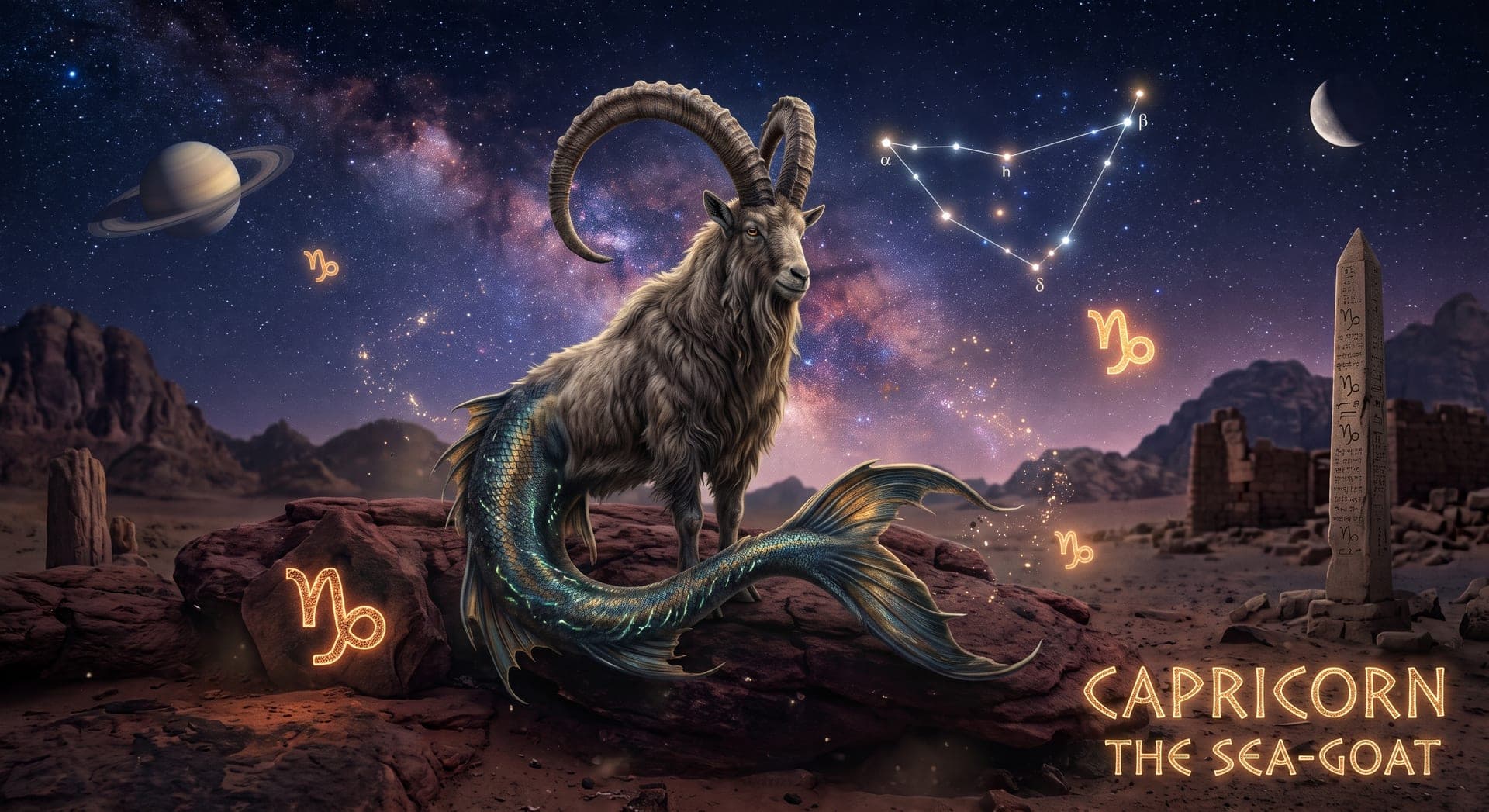
Born on December 27: Capricorn ♑
Capricorn, the tenth sign of the zodiac, spans December 22 to January 19 and is represented by the sea-goat, a mythical creature with the body of a goat and the tail of a fish, symbolizing an ability to navigate both the practical, earthly world and deeper emotional currents. Ruled by Saturn, the planet of discipline and time, Capricorns are often characterized as ambitious, patient, and deeply committed to long-term goals, willing to put in steady effort where others give up. As an Earth sign, Capricorn is grounded and practical, valuing tangible results and responsibility over impulsiveness. People born under this sign are frequently drawn to leadership and other structured pursuits where their organizational skills and work ethic can shine. Beneath a reserved, businesslike exterior, Capricorns are often said to carry a dry, understated sense of humor and a loyal, protective nature toward the people closest to them.
Personality Traits
Strengths
- Disciplined and self-controlled
- Responsible and dependable
- Excellent long-term planner
- Hardworking and persistent
- Good sense of humor once comfortable
Weaknesses
- Can be a know-it-all
- Unforgiving of mistakes, including their own
- Prone to pessimism
- Condescending toward those who don't work as hard
- Stubbornly resistant to changing plans
Compatible Signs
Fun Facts
- Capricorn's symbol, the sea-goat, comes from the Greek myth of Pan, who transformed his lower half into a fish tail to escape the monster Typhon while diving into the Nile.
- Saturn, Capricorn's ruling planet, was the Roman god of time, harvest, and generational structure, echoing the sign's association with patience and long-term thinking.
- Capricorn is one of only two zodiac signs represented by a hybrid creature, the other being Sagittarius, the centaur.
- Notable Capricorns include Michelle Obama, Martin Luther King Jr., Dolly Parton, LeBron James, and Isaac Newton.
- In traditional astrology, the winter solstice, the shortest day of the year, falls right at the start of Capricorn season in the Northern Hemisphere.
Born on December 27
- 1571
Johannes Kepler
German astronomer known for the laws of planetary motion
- 1773
George Cayley
English engineer and baronet regarded as the father of aeronautics, who identified the four forces of flight and built some of the first successful gliders.
- 1822
Louis Pasteur
French chemist who developed pasteurization and germ theory
- 1901
Marlene Dietrich
German-American actress and singer
- 1906
Oscar Levant
American pianist and composer
- 1944
Mick Jones
English guitarist and songwriter, co-founder of the punk band The Clash and later of Big Audio Dynamite.
- 1946
Janet Street-Porter
English journalist and broadcaster known for her decades in British television and print media, including editorial roles at the Independent on Sunday.
- 1946
Polly Toynbee
English journalist and long-serving columnist for The Guardian, known for her writing on poverty, inequality and British social policy.
- 1948
Gérard Depardieu
French actor
- 1952
David Knopfler
Scottish-born English musician who co-founded the rock band Dire Straits with his brother, guitarist Mark Knopfler.
- 1965
Salman Khan
Indian Bollywood film actor
- 1966
Marianne Elliott
English theatre director celebrated for acclaimed productions including War Horse and Angels in America, winning a Tony Award for Best Direction of a Play for the former.
- 1971
Duncan Ferguson
Scottish footballer nicknamed 'Big Dunc,' a powerful striker for Everton and Scotland known equally for his goals and his combustible reputation.
- 1993
Olivia Cooke
English actress known for roles in Bates Motel, Ready Player One and House of the Dragon.
- 1995
Timothée Chalamet
American actor
- 1999
Brock Purdy
American football quarterback

On This Day in History
- 1512
Spain issues the Laws of Burgos, the first codified laws regulating Spanish settlers' conduct toward Indigenous peoples in the Americas.
The Laws of Burgos represented the first formal Spanish legal code attempting to regulate the treatment of Indigenous peoples in the Americas, theoretically prohibiting outright enslavement while still permitting forced labor systems that in practice often proved similarly brutal. Despite their limitations, the laws marked an early acknowledgment of moral concerns regarding colonial treatment of native populations, prompted significantly by protests from Spanish clergy.
- 1655
Monks successfully defend the Jasna Góra Monastery against a month-long siege during the Second Northern War.
The defense of Jasna Góra Monastery, a fortified religious site housing the venerated Black Madonna icon, became a celebrated symbol of Polish resistance during the Swedish invasion known as "the Deluge." The monastery's successful defense against a much larger besieging force is often credited with helping galvanize broader Polish resistance that eventually expelled Swedish forces from the country.
- 1703
Portugal and England sign the Methuen Treaty, granting Portuguese wine favorable access to English markets.
The Methuen Treaty established favorable trading terms between Portugal and England, granting Portuguese wine reduced tariffs in English markets in exchange for England's woolen textiles receiving similar treatment in Portugal. The treaty significantly boosted trade in port wine specifically, helping establish it as a distinctly popular English drink that remains associated with British drinking culture today.
- 1703
England and Portugal sign the Methuen Treaty, opening English markets to Portuguese wine.
Named for the British diplomat John Methuen, the treaty let Portuguese wines enter England at lower tariffs than French wine in exchange for favourable terms for English wool textiles in Portugal. It cemented one of Europe's oldest continuous alliances and helped make port a staple of English drinking culture.
- 1831
Charles Darwin departs England aboard HMS Beagle, beginning the voyage that would shape his theory of evolution.
Darwin's departure aboard HMS Beagle launched a nearly five-year voyage that would fundamentally reshape his understanding of natural history, as his observations of diverse species and geological formations across South America, the Galápagos Islands, and elsewhere provided crucial evidence for his eventual theory of evolution by natural selection. The voyage's findings, developed over subsequent decades, culminated in his landmark 1859 publication "On the Origin of Species."
- 1831
Charles Darwin sets sail from England aboard HMS Beagle.
The 22-year-old naturalist joined the Royal Navy survey ship for what became a nearly five-year voyage around South America and the Pacific. His observations of wildlife and geology along the way, especially in the Galápagos Islands, formed the evidence base for the theory of evolution by natural selection he would publish decades later.
- 1836
Britain's deadliest avalanche buries a row of cottages in Lewes, Sussex, killing eight people.
Days of heavy snow had built up an overhanging cornice on the cliff above the town's South Malling area; when it collapsed onto a terrace nicknamed 'Boulder Row,' it killed eight residents. A pub later built on the site was named the Snowdrop Inn in memory of the disaster, and it remains the deadliest avalanche recorded in England.
- 1911
"Jana Gana Mana," later India's national anthem, is publicly sung for the first time at the Indian National Congress.
"Jana Gana Mana," written by Nobel laureate Rabindranath Tagore, was composed originally in Bengali before being translated and adapted, eventually becoming independent India's official national anthem following the country's 1947 independence. The song's exact original intent, whether addressed to a divine figure or to a specific political leader, has been a subject of some historical debate.
- 1922
The Japanese aircraft carrier Hōshō becomes the world's first purpose-built aircraft carrier to enter service.
The Hōshō's entry into service represented a significant milestone in naval aviation, as it was specifically designed from the outset as an aircraft carrier rather than converted from an existing hull, unlike earlier experimental carrier vessels used by other navies. The ship's design would influence subsequent Japanese carrier development leading up to World War II.
- 1929
Soviet leader Joseph Stalin orders the 'liquidation of the kulaks as a class.'
The declaration launched a brutal campaign of mass arrests, executions and deportations against better-off peasants accused of resisting agricultural collectivisation. Millions were deported to labour camps or remote regions over the following years, and the policy is considered one of the deadliest chapters of Stalin's rule.
- 1939
A devastating 7.8 magnitude earthquake strikes eastern Turkey, killing approximately 32,700 people.
The 1939 Erzincan earthquake struck eastern Turkey during a bitterly cold winter, compounding the immediate destruction with additional deaths from exposure among survivors left without adequate shelter. The disaster remains one of the deadliest earthquakes of the twentieth century and prompted significant Turkish government efforts to improve disaster response and building standards in subsequent decades.
- 1945
The International Monetary Fund is created as 29 nations sign its founding agreement.
The British economist John Maynard Keynes had been a leading architect of the Bretton Woods negotiations the previous year, pushing for a global monetary system less dominated by the US dollar. Britain was among the founding members of the IMF and the World Bank, institutions designed to stabilise the postwar global economy.
- 1949
The Netherlands formally recognizes Indonesian independence, ending Dutch colonial rule over the East Indies.
The Netherlands' recognition of Indonesian independence came after a prolonged and often violent struggle following Indonesia's initial 1945 declaration of independence, which the Dutch had refused to accept for years. The transfer of sovereignty ended over three centuries of Dutch colonial presence in the archipelago, though tensions over the status of Western New Guinea persisted for years afterward.
- 1949
The Netherlands formally recognises Indonesian independence.
The transfer of sovereignty ended more than three centuries of Dutch colonial rule over the archipelago, four years after Indonesian nationalists had unilaterally declared independence. It followed years of armed conflict and diplomatic pressure, including from the newly formed United Nations.
- 1968
Apollo 8 splashes down in the Pacific Ocean, completing the first crewed orbital mission around the Moon.
Apollo 8's splashdown, achieved after the crew successfully completed ten lunar orbits and their historic Christmas Eve broadcast, marked the triumphant conclusion of humanity's first journey to another celestial body. The mission's overwhelming success significantly boosted confidence in NASA's ability to achieve a crewed lunar landing within the following year, as President Kennedy's original goal had specified.
- 1968
Apollo 8 splashes down in the Pacific, completing the first crewed orbit of the Moon.
The three astronauts aboard had orbited the Moon ten times over Christmas, broadcasting a reading from the Book of Genesis and capturing the famous 'Earthrise' photograph. Their safe return proved NASA's hardware could carry astronauts beyond Earth orbit, clearing the way for the Apollo 11 Moon landing seven months later.
- 1978
Spain adopts a democratic constitution, formally ending 40 years of dictatorship.
The document, approved by referendum earlier that month, established Spain as a parliamentary monarchy under King Juan Carlos I and enshrined civil liberties suppressed under Francisco Franco's rule. Its ratification is regarded as the formal completion of Spain's transition to democracy.
- 1979
Soviet forces occupy Kabul, Afghanistan, marking the start of the Soviet-Afghan War.
The Soviet occupation of Kabul, which included the assassination of Afghan leader Hafizullah Amin, launched a nearly decade-long war against Afghan resistance fighters that would prove enormously costly for the Soviet Union, both militarily and economically. The conflict's drain on Soviet resources is often cited among the contributing factors to the eventual collapse of the Soviet Union itself.
- 1997
Loyalist paramilitary leader Billy Wright is shot dead inside the Maze Prison in Northern Ireland.
Wright, who had broken from the mainstream Ulster Volunteer Force to found the Loyalist Volunteer Force, was killed by Irish National Liberation Army prisoners who smuggled a handgun into the high-security prison near Lisburn. His assassination, during the fragile peace process following the Good Friday Agreement talks, triggered a spate of loyalist revenge killings.
- 2007
Former Pakistani Prime Minister Benazir Bhutto is assassinated in a shooting and bombing attack.
Benazir Bhutto's assassination, occurring shortly after she had returned to Pakistan from exile to campaign in upcoming elections, involved both gunfire and a suicide bombing at a campaign rally in Rawalpindi. Her death, amid ongoing political instability, sparked significant unrest and cast a long shadow over Pakistani politics in the years that followed.
- 2007
Former Pakistani prime minister Benazir Bhutto is assassinated at a campaign rally in Rawalpindi.
Bhutto, who had returned from exile weeks earlier to contest fresh elections, was killed by a gun and bomb attack shortly after addressing supporters. Her assassination triggered nationwide unrest and remains one of the most consequential political killings in Pakistan's history.