What’s Observed on December 2
Born on December 2: Sagittarius ♐
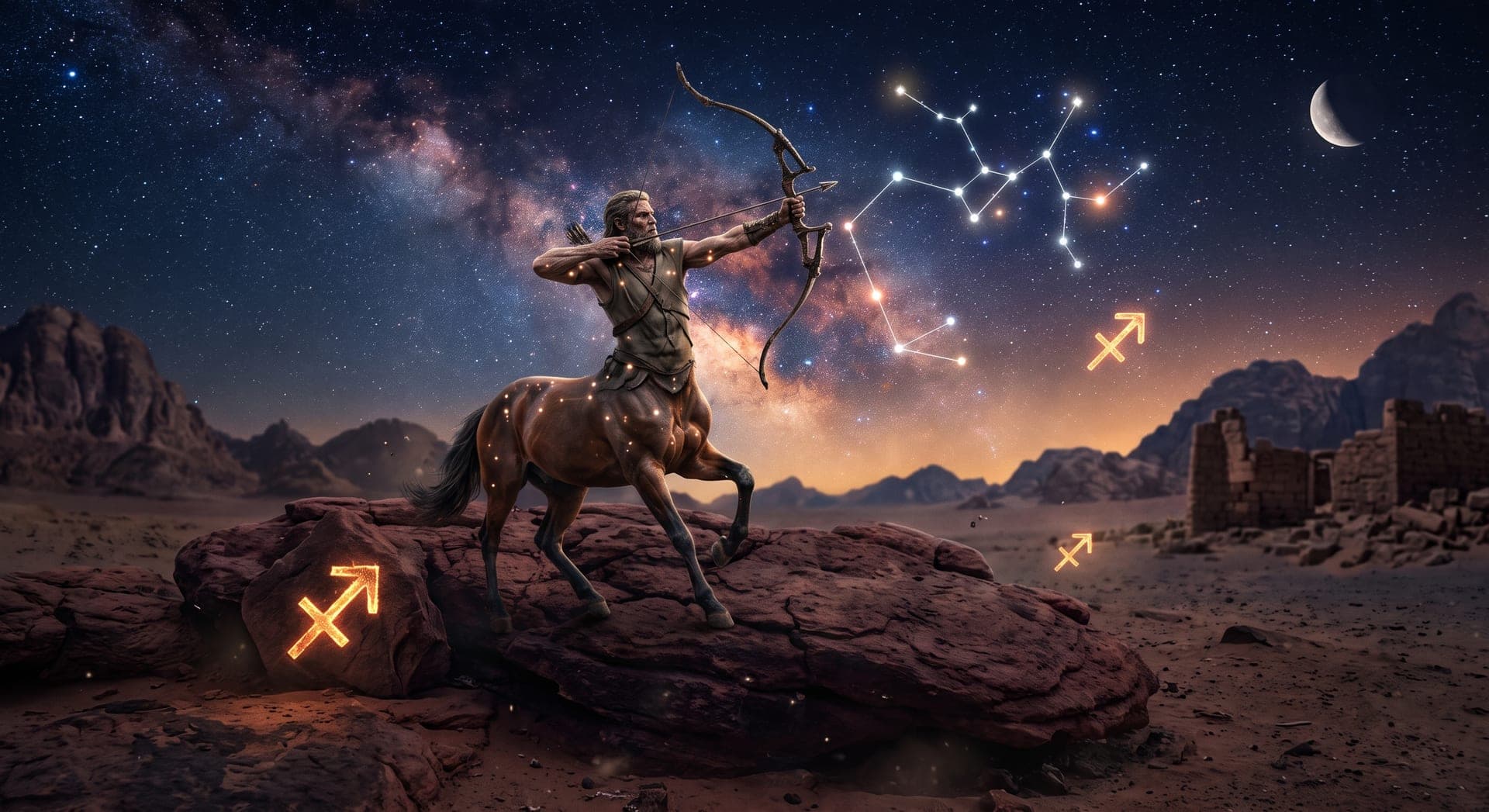
Sagittarius, the ninth sign of the zodiac, spans November 22 to December 21 and is symbolized by the archer, typically depicted as a centaur drawing a bow, representing a restless pursuit of knowledge, adventure, and far-off horizons. Ruled by Jupiter, the largest planet in the solar system and a symbol of growth, luck, and abundance, Sagittarius is widely regarded as one of the most optimistic and freedom-loving signs of the zodiac. As a Fire sign, Sagittarius approaches life with enthusiasm and a genuine hunger for new experiences, whether through literal travel or intellectual and philosophical exploration. Its Mutable modality reflects a deep aversion to routine and confinement, always looking toward the next adventure rather than settling into fixed patterns. People born under this sign are often drawn to travel, higher education, philosophy, or any pursuit that broadens their horizons and understanding of the world. Sagittarius's honesty and optimism make it excellent company, though its blunt directness and restless need for freedom can sometimes come across as tactless or noncommittal to those seeking more stability.
Personality Traits
Strengths
- Adventurous and open to new experiences
- Optimistic and enthusiastic
- Honest and direct
- Philosophical and broad-minded
- Generous and good-humored
Weaknesses
- Tactlessly blunt
- Impatient with routine
- Prone to overpromising
- Restless and commitment-averse
- Careless with details
Compatible Signs
Fun Facts
- Sagittarius's symbol, a centaur drawing a bow and arrow, connects to the Greek myth of Chiron, a wise and scholarly centaur unlike the more unruly members of his kind.
- Jupiter, Sagittarius' ruling planet, is the largest planet in the solar system, reflecting the sign's association with expansion, abundance, and big-picture thinking.
- Sagittarius is one of two zodiac signs, along with Capricorn, represented by a hybrid creature combining human and animal features.
- Notable Sagittarians include Taylor Swift, Walt Disney, Winston Churchill, and Jimi Hendrix.
- Sagittarius season spans the lead-up to the winter solstice, a period historically associated with travel, feasting, and philosophical reflection in many cultures.
Born on December 2
- 1827
William Burges
English Gothic Revival architect and designer known for lavish work such as Cardiff Castle and Castell Coch.
- 1860
Charles Studd
English cricketer who gave up a first-class cricket career to become a Christian missionary, co-founding the Worldwide Evangelization Crusade.
- 1899
John Barbirolli
English conductor who led the Hallé Orchestra for nearly three decades and was renowned for his interpretations of English and Continental repertoire.
- 1899
John Cobb
English racing driver and speedboat pilot who set multiple land speed records, reaching over 394 mph on the Bonneville Salt Flats in 1947.
- 1923
Maria Callas
Greek-American operatic soprano
- 1924
Alexander Haig
American general and U.S. Secretary of State
- 1930
Gary Becker
American economist and Nobel Prize laureate
- 1946
Gianni Versace
Italian fashion designer who founded Versace
- 1948
Patricia Hewitt
Australian-born English Labour politician who served as Secretary of State for Health and previously Secretary of State for Trade and Industry.
- 1960
Rick Savage
English bass guitarist and founding member of the rock band Def Leppard.
- 1968
Lucy Liu
American actress and producer
- 1981
Britney Spears
American singer-songwriter and pop icon
- 1988
Alfred Enoch
English actor known for playing Dean Thomas in the Harry Potter films and Wes Gibbins in How to Get Away with Murder.
- 1991
Charlie Puth
American singer-songwriter and record producer
On This Day in History
- 1697
St Paul's Cathedral, rebuilt to Sir Christopher Wren's design following the Great Fire of London, is formally consecrated.
St Paul's Cathedral's rebuilding, led by renowned architect Christopher Wren, took over three decades to complete following the destruction of the medieval original in the Great Fire of London in 1666. Wren's distinctive dome design, blending classical and baroque architectural elements, became one of London's most recognizable landmarks and remained the tallest building in the city for over two centuries.
- 1697
St Paul's Cathedral in London, rebuilt to Christopher Wren's design after the Great Fire, is consecrated.
The medieval cathedral had been destroyed in the Great Fire of London in 1666, and Wren's Baroque replacement, crowned by its famous dome, took more than three decades to complete. It remains one of London's most recognisable landmarks and a lasting symbol of the city's recovery from the fire.
- 1804
Napoleon crowns himself Emperor of the French at Notre Dame Cathedral in Paris.
Napoleon's self-coronation, during which he famously took the crown from Pope Pius VII's hands and placed it on his own head, symbolized his rejection of the traditional notion that imperial authority derived from the church rather than his own achievements. The elaborate ceremony, later immortalized in Jacques-Louis David's famous painting, marked the formal establishment of the First French Empire.
- 1805
Napoleon's French army decisively defeats a joint Russo-Austrian force at the Battle of Austerlitz.
At Austerlitz, often called Napoleon's greatest tactical triumph, French forces lured the combined Russian and Austrian armies into an overextended attack before decisively counterattacking and shattering their forces. The victory forced Austria out of the war entirely and effectively ended the Third Coalition against France, cementing Napoleon's reputation as one of history's most brilliant military commanders.
- 1805
Napoleon's Grande Armée decisively defeats a combined Russian and Austrian force at the Battle of Austerlitz.
Often called the Battle of the Three Emperors, the victory is regarded as Napoleon's greatest tactical triumph, forcing Austria out of the war and contributing to the collapse of the Holy Roman Empire the following year. It remains one of the most studied battles in military history.
- 1823
President James Monroe articulates the Monroe Doctrine, warning European powers against further colonization in the Americas.
President Monroe's doctrine, delivered during his annual address to Congress, asserted that the Western Hemisphere was no longer open to further European colonization and that any such attempts would be viewed as hostile acts against the United States. Though the young nation lacked the military power to enforce the doctrine at the time, it later became a cornerstone of American foreign policy in Latin America.
- 1859
Abolitionist John Brown is executed for his raid on the federal armory at Harpers Ferry.
John Brown's raid on the federal arsenal at Harpers Ferry, intended to spark a widespread slave rebellion, was quickly suppressed by U.S. Marines, and his subsequent trial and execution for treason made him a martyr to abolitionists while deepening Southern fears of insurrection. His death is widely regarded as one of the key events accelerating the sectional tensions that erupted into civil war less than two years later.
- 1867
Charles Dickens gives the first public reading of his American tour at Tremont Temple in Boston.
The immensely popular English novelist undertook an exhausting reading tour of the United States in 1867-68, performing dramatic excerpts from his own novels to enthusiastic crowds. The tour cemented his transatlantic celebrity but also took a serious toll on his health in the years before his death.
- 1942
Enrico Fermi initiates the first artificial self-sustaining nuclear chain reaction beneath a University of Chicago stadium.
Fermi's experiment, conducted secretly beneath the stands of an unused University of Chicago football stadium as part of the Manhattan Project, demonstrated for the first time that a controlled nuclear chain reaction was achievable, proving the scientific feasibility of both nuclear reactors and atomic weapons. The success was reported to project leaders using the coded message that "the Italian navigator has landed in the new world."
- 1942
A team led by physicist Enrico Fermi achieves the first artificial self-sustaining nuclear chain reaction, beneath a squash court at the University of Chicago.
The experiment, codenamed Chicago Pile-1, proved that a controlled nuclear reaction was achievable and became a foundational step in the Manhattan Project's development of the atomic bomb. It also opened the door to civilian nuclear power in the decades that followed.
- 1956
The yacht Granma reaches Cuba's Oriente Province carrying Fidel Castro and Che Guevara, launching the Cuban Revolution.
The yacht Granma, significantly overloaded with 82 revolutionaries including Fidel Castro, Raúl Castro, and Che Guevara, ran aground short of its intended landing point after a rough voyage from Mexico. Most of the expedition's fighters were killed or captured within days by Batista's forces, but the small band of survivors who escaped into the Sierra Maestra mountains would eventually build the guerrilla movement that toppled the Cuban government.
- 1971
Six emirates unite to form the United Arab Emirates, with a seventh joining weeks later.
Abu Dhabi, Ajman, Fujairah, Sharjah, Dubai, and Umm al-Quwain came together as Britain withdrew from its protectorate role over the Trucial States in the Persian Gulf, with Ras al-Khaimah joining the federation in early 1972. The new state, built on the region's oil wealth, grew within decades into a major global business and tourism hub.
- 1982
Barney Clark receives the first permanent artificial heart implant at the University of Utah.
Barney Clark, a retired dentist suffering from severe heart failure, became the first recipient of a permanent artificial heart, the Jarvik-7, in a groundbreaking but controversial procedure. He survived 112 days connected to an external pneumatic pump, and while he never left the hospital, the operation marked a significant milestone in the development of mechanical heart replacement technology.
- 1982
Barney Clark becomes the first person to receive a permanent artificial heart implant, at the University of Utah.
Surgeon William DeVries implanted the Jarvik-7 mechanical heart, which kept Clark alive for 112 days. Although early artificial hearts carried serious complications, the operation marked a milestone in mechanical heart-replacement technology that paved the way for later devices used as bridges to transplant.
- 1988
Benazir Bhutto becomes Prime Minister of Pakistan, the first woman to lead a Muslim-majority nation.
Bhutto's appointment as Prime Minister of Pakistan came after her Pakistan Peoples Party won the country's general election, making her the first woman to lead a democratic government in a Muslim-majority nation. Her tenure and later political career were marked by significant achievement amid intense political turbulence, ultimately ending with her assassination in 2007.
- 1988
Benazir Bhutto is sworn in as Prime Minister of Pakistan, becoming the first woman to lead a modern Muslim-majority country.
Daughter of former Prime Minister Zulfikar Ali Bhutto, she took office at 35 after her Pakistan Peoples Party won a general election following General Zia-ul-Haq's death. Her tenure was marked by political turbulence, and she would serve a second term in the 1990s before her assassination in 2007.
- 1993
Colombian drug lord Pablo Escobar is shot and killed by police during a rooftop chase in Medellín.
Once one of the wealthiest and most powerful criminals in the world, Escobar had waged a violent campaign against the Colombian state to avoid extradition to the United States. His death, a day after his 44th birthday, ended a manhunt of more than sixteen months and the effective collapse of the Medellín Cartel.
- 1999
The United Kingdom formally devolves governing power in Northern Ireland to the new Northern Ireland Executive.
The transfer of power followed the 1998 Good Friday Agreement and marked the practical start of power-sharing government between unionist and nationalist parties in Belfast. It was a landmark step in the Northern Ireland peace process after nearly three decades of the Troubles.
- 2001
Enron files for Chapter 11 bankruptcy protection, then the largest corporate bankruptcy in U.S. history.
The energy trading giant's collapse followed revelations of massive accounting fraud that had concealed billions of dollars in debt and inflated profits. The scandal cost thousands of jobs and employee pensions, led to the dissolution of auditor Arthur Andersen, and prompted sweeping U.S. corporate governance reforms.
- 2015
A mass shooting in San Bernardino, California kills fourteen people and injures twenty-two others.
The San Bernardino attack, carried out by a married couple who had pledged allegiance to ISIL, targeted a holiday party at a county public health department where one attacker worked. The FBI's subsequent investigation and legal battle with Apple over unlocking the attackers' encrypted phone became a landmark case in the ongoing debate over digital privacy and law enforcement access.