
What’s Observed on November 24
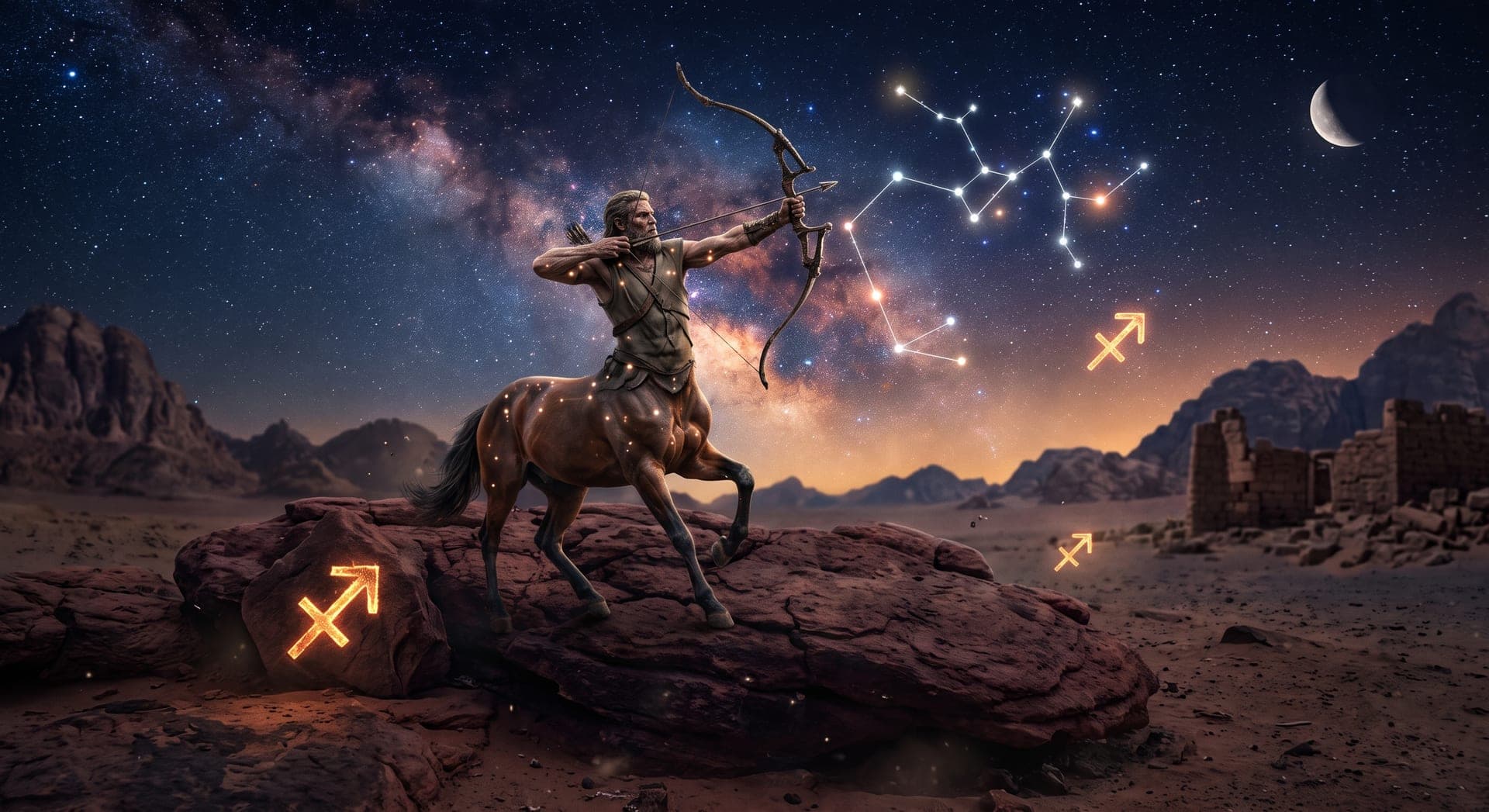
Born on November 24: Sagittarius ♐
Sagittarius, the ninth sign of the zodiac, spans November 22 to December 21 and is symbolized by the archer, typically depicted as a centaur drawing a bow, representing a restless pursuit of knowledge, adventure, and far-off horizons. Ruled by Jupiter, the largest planet in the solar system and a symbol of growth, luck, and abundance, Sagittarius is widely regarded as one of the most optimistic and freedom-loving signs of the zodiac. As a Fire sign, Sagittarius approaches life with enthusiasm and a genuine hunger for new experiences, whether through literal travel or intellectual and philosophical exploration. Its Mutable modality reflects a deep aversion to routine and confinement, always looking toward the next adventure rather than settling into fixed patterns. People born under this sign are often drawn to travel, higher education, philosophy, or any pursuit that broadens their horizons and understanding of the world. Sagittarius's honesty and optimism make it excellent company, though its blunt directness and restless need for freedom can sometimes come across as tactless or noncommittal to those seeking more stability.
Personality Traits
Strengths
- Adventurous and open to new experiences
- Optimistic and enthusiastic
- Honest and direct
- Philosophical and broad-minded
- Generous and good-humored
Weaknesses
- Tactlessly blunt
- Impatient with routine
- Prone to overpromising
- Restless and commitment-averse
- Careless with details
Compatible Signs
Fun Facts
- Sagittarius's symbol, a centaur drawing a bow and arrow, connects to the Greek myth of Chiron, a wise and scholarly centaur unlike the more unruly members of his kind.
- Jupiter, Sagittarius' ruling planet, is the largest planet in the solar system, reflecting the sign's association with expansion, abundance, and big-picture thinking.
- Sagittarius is one of two zodiac signs, along with Capricorn, represented by a hybrid creature combining human and animal features.
- Notable Sagittarians include Taylor Swift, Walt Disney, Winston Churchill, and Jimi Hendrix.
- Sagittarius season spans the lead-up to the winter solstice, a period historically associated with travel, feasting, and philosophical reflection in many cultures.
Born on November 24
- 1632
Baruch Spinoza
Dutch rationalist philosopher
- 1784
Zachary Taylor
12th President of the United States
- 1806
William Webb Ellis
English clergyman credited by longstanding tradition with originating rugby football by picking up the ball and running with it during a game at Rugby School.
- 1864
Henri de Toulouse-Lautrec
French painter known for Parisian nightlife scenes
- 1868
Scott Joplin
American composer and pioneer of ragtime
- 1888
Dale Carnegie
American author of "How to Win Friends and Influence People"
- 1925
William F. Buckley Jr.
American author and founder of National Review
- 1941
Pete Best
English drummer who played with the Beatles during their early Hamburg and Liverpool years before being replaced by Ringo Starr just before their rise to fame.
- 1942
Billy Connolly
Scottish comedian, actor, and musician celebrated for his freewheeling stand-up style, later knighted for services to entertainment and charity.
- 1955
Ian Botham
English cricketer regarded as one of the greatest all-rounders in the sport's history, famed for his match-winning performances in the 1981 Ashes series.
- 1961
Arundhati Roy
Indian author known for "The God of Small Things"
- 1964
Conleth Hill
Northern Irish actor best known for playing Lord Varys in the television series Game of Thrones.
- 1965
Shirley Henderson
Scottish actress known for roles including Moaning Myrtle in the Harry Potter films and Jude in Bridget Jones's Diary.
- 1974
Stephen Merchant
English writer, director, and actor who co-created the television series The Office and Extras with Ricky Gervais.

On This Day in History
- 847
A major earthquake devastates parts of Syria, causing significant destruction and casualties in Damascus and Mosul.
A powerful earthquake struck the region encompassing modern Syria, causing extensive destruction and significant loss of life in major cities including Antioch, Damascus, and Mosul. Medieval chroniclers described the disaster in considerable detail, providing historians valuable insight into the seismic history and urban vulnerability of the region during the early medieval period.
- 1221
Genghis Khan's Mongol forces defeat the Khwarazmian prince Jalal ad-Din, completing the conquest of Khwarazmia.
Genghis Khan's forces completed their conquest of the Khwarazmian Empire in Central Asia after a brutal, years-long campaign in retaliation for the earlier execution of Mongol merchants and envoys. The devastating conquest, marked by the destruction of numerous major cities, opened the way for the vast expansion of the Mongol Empire across Asia.
- 1542
English forces defeat a larger Scottish army at the Battle of Solway Moss.
English forces achieved a lopsided victory over a larger but poorly commanded Scottish army at the Battle of Solway Moss, a defeat so demoralizing that Scottish King James V reportedly died of despair shortly afterward. The battle left his infant daughter, the future Mary, Queen of Scots, on the throne amid significant political instability.
- 1542
An English force routs a much larger Scottish army at the Battle of Solway Moss near the border.
Sent by Henry VIII to punish Scotland for its alliance with France, an English raiding party of around 3,000 men scattered a disorganized Scottish army several times its size, capturing hundreds of prisoners and considerable artillery. The humiliating defeat is often said to have hastened the death of King James V of Scotland weeks later, leaving his week-old daughter, Mary, Queen of Scots, to inherit the throne.
- 1642
Dutch explorer Abel Tasman becomes the first European to sight the island later named Tasmania.
Dutch explorer Abel Tasman became the first recorded European to sight the island later named Tasmania, which he initially named Van Diemen's Land after the Dutch East India Company official who sponsored his voyage. His broader expedition also marked the first documented European contact with New Zealand during the same journey.
- 1859
Charles Darwin publishes On the Origin of Species, introducing his theory of evolution by natural selection.
Charles Darwin's On the Origin of Species introduced his revolutionary theory of evolution through natural selection, presenting extensive evidence gathered over decades of research and observation. Despite significant initial controversy, particularly regarding its implications for religious understandings of creation, the work fundamentally transformed the scientific understanding of biology and remains foundational to modern life sciences.
- 1859
Charles Darwin publishes On the Origin of Species, introducing the theory of evolution by natural selection to the public.
The first print run of 1,250 copies sold out on its day of publication in London. Drawing on decades of research since his voyage on HMS Beagle, Darwin's book presented evidence that species evolve over time through natural selection, a theory that reshaped biology and challenged prevailing religious understandings of life's origins, making it one of the most influential scientific works ever written.
- 1863
Union forces capture Lookout Mountain during the Battle of Chattanooga, breaking the Confederate siege of the city.
Union forces achieved a surprising and decisive victory at Lookout Mountain, scaling the seemingly impregnable heights above Chattanooga in what became romantically known afterward as the "Battle Above the Clouds" due to the thick fog that shrouded much of the fighting. The victory broke the Confederate siege of the strategically vital rail and river hub.
- 1877
Anna Sewell's novel Black Beauty is published in England.
Written in the final years of the author's life largely from her sickbed, the novel tells the story of a horse's life in Victorian England through its own eyes, campaigning against cruelty to working animals such as the harsh use of the bearing rein. It became one of the best-selling books in the English language and is credited with influencing animal welfare attitudes and legislation in Britain and beyond.
- 1922
Erskine Childers, the English-born author of the spy novel The Riddle of the Sands, is executed by firing squad during the Irish Civil War.
Once a clerk in the British House of Commons and a decorated Royal Navy Volunteer Reserve officer in the First World War, Childers turned to Irish republicanism and served as a leading propagandist and gunrunner for Sinn Féin. Captured with an illegal pistol during the Irish Civil War, he was executed by the Irish Free State he had helped bring into being, having earlier become one of Britain's best-selling novelists with his 1903 tale of German invasion.
- 1962
The BBC broadcasts the first episode of That Was the Week That Was, launching a new era of British satirical television.
Hosted by David Frost, the late-night programme skewered politicians, the establishment, and current events with an irreverence previously unseen on British television. Though it ran for only about a year before being pulled ahead of a general election, 'TW3' broke lasting ground for political satire and helped launch Frost's career as one of Britain's most prominent broadcasters.
- 1963
Lee Harvey Oswald, accused assassin of President Kennedy, is shot and killed by Jack Ruby on live television.
Lee Harvey Oswald, the accused assassin of President Kennedy, was shot at close range by nightclub owner Jack Ruby while being transferred between jail facilities, an event captured live on national television. Oswald's death before facing trial fueled decades of conspiracy theories regarding the true circumstances surrounding the president's assassination.
- 1963
Lee Harvey Oswald, the accused assassin of President Kennedy, is shot and killed by nightclub owner Jack Ruby on live television.
As police transferred Oswald between jail facilities in Dallas, Ruby stepped from a crowd of reporters and shot him at point-blank range, an act captured live on national television and witnessed by millions. Oswald's death, before he could stand trial, fueled decades of conspiracy theories about who was truly responsible for Kennedy's assassination.
- 1971
A man using the alias D.B. Cooper hijacks a Boeing 727 and parachutes into the Pacific Northwest with $200,000 in ransom money.
After claiming to have a bomb aboard the Portland-to-Seattle flight, the hijacker collected his ransom and parachutes, then jumped from the rear stairs of the aircraft somewhere over the forests of southwestern Washington state. Despite an extensive FBI manhunt, he was never identified or found, and the case remains the only unsolved commercial airplane hijacking in American history.
- 1974
Paleoanthropologists discover the fossilized skeleton "Lucy," a 3.2-million-year-old human ancestor, in Ethiopia.
Paleoanthropologists Donald Johanson and Tom Gray discovered the remarkably complete fossilized skeleton of a small hominid in Ethiopia's Afar region, nicknamed "Lucy" after a Beatles song playing at their camp that evening. The 3.2-million-year-old specimen provided crucial evidence about human evolutionary ancestry and remains one of the most famous fossil discoveries ever made.
- 1974
Paleoanthropologist Donald Johanson discovers 'Lucy,' a roughly 40-percent-complete skeleton of an early human ancestor, in Ethiopia.
Unearthed at the Hadar site in the Afar region, the 3.2-million-year-old Australopithecus afarensis skeleton offered an unprecedented look at early hominin anatomy, including evidence of upright walking well before the evolution of a large brain. Nicknamed after the Beatles song 'Lucy in the Sky with Diamonds,' it became one of the most famous fossils in paleoanthropology.
- 1989
Communist Party leadership resigns in Czechoslovakia as the Velvet Revolution brings an end to Communist rule.
Czechoslovakia's entire Communist Party leadership resigned en masse amid the rapidly escalating Velvet Revolution, as mass strikes and demonstrations made continued one-party rule increasingly untenable. The peaceful transition, achieved without significant violence, led directly to the country's first free elections in decades and the presidency of dissident playwright Vaclav Havel.
- 2016
The Colombian government and FARC rebels sign a revised peace agreement, ending over fifty years of civil conflict.
The Colombian government and FARC rebels signed a revised peace agreement after voters had narrowly rejected an initial version in a referendum weeks earlier, incorporating changes intended to address concerns raised by opponents. The accord formally ended over half a century of armed conflict that had killed hundreds of thousands of people.
- 2016
Colombia's government and the FARC rebel group sign a revised peace agreement, ending more than five decades of armed conflict.
The revised accord followed the public's narrow rejection of an earlier version in an October referendum, prompting negotiators to renegotiate key provisions before pushing the deal through Congress instead. The peace agreement ended Latin America's longest-running civil conflict, which had killed more than 200,000 people and displaced millions.
- 2023
A memorial sculpture called 'Hibiscus Rising,' honoring David Oluwale, is unveiled in Leeds.
Oluwale, who arrived in Leeds from Nigeria as a stowaway in 1949, drowned in the River Aire in 1969 after years of being harassed and assaulted by two city police officers; their subsequent convictions were among the first successful British prosecutions of police officers over the death of a Black man. Artist Yinka Shonibare's 9.5-metre sculpture, installed near where Oluwale entered the water, memorializes him as part of the Leeds 2023 culture programme.