
What’s Observed on November 25
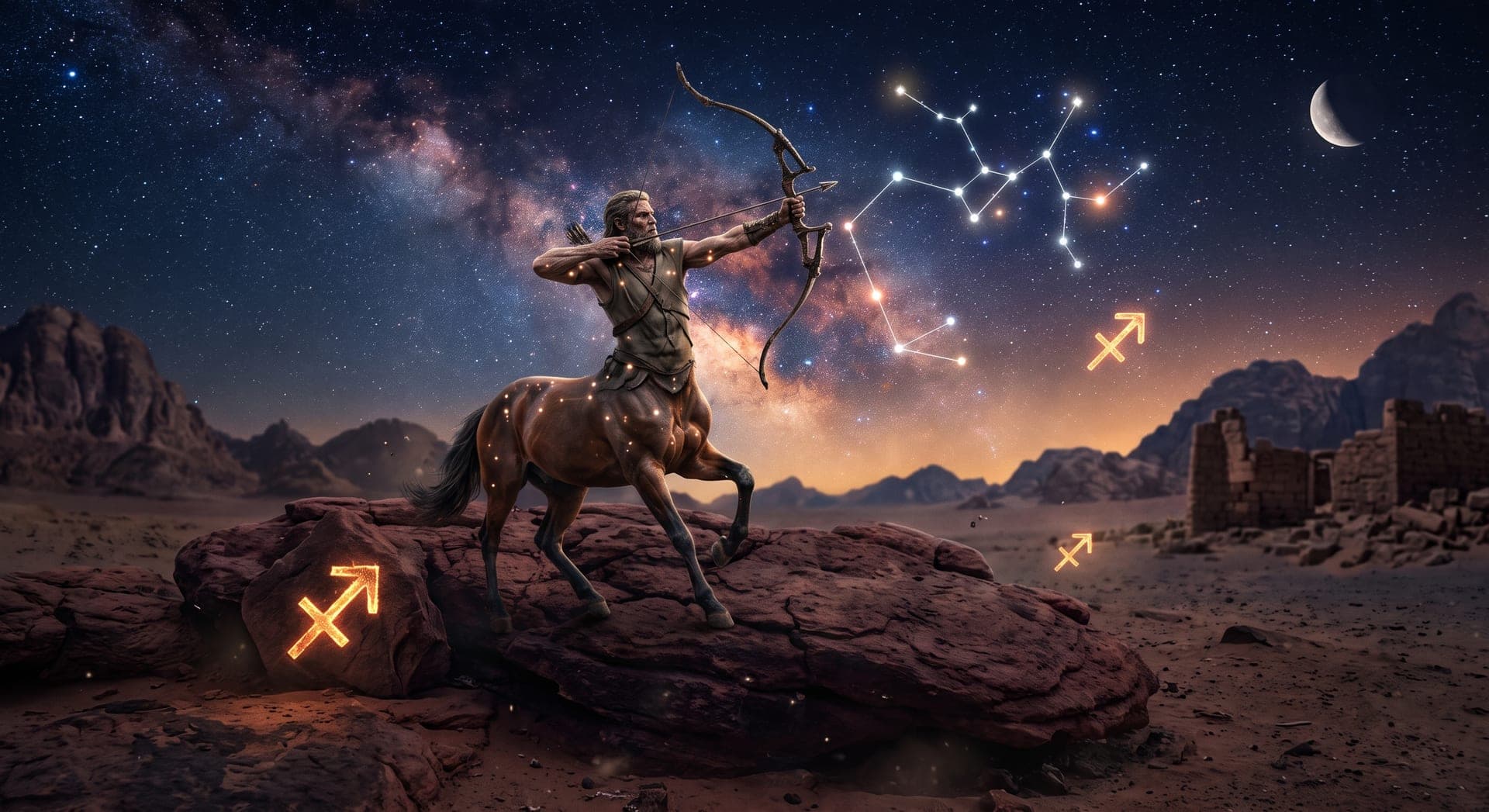
Born on November 25: Sagittarius ♐
Sagittarius, the ninth sign of the zodiac, spans November 22 to December 21 and is symbolized by the archer, typically depicted as a centaur drawing a bow, representing a restless pursuit of knowledge, adventure, and far-off horizons. Ruled by Jupiter, the largest planet in the solar system and a symbol of growth, luck, and abundance, Sagittarius is widely regarded as one of the most optimistic and freedom-loving signs of the zodiac. As a Fire sign, Sagittarius approaches life with enthusiasm and a genuine hunger for new experiences, whether through literal travel or intellectual and philosophical exploration. Its Mutable modality reflects a deep aversion to routine and confinement, always looking toward the next adventure rather than settling into fixed patterns. People born under this sign are often drawn to travel, higher education, philosophy, or any pursuit that broadens their horizons and understanding of the world. Sagittarius's honesty and optimism make it excellent company, though its blunt directness and restless need for freedom can sometimes come across as tactless or noncommittal to those seeking more stability.
Personality Traits
Strengths
- Adventurous and open to new experiences
- Optimistic and enthusiastic
- Honest and direct
- Philosophical and broad-minded
- Generous and good-humored
Weaknesses
- Tactlessly blunt
- Impatient with routine
- Prone to overpromising
- Restless and commitment-averse
- Careless with details
Compatible Signs
Fun Facts
- Sagittarius's symbol, a centaur drawing a bow and arrow, connects to the Greek myth of Chiron, a wise and scholarly centaur unlike the more unruly members of his kind.
- Jupiter, Sagittarius' ruling planet, is the largest planet in the solar system, reflecting the sign's association with expansion, abundance, and big-picture thinking.
- Sagittarius is one of two zodiac signs, along with Capricorn, represented by a hybrid creature combining human and animal features.
- Notable Sagittarians include Taylor Swift, Walt Disney, Winston Churchill, and Jimi Hendrix.
- Sagittarius season spans the lead-up to the winter solstice, a period historically associated with travel, feasting, and philosophical reflection in many cultures.
Born on November 25
- 1467
Thomas Dacre, 2nd Baron Dacre
English nobleman and Warden-General of the Marches who commanded the border cavalry at the Battle of Flodden in 1513, helping secure a decisive English victory over Scotland.
- 1566
John Heminges
English actor and fellow member of Shakespeare's theatre company, the King's Men, who co-edited the First Folio in 1623, preserving many of Shakespeare's plays for posterity.
- 1835
Andrew Carnegie
Scottish-American businessman and philanthropist
- 1844
Karl Benz
German engineer who founded Mercedes-Benz
- 1877
Harley Granville-Barker
English actor, director and playwright whose innovative productions of Shakespeare helped modernize British theatre in the early twentieth century.
- 1881
Pope John XXIII
Head of the Catholic Church who convened the Second Vatican Council
- 1890
Isaac Rosenberg
English poet and painter, one of the leading First World War poets, remembered for verse such as 'Break of Day in the Trenches' written from the trenches before his death in action in 1918.
- 1914
Joe DiMaggio
American Major League Baseball player
- 1920
Ricardo Montalban
Mexican-American actor
- 1955
Bruno Tonioli
Italian-born choreographer and television personality, long a judge on Britain's Strictly Come Dancing and its US counterpart Dancing with the Stars.
- 1959
Charles Kennedy
Scottish politician who became Britain's youngest MP in 1983 at age 23 and later led the Liberal Democrats from 1999 to 2006, becoming a prominent voice against the 2003 invasion of Iraq.
- 1960
Amy Grant
American singer-songwriter
- 1960
John F. Kennedy Jr.
American lawyer, journalist, and publisher
- 1975
Kristian Nairn
Northern Irish actor and DJ best known for playing Hodor in the HBO fantasy series Game of Thrones.

On This Day in History
- 1034
Malcolm II, King of Scots, dies and is succeeded by his grandson Duncan I.
Malcolm II had ruled Scotland since 1005, consolidating royal power through campaigns against Northumbria and the kingdom of Moray. His death cleared the way for Duncan I, son of his daughter Bethóc, to inherit the throne — a succession later loosely echoed in Shakespeare's Macbeth, in which Duncan appears as the murdered king.
- 1120
The White Ship sinks in the English Channel, drowning William Adelin, heir to King Henry I, and triggering a succession crisis.
The White Ship, carrying King Henry I's only legitimate son and heir William Adelin along with numerous other young nobles, struck a rock and sank in the English Channel shortly after departing Normandy, killing nearly everyone aboard. The disaster left England without a clear male heir, triggering a prolonged and destructive civil war known as the Anarchy decades later.
- 1120
The White Ship sinks in the English Channel, drowning William Adelin, the only legitimate son and heir of King Henry I of England.
The vessel struck a submerged rock off Barfleur while racing across the Channel at night, and nearly everyone aboard drowned, including much of the young English nobility. William Adelin's death left Henry I without a male heir, triggering a succession crisis that erupted into a prolonged civil war known as the Anarchy after Henry died in 1135.
- 1177
Baldwin IV of Jerusalem and Raynald of Chatillon defeat Saladin's larger army at the Battle of Montgisard.
King Baldwin IV of Jerusalem, despite suffering from leprosy and leading a vastly outnumbered force, achieved a stunning victory over the forces of the powerful Muslim leader Saladin at Montgisard. The unexpected triumph temporarily secured the vulnerable Crusader kingdom and became celebrated as one of the great military upsets of the Crusades.
- 1343
A tsunami triggered by an undersea earthquake in the Tyrrhenian Sea devastates the coastal towns of Naples and Amalfi.
An undersea earthquake in the Tyrrhenian Sea generated a devastating tsunami that struck the Italian coastline, causing catastrophic destruction and significant loss of life in the port cities of Naples and Amalfi. Contemporary chronicles describe the disaster's severity, marking it among the deadliest natural catastrophes recorded in medieval southern Italy.
- 1487
Elizabeth of York is crowned Queen Consort of England.
Elizabeth, eldest daughter of Edward IV, had married Henry VII in January 1486, uniting the rival houses of York and Lancaster after decades of civil war. Her coronation at Westminster Abbey, delayed until nearly two years into the marriage, symbolized the reconciliation of England's warring factions and the founding of the Tudor dynasty.
- 1510
Portuguese forces under Afonso de Albuquerque capture Goa from the Bijapur Sultanate, beginning centuries of colonial rule.
Portuguese naval commander Afonso de Albuquerque captured the city of Goa from the Bijapur Sultanate, establishing what would become the administrative capital of Portugal's Asian colonial empire for over four centuries. Goa's strategic port and location made it a crucial hub for Portuguese trade and influence throughout the Indian Ocean region.
- 1758
British forces capture Fort Duquesne from the French during the French and Indian War.
The wooden fort at the forks of the Ohio River had anchored French control of the region since 1754. Its French garrison abandoned and burned it rather than face the advancing British column under General John Forbes, and the site was soon rebuilt as Fort Pitt, around which the city of Pittsburgh later grew.
- 1783
The last British troops leave New York City, marking the end of British military presence in the newly independent United States.
The withdrawal came three months after the Treaty of Paris formally ended the American Revolutionary War and recognized American independence. British forces had occupied New York since 1776, and their departure — still marked in the US as Evacuation Day — allowed General George Washington to lead the Continental Army into the city in triumph.
- 1863
Union forces under General Ulysses S. Grant break the siege of Chattanooga at the Battle of Missionary Ridge.
Union forces under General Grant broke the prolonged Confederate siege of Chattanooga with a dramatic and largely unplanned assault up Missionary Ridge, as troops ordered only to take the base of the hill continued charging to the summit against orders. The unexpected breakthrough secured a vital rail junction and opened the path for the following year's Atlanta campaign.
- 1915
Albert Einstein presents his field equations of general relativity to the Prussian Academy of Sciences.
Albert Einstein presented the final field equations of his general theory of relativity to the Prussian Academy of Sciences, completing a decade-long intellectual effort to fundamentally reconceive gravity as the curvature of spacetime rather than a conventional force. The theory would later be confirmed through observations and remains a cornerstone of modern physics.
- 1915
Albert Einstein presents the field equations of general relativity to the Prussian Academy of Sciences.
The equations, the culmination of nearly a decade of work, described gravity as the curvature of spacetime caused by mass and energy rather than as a force acting at a distance. General relativity went on to reshape physics and cosmology, later confirmed by observations such as the bending of starlight during a 1919 solar eclipse.
- 1941
The Royal Navy battleship HMS Barham is sunk by a German U-boat in the Mediterranean.
U-331 struck Barham with three torpedoes off the coast of Egypt; the ship capsized and its magazines exploded within minutes, killing 862 of the crew, while several hundred sailors were rescued by nearby destroyers. Newsreel footage of the sinking, one of the era's most dramatic pieces of war film, was withheld from the British public for months to protect wartime morale.
- 1947
New Zealand ratifies the Statute of Westminster, becoming independent of legislative control by the United Kingdom.
The Statute of Westminster, passed by the UK Parliament in 1931, granted legislative autonomy to the self-governing dominions of the British Empire. New Zealand had been slow to adopt it, and its ratification in 1947 marked one of the last formal steps in the gradual transformation of the empire into the modern Commonwealth of Nations.
- 1952
Agatha Christie's play The Mousetrap opens in London's West End, eventually becoming theater's longest continuously running production.
Agatha Christie's murder mystery play The Mousetrap opened in London's West End to modest initial expectations, yet it continued running for decades without interruption, becoming the longest continuously running play in theatrical history. Audiences are traditionally asked not to reveal the killer's identity after each performance, a tradition maintained for generations.
- 1952
Agatha Christie's murder-mystery play The Mousetrap opens at the Ambassadors Theatre in London's West End.
The production had premiered a month earlier in Nottingham before transferring to the West End. Adapted from Christie's own radio play and short story, it went on to become the longest continuously running play in history, still staged in London decades later as a fixture of British theatrical culture.
- 1960
The three Mirabal sisters, opponents of the Trujillo regime, are assassinated in the Dominican Republic.
The Mirabal sisters, prominent opponents of the brutal dictatorship of Dominican Republic ruler Rafael Trujillo, were ambushed and murdered on his orders while returning from visiting their imprisoned husbands. Their assassination galvanized opposition to Trujillo's regime, and the date is now observed internationally as the annual day for the elimination of violence against women.
- 1963
The state funeral of assassinated US President John F. Kennedy is held in Washington, D.C.
After lying in state at the US Capitol, Kennedy's body was carried in procession to a Requiem Mass at the Cathedral of St. Matthew the Apostle, attended by dignitaries from more than ninety countries. He was buried at Arlington National Cemetery, where an eternal flame was lit at his widow Jacqueline Kennedy's request.
- 1975
Suriname gains independence from the Netherlands.
Suriname gained full independence from the Netherlands after more than three centuries of Dutch colonial administration, becoming a sovereign republic in South America. The transition prompted a significant wave of emigration among Surinamese residents who chose to relocate to the Netherlands rather than remain in the newly independent nation.
- 1984
Thirty-six musicians record Band Aid's charity single "Do They Know It's Christmas?" to raise funds for Ethiopian famine relief.
Thirty-six prominent British and Irish musicians gathered in a London studio to record "Do They Know It's Christmas?" in a single day, organized by Bob Geldof and Midge Ure to raise emergency funds for famine relief in Ethiopia. The charity single became one of the best-selling singles in UK chart history and inspired similar subsequent fundraising efforts.