
What’s Observed on November 23
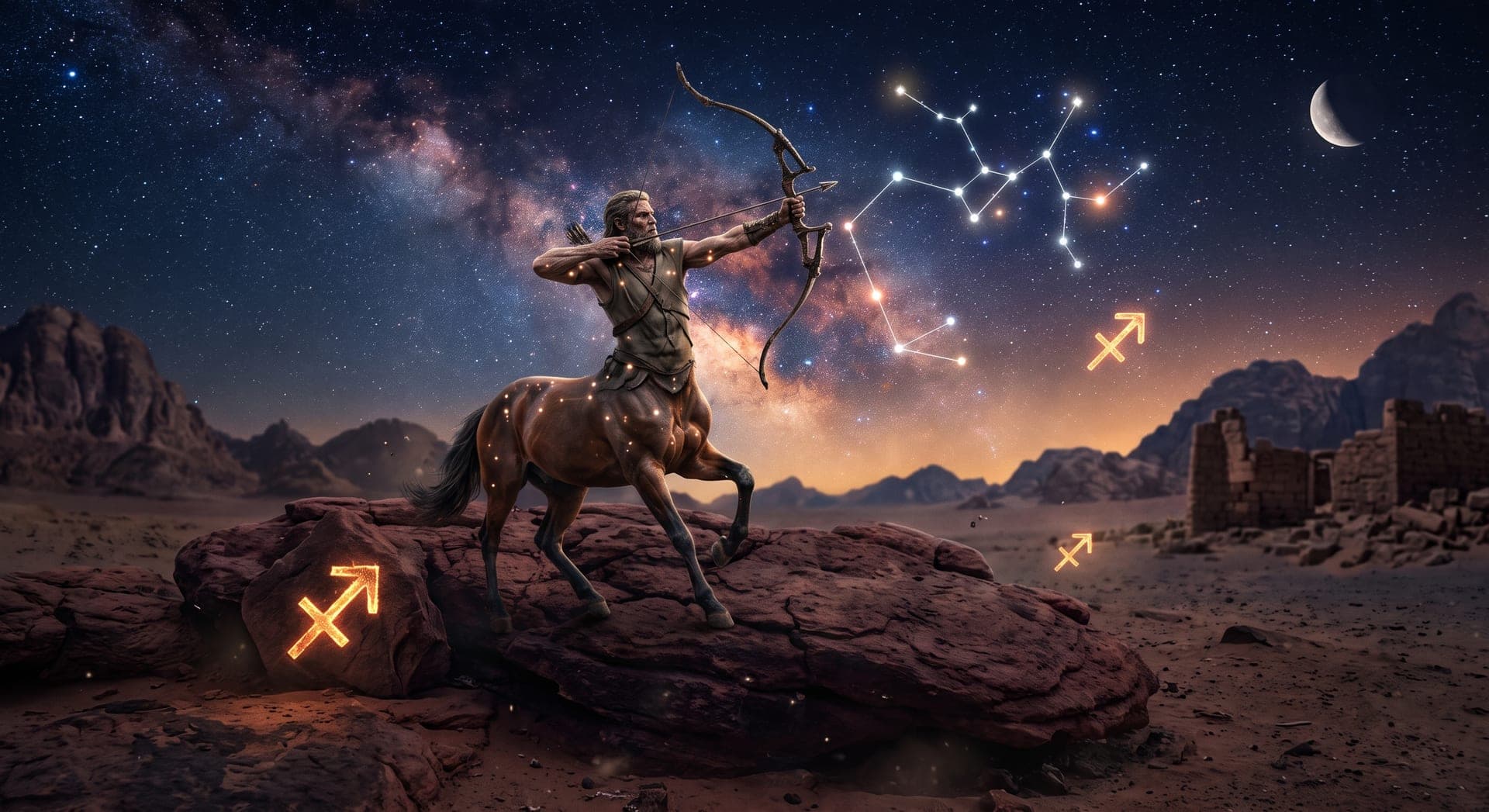
Born on November 23: Sagittarius ♐
Sagittarius, the ninth sign of the zodiac, spans November 22 to December 21 and is symbolized by the archer, typically depicted as a centaur drawing a bow, representing a restless pursuit of knowledge, adventure, and far-off horizons. Ruled by Jupiter, the largest planet in the solar system and a symbol of growth, luck, and abundance, Sagittarius is widely regarded as one of the most optimistic and freedom-loving signs of the zodiac. As a Fire sign, Sagittarius approaches life with enthusiasm and a genuine hunger for new experiences, whether through literal travel or intellectual and philosophical exploration. Its Mutable modality reflects a deep aversion to routine and confinement, always looking toward the next adventure rather than settling into fixed patterns. People born under this sign are often drawn to travel, higher education, philosophy, or any pursuit that broadens their horizons and understanding of the world. Sagittarius's honesty and optimism make it excellent company, though its blunt directness and restless need for freedom can sometimes come across as tactless or noncommittal to those seeking more stability.
Personality Traits
Strengths
- Adventurous and open to new experiences
- Optimistic and enthusiastic
- Honest and direct
- Philosophical and broad-minded
- Generous and good-humored
Weaknesses
- Tactlessly blunt
- Impatient with routine
- Prone to overpromising
- Restless and commitment-averse
- Careless with details
Compatible Signs
Fun Facts
- Sagittarius's symbol, a centaur drawing a bow and arrow, connects to the Greek myth of Chiron, a wise and scholarly centaur unlike the more unruly members of his kind.
- Jupiter, Sagittarius' ruling planet, is the largest planet in the solar system, reflecting the sign's association with expansion, abundance, and big-picture thinking.
- Sagittarius is one of two zodiac signs, along with Capricorn, represented by a hybrid creature combining human and animal features.
- Notable Sagittarians include Taylor Swift, Walt Disney, Winston Churchill, and Jimi Hendrix.
- Sagittarius season spans the lead-up to the winter solstice, a period historically associated with travel, feasting, and philosophical reflection in many cultures.
Born on November 23
- 1804
Franklin Pierce
14th President of the United States
- 1876
Manuel de Falla
Spanish composer
- 1878
Frank Pick
English administrator who, as chief executive of London Underground, commissioned its iconic roundel logo, Johnston typeface, and modernist station architecture.
- 1883
Jose Clemente Orozco
Mexican muralist painter
- 1887
Boris Karloff
English actor best remembered for playing Frankenstein's monster in the 1931 film Frankenstein, becoming one of horror cinema's defining stars.
- 1887
Henry Moseley
English physicist whose X-ray spectroscopy work established the concept of atomic number, a discovery cut short by his death in action at Gallipoli in 1915.
- 1888
Harpo Marx
American comedian, part of the Marx Brothers
- 1916
Michael Gough
English actor known for numerous Hammer horror films and for playing Alfred the butler in Tim Burton's Batman films.
- 1927
John Cole
Northern Irish-born British journalist who served as the BBC's political editor throughout the 1980s, becoming one of British broadcasting's most recognizable voices.
- 1950
Charles Schumer
American politician and U.S. Senator
- 1966
Vincent Cassel
French actor
- 1968
Kirsty Young
Scottish broadcaster who presented BBC Radio 4's Desert Island Discs for over a decade.
- 1970
Zoë Ball
English radio and television presenter known for hosting BBC Radio 2's Breakfast Show and Strictly Come Dancing: It Takes Two.
- 1992
Miley Cyrus
American singer-songwriter and actress

On This Day in History
- 1248
The Christian reconquest of Seville is completed under King Ferdinand III of Castile.
King Ferdinand III of Castile's forces completed a prolonged siege to capture Seville from Moorish rule, one of the most significant victories of the centuries-long Christian Reconquista of the Iberian Peninsula. The conquest of the important trading city marked a major expansion of Castilian territory and influence in southern Spain.
- 1499
Perkin Warbeck, a pretender who claimed to be one of the 'Princes in the Tower,' is hanged at Tyburn for plotting to escape imprisonment.
Believed to be a Flemish-born impostor posing as Richard, Duke of York, the younger of the two princes presumed murdered in the Tower of London, Warbeck had spent years challenging Henry VII's throne with support from Yorkist sympathizers across Europe. Convicted of conspiring with fellow prisoner Edward, Earl of Warwick, to burn the Tower and escape, he was drawn from the Tower to Tyburn and hanged, ending one of the most persistent threats to early Tudor rule.
- 1644
John Milton publishes Areopagitica, an influential treatise arguing against government censorship of the press.
John Milton's Areopagitica argued passionately against a Parliamentary licensing order requiring government approval before publication, making an influential early case for freedom of the press based on the belief that truth would prevail through open debate. Though it had little immediate legal effect, the essay became a foundational text in the history of free speech philosophy.
- 1644
John Milton publishes Areopagitica, his pamphlet arguing against licensing and censorship of the press.
Written in response to Parliament's 1643 Licensing Order, which required government approval before publication, Milton's unlicensed pamphlet argued that truth would prevail over falsehood if ideas were allowed to compete freely. Though it had little immediate legal effect, Areopagitica became one of the most influential defenses of free expression in the English language and a touchstone for later arguments against censorship.
- 1863
Union forces under General Ulysses S. Grant launch the opening assault of the Battle of Chattanooga at Orchard Knob.
Union General Ulysses S. Grant launched the opening phase of the multi-day Battle of Chattanooga with an assault on Orchard Knob, a modest ridge held by Confederate forces, testing enemy positions before the larger battles at Lookout Mountain and Missionary Ridge that followed in the coming days. The overall campaign broke the Confederate siege of the vital rail hub.
- 1863
Union forces under Ulysses S. Grant open the Battle of Chattanooga against Confederate positions in Tennessee.
Having broken the Confederate siege that had trapped Union troops in the city, Grant's forces began a series of assaults on the surrounding heights, including Lookout Mountain and Missionary Ridge. The Union victory secured Chattanooga as a base for the following year's invasion of Georgia and the March to the Sea.
- 1867
Three Fenians are publicly hanged in Manchester for the killing of a police officer during a prison-van rescue.
William Allen, Michael Larkin, and Michael O'Brien were convicted after a Fenian raid to free two Irish republican prisoners from a police van left a police sergeant, Charles Brett, shot dead. Their executions, widely seen even at the time as unjust given the flimsy evidence against them individually, turned the men into martyrs for Irish nationalism and galvanized support for the republican cause on both sides of the Irish Sea.
- 1924
Astronomer Edwin Hubble's discovery that the Andromeda "nebula" is a separate galaxy is reported in The New York Times.
Astronomer Edwin Hubble's finding that the Andromeda "nebula" was actually a separate galaxy far beyond the Milky Way fundamentally transformed scientific understanding of the universe's scale, proving that our galaxy was just one of countless others. The discovery is considered one of the most significant astronomical breakthroughs of the twentieth century.
- 1939
The armed merchant cruiser HMS Rawalpindi is sunk by the German battleships Scharnhorst and Gneisenau in the North Atlantic.
A former P&O liner pressed into Royal Navy service as a patrol vessel, Rawalpindi was hopelessly outgunned when it encountered the two German battlecruisers while patrolling near Iceland. Its captain, Edward Kennedy, chose to fight rather than surrender, and the ship was sunk within minutes with the loss of more than 200 lives, an early demonstration of the risks facing Britain's improvised wartime navy.
- 1955
Britain transfers sovereignty of the Cocos (Keeling) Islands in the Indian Ocean to Australia.
Though administered from Singapore for over a century, the remote atoll had been privately governed since 1886 by the Clunies-Ross family under British protection. Sovereignty passed formally to Australia at the request of both governments, though Britain retained a residual role until the islands' mixed Cocos Malay and European population voted to fully integrate with Australia in a 1984 referendum.
- 1963
The BBC premieres the science-fiction series Doctor Who, which becomes the longest-running show of its genre.
Doctor Who debuted on the BBC the day after President Kennedy's assassination dominated global news coverage, initially drawing a smaller audience than hoped but gradually building a devoted following. The science fiction series' unique premise, allowing the lead actor to periodically regenerate into a new performer, has enabled it to remain in production across six decades.
- 1963
The BBC broadcasts 'An Unearthly Child,' the first episode of Doctor Who.
Airing the day after President Kennedy's assassination dominated the news, the debut episode introduced William Hartnell as the mysterious First Doctor and his time-and-space machine, the TARDIS. Conceived partly as an educational family drama, the series went on to become the longest-running science fiction show in television history and one of Britain's most enduring cultural exports.
- 1971
The People's Republic of China takes its seat at the United Nations, including on the Security Council.
The People's Republic of China's admission to the United Nations, replacing the Taiwan-based Republic of China's seat, reflected a major diplomatic realignment as more countries recognized the Communist government in Beijing as China's legitimate representative. The change significantly altered the balance of power within the UN Security Council going forward.
- 1991
Queen frontman Freddie Mercury publicly announces he has AIDS; he dies the following day.
Freddie Mercury, the celebrated lead singer of the rock band Queen, publicly confirmed his AIDS diagnosis in a statement just one day before his death, having kept his declining health largely private during his final years. His death drew enormous public mourning and helped raise global awareness of the AIDS epidemic during a period of significant stigma.
- 1991
Queen frontman Freddie Mercury publicly confirms he has AIDS, hours before his death from bronchopneumonia brought on by the illness.
The band's lead singer had kept his diagnosis private for years, continuing to record with Queen despite his declining health. His statement, released to the press on the evening of November 23, confirmed years of media speculation; he died at his London home less than 24 hours later. Mercury's openness, even at the very end of his life, helped raise public awareness of HIV/AIDS and inspired the Mercury Phoenix Trust, founded in his memory.
- 2003
Georgian President Eduard Shevardnadze resigns following mass protests in the bloodless Rose Revolution.
Georgian President Eduard Shevardnadze resigned following weeks of mass protests over widely disputed parliamentary election results, in what became known as the peaceful Rose Revolution. The bloodless transition of power inspired similar pro-democracy movements in other former Soviet states in the years that followed.
- 2003
Georgian President Eduard Shevardnadze resigns after weeks of mass protests over a disputed parliamentary election.
Opposition activists led by Mikheil Saakashvili stormed the parliament building carrying roses as demonstrators demanded Shevardnadze's resignation over allegations of vote-rigging. His peaceful ouster, achieved without significant bloodshed, became known as the Rose Revolution and inspired a wave of similar 'colour revolutions' across the former Soviet Union in the years that followed.
- 2005
Ellen Johnson Sirleaf is declared winner of Liberia's presidential election, becoming Africa's first elected female head of state.
Ellen Johnson Sirleaf's election victory in Liberia made her Africa's first democratically elected female head of state, following years of devastating civil war in the country. Her presidency focused heavily on rebuilding Liberia's shattered infrastructure and institutions, work that later earned her the Nobel Peace Prize.
- 2005
Ellen Johnson Sirleaf is elected president of Liberia, becoming Africa's first elected female head of state.
A Harvard-educated economist who had previously been imprisoned and exiled for opposing Liberia's former governments, Sirleaf defeated football star George Weah in a runoff election following the end of the country's devastating civil war. Her presidency focused on rebuilding Liberia's shattered economy and institutions, and she was later awarded the Nobel Peace Prize.
- 2015
Blue Origin's New Shepard rocket achieves the first controlled vertical landing after reaching space.
Blue Origin's New Shepard rocket successfully launched to the edge of space and then landed itself upright back on Earth, achieving a milestone in reusable rocket technology that promised to dramatically reduce the cost of future space launches. The achievement intensified the ongoing competition among private companies pursuing commercial spaceflight.