What’s Observed on November 20
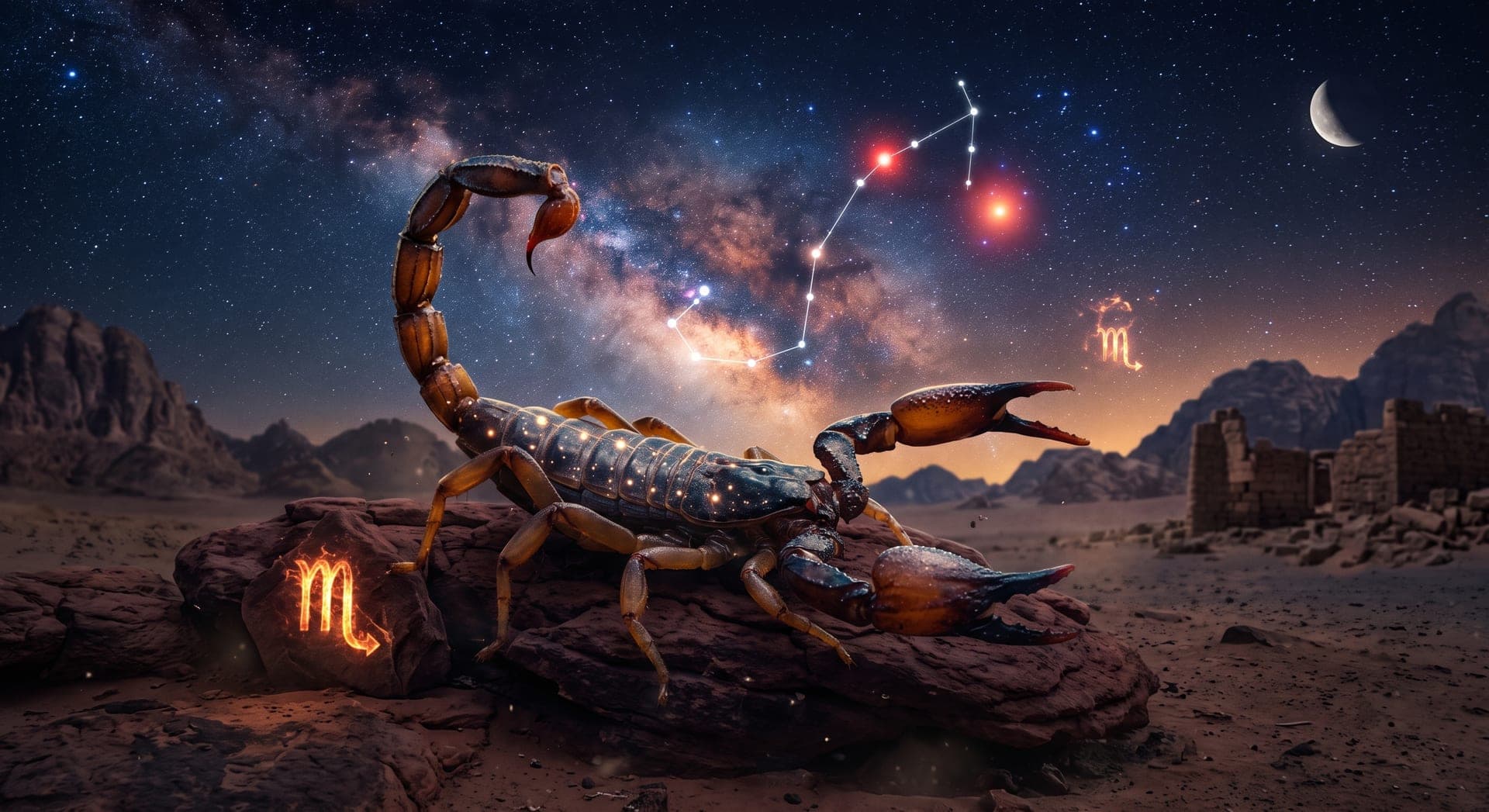
Born on November 20: Scorpio ♏
Scorpio, the eighth sign of the zodiac, spans October 23 to November 21 and is symbolized by the scorpion, a creature known for its defensive intensity and the sting it delivers when provoked. Traditionally ruled by Mars and, in modern astrology, by Pluto, the planet of transformation and the underworld, Scorpio carries a reputation as one of the most intense and emotionally powerful signs of the zodiac. As a Water sign, Scorpio experiences the world through deep, often hidden, emotion, guarding its inner life carefully while remaining acutely perceptive of others. Its Fixed modality gives Scorpio remarkable determination and resilience, able to endure hardship and pursue long-term goals with singular focus. People born under this sign are often drawn to work involving psychology, investigation, transformation, or anything requiring the ability to see beneath the surface. Scorpio's loyalty and passion run deep for those it trusts, but that same intensity can curdle into jealousy, suspicion, or an unwillingness to forgive when trust is broken.
Personality Traits
Strengths
- Deeply passionate and determined
- Fiercely loyal to those they trust
- Resourceful and strategic
- Highly perceptive
- Emotionally resilient
Weaknesses
- Prone to jealousy and possessiveness
- Secretive and guarded
- Can be vindictive when wronged
- Distrustful of others
- Prone to obsessiveness
Compatible Signs
Fun Facts
- Scorpio's scorpion symbol connects to the Greek myth of the scorpion sent by Gaia to kill the hunter Orion, with both later placed among the stars.
- Scorpio has two ruling planets: Mars in traditional astrology, and Pluto, discovered in 1930, in the modern system.
- Scorpio is often mistakenly grouped with the Fire signs due to its intensity, but it is actually a Water sign, driven by deep emotion rather than raw aggression.
- Notable Scorpios include Pablo Picasso, Marie Curie, Leonardo DiCaprio, and Hillary Clinton.
- Some astrological traditions associate Scorpio with a secondary, more elevated symbol, the eagle or phoenix, representing transformation and rebirth.
Born on November 20
- 1752
Thomas Chatterton
English poet whose precocious literary forgeries and death by suicide at 17 made him a symbol of Romantic-era genius and neglect.
- 1841
Wilfrid Laurier
7th Prime Minister of Canada
- 1851
Margherita of Savoy
Queen consort of Italy
- 1858
Selma Lagerlof
Swedish author and Nobel Prize laureate in Literature
- 1864
Percy Cox
British colonial administrator and diplomat whose decisions as High Commissioner for Mesopotamia helped shape the modern borders of Iraq and Kuwait.
- 1877
Herbert Pitman
English merchant navy officer who served as third officer aboard the RMS Titanic and helped command one of its lifeboats.
- 1886
Karl von Frisch
Austrian ethologist and Nobel Prize laureate
- 1889
Edwin Hubble
American astronomer known for Hubble's Law
- 1908
Alistair Cooke
English-American broadcaster and journalist renowned for his BBC radio series Letter from America, delivered weekly for nearly 58 years.
- 1923
Nadine Gordimer
South African novelist and Nobel Prize laureate in Literature
- 1924
Timothy Evans
Welsh factory worker wrongly hanged for murder in 1950, whose posthumous pardon became a landmark case in Britain's abolition of the death penalty.
- 1925
Robert F. Kennedy
American politician and U.S. Attorney General
- 1928
John Disley
Welsh Olympic steeplechaser who went on to co-found the London Marathon.
- 1932
Richard Dawson
English-American actor and television host best known for Hogan's Heroes and for hosting the game show Family Feud.
- 1942
Joe Biden
46th President of the United States

On This Day in History
- 1695
Zumbi, leader of the Brazilian maroon settlement of Quilombo dos Palmares, is executed by Portuguese forces.
Zumbi led the maroon settlement of Quilombo dos Palmares, a large community of formerly enslaved people and their descendants that resisted Portuguese colonial forces for nearly a century in what is now Brazil. His execution, following the settlement's eventual destruction, made him a lasting symbol of resistance, and the date is now commemorated as Black Consciousness Day in Brazil.
- 1739
A small British naval squadron under Admiral Edward Vernon captures the Spanish port of Porto Bello.
Attacking with just six ships during the War of Jenkins' Ear, Vernon's decisive victory over a far larger Spanish garrison made him a national hero in Britain and inspired the patriotic song 'Rule, Britannia!'. London's Portobello Road later took its name from the battle, and Vernon's nickname, 'Old Grog,' gave the Royal Navy's rum ration its lasting name.
- 1776
British forces storm Fort Lee, forcing George Washington's Continental Army into a hasty retreat across New Jersey.
Following the fall of Fort Washington across the Hudson days earlier, General Cornwallis's British troops crossed the river and nearly trapped the American garrison at Fort Lee. Washington's men escaped by abandoning tents, supplies, and artillery, beginning a demoralizing retreat through New Jersey that marked one of the low points of the American Revolutionary War.
- 1805
Beethoven's only opera, Fidelio, premieres in Vienna.
Beethoven's only opera, originally titled Leonore, premiered in Vienna to a disappointing reception, partly because much of the city's usual aristocratic audience had fled following a recent French military occupation. Beethoven substantially revised the work over subsequent years, and the final version, retitled Fidelio, eventually became a celebrated part of the operatic repertoire.
- 1815
The Second Treaty of Paris is signed, finalizing new European boundaries following Napoleon's defeat at Waterloo.
The Second Treaty of Paris imposed more punitive terms on France than the first treaty had the previous year, reflecting allied anger following Napoleon's dramatic return from exile and the renewed warfare of the Hundred Days. The treaty finalized territorial boundaries and reparations, formally closing the Napoleonic era in European affairs.
- 1815
The Second Treaty of Paris is signed, formally ending the Napoleonic Wars after Waterloo.
Following Napoleon's final defeat and exile to Saint Helena, Britain joined Russia, Austria, and Prussia in imposing harsher terms on France than the first Paris treaty of 1814, including a reduced border, a war indemnity, and an army of occupation. The Duke of Wellington, Britain's victorious commander at Waterloo, played a central role in shaping the settlement.
- 1820
The whaling ship Essex is attacked and sunk by a sperm whale in the Pacific Ocean, later inspiring Moby-Dick.
The whaling ship Essex, whose crew's ordeal after being rammed and sunk by an enraged sperm whale later inspired Herman Melville's Moby-Dick, left survivors adrift in small boats for months, during which several resorted to cannibalism to survive. Only a handful of the twenty-man crew ultimately survived the harrowing ordeal.
- 1820
A sperm whale rams and sinks the Nantucket whaleship Essex in the South Pacific.
After the whale struck the ship twice, its crew of 20 abandoned ship in small boats for a harrowing ordeal at sea that included resorting to cannibalism before survivors were rescued months later. The disaster became the inspiration for Herman Melville's novel Moby-Dick.
- 1910
Francisco I. Madero issues the Plan de San Luis Potosí, marking the start of the Mexican Revolution.
Francisco Madero's manifesto called on Mexicans to rise up against the long-standing authoritarian rule of President Porfirio Diaz, setting a specific date for coordinated uprisings across the country. Though the initial revolts were poorly coordinated, the document is credited with sparking the decade-long Mexican Revolution that would fundamentally transform the nation's political landscape.
- 1917
The British Army launches the Battle of Cambrai, the first large-scale use of tanks in warfare.
A force of some 400 British tanks advanced alongside infantry against German lines in northern France, achieving a rapid breakthrough that saw church bells rung back in Britain in celebration, an honour not repeated for the rest of the First World War. German counterattacks soon recovered much of the lost ground, but the battle proved tanks could break the trench deadlock and reshaped future warfare.
- 1945
The Nuremberg trials begin, prosecuting 24 senior Nazi officials for war crimes.
The Nuremberg trials brought senior surviving Nazi officials before an international tribunal to face charges including crimes against humanity and genocide, establishing significant new precedents in international law. The proceedings, extensively documented and covered by global media, provided detailed public evidence of Holocaust atrocities and shaped the modern concept of war crimes prosecution.
- 1945
The Nuremberg trials of senior Nazi leaders open, presided over by British judge Sir Geoffrey Lawrence.
Convened by the victorious Allied powers, Britain, the United States, France, and the Soviet Union, to prosecute Nazi war crimes, the International Military Tribunal was chaired by Lawrence, a British Lord Justice of Appeal. The trials established influential precedents in international law, including the principle that individuals, not just states, could be held criminally responsible for atrocities and wars of aggression.
- 1947
Princess Elizabeth marries Philip Mountbatten at Westminster Abbey in London.
The wedding of the future Queen Elizabeth II to Philip Mountbatten took place amid the austerity of postwar Britain, providing a rare moment of celebration and pageantry for a nation still recovering from the devastation of World War II. Their marriage would last over seven decades, making it one of the longest royal marriages in British history.
- 1947
Princess Elizabeth marries Lieutenant Philip Mountbatten at Westminster Abbey.
The wedding of the future Queen Elizabeth II to the former Prince Philip of Greece and Denmark, newly styled Duke of Edinburgh, offered a rare moment of celebration in an austerity-stricken postwar Britain still under rationing. Broadcast by BBC radio to a global audience, the marriage lasted 73 years, until Philip's death in 2021, making it the longest of any British monarch.
- 1962
The Cuban Missile Crisis ends after the Soviet Union agrees to remove its missiles from Cuba.
The Cuban Missile Crisis formally concluded when the Soviet Union agreed to remove its bomber aircraft from Cuba, following the earlier agreement to withdraw nuclear missiles that had brought the world dangerously close to nuclear war weeks earlier. The crisis prompted both superpowers to establish improved communication channels to help prevent future dangerous escalations.
- 1962
President Kennedy announces the end of the US naval blockade of Cuba, formally concluding the Cuban Missile Crisis.
Following the Soviet Union's agreement to remove its missiles from Cuba and a secret US pledge to withdraw missiles from Turkey, Kennedy lifted the quarantine that had brought the two superpowers to the brink of nuclear war. The 13-day crisis remains widely regarded as the closest the Cold War came to escalating into direct nuclear conflict.
- 1985
Microsoft releases Windows 1.0, its first graphical operating environment, to the public.
Windows 1.0's public release, after a lengthy and highly publicized development delay, offered a graphical alternative to text-based computing that included basic built-in applications like a calculator and calendar. Though commercially modest at first, it established Microsoft's long-term commitment to graphical operating systems that would eventually dominate personal computing.
- 1992
A fire tears through Windsor Castle, causing an estimated £50 million in damage.
Sparked by a spotlight igniting a curtain in the castle's private chapel, the blaze burned for 15 hours and gutted St George's Hall and more than 100 other rooms of the royal residence. The disaster, coming days before Queen Elizabeth II would call it part of her 'annus horribilis,' reignited public debate over using taxpayer funds to restore royal palaces.
- 2003
A truck bomb destroys the British consulate and an HSBC bank building in Istanbul, killing more than two dozen people including the British consul general.
The attack, carried out by a local al-Qaeda-linked cell, struck almost simultaneously with a second truck bomb at the nearby HSBC headquarters, five days after bombings had targeted two Istanbul synagogues. Among the dead was Roger Short, the British Consul-General to Istanbul, one of the most senior British diplomats killed by terrorism in decades.
- 2022
The FIFA World Cup begins in Qatar, marking the tournament's first hosting in the Middle East.
The FIFA World Cup's opening in Qatar marked the first time the tournament was held in the Middle East and the first time it took place during the winter months to avoid the region's extreme summer heat. The tournament had drawn significant controversy over the country's human rights record and the conditions faced by migrant workers who built its stadiums.