What’s Observed on November 17
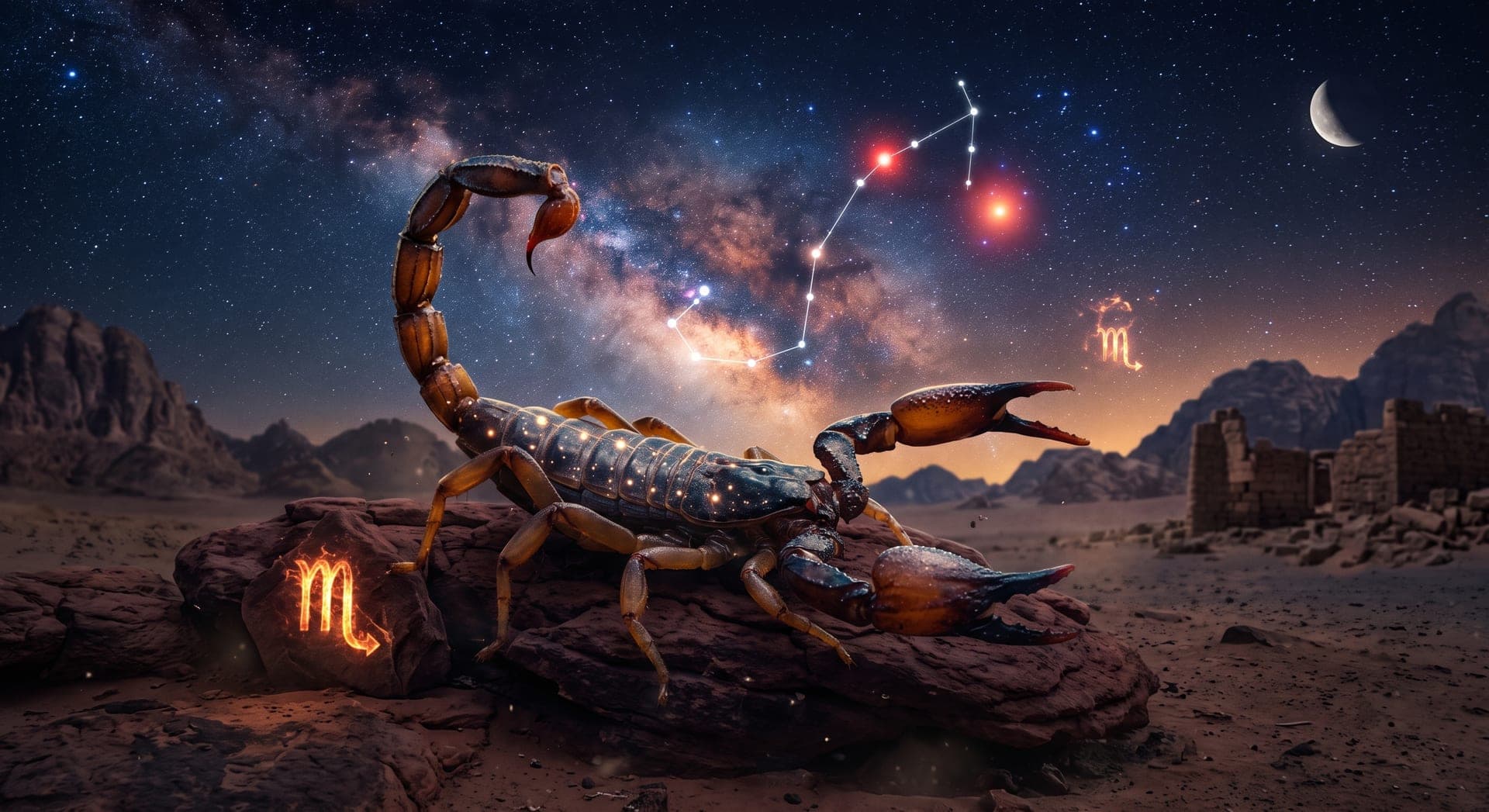
Born on November 17: Scorpio ♏
Scorpio, the eighth sign of the zodiac, spans October 23 to November 21 and is symbolized by the scorpion, a creature known for its defensive intensity and the sting it delivers when provoked. Traditionally ruled by Mars and, in modern astrology, by Pluto, the planet of transformation and the underworld, Scorpio carries a reputation as one of the most intense and emotionally powerful signs of the zodiac. As a Water sign, Scorpio experiences the world through deep, often hidden, emotion, guarding its inner life carefully while remaining acutely perceptive of others. Its Fixed modality gives Scorpio remarkable determination and resilience, able to endure hardship and pursue long-term goals with singular focus. People born under this sign are often drawn to work involving psychology, investigation, transformation, or anything requiring the ability to see beneath the surface. Scorpio's loyalty and passion run deep for those it trusts, but that same intensity can curdle into jealousy, suspicion, or an unwillingness to forgive when trust is broken.
Personality Traits
Strengths
- Deeply passionate and determined
- Fiercely loyal to those they trust
- Resourceful and strategic
- Highly perceptive
- Emotionally resilient
Weaknesses
- Prone to jealousy and possessiveness
- Secretive and guarded
- Can be vindictive when wronged
- Distrustful of others
- Prone to obsessiveness
Compatible Signs
Fun Facts
- Scorpio's scorpion symbol connects to the Greek myth of the scorpion sent by Gaia to kill the hunter Orion, with both later placed among the stars.
- Scorpio has two ruling planets: Mars in traditional astrology, and Pluto, discovered in 1930, in the modern system.
- Scorpio is often mistakenly grouped with the Fire signs due to its intensity, but it is actually a Water sign, driven by deep emotion rather than raw aggression.
- Notable Scorpios include Pablo Picasso, Marie Curie, Leonardo DiCaprio, and Hillary Clinton.
- Some astrological traditions associate Scorpio with a secondary, more elevated symbol, the eagle or phoenix, representing transformation and rebirth.
Born on November 17
- 9
Vespasian
Roman emperor who commissioned the Colosseum
- 1755
Louis XVIII
King of France
- 1887
Bernard Montgomery
English field marshal who led the British Eighth Army to victory at El Alamein and commanded Allied ground forces during the D-Day invasion of Normandy.
- 1902
Eugene Wigner
Hungarian-American physicist and Nobel Prize laureate
- 1906
Soichiro Honda
Japanese engineer who co-founded Honda Motor Company
- 1925
Rock Hudson
American actor
- 1927
Fenella Fielding
English actress celebrated for her sultry comic roles, most memorably as Valeria in Carry On Screaming!.
- 1937
Peter Cook
English comedian and satirist, co-founder of Beyond the Fringe and Private Eye, regarded as a pioneer of modern British satire.
- 1938
Charles Guthrie
Scottish army officer who served as Chief of the Defence Staff, Britain's most senior military officer, from 1997 to 2001.
- 1942
Martin Scorsese
American film director
- 1944
Danny DeVito
American actor and director
- 1960
Jonathan Ross
English broadcaster known for hosting Friday Night with Jonathan Ross and other long-running British chat shows.
- 1981
Sarah Harding
English singer and actress, a member of the pop group Girls Aloud.
- 1994
Rose Ayling-Ellis
English actress known for playing Frankie Lewis on EastEnders and for becoming the first deaf winner of Strictly Come Dancing.
On This Day in History
- 1292
John Balliol ascends to the Scottish throne after being chosen to settle a succession dispute.
John Balliol was selected as King of Scotland by English King Edward I through a legal process called the Great Cause, resolving a succession dispute among numerous claimants to the Scottish throne. His reign proved short and troubled, as Edward's increasing interference in Scottish affairs eventually provoked the wars of Scottish independence.
- 1292
John Balliol is enthroned as King of Scots at Scone.
Chosen by Edward I of England to settle a succession dispute known as the Great Cause, Balliol was crowned at Scone Abbey after swearing fealty to the English crown. His reign proved short and troubled, as Edward's continued interference in Scottish affairs eventually provoked rebellion and the Wars of Scottish Independence.
- 1511
Henry VIII signs the Treaty of Westminster, allying England with Spain against France.
The treaty bound Henry VIII and King Ferdinand II of Aragon to a joint military campaign to recover Aquitaine and other former English territories from France. It marked one of Henry's earliest forays into continental power politics, part of the Holy League coalition assembled by Pope Julius II against the French crown.
- 1558
Queen Mary I of England dies and is succeeded by her half-sister Elizabeth I, beginning the Elizabethan era.
Elizabeth I's accession following the death of her Catholic half-sister Mary I marked the beginning of a nearly 45-year reign often celebrated as a golden age of English culture, exploration, and naval power. Elizabeth's return of England to Protestantism and her careful, pragmatic style of governance helped stabilize the kingdom after decades of religious upheaval.
- 1558
Elizabeth I becomes Queen of England upon the death of her half-sister, Mary I.
Mary I's death at St James's Palace ended five years of Catholic restoration and brought the 25-year-old Elizabeth to the throne. Her accession, later celebrated annually as Accession Day, opened the Elizabethan era, a period of relative stability, naval expansion, and cultural flowering that included the work of Shakespeare and Marlowe.
- 1603
Sir Walter Raleigh goes on trial for treason at Winchester Castle.
Accused of conspiring against the newly crowned James I in the so-called Main Plot, Raleigh was convicted largely on the strength of a co-defendant's confession, which he never had the chance to cross-examine. Though sentenced to death, he was reprieved and spent the next 13 years imprisoned in the Tower of London.
- 1777
The Articles of Confederation are formally submitted to the states for ratification.
With the Continental Congress's approval secured earlier that same week, the Articles of Confederation were sent to the individual states for the lengthy ratification process required to establish America's first national government. Unanimous agreement among all thirteen states would not be achieved until 1781, delayed largely by disputes over western land claims.
- 1800
The United States Congress holds its first session in the new capital of Washington, D.C.
Congress convened for the first time in the newly established federal capital of Washington, D.C., moving from Philadelphia into a still largely unfinished city built specifically to house the nation's government. Many early legislators found the raw, swampy new capital considerably less comfortable than the established urban amenities of Philadelphia.
- 1810
Sweden declares war on the United Kingdom under pressure from Napoleon's Continental System.
Forced by Napoleon to join his blockade against British trade, Sweden's declaration was largely nominal: no battles were fought and normal commerce between the two countries quietly continued. The uneasy state of war persisted until 1812, when Sweden abandoned its French alliance and joined the coalition against Napoleon instead.
- 1869
The Suez Canal, connecting the Mediterranean and Red Seas, officially opens in Egypt.
The Suez Canal's opening, connecting the Mediterranean and Red Seas through Egypt, dramatically shortened shipping routes between Europe and Asia by eliminating the need to sail around the entire African continent. The canal's strategic and economic importance made it a focal point of international rivalry and conflict for the following century.
- 1869
The Suez Canal opens, linking the Mediterranean and Red Seas.
Built over ten years under French engineer Ferdinand de Lesseps, the 193-kilometre waterway allowed ships to sail directly between Europe and Asia without rounding the African continent. It transformed global shipping and trade routes and later became a flashpoint of imperial rivalry, most notably during the 1956 Suez Crisis when Britain, France, and Israel invaded Egypt after its nationalization of the canal.
- 1903
The Russian Social Democratic Labour Party splits into two factions, the Bolsheviks and the Mensheviks.
Deep ideological and organizational disagreements at a Russian Social Democratic Labour Party congress in London led to a fundamental split between Vladimir Lenin's more radical Bolshevik faction and the more moderate Mensheviks. This division would prove historically decisive, as the Bolsheviks eventually seized power during the 1917 Russian Revolution.
- 1950
The 14-year-old Lhamo Dondrub is formally enthroned as the 14th Dalai Lama of Tibet.
The young Tenzin Gyatso was formally enthroned as Tibet's spiritual and political leader amid growing political uncertainty as Chinese Communist forces prepared to assert control over the region. He would later flee into exile in India following a failed uprising, becoming one of the world's most recognized advocates for Tibetan autonomy and Buddhist teachings.
- 1957
A British European Airways Viscount loses three engines to icing over Denmark but lands safely.
The aircraft, flying a scheduled mail service from London to Copenhagen, suffered ice buildup on its engine cowlings after its de-icing system malfunctioned, causing three of its four engines to fail. The crew carried out a forced landing near Ballerup without injury, an incident that prompted scrutiny of Viscount de-icing procedures.
- 1973
President Richard Nixon declares "I am not a crook" during a televised press conference addressing Watergate allegations.
Facing mounting pressure over the unfolding Watergate scandal and allegations of financial impropriety, President Nixon made his famous denial during a televised question-and-answer session with newspaper editors. The statement became one of the most quoted and ultimately ironic lines of his presidency, given his resignation less than a year later.
- 1989
The Velvet Revolution begins in Prague after riot police suppress a student demonstration.
The Velvet Revolution began when riot police violently broke up a peaceful student demonstration commemorating an earlier Nazi-era crackdown, an event that unexpectedly galvanized much broader public opposition to Czechoslovakia's Communist government. Within weeks, mass protests and strikes forced the Communist Party to relinquish power without significant bloodshed.
- 1989
A police crackdown on student protesters in Prague sparks Czechoslovakia's Velvet Revolution.
What began as a march commemorating International Students' Day turned violent when riot police attacked demonstrators on Prague's Národní Street. The brutality galvanized public anger, triggering ten days of mass protests that toppled the country's Communist government and, within weeks, brought playwright Václav Havel to the presidency.
- 1997
Islamist militants kill 62 people, including six Britons, at the Temple of Hatshepsut in Luxor, Egypt.
Six gunmen from the militant group al-Gama'a al-Islamiyya opened fire on tourists visiting the ancient temple, killing 58 foreign visitors and four Egyptians before being killed themselves. Among the dead were three generations of one Yorkshire family. The attack devastated Egypt's tourism industry and remains one of the deadliest assaults on foreign visitors in the country's history.
- 2019
The first known case of COVID-19 is later traced to a man who visited a market in Wuhan, China.
Retrospective epidemiological investigation later identified a market visit by an individual in Wuhan, China as among the earliest documented cases connected to what would become the COVID-19 pandemic, though the precise origin point remains scientifically debated. The eventual global spread of the virus would go on to claim millions of lives worldwide.
- 2019
Chinese authorities later trace the first known COVID-19 case to a 55-year-old man in Hubei province.
Retrospective investigation identified this case, reported to have begun symptoms on November 17, 2019, as the earliest documented instance of the disease that would trigger a global pandemic. The finding, revealed only after the outbreak had spread worldwide, helped researchers reconstruct the virus's early transmission timeline around Wuhan.