What’s Observed on November 15
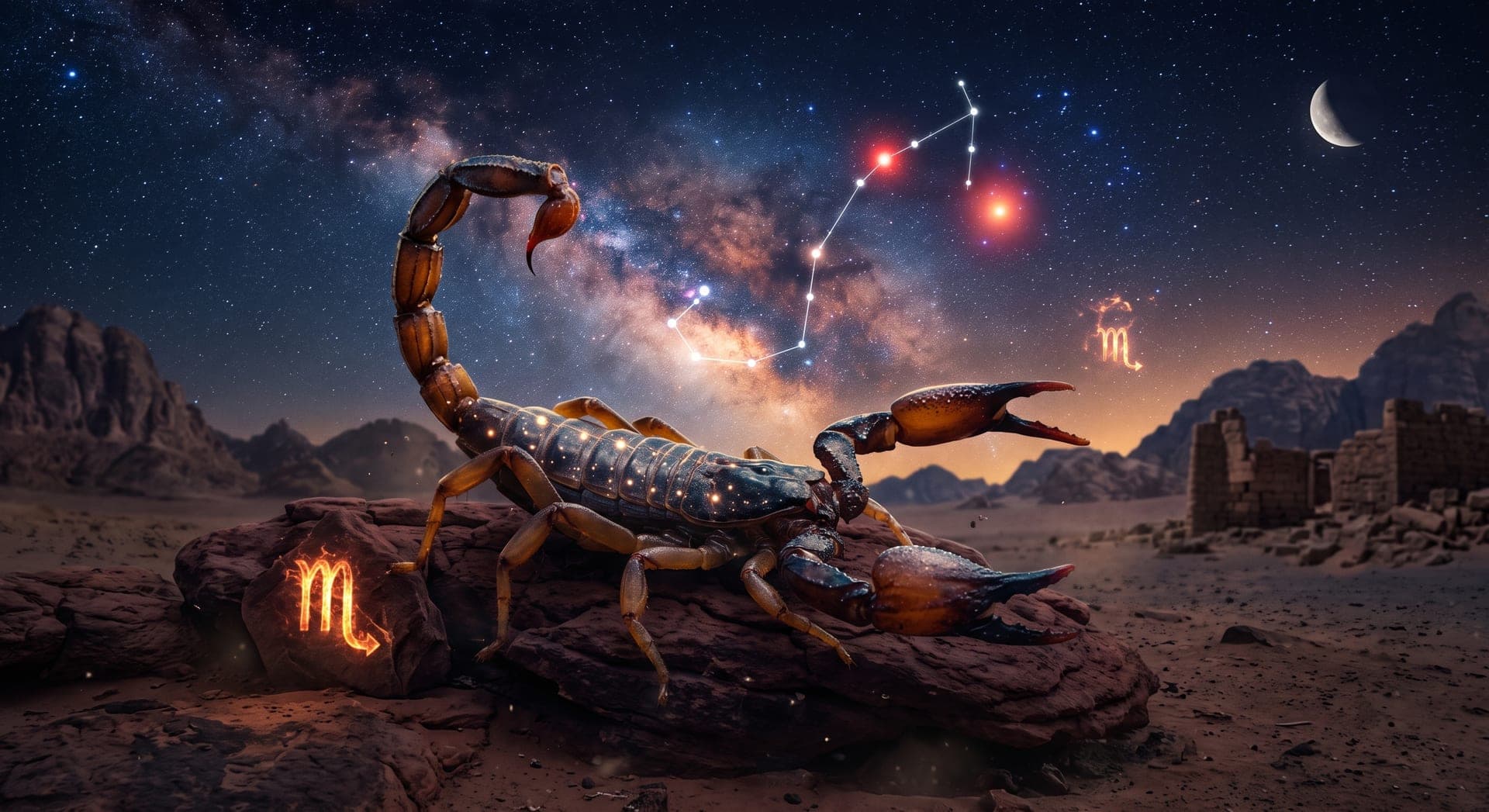
Born on November 15: Scorpio ♏
Scorpio, the eighth sign of the zodiac, spans October 23 to November 21 and is symbolized by the scorpion, a creature known for its defensive intensity and the sting it delivers when provoked. Traditionally ruled by Mars and, in modern astrology, by Pluto, the planet of transformation and the underworld, Scorpio carries a reputation as one of the most intense and emotionally powerful signs of the zodiac. As a Water sign, Scorpio experiences the world through deep, often hidden, emotion, guarding its inner life carefully while remaining acutely perceptive of others. Its Fixed modality gives Scorpio remarkable determination and resilience, able to endure hardship and pursue long-term goals with singular focus. People born under this sign are often drawn to work involving psychology, investigation, transformation, or anything requiring the ability to see beneath the surface. Scorpio's loyalty and passion run deep for those it trusts, but that same intensity can curdle into jealousy, suspicion, or an unwillingness to forgive when trust is broken.
Personality Traits
Strengths
- Deeply passionate and determined
- Fiercely loyal to those they trust
- Resourceful and strategic
- Highly perceptive
- Emotionally resilient
Weaknesses
- Prone to jealousy and possessiveness
- Secretive and guarded
- Can be vindictive when wronged
- Distrustful of others
- Prone to obsessiveness
Compatible Signs
Fun Facts
- Scorpio's scorpion symbol connects to the Greek myth of the scorpion sent by Gaia to kill the hunter Orion, with both later placed among the stars.
- Scorpio has two ruling planets: Mars in traditional astrology, and Pluto, discovered in 1930, in the modern system.
- Scorpio is often mistakenly grouped with the Fire signs due to its intensity, but it is actually a Water sign, driven by deep emotion rather than raw aggression.
- Notable Scorpios include Pablo Picasso, Marie Curie, Leonardo DiCaprio, and Hillary Clinton.
- Some astrological traditions associate Scorpio with a secondary, more elevated symbol, the eagle or phoenix, representing transformation and rebirth.
Born on November 15
- 1708
William Pitt, 1st Earl of Chatham
English statesman who served as Prime Minister during the Seven Years' War and oversaw Britain's rise to global imperial dominance.
- 1738
William Herschel
German-born astronomer who settled in England and discovered the planet Uranus in 1781, becoming one of history's most celebrated astronomers.
- 1887
Georgia O'Keeffe
American painter known for large-scale flower paintings
- 1891
Erwin Rommel
German field marshal known as the "Desert Fox"
- 1897
Aneurin Bevan
Welsh Labour politician who, as Minister of Health, founded Britain's National Health Service in 1948.
- 1906
Curtis LeMay
American Air Force general
- 1930
J. G. Ballard
English novelist known for dystopian and speculative fiction including Empire of the Sun and Crash, drawing partly on his childhood internment in wartime Shanghai.
- 1932
Petula Clark
English singer and actress whose hit 'Downtown' made her one of the most successful British female vocalists of the 1960s.
- 1942
Daniel Barenboim
Argentine-Israeli pianist and conductor
- 1972
Jonny Lee Miller
English actor known for early roles in Trainspotting and Hackers, and for playing Sherlock Holmes in the American series Elementary.
- 1983
Sophia Di Martino
English actress who gained international attention playing Sylvie in the Marvel series Loki.

On This Day in History
- 655
Oswiu of Northumbria defeats and kills Penda of Mercia at the Battle of the Winwaed, ending Mercian dominance over Anglo-Saxon England.
Penda had been the last major pagan king among the Anglo-Saxon kingdoms, and his death effectively completed England's conversion to Christianity at the royal level. The victory made Oswiu the most powerful ruler in Britain and reshaped the balance of power among the early English kingdoms for a generation.
- 1315
The Swiss Confederacy ambushes and defeats Duke Leopold I's army at the Battle of Morgarten, securing early Swiss independence.
A small force of Swiss confederates ambushed Duke Leopold I of Austria's much larger army in a narrow mountain pass at Morgarten, using the terrain to devastating advantage against the heavily armored Austrian knights. The decisive victory helped secure the fledgling Swiss Confederacy's independence and became a foundational moment in Swiss national identity.
- 1532
Spanish conquistador Francisco Pizarro's forces enter Cajamarca and first meet Inca Emperor Atahualpa.
Francisco Pizarro's small band of Spanish conquistadors entered the Andean city of Cajamarca and arranged a meeting with the Inca emperor Atahualpa, who arrived with a large but largely ceremonial escort, unaware of the ambush Pizarro was planning. This tense first encounter set the stage for Atahualpa's capture the following day and the eventual Spanish conquest of the Inca Empire.
- 1777
The Continental Congress approves the Articles of Confederation after sixteen months of deliberation.
After extensive debate over issues of state sovereignty and representation, the Continental Congress finally approved the Articles of Confederation, America's first constitutional framework, though it would take several more years for all thirteen states to ratify it. The document's weaknesses in creating a functional central government would later prompt the drafting of the current U.S. Constitution.
- 1864
Union General William Tecumseh Sherman begins his March to the Sea through Georgia during the Civil War.
General Sherman's March to the Sea saw Union forces cut a sixty-mile-wide swath of destruction through Georgia, deliberately targeting infrastructure, plantations, and supplies to cripple the Confederacy's capacity to wage war. The controversial campaign, a stark early example of total war strategy, significantly hastened the Confederacy's eventual collapse.
- 1864
Union General William Tecumseh Sherman begins his March to the Sea, a scorched-earth campaign through Georgia during the American Civil War.
Cutting loose from his supply lines, Sherman's army of 60,000 men lived off the land while destroying railroads, factories, and farms across a 60-mile-wide swath of territory. The campaign devastated the Confederate heartland's capacity to sustain the war and is remembered as one of the first large-scale examples of total war.
- 1884
The Berlin Conference opens in Germany, where European powers begin negotiating rules for the colonization of Africa.
Convened by German Chancellor Otto von Bismarck, the conference brought together representatives of fourteen countries to regulate European trade and colonization on the African continent, formalising the principles behind the 'Scramble for Africa.' Its outcomes, agreed the following February, ignored African political structures entirely and set the stage for decades of colonial rule across the continent.
- 1889
Marshal Deodoro da Fonseca declares Brazil a republic, deposing Emperor Pedro II.
A military coup led by Marshal Deodoro da Fonseca deposed Emperor Pedro II and abolished Brazil's monarchy, establishing a republican government after nearly seven decades of imperial rule. The transition, achieved with minimal violence, reflected growing dissatisfaction among military and elite classes with the aging emperor's governance.
- 1899
A British armoured train is ambushed by Boer forces in South Africa, and war correspondent Winston Churchill is taken prisoner.
Churchill, then a 24-year-old journalist covering the Second Boer War, helped free the train's locomotive under fire before being captured along with dozens of soldiers. His subsequent daring escape from a Pretoria prison camp weeks later made him a national celebrity and launched the political career that would eventually take him to Downing Street.
- 1920
The League of Nations holds its first assembly in Geneva, Switzerland, establishing post-WWI international governance.
The League of Nations, established after World War I to prevent future conflicts through collective diplomacy and arbitration, held its inaugural assembly in Geneva with representatives from dozens of member nations. Despite its ambitious goals, the organization's inability to prevent renewed aggression in the 1930s ultimately led to its replacement by the United Nations after World War II.
- 1928
The Rye Harbour lifeboat Mary Stanford capsizes in a storm, killing all seventeen crew members while responding to a false alarm.
The volunteer crew, drawn largely from a handful of local families, launched in atrocious conditions to answer a distress signal from a ship that turned out to be in no danger. It remains the worst single loss in the history of the RNLI, devastating the small fishing village of Rye Harbour.
- 1957
A Short Solent flying boat operated by Aquila Airways crashes near Chessell on the Isle of Wight, killing all 45 people aboard.
The aircraft, flying from Lisbon toward Southampton Water, struck high ground on the island in poor weather during its approach. It remains one of the deadliest aviation accidents in British history and hastened the decline of the flying boat services that had once linked Britain to its empire.
- 1971
Intel releases the 4004, the world's first commercially available single-chip microprocessor.
Intel's release of the 4004 microprocessor packed the equivalent computing power of a room-sized 1940s computer onto a single small silicon chip, originally designed for a Japanese calculator company. This breakthrough in miniaturization laid the essential technological foundation for the personal computer revolution that would follow in subsequent decades.
- 1971
Intel releases the 4004, the world's first commercially available single-chip microprocessor.
Originally designed for a Japanese calculator manufacturer, the 4004 packed the equivalent of a room-sized computer's processing power onto a single silicon chip smaller than a fingernail. Its release is widely regarded as the starting point of the modern microprocessor industry that underpins virtually all computing today.
- 1985
British Prime Minister Margaret Thatcher and Irish Taoiseach Garret FitzGerald sign the Anglo-Irish Agreement, giving the Republic of Ireland a formal consultative role in Northern Ireland's governance.
The agreement marked the first time London formally recognised Dublin's interest in Northern Irish affairs, while reaffirming that Northern Ireland's constitutional status could only change with majority consent. Though bitterly opposed by unionists, it laid important groundwork for the peace process that eventually produced the 1998 Good Friday Agreement.
- 1988
The Palestinian National Council proclaims an independent State of Palestine.
The Palestinian National Council, meeting in exile in Algiers, proclaimed the establishment of an independent State of Palestine, a largely symbolic declaration that nonetheless received diplomatic recognition from dozens of countries around the world. The declaration came amid the ongoing First Intifada uprising against Israeli occupation in the West Bank and Gaza.
- 2001
Microsoft launches the Xbox video game console in North America.
Microsoft's launch of the Xbox marked its ambitious entry into the console gaming market long dominated by Japanese companies like Sony and Nintendo, backed by significant financial investment and powerful hardware for its time. The console's success helped establish Microsoft as a major long-term player in the video game industry.
- 2020
British Formula One driver Lewis Hamilton wins the Turkish Grand Prix to secure his record-equalling seventh World Drivers' Championship.
Racing for Mercedes in wet, chaotic conditions at Istanbul Park, Hamilton fought back from a poor start to seal the title with three races still to spare. The win drew him level with Michael Schumacher's long-standing record and cemented Hamilton's status as one of the greatest drivers in the sport's history.
- 2022
The world's population is estimated to reach eight billion people, according to the United Nations.
The United Nations estimated that global population reached eight billion people, a milestone reached just over a decade after the world passed seven billion, reflecting both continued population growth and improvements in global life expectancy. Population growth has slowed considerably in recent decades but continues to raise questions about resource sustainability.
- 2022
The United Nations marks the day the global human population is estimated to have reached eight billion people.
The milestone came just over a decade after the world passed seven billion, reflecting continued, if slowing, population growth concentrated in parts of Asia and Africa. The UN used the occasion to highlight both the achievements of longer life expectancy and the mounting pressures population growth places on resources and the environment.