
What’s Observed on November 14
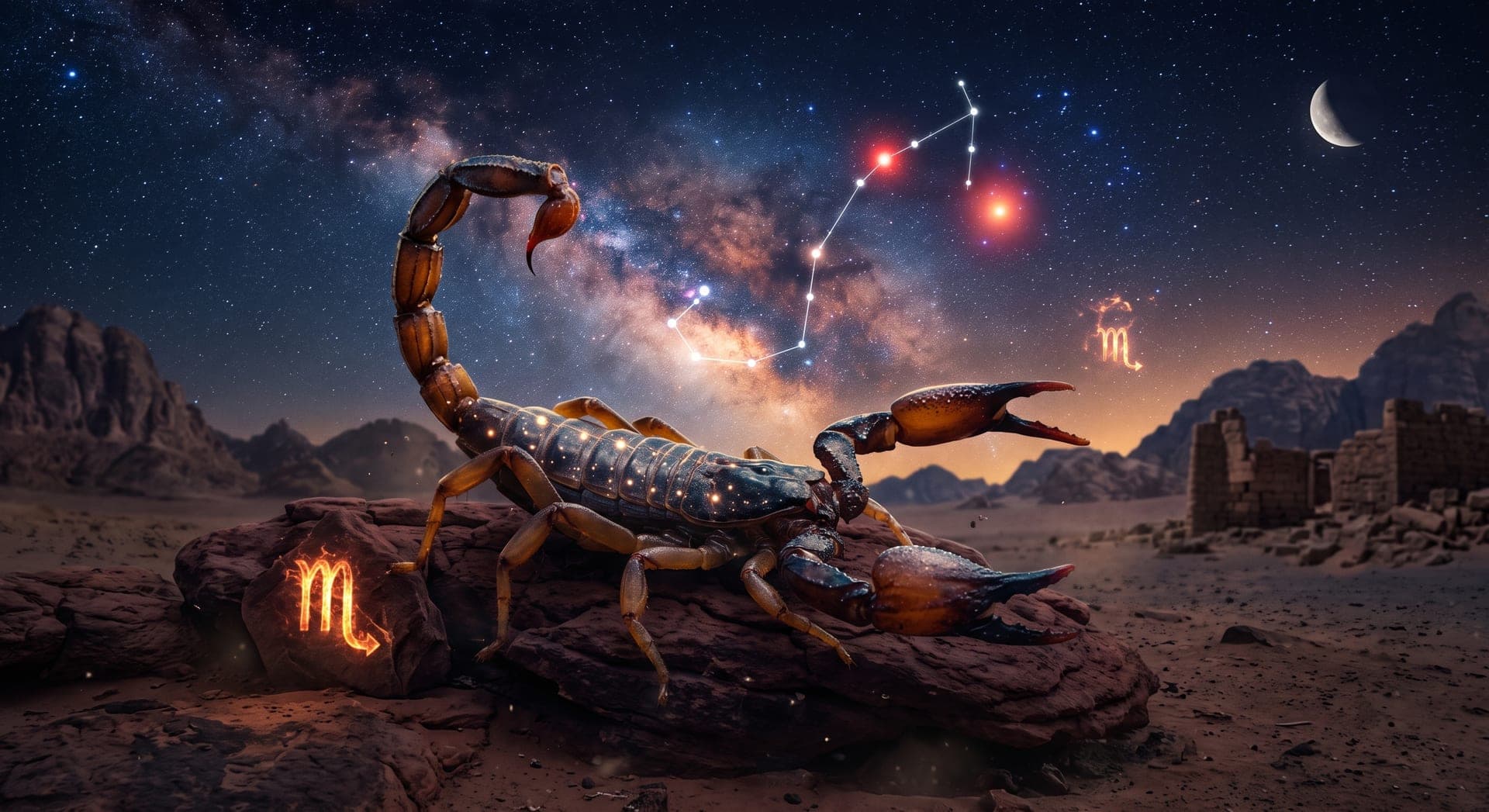
Born on November 14: Scorpio ♏
Scorpio, the eighth sign of the zodiac, spans October 23 to November 21 and is symbolized by the scorpion, a creature known for its defensive intensity and the sting it delivers when provoked. Traditionally ruled by Mars and, in modern astrology, by Pluto, the planet of transformation and the underworld, Scorpio carries a reputation as one of the most intense and emotionally powerful signs of the zodiac. As a Water sign, Scorpio experiences the world through deep, often hidden, emotion, guarding its inner life carefully while remaining acutely perceptive of others. Its Fixed modality gives Scorpio remarkable determination and resilience, able to endure hardship and pursue long-term goals with singular focus. People born under this sign are often drawn to work involving psychology, investigation, transformation, or anything requiring the ability to see beneath the surface. Scorpio's loyalty and passion run deep for those it trusts, but that same intensity can curdle into jealousy, suspicion, or an unwillingness to forgive when trust is broken.
Personality Traits
Strengths
- Deeply passionate and determined
- Fiercely loyal to those they trust
- Resourceful and strategic
- Highly perceptive
- Emotionally resilient
Weaknesses
- Prone to jealousy and possessiveness
- Secretive and guarded
- Can be vindictive when wronged
- Distrustful of others
- Prone to obsessiveness
Compatible Signs
Fun Facts
- Scorpio's scorpion symbol connects to the Greek myth of the scorpion sent by Gaia to kill the hunter Orion, with both later placed among the stars.
- Scorpio has two ruling planets: Mars in traditional astrology, and Pluto, discovered in 1930, in the modern system.
- Scorpio is often mistakenly grouped with the Fire signs due to its intensity, but it is actually a Water sign, driven by deep emotion rather than raw aggression.
- Notable Scorpios include Pablo Picasso, Marie Curie, Leonardo DiCaprio, and Hillary Clinton.
- Some astrological traditions associate Scorpio with a secondary, more elevated symbol, the eagle or phoenix, representing transformation and rebirth.
Born on November 14
- 1650
William III
Dutch-born Prince of Orange who became joint monarch of England, Scotland, and Ireland with his wife Mary II after the Glorious Revolution of 1688.
- 1797
Charles Lyell
Scottish geologist whose Principles of Geology established uniformitarianism and profoundly influenced Charles Darwin's theory of evolution.
- 1840
Claude Monet
French painter and founder of Impressionism
- 1889
Jawaharlal Nehru
First Prime Minister of India
- 1891
Frederick Banting
Canadian physician and Nobel Prize laureate for discovering insulin
- 1900
Aaron Copland
American composer known for "Appalachian Spring"
- 1904
Harold Larwood
English fast bowler notorious for spearheading England's controversial 'Bodyline' cricket tactics against Australia in the 1932-33 Ashes series.
- 1907
Astrid Lindgren
Swedish author who created Pippi Longstocking
- 1922
Veronica Lake
American actress
- 1934
Dave Mackay
Scottish footballer regarded as one of Tottenham Hotspur's greatest captains, central to the club's double-winning side of 1961.
- 1944
Karen Armstrong
English author and religious historian known for accessible, wide-ranging books on comparative faith, including A History of God.
- 1948
Charles III
King of the United Kingdom and the Commonwealth realms since 2022, and formerly the longest-serving heir apparent in British history as Prince of Wales.
- 1959
Paul McGann
English actor best known for playing the eighth incarnation of the Doctor in Doctor Who and for his role in the cult film Withnail and I.

On This Day in History
- 332 BCE
Alexander the Great is crowned pharaoh of Egypt after taking control of the country from Persian rule.
Alexander the Great entered Egypt largely unopposed after the Persian satrap surrendered without resistance, and Egyptian priests crowned him pharaoh, a title he embraced to legitimize his rule over the ancient civilization. During his time there, he also founded the city of Alexandria, which would become one of the ancient world's great centers of learning and culture.
- 1770
Explorer James Bruce reaches what he believes to be the source of the Blue Nile in Ethiopia.
Scottish explorer James Bruce, after years of arduous travel through Ethiopia, reached what he believed was the source of the Nile at Lake Tana, though he had actually found the source of the Blue Nile rather than the longer White Nile branch. His extensive published accounts of the journey, while sometimes doubted by contemporaries, later proved largely accurate and valuable to geographers.
- 1770
Scottish explorer James Bruce reaches Lake Tana in Ethiopia, which he believes to be the long-sought source of the Nile.
Bruce had travelled for years across the Ottoman Empire and the Horn of Africa in search of the river's origin, reaching the source of the Blue Nile rather than the White Nile, the river's true main source. His account, published years later, brought him fame and skepticism in equal measure, as many contemporaries doubted his claims until later expeditions largely vindicated them.
- 1851
Herman Melville's novel Moby-Dick is published in the United States.
Moby-Dick, Herman Melville's sprawling novel about Captain Ahab's obsessive pursuit of a white whale, received a largely lukewarm critical and commercial reception upon its initial publication in the United States. The novel's reputation grew enormously in the twentieth century, and it is now widely regarded as one of the greatest works in American literature.
- 1851
Herman Melville's novel Moby-Dick is published in the United States, months after its British release under a different title.
The sprawling tale of Captain Ahab's obsessive pursuit of a white whale sold poorly and received mixed reviews during Melville's lifetime. It was only rediscovered and reassessed in the early 20th century, after which it came to be regarded as one of the greatest novels in the American literary canon.
- 1889
Journalist Nellie Bly begins her successful attempt to circumnavigate the globe in under 80 days, completing it in 72.
Pioneering journalist Nellie Bly set out from New York to circle the globe, seeking to beat the fictional 80-day journey depicted in Jules Verne's popular novel. Her successful 72-day trip, chronicled through newspaper dispatches, made her an international celebrity and demonstrated the growing capabilities of global transportation networks in the late nineteenth century.
- 1922
The British Broadcasting Company begins regular radio service in the United Kingdom.
The British Broadcasting Company's inaugural radio broadcasts marked the beginning of organized national radio service in the United Kingdom, initially funded through a combination of license fees and receiver manufacturer contributions. The service would later be reorganized as the publicly funded BBC, becoming one of the world's most influential broadcasting institutions.
- 1922
The British Broadcasting Company begins its first regular radio broadcasts in the United Kingdom.
Launched from station 2LO in London, the service was formed by a consortium of radio manufacturers and would be reconstituted five years later as the publicly funded British Broadcasting Corporation. It grew into one of the world's most influential media organisations, shaping British broadcasting standards and public service journalism for a century.
- 1940
German bombers devastate Coventry in a massive night raid, destroying much of the city centre including its medieval cathedral.
Over 500 tonnes of bombs fell on the city in a coordinated attack targeting its industrial factories, killing around 570 people and leaving the cathedral a roofless ruin. The raid gave rise to the German verb 'coventrieren' (to coventrate), and the ruined cathedral, preserved beside a new one built after the war, remains a powerful symbol of reconciliation.
- 1941
The Royal Navy aircraft carrier HMS Ark Royal sinks in the Mediterranean after being torpedoed by a German U-boat.
Struck the previous day while returning from delivering aircraft to Malta, the veteran carrier had survived numerous earlier attacks and been repeatedly, and prematurely, reported sunk by German propaganda. Her actual loss, with only one crew member killed thanks to a successful evacuation, was a significant blow to British naval airpower in the Mediterranean theatre.
- 1952
The New Musical Express publishes the first regular UK Singles Chart, based on sales figures gathered from a small sample of record shops.
Topped in its debut week by Al Martino's 'Here in My Heart,' the chart offered Britain its first standardised measure of record popularity. It evolved over subsequent decades into the official UK chart compiled today, becoming a central institution of British pop culture and a weekly ritual for generations of music fans.
- 1960
Ruby Bridges becomes the first Black child to attend a formerly all-white elementary school in Louisiana.
Six-year-old Ruby Bridges, escorted by federal marshals through jeering crowds of protesters, became the first Black child to integrate an elementary school in the American South, a moment later immortalized in Norman Rockwell's famous painting "The Problem We All Live With." Her courage amid intense hostility became an enduring symbol of the civil rights movement.
- 1969
NASA launches Apollo 12, the second crewed mission to land astronauts on the Moon.
Apollo 12 launched just months after the historic Apollo 11 mission, sending astronauts Pete Conrad and Alan Bean to conduct a more precise lunar landing near a previously unmanned probe, demonstrating NASA's growing navigational accuracy. The mission also survived being struck by lightning twice shortly after liftoff without significant damage.
- 1969
NASA launches Apollo 12, the second crewed mission to land astronauts on the Moon.
Commanded by Pete Conrad, the mission survived being struck by lightning twice during launch before going on to make a precise landing near the earlier robotic Surveyor 3 probe in the Ocean of Storms. Astronauts Conrad and Alan Bean spent over seven hours exploring the lunar surface across two moonwalks.
- 1973
Princess Anne marries Captain Mark Phillips at Westminster Abbey in London.
Princess Anne, daughter of Queen Elizabeth II, married army officer Mark Phillips in a lavish royal wedding at Westminster Abbey, drawing massive public and international media attention. The couple's marriage, one of the first modern royal weddings extensively televised worldwide, would later end in divorce nearly two decades afterward.
- 1973
Princess Anne marries Captain Mark Phillips at Westminster Abbey in a ceremony watched by an estimated 500 million people worldwide.
The televised royal wedding was one of the most widely watched broadcasts of its era, reflecting the global fascination with the British monarchy. The couple had two children before divorcing in 1992; Anne later remarried, while the abbey wedding itself remained a landmark moment in royal broadcasting history.
- 1977
Labour MP Tam Dalyell raises what becomes known as the West Lothian question, challenging the fairness of devolution proposals for Scotland and Wales.
Dalyell, MP for West Lothian, asked why Scottish MPs at Westminster would retain votes on English-only matters while English MPs would lose influence over devolved Scottish affairs. The question became a recurring theme in British constitutional debate, resurfacing repeatedly through subsequent devolution settlements and discussions of English votes for English laws.
- 1991
The United States and Scotland jointly announce indictments against two Libyan intelligence officers for the 1988 bombing of Pan Am Flight 103 over Lockerbie.
The bombing had killed 270 people, including 11 on the ground in the Scottish town of Lockerbie, in Britain's deadliest terrorist attack. The indictments named Abdelbaset al-Megrahi and Lamin Khalifah Fhimah, launching a decade-long diplomatic standoff with Libya before a trial was eventually held under Scottish law in the Netherlands.
- 2008
The first G-20 leaders' summit convenes in Washington, D.C. amid the global financial crisis.
Leaders from the world's largest economies convened in Washington for the first-ever G-20 summit, called in response to the escalating global financial crisis triggered by the collapse of major financial institutions. The gathering established the G-20 as a primary forum for coordinating international economic policy in the years that followed.