What’s Observed on November 13
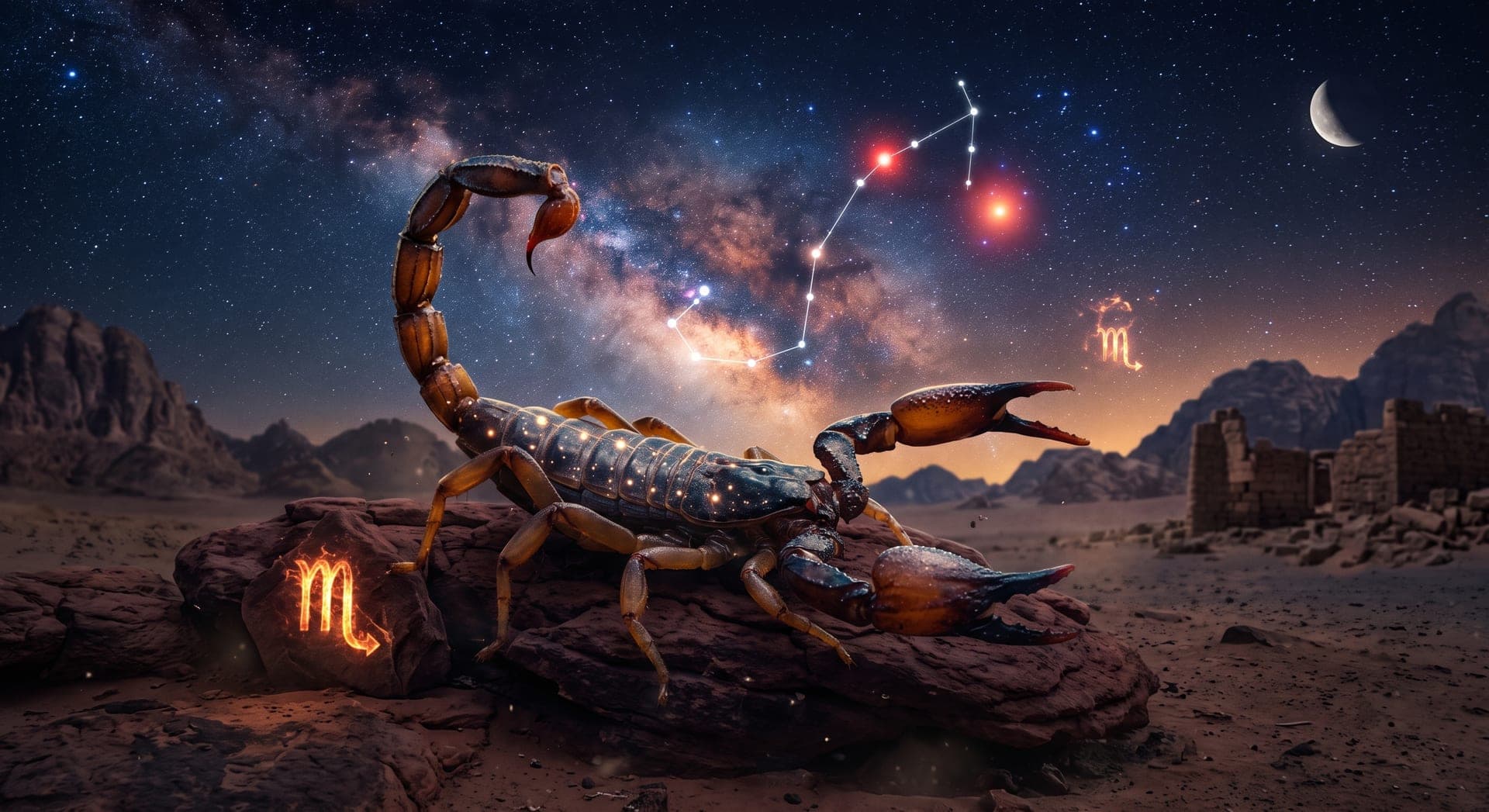
Born on November 13: Scorpio ♏
Scorpio, the eighth sign of the zodiac, spans October 23 to November 21 and is symbolized by the scorpion, a creature known for its defensive intensity and the sting it delivers when provoked. Traditionally ruled by Mars and, in modern astrology, by Pluto, the planet of transformation and the underworld, Scorpio carries a reputation as one of the most intense and emotionally powerful signs of the zodiac. As a Water sign, Scorpio experiences the world through deep, often hidden, emotion, guarding its inner life carefully while remaining acutely perceptive of others. Its Fixed modality gives Scorpio remarkable determination and resilience, able to endure hardship and pursue long-term goals with singular focus. People born under this sign are often drawn to work involving psychology, investigation, transformation, or anything requiring the ability to see beneath the surface. Scorpio's loyalty and passion run deep for those it trusts, but that same intensity can curdle into jealousy, suspicion, or an unwillingness to forgive when trust is broken.
Personality Traits
Strengths
- Deeply passionate and determined
- Fiercely loyal to those they trust
- Resourceful and strategic
- Highly perceptive
- Emotionally resilient
Weaknesses
- Prone to jealousy and possessiveness
- Secretive and guarded
- Can be vindictive when wronged
- Distrustful of others
- Prone to obsessiveness
Compatible Signs
Fun Facts
- Scorpio's scorpion symbol connects to the Greek myth of the scorpion sent by Gaia to kill the hunter Orion, with both later placed among the stars.
- Scorpio has two ruling planets: Mars in traditional astrology, and Pluto, discovered in 1930, in the modern system.
- Scorpio is often mistakenly grouped with the Fire signs due to its intensity, but it is actually a Water sign, driven by deep emotion rather than raw aggression.
- Notable Scorpios include Pablo Picasso, Marie Curie, Leonardo DiCaprio, and Hillary Clinton.
- Some astrological traditions associate Scorpio with a secondary, more elevated symbol, the eagle or phoenix, representing transformation and rebirth.
Born on November 13
- 1312
Edward III
King of England from 1327 to 1377 whose reign launched the Hundred Years' War with France and saw the founding of the Order of the Garter.
- 1850
Robert Louis Stevenson
Scottish novelist and poet celebrated for Treasure Island, Kidnapped, and Strange Case of Dr Jekyll and Mr Hyde.
- 1856
Louis Brandeis
American jurist and U.S. Supreme Court justice
- 1893
Edward Adelbert Doisy
American biochemist and Nobel Prize laureate
- 1910
Pat Reid
English soldier and author best known for The Colditz Story, his memoir of repeated escape attempts from the German POW camp Oflag IV-C.
- 1935
George Carey
English clergyman who served as Archbishop of Canterbury from 1991 to 2002, leading the Church of England through debates over women's ordination.
- 1955
Whoopi Goldberg
American actress, comedian, and talk show host
- 1967
Jimmy Kimmel
American comedian and talk show host
- 1969
Gerard Butler
Scottish actor known for leading roles in 300, Phantom of the Opera, and the Has Fallen film series.
- 1986
Kevin Bridges
Scottish stand-up comedian celebrated for his observational humour rooted in working-class Glasgow life.
- 1999
Lando Norris
British Formula One driver who races for McLaren and became one of the sport's leading young talents through the 2020s.
- 2002
Emma Raducanu
British tennis player who stunned the sport by winning the 2021 US Open as an 18-year-old qualifier, becoming the first British woman to win a Grand Slam singles title since 1977.

On This Day in History
- 1002
English king Æthelred II orders the killing of Danish settlers in England in what becomes known as the St. Brice's Day massacre.
King Aethelred II ordered the massacre of Danish settlers living in England, fearing a conspiracy against his rule amid ongoing Viking raids and political instability. Among those reportedly killed was Gunhilde, sister of the Danish king, an act that historians believe helped provoke King Sweyn Forkbeard's subsequent invasion and eventual conquest of England.
- 1002
King Æthelred II orders the killing of all Danes living in England, in what becomes known as the St Brice's Day Massacre.
Fearing a Danish plot against his life, Æthelred's decree triggered attacks on Danish settlers across English towns, including a notorious massacre at Oxford where refugees burned to death in a church. Rather than ending the Viking threat, the massacre is widely believed to have provoked King Sweyn Forkbeard's invasions, which eventually led to Danish rule over England.
- 1093
English forces ambush and kill King Malcolm III of Scotland and his son Edward at the Battle of Alnwick.
Malcolm had invaded Northumbria for the fifth time, and his death during a surprise attack near Alnwick Castle threw Scotland into a succession crisis. The killing ended a long reign that had seen Malcolm marry the future Saint Margaret and shape Scotland's early medieval relationship with Norman England.
- 1642
Royalist troops withdraw from London at the Battle of Turnham Green during the English Civil War.
Royalist forces under King Charles I withdrew from a standoff with a much larger Parliamentarian army at Turnham Green outside London, effectively abandoning any immediate hope of capturing the capital early in the English Civil War. The retreat proved strategically significant, prolonging the conflict for years and denying the king a potentially decisive early victory.
- 1642
Royalist and Parliamentarian armies face off at Turnham Green, just outside London, in a standoff that halts King Charles I's march on the capital during the English Civil War.
Confronted by a much larger Parliamentarian force, including London's trained bands, Charles chose to withdraw rather than risk battle so close to the city. The retreat effectively ended any realistic chance of a swift Royalist victory, prolonging the civil war for years and shifting the conflict's momentum toward Parliament.
- 1715
Jacobite and government forces fight an inconclusive battle at Sheriffmuir in Scotland, halting the Jacobite rising in support of the exiled Stuart claimant.
Though neither side achieved a clear tactical victory, the battle stalled the momentum of the Earl of Mar's Jacobite army, which had been advancing to restore James Francis Edward Stuart to the British throne. The rising collapsed within months, and the setback at Sheriffmuir is often seen as its turning point.
- 1775
American Revolutionary forces under General Richard Montgomery capture Montreal from British control.
American forces under General Richard Montgomery captured Montreal with minimal resistance during an early campaign of the Revolutionary War aimed at bringing Canada into the rebellion against British rule. The subsequent, more ambitious assault on Quebec City proved disastrous, and American forces would ultimately withdraw from Canada entirely within the following year.
- 1809
A British East India Company flotilla launches an assault on the port of Ras Al Khaimah in the Persian Gulf, targeting Qawasim vessels accused of piracy.
Part of Britain's campaign to secure trade routes to India, the expedition bombarded and destroyed the town's fortifications and fleet. The operation was the first of several British interventions along the Gulf coast that eventually led to the region's Trucial States becoming British protectorates.
- 1833
A spectacular meteor shower, later known as the Great Meteor Storm of 1833, is witnessed across North America.
The Great Meteor Storm of 1833 produced an extraordinarily intense display of the Leonid meteor shower, with observers across North America reporting tens of thousands of meteors visible per hour, an event many contemporary witnesses feared signaled the end of the world. The storm spurred significant early scientific interest in understanding the periodic nature of meteor showers.
- 1841
Scottish surgeon James Braid attends a demonstration of 'animal magnetism' in Manchester, setting him on the path to founding the modern study of hypnotism.
Skeptical of mesmerism's mystical claims, Braid began his own experiments and concluded the effects stemmed from focused attention and suggestion rather than any magnetic force. He coined the term 'hypnotism' and published his findings, establishing a scientific framework for a practice still used in medicine and psychology today.
- 1887
Police violently break up a demonstration against unemployment and Irish coercion policies in Trafalgar Square, in a clash that becomes known as Bloody Sunday.
Tens of thousands of protesters, socialists, and Irish nationalists gathered despite a ban on the rally, prompting police and troops to charge the crowd. Scores were injured and hundreds arrested in one of the era's most violent confrontations between the state and organised labour, galvanising Britain's emerging socialist movement.
- 1901
The Caister lifeboat capsizes in a storm off the Norfolk coast, killing nine of its twelve crew during a rescue attempt.
The volunteer crew launched into ferocious seas to aid a distressed vessel, but their boat overturned before reaching it. A coroner's remark that the crew 'need not have gone out' provoked the famous local retort, 'Caister men never turn back,' which became a lasting motto of Britain's lifeboat service.
- 1927
The Holland Tunnel opens, becoming the first vehicular tunnel to connect New Jersey and New York City.
The Holland Tunnel, named after its chief engineer Clifford Holland who died before its completion, became the first mechanically ventilated underwater vehicular tunnel in the world, solving significant engineering challenges related to carbon monoxide buildup. Its opening dramatically improved transportation links between New Jersey and Manhattan.
- 1940
Walt Disney's animated film Fantasia premieres in its first roadshow release in New York.
Fantasia combined classical orchestral music performed by the Philadelphia Orchestra with innovative animated sequences, representing one of Walt Disney's most artistically ambitious projects. Though it initially underperformed financially due to its unconventional format and the era's uncertain wartime market, the film later gained recognition as a landmark achievement in animation.
- 1954
Great Britain defeats France in Paris to win the inaugural Rugby League World Cup.
Played as a round-robin tournament between Great Britain, France, Australia, and New Zealand, the competition was the first World Cup in either code of rugby. Great Britain's victory established the team as the sport's dominant early power and set the template for a tournament still contested today.
- 1982
The Vietnam Veterans Memorial is officially dedicated in Washington, D.C.
The Vietnam Veterans Memorial, designed by then-22-year-old architecture student Maya Lin following a national design competition, consists of a black granite wall inscribed with the names of over 58,000 American service members killed or missing in the conflict. Initially controversial for its minimalist design, it has since become one of the most visited and emotionally resonant memorials in Washington.
- 1985
The Nevado del Ruiz volcano erupts in Colombia, triggering a mudslide that buries the town of Armero.
The eruption of Nevado del Ruiz, though relatively moderate in volcanic terms, melted glacial ice atop the volcano and triggered a massive lahar, or volcanic mudflow, that buried the town of Armero and killed over 20,000 people. The disaster is widely cited as a preventable tragedy, given that scientists had issued warnings that were largely ignored by local officials.
- 1995
Mozambique becomes the first member of the Commonwealth of Nations with no prior constitutional link to the British Empire.
Having been a Portuguese colony rather than a British one, Mozambique's admission marked a significant broadening of the Commonwealth's identity beyond its origins as an association of former British territories. Its membership, championed by neighbouring Commonwealth states, set a precedent for later admissions of countries without historic ties to Britain.
- 2001
Northern Alliance forces capture the Afghan capital of Kabul during the war in Afghanistan.
Northern Alliance forces, supported by American airstrikes and special operations troops, captured Kabul from Taliban control just weeks after the U.S.-led invasion of Afghanistan began following the September 11 attacks. The rapid collapse of Taliban rule in the capital marked an early apparent success in the initial phase of the war.
- 2012
A total solar eclipse is visible across parts of northern Australia and the South Pacific.
The total solar eclipse traced a path primarily across remote areas of northern Australia and the South Pacific Ocean, drawing astronomy enthusiasts and scientific researchers to observe the rare celestial alignment. Such total eclipses, visible from any specific location only once every few centuries on average, continue to attract significant public and scientific interest.
- 2015
Coordinated terrorist attacks across Paris, claimed by the Islamic State, kill 130 people.
Coordinated attacks by Islamic State militants across multiple locations in Paris, including a concert hall, restaurants, and the national stadium, killed 130 people in the deadliest terrorist attack in French history. The attacks prompted France to declare a state of emergency and intensified international military operations against the Islamic State in Syria and Iraq.