
What’s Observed on November 12
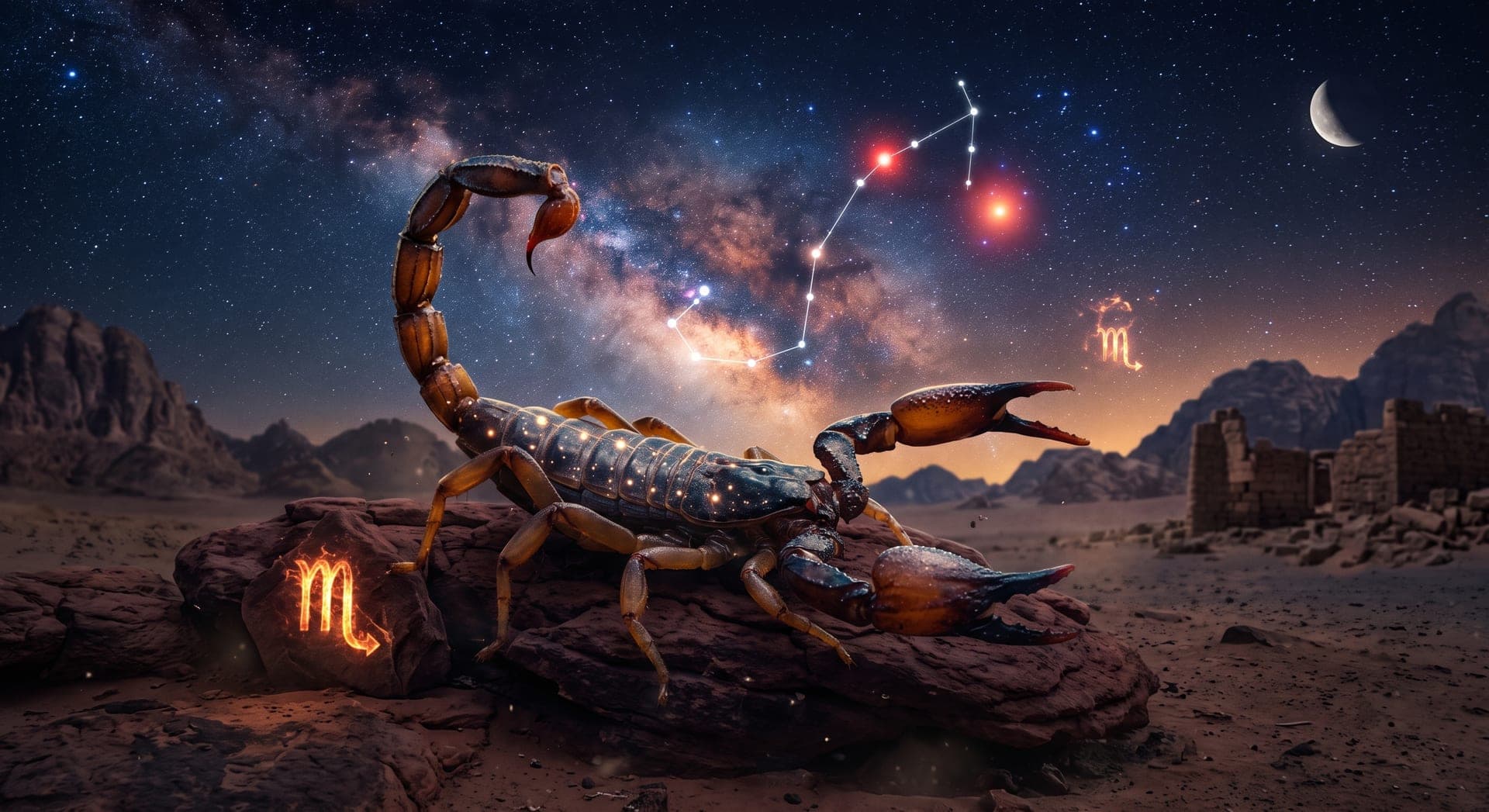
Born on November 12: Scorpio ♏
Scorpio, the eighth sign of the zodiac, spans October 23 to November 21 and is symbolized by the scorpion, a creature known for its defensive intensity and the sting it delivers when provoked. Traditionally ruled by Mars and, in modern astrology, by Pluto, the planet of transformation and the underworld, Scorpio carries a reputation as one of the most intense and emotionally powerful signs of the zodiac. As a Water sign, Scorpio experiences the world through deep, often hidden, emotion, guarding its inner life carefully while remaining acutely perceptive of others. Its Fixed modality gives Scorpio remarkable determination and resilience, able to endure hardship and pursue long-term goals with singular focus. People born under this sign are often drawn to work involving psychology, investigation, transformation, or anything requiring the ability to see beneath the surface. Scorpio's loyalty and passion run deep for those it trusts, but that same intensity can curdle into jealousy, suspicion, or an unwillingness to forgive when trust is broken.
Personality Traits
Strengths
- Deeply passionate and determined
- Fiercely loyal to those they trust
- Resourceful and strategic
- Highly perceptive
- Emotionally resilient
Weaknesses
- Prone to jealousy and possessiveness
- Secretive and guarded
- Can be vindictive when wronged
- Distrustful of others
- Prone to obsessiveness
Compatible Signs
Fun Facts
- Scorpio's scorpion symbol connects to the Greek myth of the scorpion sent by Gaia to kill the hunter Orion, with both later placed among the stars.
- Scorpio has two ruling planets: Mars in traditional astrology, and Pluto, discovered in 1930, in the modern system.
- Scorpio is often mistakenly grouped with the Fire signs due to its intensity, but it is actually a Water sign, driven by deep emotion rather than raw aggression.
- Notable Scorpios include Pablo Picasso, Marie Curie, Leonardo DiCaprio, and Hillary Clinton.
- Some astrological traditions associate Scorpio with a secondary, more elevated symbol, the eagle or phoenix, representing transformation and rebirth.
Born on November 12
- 1684
Edward Vernon
English admiral known as 'Old Grog,' who captured Porto Bello from Spain and ordered rum diluted with water for his sailors, a drink later named after him.
- 1774
Charles Bell
Scottish surgeon, anatomist, and artist whose research into the nervous system gave his name to Bell's palsy, a form of facial paralysis.
- 1833
Alexander Borodin
Russian Romantic composer and chemist
- 1840
Auguste Rodin
French sculptor known for "The Thinker"
- 1842
John William Strutt, 3rd Baron Rayleigh
English physicist who discovered the element argon and won the 1904 Nobel Prize in Physics for his work on the density of gases.
- 1866
Sun Yat-sen
Chinese revolutionary and first President of the Republic of China
- 1926
Robert Goff, Baron Goff of Chieveley
English judge who served as a Law Lord and became one of Britain's most influential authorities on contract and commercial law.
- 1929
Grace Kelly
American actress who became Princess of Monaco
- 1943
Errol Brown
Jamaican-born English singer-songwriter and frontman of Hot Chocolate, whose hits including 'You Sexy Thing' made him a fixture of British pop for decades.
- 1945
Neil Young
Canadian singer-songwriter and guitarist
- 1962
Mariella Frostrup
British broadcaster and journalist known for presenting arts, culture, and books programmes on BBC radio and television.
- 1967
Grant Nicholas
Welsh singer-songwriter and frontman of the rock band Feeder, known for hits including 'Buck Rogers' and 'Just a Day'.
- 1970
Tonya Harding
American figure skater
- 1980
Ryan Gosling
Canadian actor
- 1982
Anne Hathaway
American actress and Academy Award winner
On This Day in History
- 1439
Plymouth becomes the first town in England to be incorporated by an act of Parliament.
The charter granted the Devon port town self-governing status independent of the local lord, allowing it to elect its own mayor and officials. The move reflected Plymouth's growing importance as a naval and trading harbour, a status that would later make it the departure point for the Mayflower and countless other historic voyages.
- 1835
Construction finishes on the Wilberforce Monument in Kingston upon Hull, honouring the city's native son and leading abolitionist William Wilberforce.
Standing over 30 metres tall, the column commemorates Wilberforce's decades-long parliamentary campaign that led to the Slave Trade Act 1807 and the Slavery Abolition Act 1833, ending slavery across most of the British Empire. It remains one of Hull's best-known landmarks and a testament to the city's role in the abolition movement.
- 1892
Pudge Heffelfinger reportedly becomes the first person paid to play American football.
William "Pudge" Heffelfinger reportedly received $500 to play a single game for the Allegheny Athletic Association, a payment historians consider the first documented instance of a professional athlete being paid to play American football. The transaction, discovered decades later in club expense records, marked the quiet beginning of football's transition from strictly amateur pastime to professional sport.
- 1893
Afghan ruler Abdur Rahman Khan agrees to the Durand Line as the border between Afghanistan and British India.
Negotiated with British diplomat Sir Mortimer Durand, the boundary line divided Pashtun and Baloch tribal territories between British India and Afghanistan. Intended to settle imperial rivalries in the region, the line remains the disputed border between modern Afghanistan and Pakistan, and its legacy continues to shape regional politics today.
- 1912
The frozen remains of polar explorer Robert Falcon Scott are discovered on the Ross Ice Shelf in Antarctica.
The bodies of polar explorer Robert Falcon Scott and two companions were discovered in their tent by a search party, having perished on their return journey after reaching the South Pole only to find Norwegian explorer Roald Amundsen had beaten them there. Scott's poignant final diary entries, discovered alongside the bodies, transformed the tragic expedition into a lasting symbol of heroic British endurance.
- 1912
A search party finds the frozen bodies of Robert Falcon Scott and two companions in their tent on the Ross Ice Shelf, months after they perished returning from the South Pole.
Scott's Terra Nova expedition had reached the South Pole in January 1912, only to find Roald Amundsen's Norwegian team had beaten them by weeks. Scott and his men died of starvation and exposure on the return journey, and their story of stoic endurance in defeat became a defining episode of British polar exploration.
- 1918
Austria becomes a republic following the dissolution of the Austro-Hungarian Empire.
The proclamation of an Austrian republic followed the collapse of the centuries-old Austro-Hungarian Empire in the final weeks of World War I, as Emperor Karl I renounced participation in state affairs without formally abdicating. The newly reduced Austrian state faced significant economic and political challenges as it adjusted to its diminished postwar status.
- 1920
A hunger strike by Irish republican prisoners at Cork Gaol ends after three of them have died in custody, during the Irish War of Independence.
The prisoners were protesting internment without trial, and their deaths coincided with the more widely publicised hunger strike of Cork's Lord Mayor, Terence MacSwiney, who had died in a London prison weeks earlier. The combined protests drew international attention to British policy in Ireland and hardened nationalist resolve in the final year before the Anglo-Irish Treaty.
- 1936
The San Francisco-Oakland Bay Bridge opens to traffic in California.
The Golden Gate Bridge's less famous but equally significant sibling, the Bay Bridge, opened just months before its more celebrated counterpart, providing a critical vehicular link between San Francisco and Oakland across the bay. The massive engineering project remains one of the longest bridges in the world and a vital component of the region's transportation infrastructure.
- 1942
The Naval Battle of Guadalcanal begins between Japanese and American forces in the Pacific.
The Naval Battle of Guadalcanal, a pivotal multi-day engagement during the broader Guadalcanal campaign, saw fierce nighttime ship-to-ship combat between American and Japanese naval forces vying for control of vital sea lanes. The costly American victory helped secure control of the strategically important island and marked a turning point in the Pacific theater of World War II.
- 1942
The Naval Battle of Guadalcanal begins, a fierce three-day engagement between American and Japanese fleets in the Pacific.
Fought in the waters off Guadalcanal as both sides sought to control the strategic island, the battle involved intense close-range surface combat and cost both navies significant losses. The American victory helped secure Guadalcanal and marked a turning point in the Pacific War's momentum toward the Allies.
- 1944
The Royal Air Force sinks the German battleship Tirpitz off the coast of Norway.
British aircraft sank the German battleship Tirpitz, sister ship to the Bismarck, using massive specialized "earthquake bombs" designed to penetrate the ship's heavy armor while it was anchored near Norway. The Tirpitz had long tied down significant Allied naval resources simply through its presence as a potential threat, making its destruction a major strategic relief.
- 1944
Royal Air Force bombers sink the German battleship Tirpitz, sister ship of the Bismarck, in a Norwegian fjord near Tromsø.
After earlier attacks by midget submarines and carrier aircraft failed to destroy her, RAF Lancaster bombers carrying 12,000-pound 'Tallboy' bombs finally capsized the Tirpitz at anchor, killing around 1,000 crew. Her destruction removed the last major surface threat to Allied Arctic convoys supplying the Soviet Union.
- 1980
NASA's Voyager 1 makes its closest approach to Saturn, photographing the planet's rings in detail.
Voyager 1's flyby of Saturn provided scientists with unprecedented close-up imagery of the planet's intricate ring system and numerous moons, revealing structural details invisible from Earth-based telescopes. The data gathered during the encounter significantly advanced scientific understanding of gas giant planets and their complex satellite systems.
- 1980
NASA's Voyager 1 spacecraft makes its closest approach to Saturn, capturing detailed images of the planet's rings and largest moon, Titan.
The flyby returned stunning photographs revealing the intricate structure of Saturn's ring system and provided the first close-up data on Titan's dense atmosphere. Voyager 1 continued on a trajectory out of the solar system, later becoming the first human-made object to enter interstellar space.
- 1990
Crown Prince Akihito is formally installed as the 125th Emperor of Japan.
Akihito's formal enthronement ceremony, conducted according to ancient Shinto rituals, officially confirmed his succession as Japan's 125th emperor following his father Hirohito's death the previous year. The elaborate ceremony blended centuries-old imperial tradition with Japan's modern constitutional role for the monarchy as a symbol of national unity.
- 1990
English computer scientist Tim Berners-Lee publishes a formal proposal for the World Wide Web while working at CERN.
Building on his earlier internal memo, Berners-Lee's proposal outlined a system of hypertext documents linked over the internet, laying out the concepts of URLs, HTTP, and HTML that underpin the modern web. Within a year he had built the first web browser and server, transforming how the world shares information.
- 2001
American Airlines Flight 587 crashes in Queens, New York, shortly after takeoff, killing 265 people.
American Airlines Flight 587 crashed into a residential neighborhood in Queens shortly after takeoff from JFK Airport when its vertical stabilizer separated from the aircraft due to excessive rudder movements by the co-pilot. The disaster, the second-deadliest aviation accident in U.S. history, prompted significant changes to pilot training regarding rudder use during wake turbulence encounters.
- 2014
The Philae lander successfully touches down on Comet 67P/Churyumov-Gerasimenko.
The European Space Agency's Philae lander successfully touched down on the surface of a comet for the first time in history, though its harpoons failed to anchor it securely, causing it to bounce before finally settling in a shadowed location. Despite limited solar power at its resting spot, the mission still gathered valuable scientific data about the comet's composition.
- 2020
Sony releases the PlayStation 5 video game console in North America, Japan, and other select markets.
The console launched alongside a redesigned controller featuring haptic feedback and adaptive triggers, and it sold out almost immediately amid a global chip shortage that constrained supply for over a year. It became one of the fastest-selling consoles in Sony's history despite the ongoing shortages.