
What’s Observed on October 29
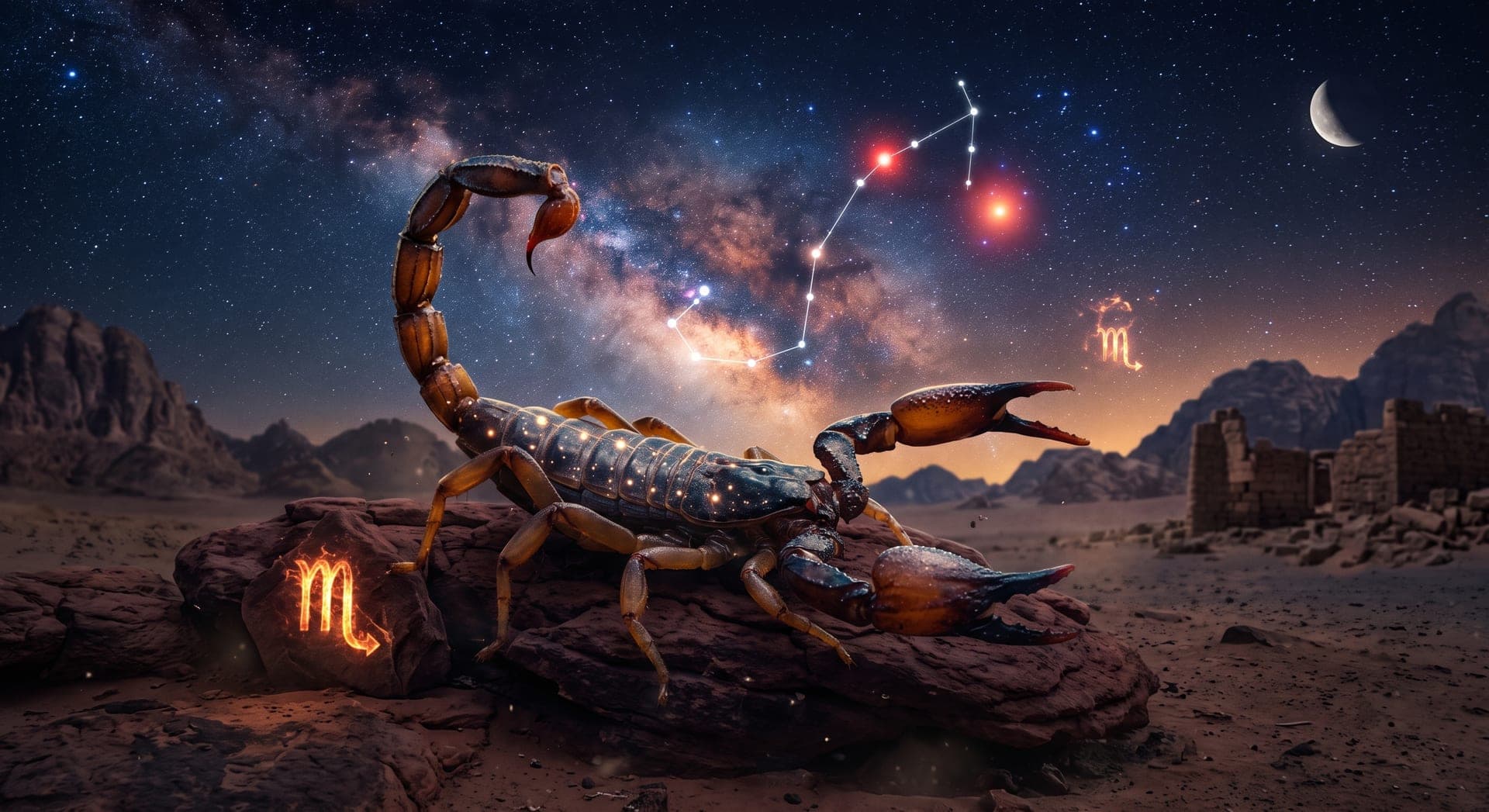
Born on October 29: Scorpio ♏
Scorpio, the eighth sign of the zodiac, spans October 23 to November 21 and is symbolized by the scorpion, a creature known for its defensive intensity and the sting it delivers when provoked. Traditionally ruled by Mars and, in modern astrology, by Pluto, the planet of transformation and the underworld, Scorpio carries a reputation as one of the most intense and emotionally powerful signs of the zodiac. As a Water sign, Scorpio experiences the world through deep, often hidden, emotion, guarding its inner life carefully while remaining acutely perceptive of others. Its Fixed modality gives Scorpio remarkable determination and resilience, able to endure hardship and pursue long-term goals with singular focus. People born under this sign are often drawn to work involving psychology, investigation, transformation, or anything requiring the ability to see beneath the surface. Scorpio's loyalty and passion run deep for those it trusts, but that same intensity can curdle into jealousy, suspicion, or an unwillingness to forgive when trust is broken.
Personality Traits
Strengths
- Deeply passionate and determined
- Fiercely loyal to those they trust
- Resourceful and strategic
- Highly perceptive
- Emotionally resilient
Weaknesses
- Prone to jealousy and possessiveness
- Secretive and guarded
- Can be vindictive when wronged
- Distrustful of others
- Prone to obsessiveness
Compatible Signs
Fun Facts
- Scorpio's scorpion symbol connects to the Greek myth of the scorpion sent by Gaia to kill the hunter Orion, with both later placed among the stars.
- Scorpio has two ruling planets: Mars in traditional astrology, and Pluto, discovered in 1930, in the modern system.
- Scorpio is often mistakenly grouped with the Fire signs due to its intensity, but it is actually a Water sign, driven by deep emotion rather than raw aggression.
- Notable Scorpios include Pablo Picasso, Marie Curie, Leonardo DiCaprio, and Hillary Clinton.
- Some astrological traditions associate Scorpio with a secondary, more elevated symbol, the eagle or phoenix, representing transformation and rebirth.
Born on October 29
- 1690
Martin Folkes
English mathematician and antiquarian who served as President of the Royal Society and the Society of Antiquaries.
- 1740
James Boswell
Scottish lawyer and writer best known for his landmark biography, The Life of Samuel Johnson.
- 1877
Wilfred Rhodes
English cricketer regarded as one of the greatest all-rounders in the sport's history, playing for Yorkshire and England for over three decades.
- 1882
Jean Giraudoux
French playwright
- 1891
Fanny Brice
American comedian and singer
- 1897
Billy Walker
English footballer who played for Aston Villa and earned international caps for England during the interwar era.
- 1910
A. J. Ayer
English philosopher known for championing logical positivism in his influential book Language, Truth and Logic.
- 1925
Robert Hardy
English actor known for playing Siegfried Farnon in All Creatures Great and Small and Cornelius Fudge in the Harry Potter films.
- 1938
Ellen Johnson Sirleaf
President of Liberia and Nobel Peace Prize laureate
- 1946
Peter Green
English guitarist and songwriter who founded the band Fleetwood Mac.
- 1947
Richard Dreyfuss
American actor
- 1957
Dan Castellaneta
American voice actor known as the voice of Homer Simpson
- 1967
Rufus Sewell
English actor known for roles in Dark City and The Man in the High Castle.
- 1971
Winona Ryder
American actress

On This Day in History
- 312
Constantine the Great enters Rome to popular jubilation following his victory at the Battle of the Milvian Bridge.
Following his decisive victory over Maxentius at the Milvian Bridge days earlier, Constantine entered Rome and was greeted with widespread public celebration, formally beginning his consolidation of power over the Western Roman Empire and his gradual promotion of Christianity throughout Roman society.
- 437
Western Roman Emperor Valentinian III marries Licinia Eudoxia, unifying two branches of the ruling imperial dynasty.
The marriage between Western Emperor Valentinian III and Licinia Eudoxia, daughter of the Eastern Emperor, symbolically reunified the two branches of the House of Theodosius that had ruled the divided Eastern and Western Roman Empires, strengthening diplomatic ties between the two increasingly distinct halves of the empire.
- 1621
Londoners celebrate the inauguration of a new Lord Mayor with an elaborate civic pageant, part of the centuries-old tradition that became the Lord Mayor's Show.
Such pageants were commissioned from leading dramatists of the day, who devised allegorical floats, verses and spectacle to honour the incoming mayor and the City's trading companies. The custom of marking the mayor's inauguration with a procession through London dates back to the thirteenth century and continues today as the Lord Mayor's Show, now one of the oldest and largest civic parades in the world.
- 1658
Dutch naval forces defeat Sweden at the Battle of the Sound during the Second Northern War.
A Dutch fleet decisively defeated a Swedish naval force in the strait between Denmark and Sweden, an intervention that prevented Sweden from gaining complete control over the crucial Baltic Sea trade route and helped preserve a regional balance of power favorable to Dutch commercial interests.
- 1675
Gottfried Leibniz makes the first documented use of the integral symbol in calculus.
German mathematician and philosopher Gottfried Wilhelm Leibniz first employed the elongated "S" symbol to represent integration in his developing calculus notation, a symbol still universally used in mathematics today and one of Leibniz's most enduring and practical contributions to mathematical notation.
- 1792
Mount Hood in present-day Oregon is named by British naval officer Lieutenant William Broughton.
British naval officer Lieutenant William Broughton, exploring the Columbia River region, named the prominent volcanic peak in present-day Oregon after British naval officer Lord Samuel Hood, a name that has remained in continuous use despite the mountain's much older Indigenous names.
- 1792
British naval officer William Broughton sights and names Mount Hood in present-day Oregon after Admiral Samuel Hood, during George Vancouver's survey expedition.
Broughton was charting the mouth of the Columbia River as part of Vancouver's larger expedition to survey the Pacific coast of North America on behalf of the British Admiralty. He named the peak in honour of Samuel Hood, a distinguished Royal Navy admiral who had never seen the mountain himself. The name has endured, making Mount Hood one of several Pacific Northwest peaks bearing British naval honorifics.
- 1863
Representatives from eighteen nations establish the International Red Cross in Geneva.
Delegates from eighteen nations meeting in Geneva formally established the organization that became the International Committee of the Red Cross, inspired by Swiss businessman Henry Dunant's advocacy following his witness of the suffering of wounded soldiers, creating a neutral humanitarian body dedicated to protecting victims of armed conflict.
- 1888
European powers and the Ottoman Empire sign the Convention of Constantinople, guaranteeing free passage through the Suez Canal for ships of all nations in war and peace.
Britain, which had occupied Egypt since 1882 and depended on the canal as its vital sea link to India, played the leading role in shaping the agreement despite initially resisting a formal treaty. The convention formally neutralised the waterway, though Britain in practice retained effective control over it for decades afterward, a dominance that would later fuel the Suez Crisis of 1956.
- 1914
The Ottoman Empire enters World War I on the side of the Central Powers.
The Ottoman Empire formally entered World War I by attacking Russian Black Sea ports, aligning itself with the Central Powers and opening additional fronts in the Caucasus and Middle East that ultimately contributed significantly to the empire's collapse by the war's conclusion.
- 1929
The New York Stock Exchange crashes on "Black Tuesday," a pivotal event triggering the Great Depression.
The New York Stock Exchange suffered a catastrophic collapse on what became known as "Black Tuesday," wiping out enormous amounts of investor wealth within hours and marking a pivotal moment in the onset of the Great Depression, the most severe economic downturn in modern industrialized history.
- 1929
The New York Stock Exchange suffers its most catastrophic single-day collapse, remembered as Black Tuesday, wiping out billions of dollars in value.
Panic selling by investors, many of whom had bought shares on borrowed money, followed several days of sharp declines and effectively ended the speculative boom of the 1920s. The crash is widely seen as the opening chapter of the Great Depression, a decade-long global economic downturn that brought mass unemployment and hardship to millions of people around the world.
- 1956
The Suez Crisis begins as Israeli forces invade Egypt's Sinai Peninsula.
Israeli forces invaded Egypt's Sinai Peninsula in coordination with a secret prior agreement with Britain and France, who sought to regain control of the recently nationalized Suez Canal, triggering an international crisis that ultimately forced the invading powers to withdraw under significant American and Soviet diplomatic pressure.
- 1956
Israeli forces invade the Sinai Peninsula, opening the Suez Crisis in a campaign secretly coordinated with Britain and France.
Under a secret agreement reached at Sevres, Israel's advance gave Britain and France a pretext to intervene militarily and seize control of the Suez Canal, which Egypt's President Nasser had nationalised months earlier. The collusion, once exposed, badly damaged British and French international standing and accelerated the decline of both countries' influence as global imperial powers in favour of American and Soviet dominance.
- 1969
The first host-to-host connection on ARPANET is established between computers at UCLA and Stanford, an early step toward the modern internet.
Researchers attempting to remotely log in to the Stanford machine managed to transmit only the letters 'L' and 'O' of the word 'LOGIN' before the system crashed, in what is often cited as the first message sent over a computer network. Despite the modest start, ARPANET, funded by the US Defense Department, laid the technical groundwork for the networking protocols that underpin today's internet.
- 1986
British Prime Minister Margaret Thatcher opens the final stretch of the M25, completing London's orbital motorway.
The 117-mile ring road around the capital had been built in sections over more than a decade and, at the time of its completion, was the longest ring road in Europe. Intended to ease congestion by routing through-traffic around rather than through London, the motorway instead quickly became notorious for its own heavy congestion, prompting decades of subsequent widening and improvement schemes.
- 1991
NASA's Galileo spacecraft flies past the asteroid 951 Gaspra, capturing the first close-up images ever taken of an asteroid.
En route to Jupiter, Galileo passed within about a thousand miles of the potato-shaped asteroid, revealing a heavily cratered surface roughly twelve miles long. The encounter provided scientists with their first detailed look at a body from the asteroid belt and helped confirm theories about the composition and battering history of these rocky remnants from the early Solar System.
- 2015
China announces the end of its one-child policy after 35 years.
Facing a rapidly aging population and long-term demographic and economic concerns stemming from decades of strict birth limits, China's government announced it would end its controversial one-child policy, allowing all couples to have two children after 35 years of the restrictive population control measure.
- 2018
Lion Air Flight 610 crashes into the Java Sea shortly after takeoff from Jakarta, killing all 189 people on board.
The Boeing 737 MAX plunged into the sea just minutes after departure following erratic altitude readings, in a disaster later traced to a faulty automated flight-control system called MCAS. The crash, followed by a similar one in Ethiopia five months later, led to the worldwide grounding of the 737 MAX fleet and a lengthy crisis for Boeing over the aircraft's safety and certification.
- 2020
The UK Labour Party suspends former leader Jeremy Corbyn after he downplayed the findings of a report into antisemitism within the party.
The Equality and Human Rights Commission report found that Labour had unlawfully discriminated against, harassed and victimised Jewish members during Corbyn's leadership. Corbyn responded that the scale of antisemitism had been 'dramatically overstated for political reasons,' prompting his immediate suspension by the party he had led from 2015 to 2020 and deepening a bitter internal rift over the issue.