
What’s Observed on October 28
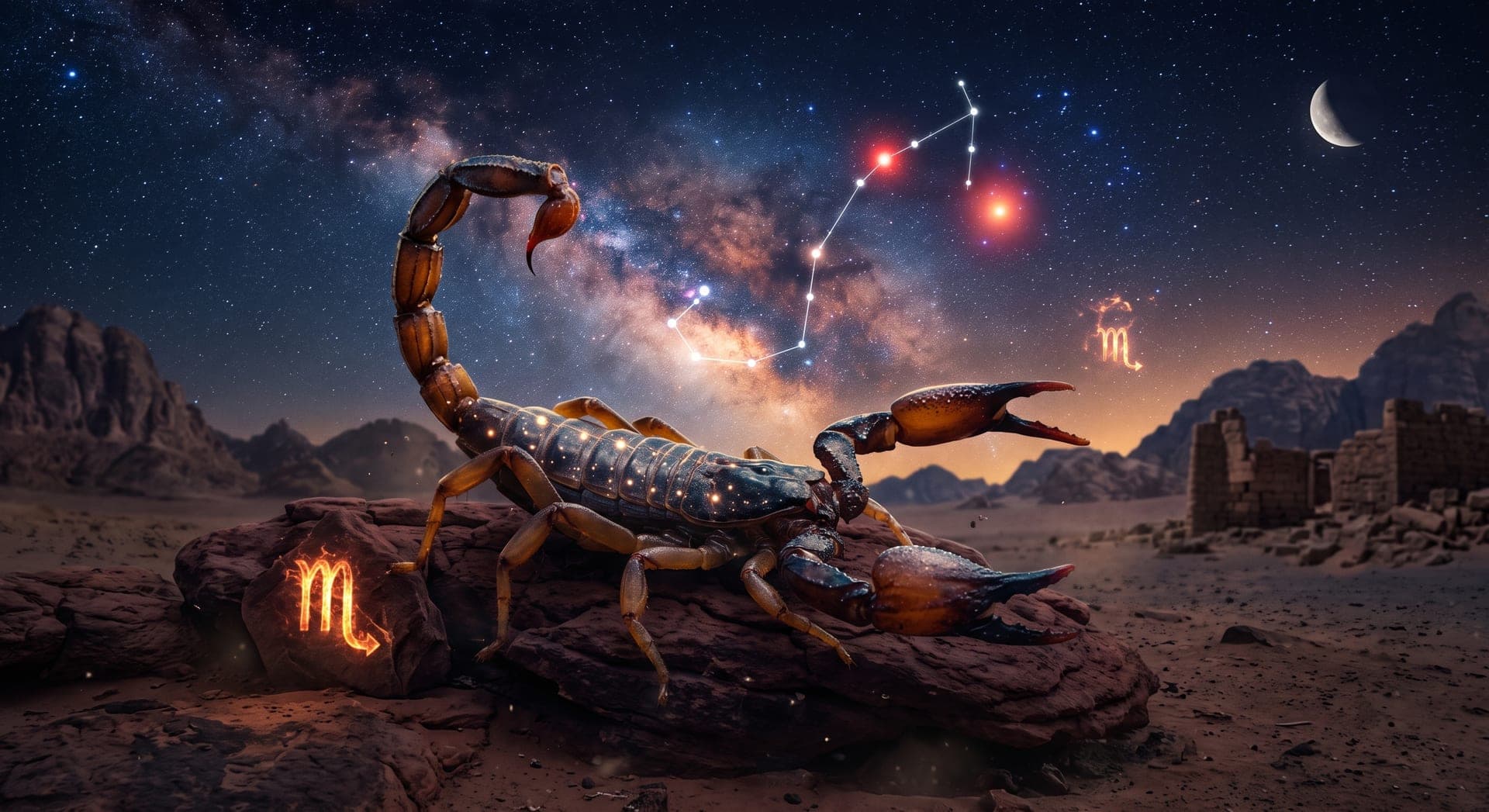
Born on October 28: Scorpio ♏
Scorpio, the eighth sign of the zodiac, spans October 23 to November 21 and is symbolized by the scorpion, a creature known for its defensive intensity and the sting it delivers when provoked. Traditionally ruled by Mars and, in modern astrology, by Pluto, the planet of transformation and the underworld, Scorpio carries a reputation as one of the most intense and emotionally powerful signs of the zodiac. As a Water sign, Scorpio experiences the world through deep, often hidden, emotion, guarding its inner life carefully while remaining acutely perceptive of others. Its Fixed modality gives Scorpio remarkable determination and resilience, able to endure hardship and pursue long-term goals with singular focus. People born under this sign are often drawn to work involving psychology, investigation, transformation, or anything requiring the ability to see beneath the surface. Scorpio's loyalty and passion run deep for those it trusts, but that same intensity can curdle into jealousy, suspicion, or an unwillingness to forgive when trust is broken.
Personality Traits
Strengths
- Deeply passionate and determined
- Fiercely loyal to those they trust
- Resourceful and strategic
- Highly perceptive
- Emotionally resilient
Weaknesses
- Prone to jealousy and possessiveness
- Secretive and guarded
- Can be vindictive when wronged
- Distrustful of others
- Prone to obsessiveness
Compatible Signs
Fun Facts
- Scorpio's scorpion symbol connects to the Greek myth of the scorpion sent by Gaia to kill the hunter Orion, with both later placed among the stars.
- Scorpio has two ruling planets: Mars in traditional astrology, and Pluto, discovered in 1930, in the modern system.
- Scorpio is often mistakenly grouped with the Fire signs due to its intensity, but it is actually a Water sign, driven by deep emotion rather than raw aggression.
- Notable Scorpios include Pablo Picasso, Marie Curie, Leonardo DiCaprio, and Hillary Clinton.
- Some astrological traditions associate Scorpio with a secondary, more elevated symbol, the eagle or phoenix, representing transformation and rebirth.
Born on October 28
- 1466
Erasmus
Dutch Renaissance humanist philosopher
- 1794
Robert Liston
Scottish surgeon renowned for his speed in the era before anaesthesia, sometimes called 'the fastest knife in the West End.'
- 1846
Auguste Escoffier
French chef who modernized classic French cuisine
- 1903
Evelyn Waugh
English novelist and satirist best known for Brideshead Revisited and Decline and Fall.
- 1912
Richard Doll
English epidemiologist who provided the first solid statistical evidence linking cigarette smoking to lung cancer.
- 1914
Jonas Salk
American developer of the polio vaccine
- 1929
Joan Plowright
English actress celebrated for her stage work with the National Theatre and for her film roles later in her career.
- 1930
Bernie Ecclestone
English businessman who built and controlled Formula One racing for decades as its longtime chief executive.
- 1941
Hank Marvin
English guitarist and founding member of The Shadows, best known for his instrumental work backing Cliff Richard.
- 1949
Caitlyn Jenner
American Olympic decathlete and media personality
- 1955
Bill Gates
American co-founder of Microsoft
- 1967
Julia Roberts
American actress
- 1974
Joaquin Phoenix
American actor
- 1982
Matt Smith
English actor who played the Eleventh Doctor in the television series Doctor Who.
- 1987
Frank Ocean
American singer-songwriter
- 1991
Lucy Bronze
English footballer regarded as one of the world's best defenders, with multiple Champions League titles to her name.
On This Day in History
- 97
Roman Emperor Nerva is pressured into adopting general Marcus Ulpius Trajanus, the future Trajan, as his successor.
Facing pressure from the Praetorian Guard following the assassination of his predecessor Domitian, the elderly Emperor Nerva adopted the respected general Trajan as his son and heir, a succession strategy that helped ensure a stable transition and ushered in a period later remembered as part of Rome's golden age under the "Five Good Emperors."
- 306
Maxentius is proclaimed Roman emperor in Rome.
Amid the political chaos following Emperor Diocletian's abdication system breaking down, Maxentius seized power in Rome with the support of the Praetorian Guard, ruling as a rival claimant to imperial authority until his eventual defeat by Constantine six years later.
- 312
Constantine I defeats Maxentius at the Battle of the Milvian Bridge, securing sole rule of the Western Roman Empire.
Constantine's forces achieved a decisive victory over the numerically superior army of rival emperor Maxentius at the Milvian Bridge near Rome, with Maxentius drowning in the Tiber River during the chaotic retreat, securing Constantine's control over the Western Roman Empire and paving the way for Christianity's eventual imperial favor.
- 312
Roman emperor Constantine I defeats his rival Maxentius at the Battle of the Milvian Bridge, becoming the unchallenged ruler of the western Roman Empire.
According to tradition, Constantine ordered his troops to paint a Christian symbol on their shields after experiencing a vision before the battle. Maxentius drowned in the Tiber during the retreat when a pontoon bridge collapsed under the weight of fleeing soldiers. The victory paved the way for Constantine's conversion to Christianity and his eventual toleration of the faith throughout the empire.
- 1492
Christopher Columbus reaches Cuba during his first voyage, mistakenly believing he has found Japan.
During his first voyage of exploration in the Caribbean, Christopher Columbus's expedition reached the northeastern coast of Cuba, which Columbus initially believed, based on his significant miscalculation of global geography, might be a peninsula of mainland Japan or China rather than an entirely separate and previously unknown landmass to Europeans.
- 1492
Christopher Columbus sights Cuba during his first voyage across the Atlantic, believing he has reached an outlying province of Japan.
Columbus anchored off the northeastern coast and described the island's lush landscape in glowing terms in his journal, convinced he was nearing the court of the Great Khan of Asia. He never fully realised he had encountered a new continent rather than the outskirts of Asia. Cuba would go on to become a cornerstone of Spain's colonial empire in the Americas.
- 1520
Ferdinand Magellan's expedition reaches the Pacific Ocean after navigating the strait later named for him.
After successfully navigating through the treacherous strait later named in his honor, Ferdinand Magellan's expedition emerged into the vast ocean he named the Pacific for its apparent calm, beginning the long and difficult crossing that ultimately claimed Magellan's own life before his remaining crew completed history's first circumnavigation.
- 1628
The siege of La Rochelle concludes after fourteen months with the surrender of the Huguenot stronghold.
The fortified Huguenot stronghold of La Rochelle finally surrendered to French royal forces after a grueling fourteen-month siege that had starved much of the city's population, a major victory for Cardinal Richelieu's efforts to consolidate royal authority and curb the political power of French Protestants.
- 1664
The Duke of York and Albany's Maritime Regiment of Foot is raised in England, the unit that would evolve into the Royal Marines.
Formed to provide soldiers capable of fighting at sea during the naval wars with the Dutch, the regiment combined the discipline of infantry with the specialised skills needed for shipboard combat and amphibious landings. Over the following centuries it was repeatedly reorganised and renamed before becoming the modern Royal Marines, one of Britain's most storied military units and part of the Royal Navy.
- 1726
Jonathan Swift's satirical novel "Gulliver's Travels" is published.
Jonathan Swift's satirical novel, presenting the fantastical travels of ship's surgeon Lemuel Gulliver to lands including the tiny Lilliputians and the giant Brobdingnagians, was published anonymously to immediate popularity. The work offered sharp social and political commentary on contemporary British society and human nature more broadly, disguised within its imaginative and entertaining adventure narrative.
- 1726
Jonathan Swift's satirical novel Gulliver's Travels is published in London, quickly becoming a sensation among English readers.
Published anonymously by Benjamin Motte, the book used the fantastical voyages of Lemuel Gulliver to Lilliput, Brobdingnag and other imagined lands to satirise English politics, science and human nature. Swift, an Anglo-Irish clergyman and satirist, saw the work become an immediate bestseller, and it has remained a landmark of English-language literature and a staple of children's and adult reading alike ever since.
- 1776
British troops under General William Howe capture Chatterton Hill during the Battle of White Plains in the American Revolutionary War.
Howe's forces dislodged American militia and Continental troops from high ground overlooking the main battlefield, forcing General George Washington to withdraw his army further north to avoid encirclement. Although a tactical British victory, Howe's characteristically cautious pursuit allowed Washington's army to escape intact, preserving the Continental Army to fight on through the rest of the war.
- 1834
British colonial forces kill an estimated thirty Noongar people at the Pinjarra massacre in Western Australia's Swan River Colony.
A detachment led by Governor James Stirling attacked a Noongar encampment on the Murray River in what colonial authorities described as retaliation for earlier killings of settlers. Noongar oral history remembers the attack as a one-sided massacre of men, women and children rather than a battle. It remains one of the most notorious episodes of frontier violence in early Australian colonial history.
- 1835
Northern Maori chiefs sign a Declaration of Independence establishing the United Tribes of New Zealand, an act recognised by the British Crown.
Drafted with the encouragement of British Resident James Busby, the declaration asserted that sovereign power in New Zealand rested with the confederated Maori chiefs and sought recognition from Britain to deter other powers from claiming the islands. Britain acknowledged the declaration, though the arrangement was superseded five years later by the Treaty of Waitangi, under which New Zealand became a British colony.
- 1886
President Grover Cleveland formally dedicates the Statue of Liberty in New York Harbor.
President Grover Cleveland presided over the formal dedication ceremony for the Statue of Liberty in New York Harbor, a gift from France commemorating the two nations' shared republican ideals, which soon became an enduring symbol of freedom and opportunity for immigrants arriving in the United States.
- 1886
US President Grover Cleveland formally dedicates the Statue of Liberty in New York Harbor before a crowd of onlookers and a flotilla of ships.
The statue, a gift from the people of France to commemorate American independence and Franco-American friendship, had been shipped across the Atlantic in crates and assembled on Bedloe's Island. Designed by sculptor Frederic Auguste Bartholdi with an iron framework by Gustave Eiffel, it soon became an enduring symbol of freedom and, for millions of immigrants arriving by sea, of welcome to America.
- 1922
Benito Mussolini's fascist supporters march on Rome, leading to his appointment as Italian prime minister.
Benito Mussolini's Fascist paramilitary supporters marched on Rome demanding political power, and King Victor Emmanuel III, fearing civil conflict, appointed Mussolini as prime minister rather than order military resistance, a decision that opened the way for Mussolini's subsequent consolidation of dictatorial authority in Italy.
- 1962
The Cuban Missile Crisis concludes as Soviet Premier Nikita Khrushchev orders the removal of missiles from Cuba.
Soviet Premier Nikita Khrushchev announced Moscow's agreement to remove nuclear missiles from Cuba in exchange for a secret American pledge to remove missiles from Turkey and a public assurance not to invade Cuba, bringing the tense Cuban Missile Crisis to a peaceful resolution.
- 1962
The Cuban Missile Crisis ends as Soviet leader Nikita Khrushchev agrees to remove nuclear missiles from Cuba in exchange for US assurances.
The announcement, broadcast on Radio Moscow, came after thirteen tense days in which the world stood closer to nuclear war than at any other point in the Cold War. In exchange for the withdrawal, the United States secretly agreed to remove its own Jupiter missiles from Turkey and publicly pledged not to invade Cuba, defusing the most dangerous confrontation of the era.
- 1971
Prospero becomes the only British satellite ever launched by a British-built rocket, lifting off aboard a Black Arrow from Woomera, Australia.
The launch came just months after the government had already cancelled the Black Arrow programme on cost grounds, making Britain the first and so far only country to develop and then abandon an independent satellite launch capability. Prospero, designed to study the effects of space debris, remained operational for years afterward and is still in orbit, occasionally contacted by radio enthusiasts.