
What’s Observed on January 29
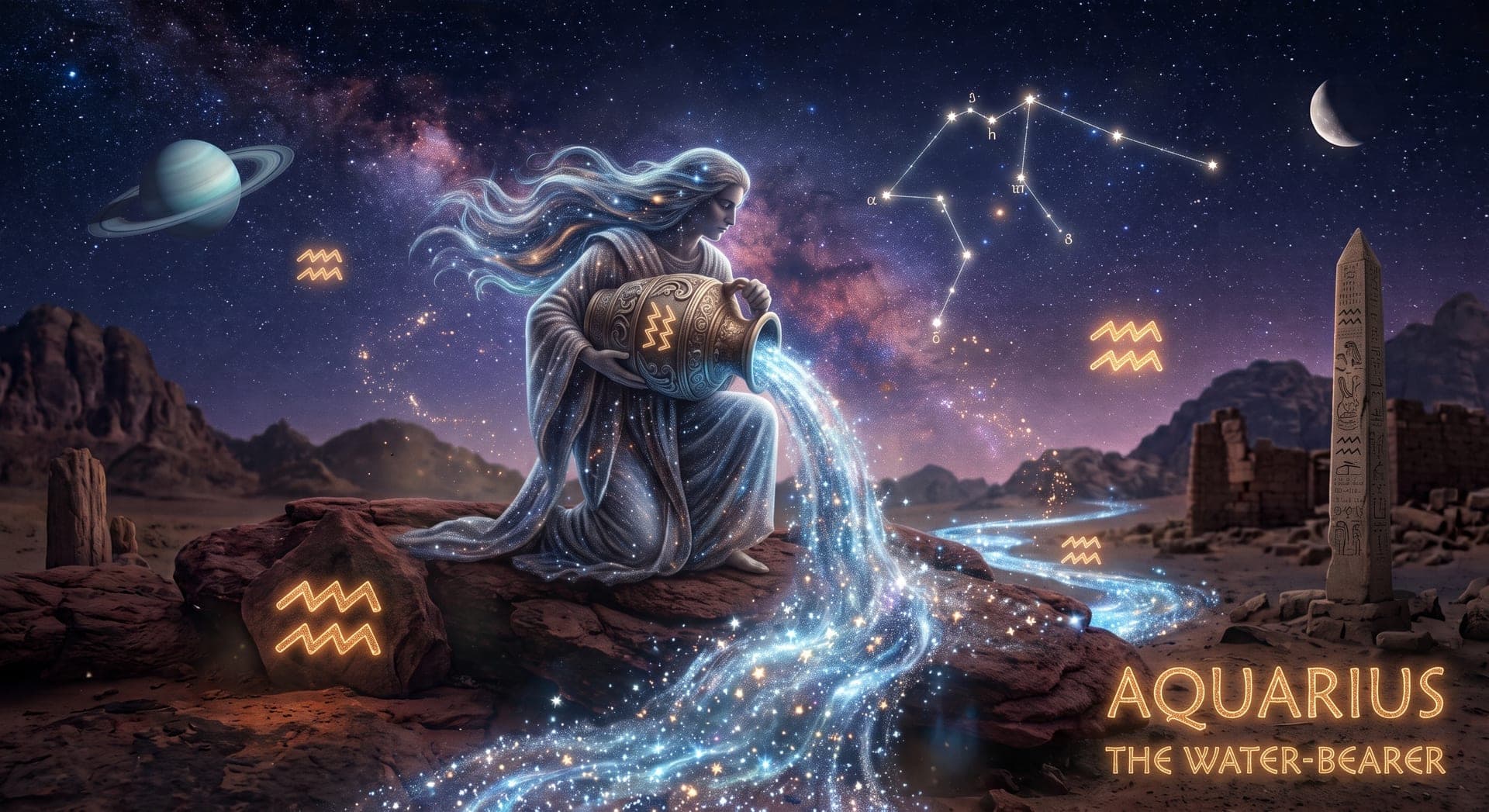
Born on January 29: Aquarius ♒
Aquarius, the eleventh sign of the zodiac, spans January 20 to February 18 and is symbolized by the water bearer, an image of someone pouring out knowledge and life-giving ideas to the world, despite Aquarius actually being an air sign rather than a water sign. Traditionally ruled by disciplined Saturn and, in modern astrology, by unpredictable Uranus, the planet of innovation and rebellion, Aquarius carries a distinctive blend of structure and originality. People born under this sign are often described as independent thinkers, forward-looking, and drawn to humanitarian causes, valuing the collective good over convention. As a Fixed sign, Aquarius can be famously stubborn once its mind is made up, even while championing change for everyone else. Intellectually curious and sometimes emotionally guarded, Aquarians tend to value friendship and community deeply, often serving as the visionary of their social circle, more comfortable debating ideas than discussing feelings.
Personality Traits
Strengths
- Original and forward-thinking
- Strong sense of fairness and justice
- Independent and self-sufficient
- Loyal to friends and causes alike
- Sees the bigger picture others miss
Weaknesses
- Can run from emotional expression
- Uncompromising once a position is fixed
- Prone to aloofness or detachment
- Sometimes contrarian just to stand apart
- Can prioritize ideas over people's feelings
Compatible Signs
Fun Facts
- Despite its watery name and imagery, Aquarius is classified as an air sign, grouped with Gemini and Libra as a sign of thought and communication rather than emotion.
- Aquarius has two ruling planets: Saturn in classical astrology, and Uranus, discovered in 1781, in the modern system most Western astrologers use today.
- The water bearer symbol traces back to Ganymede in Greek mythology, a cupbearer to the gods said to pour out a life-giving stream from the heavens.
- Notable Aquarians include Oprah Winfrey, Abraham Lincoln, Charles Darwin, Thomas Edison, and Bob Marley.
- Aquarius is one of the rarer signs to be represented by a person rather than an animal or object, alongside Gemini, Virgo, and Sagittarius's centaur half.
Born on January 29
- 1843
William McKinley
25th President of the United States
- 1860
Anton Chekhov
Russian playwright and short story writer
- 1862
Frederick Delius
English composer celebrated for richly orchestrated works blending impressionism and romanticism
- 1880
W. C. Fields
American comedian and actor known for his deadpan wit
- 1888
Sydney Chapman
English mathematician and geophysicist known for his work on the upper atmosphere and geomagnetism
- 1926
Abdus Salam
Pakistani physicist and Nobel Prize laureate
- 1931
Leslie Bricusse
English playwright, lyricist, and composer known for musicals and film songs like "Feeling Good"
- 1939
Germaine Greer
Australian writer and prominent feminist scholar
- 1943
Tony Blackburn
English radio broadcaster and the first voice heard on BBC Radio 1
- 1945
Tom Selleck
American actor known for "Magnum, P.I."
- 1954
Oprah Winfrey
Media executive, talk show host, and philanthropist
- 1964
Roddy Frame
Scottish singer-songwriter and guitarist best known as frontman of Aztec Camera
- 1970
Heather Graham
American actress
- 1971
Clare Balding
English broadcaster and journalist known for her sports commentary and presenting
- 1985
Rag'n'Bone Man
English singer-songwriter known for the hit single "Human"

On This Day in History
- 1819
Sir Thomas Stamford Raffles lands on the island of Singapore.
Raffles, a British colonial administrator, negotiated a treaty with local rulers to establish a trading post on the island, recognizing its strategic position along key shipping routes. The settlement grew rapidly under British administration into one of the great trading ports of the empire, and remains the founding moment celebrated in Singapore's modern history.
- 1845
Edgar Allan Poe's poem "The Raven" is published in the New York Evening Mirror, bringing him widespread fame.
Poe's atmospheric poem about a talking raven and a grieving narrator's descent into madness became an instant sensation, reprinted widely and even parodied within weeks of publication. Despite the poem's massive popularity, Poe, who struggled financially throughout his career, reportedly earned only a small sum for it, and he died destitute just five years later.
- 1845
Edgar Allan Poe's poem "The Raven" is published under his own name.
The poem appeared in the New York Evening Mirror and quickly brought Poe widespread fame, though not much financial reward, reportedly earning him only a small payment. Its hypnotic rhythm, gothic atmosphere, and mournful refrain of "Nevermore" made it one of the most recognizable and frequently quoted poems in American literature, cementing Poe's reputation as a master of the macabre.
- 1850
Senator Henry Clay introduces the Compromise of 1850 in an effort to ease tensions between free and slave states.
Clay's proposed package of five bills aimed to defuse escalating tensions between free and slave states over territory gained from the Mexican-American War, admitting California as a free state while allowing new territories to decide slavery through popular sovereignty and strengthening fugitive slave laws. The compromise delayed, but ultimately failed to prevent, the sectional conflict that erupted into civil war a decade later.
- 1850
Henry Clay introduces the resolutions that become the Compromise of 1850 to the US Congress.
The proposals aimed to defuse escalating sectional tensions over the expansion of slavery into territories won from Mexico, admitting California as a free state while strengthening fugitive slave laws elsewhere. Though it delayed the outbreak of civil war by roughly a decade, the compromise ultimately failed to resolve the underlying conflict over slavery.
- 1856
Queen Victoria establishes the Victoria Cross, Britain's highest military decoration for valor.
Victoria established the medal, cast from the bronze of cannons captured during the Crimean War, to recognize extraordinary bravery in combat regardless of military rank, a departure from earlier honors reserved mainly for officers. The Victoria Cross remains the highest award for gallantry in the United Kingdom and many Commonwealth nations, with only a small number awarded in most modern conflicts.
- 1856
Queen Victoria institutes the Victoria Cross, Britain's highest award for military gallantry.
The medal was created by royal warrant to recognize acts of extraordinary courage in the face of the enemy, awarded regardless of rank or class, a notable departure from earlier honors reserved largely for officers. It remains the pre-eminent decoration in the British and Commonwealth honours system, cast from bronze traditionally said to derive from captured Russian cannon.
- 1861
Kansas is admitted as the 34th U.S. state.
Kansas entered the Union as a free state after years of violent conflict between pro-slavery and anti-slavery settlers known as "Bleeding Kansas," a preview of the larger national conflict to come. Its admission, tipping the sectional balance further against slaveholding interests, came just over a year before the outbreak of the Civil War.
- 1863
US Army volunteers attack a Shoshone encampment in the Bear River Massacre.
Troops under Colonel Patrick Connor attacked a Shoshone winter camp along the Bear River in present-day Idaho, killing several hundred men, women, and children. Though less widely remembered than later massacres such as Wounded Knee, it is considered one of the deadliest single episodes of violence against Native Americans in United States history, and remains a somber landmark in the region's history.
- 1886
Karl Benz patents the first successful gasoline-powered automobile.
Benz's three-wheeled "Motorwagen," powered by a single-cylinder internal combustion engine, is widely regarded as the first true automobile, distinct from earlier steam- or horse-powered experiments. His wife, Bertha Benz, later undertook the first long-distance automobile road trip without her husband's knowledge, proving the vehicle's practicality and generating publicity that helped launch the automotive industry.
- 1886
Karl Benz is granted a patent for the first practical automobile.
The German engineer's patent covered his Benz Patent-Motorwagen, a three-wheeled vehicle powered by a single-cylinder internal combustion engine, widely regarded as the first automobile designed from the ground up to generate its own power rather than being adapted from a horse-drawn carriage. The invention laid the technical foundation for the modern automotive industry that followed.
- 1918
Ukrainian forces are defeated by advancing Bolshevik troops at the Battle of Kruty.
A small, largely improvised force of Ukrainian students and military cadets attempted to hold back advancing Bolshevik troops near the railway station at Kruty as they pushed toward Kyiv during Ukraine's war for independence. Though a military defeat, with heavy losses on the Ukrainian side, the battle became a lasting symbol of youthful national sacrifice in Ukrainian historical memory.
- 1936
The first inductees to the Baseball Hall of Fame, including Babe Ruth and Ty Cobb, are announced.
The inaugural class of the Baseball Hall of Fame in Cooperstown, New York, honored five legendary players, including Babe Ruth, Ty Cobb, and Honus Wagner, chosen by a vote of baseball writers. The museum, which opened three years later, has since become the sport's most revered institution, enshrining the careers of its greatest players, managers, and executives.
- 1936
The first inductees to the National Baseball Hall of Fame are announced.
The inaugural class included five of the sport's most celebrated figures: Ty Cobb, Babe Ruth, Honus Wagner, Christy Mathewson, and Walter Johnson. The Hall of Fame itself would not formally open its doors in Cooperstown, New York, until 1939, but the announcement marked the beginning of baseball's enduring institution for honoring its greatest players.
- 1991
The Battle of Khafji, the first major ground engagement of the Gulf War, begins.
Iraqi forces launched a surprise cross-border assault into the Saudi Arabian town of Khafji, briefly occupying it before being repelled by Saudi and coalition ground troops backed by heavy air support. The engagement, the first major ground combat of the Gulf War, offered an early preview of the coalition's overwhelming military advantage before the main ground offensive weeks later.
- 1991
Iraqi forces launch an assault on the Saudi Arabian town of Khafji during the Gulf War.
The attack marked the first major ground engagement of the Gulf War, as Iraqi armored units briefly seized the town near the Kuwaiti border. Saudi and Qatari forces, supported by coalition air power, recaptured Khafji within days, repelling the Iraqi advance and dealing a significant blow to Iraq's ground offensive capability.
- 2002
President George W. Bush describes Iraq, Iran, and North Korea as an "axis of evil" in his State of the Union address.
Bush's speech grouped Iraq, Iran, and North Korea together as an "axis of evil" pursuing weapons of mass destruction and supporting terrorism, signaling a hardened U.S. foreign policy stance following the September 11 attacks. The framing, particularly toward Iraq, helped build the political case for the U.S. invasion that followed roughly a year later.
- 2002
US President George W. Bush describes Iraq, Iran, and North Korea as an "axis of evil."
The phrase, used in Bush's State of the Union address, signaled a hardened American stance toward states accused of sponsoring terrorism and pursuing weapons of mass destruction. It became a defining rhetorical marker of post-9/11 US foreign policy and shaped the debate leading up to the 2003 invasion of Iraq.
- 2005
The first direct commercial flights between mainland China and Taiwan since 1949 take place.
The direct charter flights, arranged for the Lunar New Year holiday, marked a symbolic thaw in relations between China and Taiwan, which had been severed since the Chinese Civil War ended in 1949 with the Nationalist government's retreat to Taiwan. Regular direct flights between the two sides were not fully established until several years later, as cross-strait relations gradually normalized.
- 2025
An American Airlines regional jet collides with a military helicopter over the Potomac River near Washington, D.C., killing everyone aboard both aircraft.
The regional jet, approaching Ronald Reagan Washington National Airport, collided with an Army Black Hawk helicopter conducting a training flight over the Potomac River, killing everyone aboard both aircraft. It was the deadliest U.S. aviation disaster in over two decades and prompted immediate scrutiny of helicopter traffic patterns near the busy airport's approach routes.