What’s Observed on July 24
Born on July 24: Leo ♌
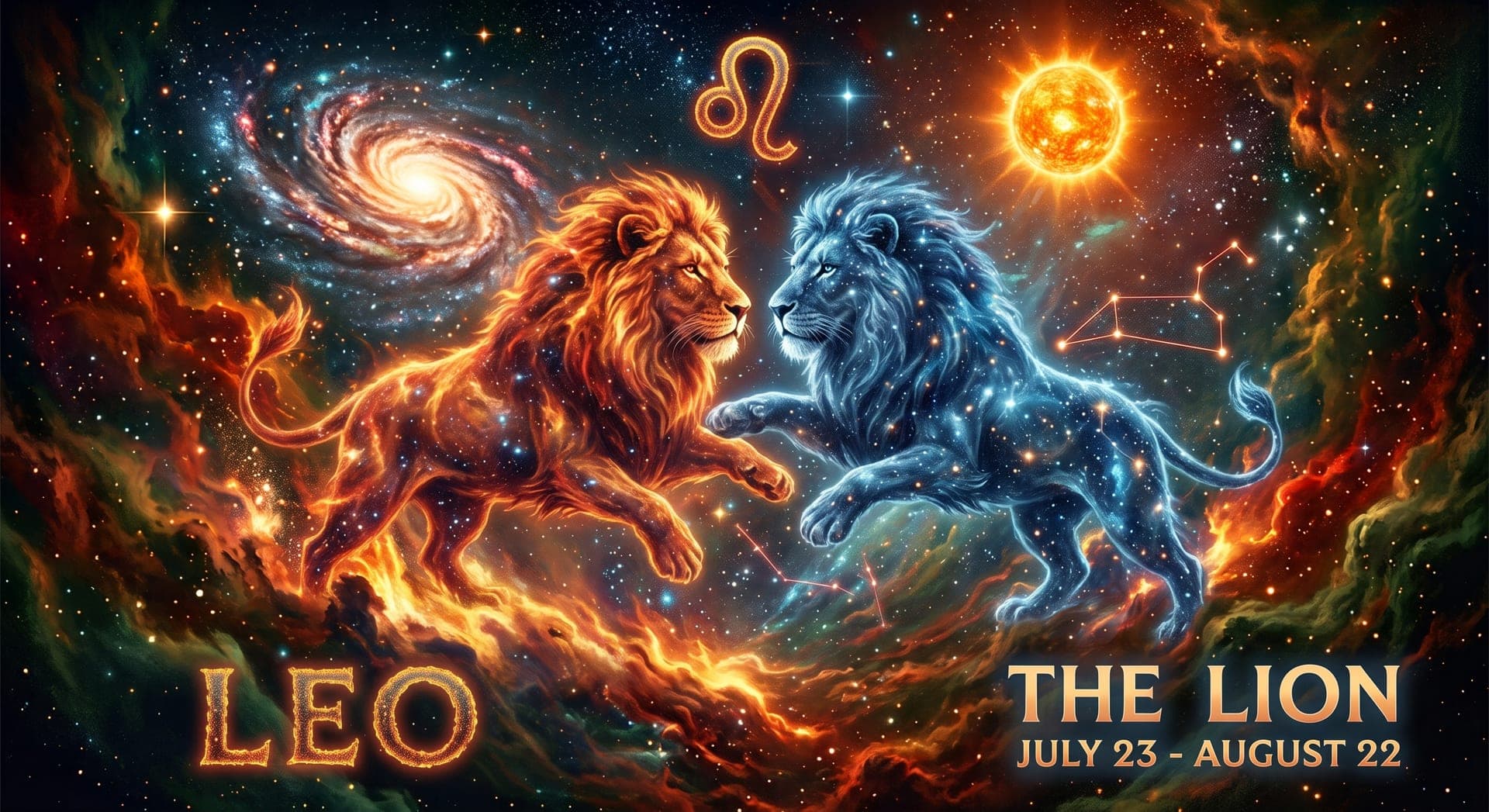
Leo, the fifth sign of the zodiac, spans July 23 to August 22 and is symbolized by the lion, an animal long associated with courage, pride, and natural leadership. Ruled by the Sun, the center of the solar system and the source of light and life, Leo is widely regarded as one of the most confident, warm, and charismatic signs of the zodiac, naturally drawn to the spotlight. As a Fire sign, Leo approaches life with passion, enthusiasm, and a flair for the dramatic, rarely content to blend quietly into the background. Its Fixed modality gives Leo a strong sense of loyalty and consistency, along with a stubborn streak once its mind is made up. People born under this sign are often natural performers, leaders, or creatives who thrive when appreciated and celebrated by those around them. Leo's generosity and warmth make it a beloved friend and steadfast ally, though its genuine need for recognition and admiration can tip into vanity or a demand for center stage if left unchecked.
Personality Traits
Strengths
- Naturally charismatic leader
- Generous and warm-hearted
- Confident and self-assured
- Creative and expressive
- Loyal to friends and family
Weaknesses
- Prone to arrogance
- Craves attention and validation
- Stubborn once decided
- Can be domineering
- Sensitive to criticism of their ego
Compatible Signs
Fun Facts
- Leo's lion symbol connects to the Greek myth of the Nemean Lion, slain by Hercules as the first of his twelve labors.
- Leo is ruled by the Sun, the only zodiac sign ruled directly by a star rather than a planet or moon.
- As a Fixed Fire sign, Leo season falls at the height of summer, when the sun's warmth and intensity are strongest in the Northern Hemisphere.
- Notable Leos include Barack Obama, Madonna, Jennifer Lawrence, and Napoleon Bonaparte.
- Leo rules the heart in traditional medical astrology, reflecting the sign's association with vitality, courage, and life force.
Born on July 24
- 1725
John Newton
English sailor and Anglican clergyman, a former slave ship captain turned abolitionist who wrote the hymn 'Amazing Grace.'
- 1783
Simón Bolívar
Venezuelan military and political leader who liberated much of South America
- 1802
Alexandre Dumas
French novelist known for "The Three Musketeers"
- 1867
E. F. Benson
English novelist and biographer best remembered for his satirical Mapp and Lucia series of novels.
- 1867
Fred Tate
English cricketer who played one Test match for England, remembered for a dropped catch in the deciding match of the 1902 Ashes series.
- 1878
Lord Dunsany
London-born Anglo-Irish writer and 18th Baron Dunsany regarded as a pioneering figure in fantasy literature
- 1895
Robert Graves
English poet, novelist, and classicist best known for the historical novel I, Claudius and his war memoir Goodbye to All That.
- 1897
Amelia Earhart
American aviation pioneer
- 1942
Chris Sarandon
American actor
- 1951
Lynda Carter
American actress known for "Wonder Woman"
- 1961
Kerry Dixon
English footballer who scored more than 150 goals for Chelsea and later became a respected football pundit.
- 1963
Karl Malone
American professional basketball player
- 1964
Barry Bonds
American Major League Baseball player
- 1966
Martin Keown
English footballer who played centre-back for Arsenal during the club's most successful era and later became a television pundit.
- 1969
Jennifer Lopez
American singer and actress
- 1987
Zack Sabre Jr.
English professional wrestler known for his technical, submission-based wrestling style in New Japan Pro-Wrestling and other promotions.
On This Day in History
- 1132
Roger II of Sicily defeats rival forces at the Battle of Nocera, consolidating his control over southern Italy.
Norman ruler Roger II defeated a coalition of rebellious vassals and allied forces at Nocera in southern Italy, a victory that helped consolidate his control over the mainland territories that, combined with Sicily, formed the foundation of the Norman Kingdom of Sicily.
- 1304
King Edward I of England captures Stirling Castle using a massive siege engine known as the War Wolf.
During the First War of Scottish Independence, English King Edward I's forces finally captured the strategically vital Stirling Castle after a prolonged siege, employing a massive and technologically impressive trebuchet nicknamed the "War Wolf" that the king reportedly insisted on using even after the garrison offered to surrender.
- 1304
King Edward I of England captured Stirling Castle after a prolonged siege, using a massive trebuchet nicknamed 'Warwolf.'
The huge siege engine, built specially for the assault, was so devastating that the Scottish garrison reportedly tried to surrender before it was even used, though Edward insisted on firing it anyway to demonstrate its power. The castle's fall gave England control of a key strategic stronghold during the Wars of Scottish Independence. Stirling was later recaptured by the Scots following Robert the Bruce's victory at nearby Bannockburn a decade afterward.
- 1411
The Battle of Harlaw, one of the bloodiest battles in Scottish history, was fought between Highland and Lowland Scottish forces near Aberdeenshire.
The clash arose from a succession dispute over the Earldom of Ross, pitting Donald, Lord of the Isles, and his Highland army against forces loyal to the Duke of Albany and the Lowland nobility. Though neither side achieved a decisive tactical victory, the battle halted the Highland advance and became remembered in Scottish folklore as 'Red Harlaw' for its heavy casualties. It remains one of the most storied conflicts in medieval Scottish history.
- 1534
French explorer Jacques Cartier plants a cross on the Gaspe Peninsula, formally claiming the territory for France.
During his voyage exploring the Gulf of Saint Lawrence, French explorer Jacques Cartier erected a large cross on the Gaspe Peninsula bearing the arms of the French king, formally claiming the territory for France and initiating the long history of French colonial presence in what became Canada.
- 1567
Mary, Queen of Scots is forced to abdicate the Scottish throne in favor of her infant son, James VI.
Facing a rebellion by Protestant Scottish nobles following scandal and the suspicious death of her second husband, Mary, Queen of Scots was forced to abdicate her throne in favor of her thirteen-month-old son, who was crowned James VI and later became James I of England as well.
- 1567
Mary, Queen of Scots was forced to abdicate the Scottish throne in favor of her infant son, who became James VI.
Mary had been imprisoned by rebellious Scottish nobles following the scandal surrounding the murder of her husband, Lord Darnley, and her subsequent marriage to a man widely suspected of the killing. Her one-year-old son was crowned king while her half-brother, the Earl of Moray, governed as regent. James VI later inherited the English throne as well in 1603, uniting the two crowns as James I of England.
- 1701
French explorer Antoine de la Mothe Cadillac founds Fort Pontchartrain, the settlement that grew into the city of Detroit.
French explorer and colonial administrator Antoine de la Mothe Cadillac established a fortified settlement along the Detroit River as part of France's effort to control trade routes and counter British expansion in the Great Lakes region. The outpost gradually grew into the major American industrial city of Detroit.
- 1847
Brigham Young leads Mormon pioneers into the Salt Lake Valley, founding what became Salt Lake City.
After being driven from Illinois due to religious persecution, Brigham Young led a large group of Latter-day Saint pioneers into the arid Salt Lake Valley, where he reportedly declared it the right place for their new settlement. The community rapidly developed into a significant regional center and eventually the capital of Utah.
- 1911
American explorer Hiram Bingham III brings the ruins of Machu Picchu to international attention, later popularly described as its rediscovery.
American explorer and Yale professor Hiram Bingham III, guided by local farmers, visited the overgrown ruins of the Inca citadel Machu Picchu and subsequently publicized the site internationally through detailed expeditions and photography, bringing global attention to what remains one of the most iconic archaeological sites in South America.
- 1911
American explorer Hiram Bingham was led to the ruins of Machu Picchu, the ancient Inca city high in the Peruvian Andes.
Bingham, a Yale University lecturer searching for the lost Inca city of Vilcabamba, was guided to the overgrown site by a local farmer, though the ruins were already known to some local residents at the time. His subsequent expeditions and writings brought Machu Picchu to international fame as one of the most remarkable archaeological sites in the Americas. The site is now a UNESCO World Heritage Site and one of South America's most visited tourist destinations.
- 1922
The League of Nations formally approved the British Mandate for Palestine, placing the territory under British administration.
The mandate incorporated the earlier Balfour Declaration's commitment to establishing a 'national home for the Jewish people' in Palestine while also pledging to protect the rights of the existing Arab population. Britain administered the territory for the next 25 years, navigating escalating tensions between Jewish and Arab communities. The mandate's unresolved contradictions contributed to decades of conflict that followed Britain's eventual withdrawal in 1948.
- 1927
The Menin Gate memorial to the missing was dedicated at Ypres, Belgium, honoring British and Commonwealth soldiers who died in the First World War with no known grave.
The monumental arch, built on one of the main routes soldiers took toward the front lines, bears the names of more than 54,000 men who died in the Ypres Salient before August 1917 and have no known grave. Since 1928, buglers have sounded the Last Post beneath the gate every evening as an act of remembrance, a tradition that continues today aside from a pause during German occupation in the Second World War. The memorial remains one of the most significant British war memorials on the Western Front.
- 1943
The Royal Air Force launched Operation Gomorrah, a devastating bombing campaign against Hamburg, beginning with a massive night raid.
British and Canadian bombers struck the German port city at night while American forces bombed by day, over about a week, creating a firestorm that killed more than 30,000 people and destroyed much of the city. It was among the most destructive air campaigns of the Second World War, demonstrating the devastating potential of concentrated incendiary bombing. The raid's scale shocked German leadership and influenced later Allied bombing strategy against other cities.
- 1969
The Apollo 11 spacecraft splashes down safely in the Pacific Ocean, completing the first crewed Moon landing mission.
The Apollo 11 command module Columbia splashed down safely in the Pacific Ocean, successfully concluding the historic mission that had achieved humanity's first crewed lunar landing days earlier. The returning astronauts were immediately placed in quarantine as a precaution against potential lunar contaminants before their triumphant public reception.
- 1974
The U.S. Supreme Court unanimously rules that President Nixon must surrender the Watergate tapes to prosecutors.
In a unanimous ruling addressing the ongoing Watergate scandal, the U.S. Supreme Court determined that executive privilege did not permit President Nixon to withhold subpoenaed White House tape recordings from prosecutors. The decision proved instrumental in bringing about Nixon's resignation just weeks later.
- 1974
The US Supreme Court unanimously ruled that President Richard Nixon must turn over secret White House tape recordings to Watergate prosecutors.
The recordings ultimately revealed Nixon's direct involvement in covering up the break-in at the Democratic National Committee's headquarters at the Watergate complex two years earlier. The ruling rejected Nixon's claim of executive privilege and set a lasting precedent limiting presidential power to withhold evidence in criminal proceedings. Facing near-certain impeachment after the tapes' release, Nixon resigned from office less than three weeks later.
- 2013
A high-speed passenger train derailed while traveling far above the speed limit near Santiago de Compostela, Spain, killing 78 people.
The train left the tracks on a sharp curve just outside the city, with several carriages overturning and catching fire in one of Spain's deadliest rail disasters. Investigators determined that the driver had been traveling at more than twice the curve's speed limit while distracted by a phone call. The disaster prompted a major review of rail safety systems and driver oversight across Spain's high-speed rail network.
- 2019
Boris Johnson becomes Prime Minister of the United Kingdom.
Following a decisive Conservative Party leadership contest, Boris Johnson formally became Prime Minister of the United Kingdom, inheriting the unresolved and contentious task of implementing Britain's withdrawal from the European Union after his predecessor's efforts had repeatedly stalled in Parliament.
- 2019
Boris Johnson became Prime Minister of the United Kingdom after winning the Conservative Party leadership contest.
Johnson succeeded Theresa May, who resigned after failing to secure parliamentary approval for her Brexit withdrawal agreement. His premiership was defined by delivering Britain's departure from the European Union, along with the government's response to the COVID-19 pandemic that followed shortly after. Johnson led the Conservatives to a large majority in the December 2019 general election before resigning in 2022 amid a series of political controversies.