
What’s Observed on June 10
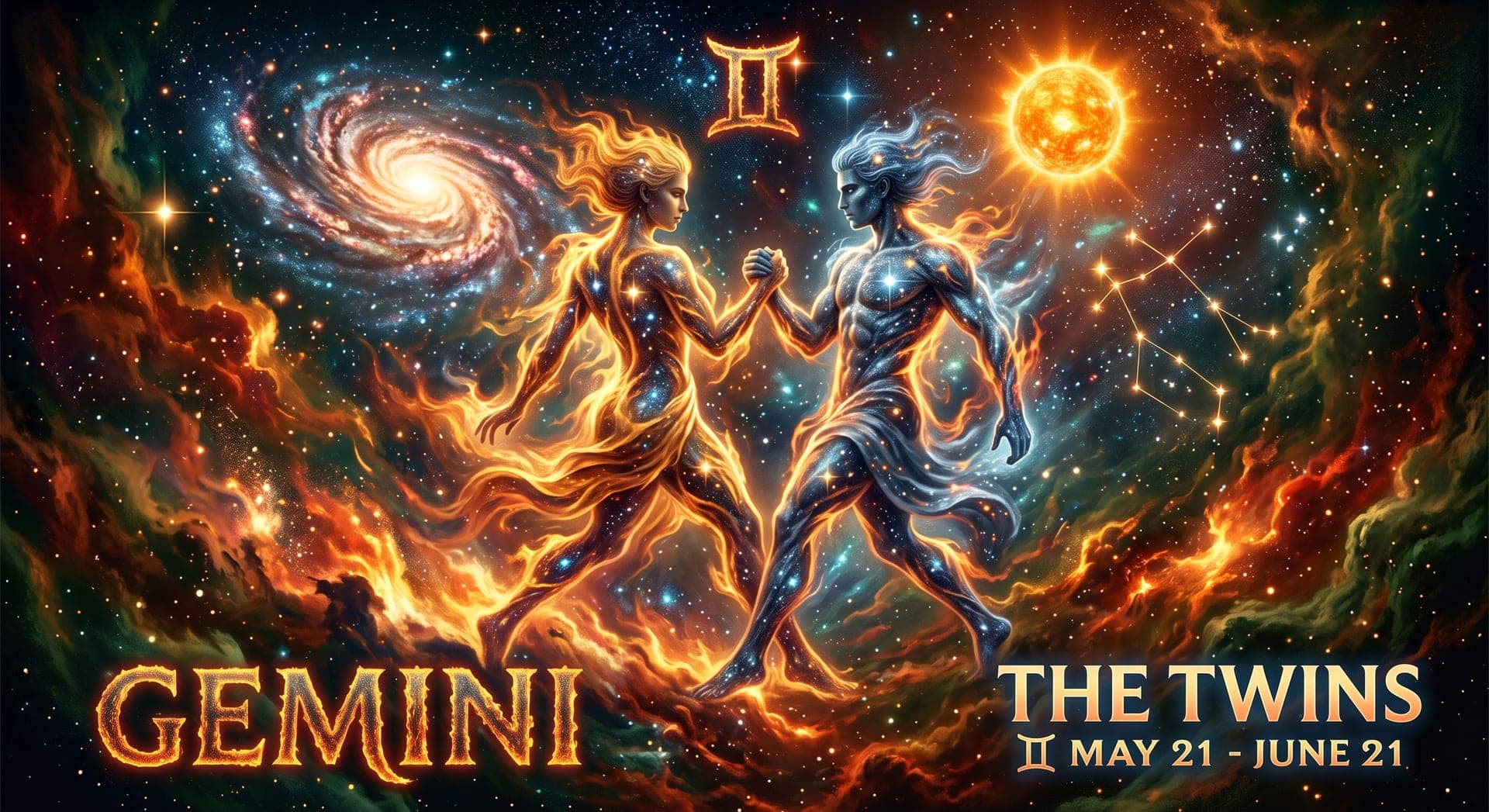
Born on June 10: Gemini ♊
Gemini, the third sign of the zodiac, spans May 21 to June 20 and is symbolized by twins, representing the sign's dual nature and its ability to see multiple sides of any situation at once. Ruled by Mercury, the planet of communication and intellect, Gemini is widely regarded as one of the most talkative, curious, and quick-witted signs of the zodiac, constantly gathering new information and ideas. As an Air sign, Gemini approaches the world primarily through thought and conversation, thriving on mental stimulation and social interaction. Its Mutable modality reflects a restless adaptability, since Gemini tends to resist routine and prefers variety, novelty, and the freedom to change course whenever something more interesting comes along. People born under this sign are often skilled communicators, natural storytellers, and quick learners who can hold their own in nearly any conversation. That same adaptability can also come across as inconsistency, and Gemini's dual nature sometimes earns an unfair reputation for being two-faced, when in reality it simply reflects genuine curiosity about every side of a story.
Personality Traits
Strengths
- Quick-witted and intelligent
- Excellent communicator
- Adaptable to new situations
- Curious and eager to learn
- Charming and sociable
Weaknesses
- Prone to inconsistency
- Can be superficial
- Easily bored
- Indecisive
- Tendency to gossip
Compatible Signs
Fun Facts
- Gemini's twin symbol traces back to the Greek myth of Castor and Pollux, twin brothers placed among the stars as the constellation Gemini.
- Mercury, Gemini's ruling planet, was the swift Roman messenger god, reflecting the sign's associations with communication and quick thinking.
- Gemini is one of only a few zodiac signs represented by human figures rather than animals or objects.
- Notable Geminis include Marilyn Monroe, Kanye West, Angelina Jolie, and John F. Kennedy.
- Gemini season overlaps with the transition from spring to summer in the Northern Hemisphere, reflecting the sign's changeable, in-between nature.
Born on June 10
- 1688
James Francis Edward Stuart
English claimant to the British throne, known as 'the Old Pretender,' whose exile after the Glorious Revolution fuelled decades of Jacobite risings.
- 1713
Princess Caroline of Great Britain
British princess, third daughter of King George II, known for her charitable giving
- 1819
Gustave Courbet
French realist painter
- 1901
Frederick Loewe
Austrian-American composer of musical theatre
- 1911
Terence Rattigan
English playwright celebrated for finely crafted dramas including The Winslow Boy and The Browning Version.
- 1915
Saul Bellow
Canadian-American novelist and Nobel Prize laureate in Literature
- 1921
Prince Philip, Duke of Edinburgh
Husband and consort of Queen Elizabeth II, and co-founder of The Duke of Edinburgh's Award
- 1922
Judy Garland
American actress and singer known for "The Wizard of Oz"
- 1926
Lionel Jeffries
English actor and film director best remembered for directing the classic family film The Railway Children.
- 1928
Maurice Sendak
American children's book author and illustrator
- 1936
Marion Chesney
Scottish novelist who, writing as M. C. Beaton, created the bestselling Hamish Macbeth and Agatha Raisin mystery series.
- 1943
Simon Jenkins
English journalist and author, a longtime newspaper columnist and former editor of The Times.
- 1965
Elizabeth Hurley
English actress, model, and producer known for her role in the Austin Powers films and her fashion label.
- 1966
David Platt
English footballer who captained the national team before becoming a manager at clubs including Sampdoria and Nottingham Forest.
- 1987
James Maynard
British mathematician awarded the 2022 Fields Medal for breakthroughs in analytic number theory, including work on prime gaps.

On This Day in History
- 1190
Holy Roman Emperor Frederick Barbarossa drowns while crossing a river in Anatolia during the Third Crusade, throwing his army into disarray.
Holy Roman Emperor Frederick Barbarossa drowned while attempting to cross the Saleph River in Anatolia during the Third Crusade, likely after being weighed down by his armor or suffering a heart attack while swimming, a sudden death that threw his large German crusading army into disarray and significantly diminished its effectiveness in the subsequent campaign.
- 1190
Holy Roman Emperor Frederick I "Barbarossa" drowns while crossing the Saleph River during the Third Crusade.
Leading a large German army overland toward the Holy Land, the elderly emperor drowned attempting to cross the fast-flowing river in Cilicia, possibly after being thrown by his horse or suffering a heart attack. His death demoralized his army, and much of the German contingent turned back or dispersed before reaching the crusader states.
- 1692
Bridget Bishop becomes the first person executed during the Salem witch trials in colonial Massachusetts.
Bridget Bishop became the first person executed during the Salem witch trials in colonial Massachusetts, hanged after being convicted of witchcraft based largely on spectral evidence and dubious testimony, the opening execution in a hysteria that would ultimately claim twenty lives before the trials were discredited and abandoned.
- 1719
Government forces defeat a combined Jacobite and Spanish force at the Battle of Glen Shiel in the Scottish Highlands.
Part of a wider, ultimately failed attempt to restore the exiled Stuart dynasty with Spanish military backing, the battle pitted Hanoverian troops against Jacobite clansmen and a small Spanish expeditionary force in rugged Highland terrain. The decisive government victory ended the 1719 Jacobite rising and forced the surviving Spanish troops to surrender.
- 1782
Rama I is crowned King of Siam, founding the Chakri dynasty that continues to rule Thailand today.
Chao Phraya Chakri was crowned King of Siam, taking the reigning name Rama I and founding the Chakri dynasty that continues to rule Thailand today, establishing Bangkok as the new royal capital and beginning a period of political consolidation and cultural revival following years of warfare with Burma.
- 1829
Oxford and Cambridge universities hold the first Boat Race on the River Thames, launching a storied annual rowing rivalry.
Crews representing Oxford and Cambridge universities competed in the first Boat Race, a rowing competition on the River Thames that has continued annually with few interruptions ever since, evolving into one of Britain's most enduring sporting traditions and a fixture of the British university and social calendar.
- 1829
Oxford and Cambridge universities row against each other for the first time in what becomes the annual Boat Race.
Challenged by a Cambridge student to a rowing contest, Oxford accepted and won the inaugural race on the Thames at Henley, watched by a large crowd including King George IV's brother. The event grew into one of Britain's oldest and most famous sporting traditions, contested nearly every year since on the Thames in London.
- 1863
French forces capture Mexico City during France's intervention in Mexico.
French forces intervening in Mexican political affairs captured Mexico City, installing a puppet government that later placed Austrian Archduke Maximilian on a newly created Mexican imperial throne, an intervention that Mexican republican forces under Benito Juarez ultimately reversed within a few years, with Maximilian himself executed in 1867.
- 1886
Mount Tarawera erupts in New Zealand, killing over 150 people and burying the famed Pink and White Terraces beneath volcanic ash.
Mount Tarawera erupted violently in New Zealand's North Island, killing more than 150 people and completely destroying the famous Pink and White Terraces, a renowned natural silica formation that had drawn tourists from around the world and was considered one of the natural wonders of the Southern Hemisphere before its burial under volcanic debris.
- 1935
Recovering alcoholic Dr. Robert Smith takes his last drink in Akron, Ohio, a date later marked as the founding of Alcoholics Anonymous.
Smith, a struggling surgeon, achieved sobriety with the support of fellow alcoholic Bill Wilson, whom he had met weeks earlier. Their partnership grew into Alcoholics Anonymous, whose twelve-step program of mutual support became the model for addiction recovery movements worldwide, helping millions of people achieve and maintain sobriety in the decades since.
- 1940
Fascist Italy declares war on France and Britain, joining Nazi Germany's side in World War II.
Fascist Italy under Benito Mussolini declared war on France and Britain, joining Nazi Germany's side just as France's military collapse appeared imminent, a calculated but militarily underprepared decision that Mussolini hoped would secure Italian territorial gains with minimal fighting, though Italian forces subsequently struggled significantly throughout the wider war.
- 1940
Fascist Italy declares war on France and the United Kingdom, entering the Second World War on the side of Germany.
With France on the verge of collapse under the German invasion, Mussolini judged the moment opportune to join the war and pursue Italian territorial ambitions in the Mediterranean and North Africa. The declaration opened new fronts against Britain in East Africa and the Mediterranean, prompting Franklin Roosevelt to denounce Italy's move as a 'stab in the back.'
- 1942
German forces massacre the population of the Czech village of Lidice in reprisal for the assassination of SS official Reinhard Heydrich.
After Czech resistance fighters fatally wounded Heydrich, Hitler ordered brutal collective punishment. German troops shot all the men of Lidice, deported most women and children to concentration camps, and razed the village to the ground. The massacre became an infamous symbol of Nazi terror and a rallying point for Allied wartime propaganda.
- 1944
German Waffen-SS troops massacre 643 residents of the French village of Oradour-sur-Glane.
Days after the D-Day landings, an SS armoured division swept through the village, herding men into barns and women and children into the church before setting the buildings ablaze and shooting those who tried to flee. It remains one of the worst atrocities committed against French civilians during the German occupation, and the ruined village has been preserved as a permanent memorial.
- 1967
The Six-Day War ends as Israel and Syria agree to a ceasefire.
Israel and Syria agreed to a United Nations-brokered ceasefire, formally ending active combat operations of the Six-Day War, a brief but transformative conflict in which Israel had captured the Sinai Peninsula, Gaza Strip, West Bank, and Golan Heights, reshaping the geopolitical map of the Middle East for decades to come.
- 1990
British Airways Flight 5390 lands safely after its cockpit windscreen blows out, partially sucking the captain out of the plane.
At 17,000 feet over Oxfordshire, an improperly fitted windscreen blew off the BAC One-Eleven, sucking Captain Tim Lancaster halfway out of the cockpit; cabin crew held onto his legs for over twenty minutes while the co-pilot flew the plane to an emergency landing at Southampton Airport. Remarkably, Lancaster survived with relatively minor injuries.
- 1996
Multi-party peace talks on Northern Ireland's future begin at Stormont without Sinn Féin, which had been excluded after the collapse of the IRA ceasefire.
The talks, chaired by former US Senator George Mitchell, brought together the British and Irish governments with most of Northern Ireland's political parties in an effort to find a political settlement to the Troubles. Sinn Féin was barred from participating until the IRA renewed its ceasefire, but the process eventually culminated in the 1998 Good Friday Agreement.
- 1999
NATO suspends its bombing campaign after Yugoslav President Slobodan Milosevic agrees to withdraw forces from Kosovo.
NATO suspended its 78-day bombing campaign against Yugoslavia after Yugoslav President Slobodan Milosevic agreed to withdraw Serbian security forces from Kosovo, a decision that ended the Kosovo War and paved the way for an international peacekeeping and administrative mission in the contested territory.
- 2002
British cybernetics researcher Kevin Warwick undergoes an experiment achieving what is reported as the first direct electronic communication between the nervous systems of two humans.
As part of his 'Project Cyborg' research at the University of Reading, Warwick had a microelectrode array implanted in his arm, connecting his nervous system to a computer and, remotely, to a similar implant in his wife's arm. The experiment allowed simple neural signals to be transmitted between them, an early exploration of human-machine and human-human neural interfacing.
- 2003
NASA launches its Spirit rover toward Mars as part of the Mars Exploration Rover mission.
NASA launched its Spirit rover toward Mars as part of the twin-rover Mars Exploration Rover mission, a spacecraft that, after successfully landing months later, vastly exceeded its planned 90-day mission lifespan, operating on the Martian surface for over six years and providing groundbreaking geological evidence of the planet's watery past.