
What’s Observed on March 2
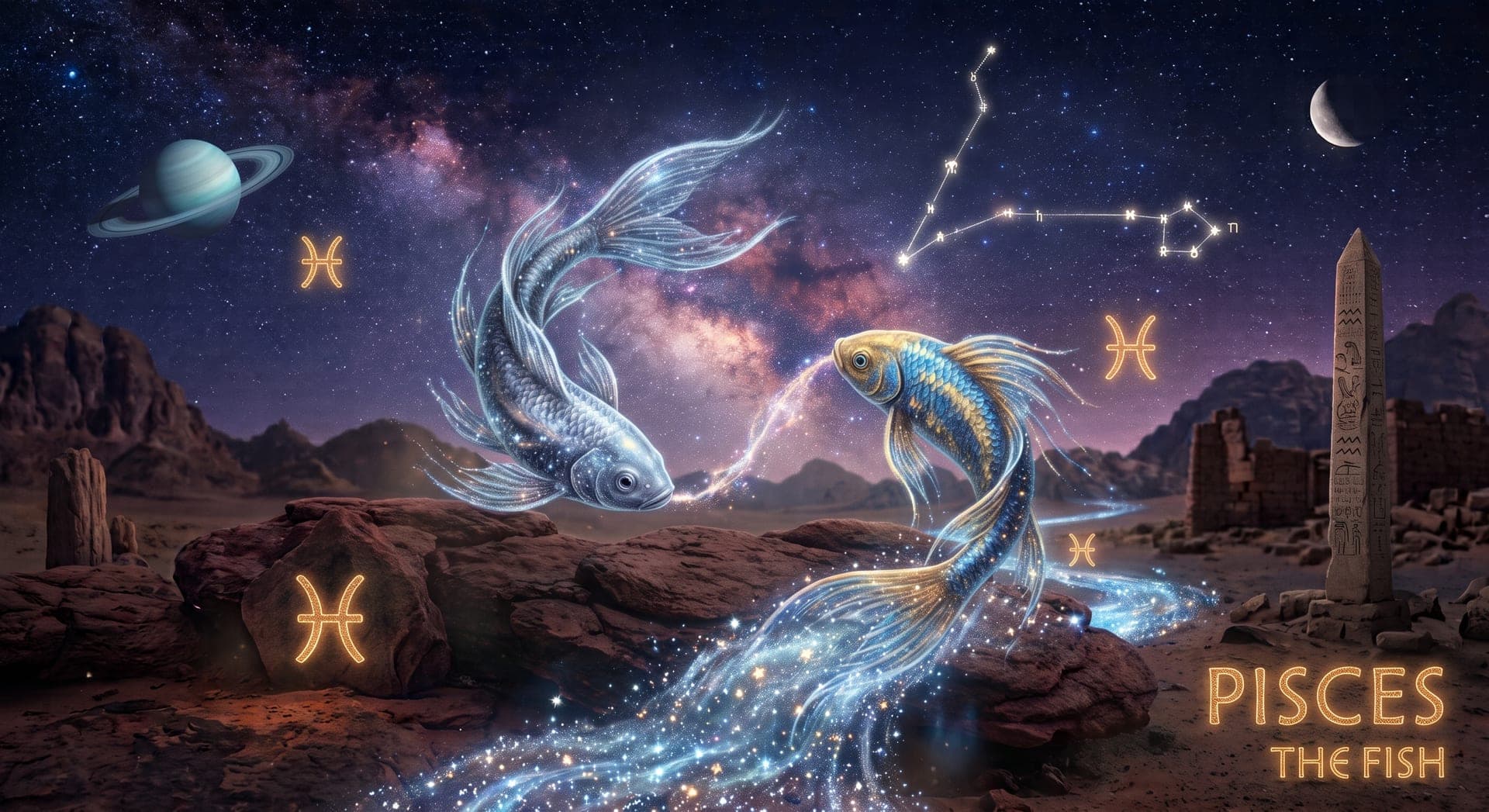
Born on March 2: Pisces ♓
Pisces, the twelfth and final sign of the zodiac, spans February 19 to March 20 and is symbolized by two fish swimming in opposite directions, tied together by a cord, representing the tension between fantasy and reality, or the conscious and subconscious mind. Ruled by Neptune, the planet of dreams, intuition, and illusion, Pisces is widely regarded as the most emotionally sensitive and imaginative sign of the zodiac. As a Water sign, Pisces navigates the world primarily through feeling and empathy, often absorbing the moods of people around it as though they were its own. Its Mutable modality reflects a deep adaptability and fluidity, comfortable going with the flow rather than forcing rigid plans. People born under this sign are often drawn to art, music, and other creative or spiritual pursuits where their vivid imagination can take shape. Compassionate to a fault, Pisces individuals are frequently the ones quietly caring for others, sometimes at the expense of their own boundaries and needs.
Personality Traits
Strengths
- Deeply empathetic and compassionate
- Highly imaginative and artistic
- Intuitive and perceptive
- Selfless and generous
- Adaptable to change
Weaknesses
- Prone to escapism or avoidance
- Overly trusting, can be taken advantage of
- Difficulty setting boundaries
- Tends toward melancholy
- Indecisive
Compatible Signs
Fun Facts
- Pisces' symbol of two fish bound together swimming in opposite directions comes from a Greek myth in which Aphrodite and Eros transformed into fish and tied themselves together to escape the monster Typhon.
- As the twelfth and final sign of the zodiac, Pisces is often described as embodying traits of all the preceding signs, a kind of culmination of the zodiac wheel.
- Neptune, Pisces' modern ruling planet, is the Roman god of the sea, discovered in 1846 and named for its blue, oceanic appearance.
- Notable Pisces include Albert Einstein, Rihanna, Steve Jobs, and Kurt Cobain.
- Classical astrology assigns Jupiter as Pisces' ruler, before Neptune's discovery in the 19th century gave the sign its modern ruling planet.
Born on March 2
- 1545
Thomas Bodley
English diplomat and scholar who founded Oxford's Bodleian Library
- 1705
William Murray, 1st Earl of Mansfield
Scottish-born judge and Lord Chief Justice whose 1772 Somerset ruling helped undermine the legal basis of slavery in England
- 1904
Dr. Seuss
American children's author and illustrator
- 1923
Basil Hume
English Benedictine monk and cardinal who served as Archbishop of Westminster
- 1931
Mikhail Gorbachev
Final leader of the Soviet Union, Nobel Peace Prize laureate
- 1940
Billy McNeill
Scottish footballer who captained Celtic to victory in the 1967 European Cup
- 1962
Jon Bon Jovi
American rock singer-songwriter and frontman of Bon Jovi
- 1968
Daniel Craig
English actor best known for playing James Bond in five films
- 1977
Chris Martin
English singer-songwriter and frontman of the rock band Coldplay
- 1980
Rebel Wilson
Australian actress and comedian
- 1981
Bryce Dallas Howard
American actress and director
- 1989
Nathalie Emmanuel
English actress known for Game of Thrones and the Fast & Furious franchise
- 1997
Becky G
American singer and actress

On This Day in History
- 1484
England's College of Arms, the country's official heraldic authority, is formally incorporated by royal charter under King Richard III.
The heralds had operated informally as part of the royal household for generations before Richard III granted them a corporate charter and a permanent home, Coldharbour house in London. The College remains responsible for granting and recording coats of arms and pedigrees across England, Wales, Northern Ireland, and parts of the Commonwealth, and continues to play a ceremonial role in state occasions such as coronations.
- 1796
Napoleon Bonaparte is appointed commander of the French Army of Italy, launching the campaign that made his early reputation.
The 26-year-old Napoleon Bonaparte was given command of French forces facing Austrian and Piedmontese armies in northern Italy. His subsequent lightning campaign of victories, achieved through speed and audacity, established his reputation as a military genius and set him on the path from revolutionary general to emperor.
- 1797
The Bank of England issues its first one-pound and two-pound banknotes.
The lower-denomination notes were introduced during a financial panic sparked by fears of French invasion, which had triggered a run on gold and forced the Bank to suspend cash payments in coin. Allowing everyday transactions to continue without gold backing was a major step in Britain's shift toward paper currency, gradually reducing reliance on gold coin as the country's everyday medium of exchange.
- 1807
The U.S. Congress passes legislation banning the importation of enslaved people, effective the following year.
Congress prohibited the further importation of enslaved people into the United States, a measure timed to the earliest date allowed under the Constitution's compromise provisions. The law did nothing to end domestic slavery or the internal slave trade, which continued to expand for decades until the Civil War.
- 1815
British colonial forces and Kandyan chiefs sign the Kandyan Convention, ceding the last independent kingdom on the island of Ceylon to British rule.
The agreement deposed King Sri Vikrama Rajasinha and ended over two centuries of Kandyan resistance to European conquest by the Portuguese, Dutch, and finally the British. It formally brought the entire island under a single colonial administration for the first time. A major Kandyan uprising against the new British rule broke out just three years later, in 1817-18, and was harshly suppressed.
- 1836
Texan delegates adopt the Texas Declaration of Independence, establishing the Republic of Texas.
Meeting at Washington-on-the-Brazos, delegates from Texan settlements declared independence from Mexico, citing grievances over governance and rights. The declaration came amid the ongoing revolution that included the siege of the Alamo, and led to the short-lived Republic of Texas before its eventual annexation by the United States in 1845.
- 1855
Alexander II becomes Tsar of Russia, later overseeing the emancipation of the serfs.
Alexander II ascended to the Russian throne following the death of his father, Nicholas I, during the Crimean War. Known as the "Tsar Liberator," he later issued the 1861 emancipation edict freeing Russia's serfs, one of the most significant reforms in Russian history, though he was assassinated in 1881.
- 1882
Queen Victoria narrowly escapes an assassination attempt by Roderick Maclean outside Windsor railway station.
Maclean, a disgruntled poet nursing a grievance, fired a pistol at the Queen's carriage as it left the station; the shot missed, and onlookers, including nearby Eton schoolboys, helped restrain him. It was the eighth and final attempt on Victoria's life during her long reign. Maclean was found not guilty by reason of insanity and committed to an asylum for the rest of his life.
- 1901
U.S. Steel Corporation is founded, becoming the first company in history valued at over a billion dollars.
Financier J.P. Morgan orchestrated the merger of Andrew Carnegie's steel operations with several competitors to create U.S. Steel, capitalized at $1.4 billion. The consolidation made it the world's largest corporation at the time and a symbol of the industrial trusts that dominated the American economy during the Gilded Age.
- 1933
The film "King Kong" premieres at Radio City Music Hall in New York, becoming an instant sensation and a landmark of early special-effects filmmaking.
Directed by Merian C. Cooper and Ernest B. Schoedsack, "King Kong" combined pioneering stop-motion animation with a compelling monster-adventure story, drawing huge crowds during the Great Depression. Its groundbreaking special effects influenced generations of filmmakers and cemented the giant ape as one of cinema's most enduring icons.
- 1939
Cardinal Eugenio Pacelli is elected pope, taking the name Pius XII.
Following the death of Pope Pius XI, the College of Cardinals elected Eugenio Pacelli, the Vatican's Secretary of State, who took the name Pius XII. His papacy would span World War II and its aftermath, a period whose controversial silence on the Holocaust continues to be debated by historians.
- 1939
Cardinal Eugenio Pacelli is elected Pope, taking the name Pius XII.
The former Vatican Secretary of State was elected on the very first day of the conclave following Pope Pius XI's death, an unusually swift outcome. His nearly two-decade papacy spanned the Second World War and the Holocaust, during which his response to Nazi persecution of Jews remains a subject of historical debate, and continued into the early years of the Cold War until his death in 1958.
- 1949
Captain James Gallagher lands his B-50 Superfortress Lucky Lady II after completing the first non-stop around-the-world flight.
The USAF bomber departed and returned to Fort Worth, Texas, covering roughly 23,000 miles in about 94 hours with the help of four in-flight refuelings over the ocean. The feat demonstrated the reach of aerial refueling technology and America's emerging strategic air power in the early Cold War, showing an ability to strike distant targets without relying on overseas air bases.
- 1962
Wilt Chamberlain scores 100 points in a single NBA game, a record that still stands.
Playing for the Philadelphia Warriors against the New York Knicks, Wilt Chamberlain scored 100 points in a single game, a feat unmatched in NBA history despite the league's evolution. The game was not televised, and much of what is known comes from radio broadcasts and box scores.
- 1968
Baggeridge Colliery in Staffordshire closes, ending more than 300 years of coal mining in the Black Country.
The pit's closure symbolised the accelerating decline of Britain's deep coal mining industry as cheaper oil, gas, and imported coal reduced demand for domestic pit output. The Black Country, once one of England's most heavily worked coalfields, had been mined continuously since at least the 17th century, and the closure of its last colliery marked the end of an era for the region's industrial identity.
- 1969
The Anglo-French Concorde supersonic airliner completes its first test flight in Toulouse, France.
The Anglo-French Concorde, developed jointly by Britain and France, completed its maiden flight from Toulouse, marking a milestone in commercial aviation. The supersonic jet would eventually carry passengers across the Atlantic in under three and a half hours before rising costs and a fatal 2000 crash led to its retirement in 2003.
- 1969
The Anglo-French Concorde makes its first test flight, taking off from Toulouse, France.
Developed jointly by the British Aircraft Corporation and France's Aérospatiale under a 1962 treaty, Concorde became the world's first supersonic airliner to enter regular commercial service, cruising at over twice the speed of sound. British Airways and Air France flew Concorde routes from 1976 until the fleet's retirement in 2003, following the fatal 2000 Paris crash and a post-9/11 downturn in demand.
- 1970
Rhodesia declares itself a republic, formally severing its last constitutional links with the British Crown.
The move followed the white-minority government's 1965 Unilateral Declaration of Independence from Britain, which the UK and most of the international community refused to recognise. The republic remained diplomatically isolated and under United Nations sanctions throughout the 1970s. The dispute was ultimately resolved by the 1979 Lancaster House Agreement, leading to internationally recognised independence as Zimbabwe in 1980.
- 1978
Czechoslovak cosmonaut Vladimír Remek becomes the first person from outside the Soviet Union or United States to travel into space.
Launched aboard Soyuz 28 as part of the Soviet Intercosmos programme, which invited guest cosmonauts from allied nations to visit the Salyut 6 space station, Remek's eight-day mission was a prestige achievement for the Eastern Bloc during the Cold War. His flight extended Soviet space diplomacy and secured Czechoslovakia's place in the early history of human spaceflight.
- 1995
Physicists at Fermilab announce the discovery of the top quark, completing the Standard Model's roster of known quarks.
Researchers at Fermilab's Tevatron collider announced experimental confirmation of the top quark, the heaviest of the six quarks predicted by the Standard Model of particle physics. Its discovery, requiring immense collision energies to produce the short-lived particle, completed decades of theoretical and experimental work mapping the fundamental building blocks of matter.