
What’s Observed on March 1
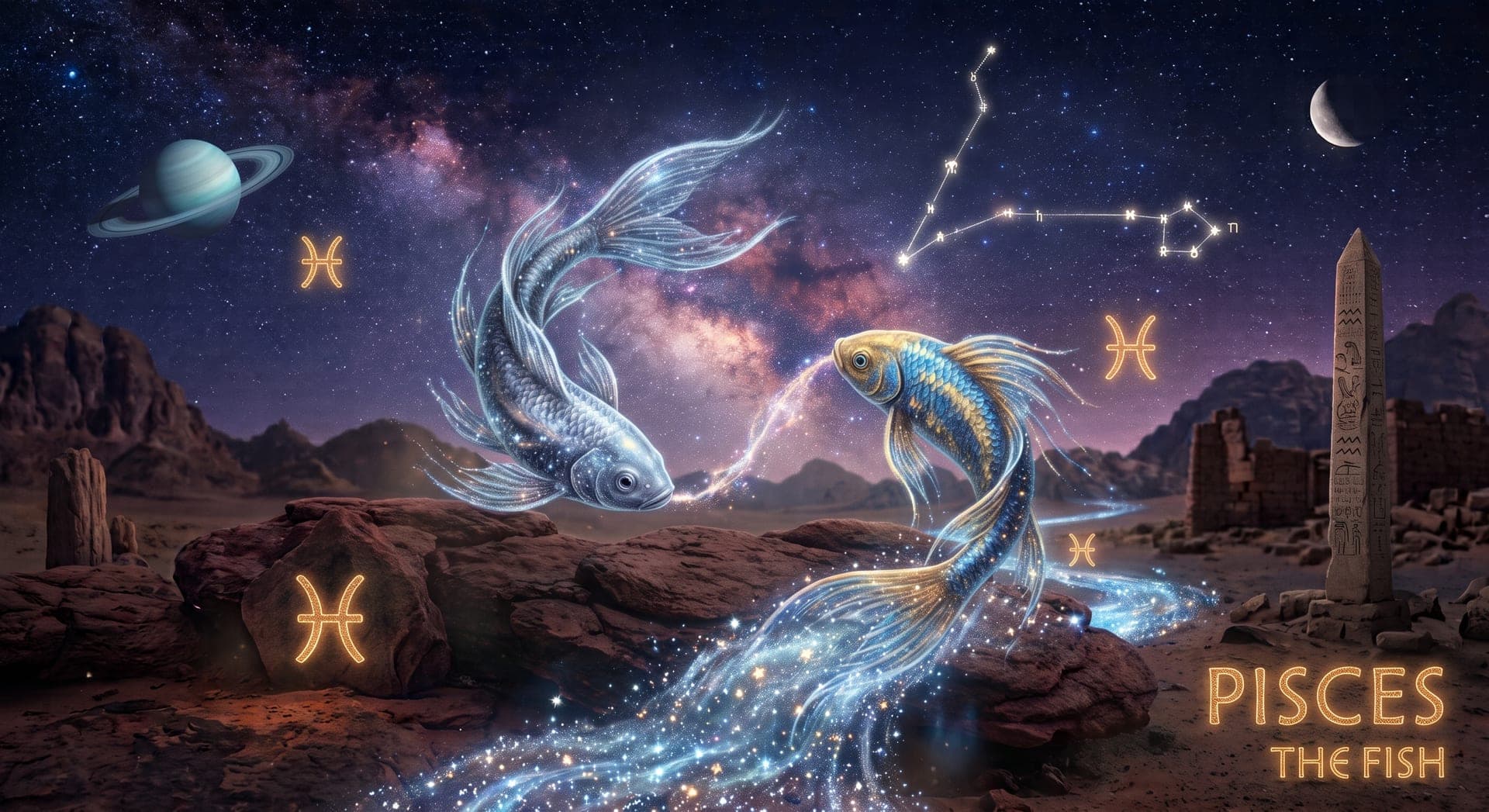
Born on March 1: Pisces ♓
Pisces, the twelfth and final sign of the zodiac, spans February 19 to March 20 and is symbolized by two fish swimming in opposite directions, tied together by a cord, representing the tension between fantasy and reality, or the conscious and subconscious mind. Ruled by Neptune, the planet of dreams, intuition, and illusion, Pisces is widely regarded as the most emotionally sensitive and imaginative sign of the zodiac. As a Water sign, Pisces navigates the world primarily through feeling and empathy, often absorbing the moods of people around it as though they were its own. Its Mutable modality reflects a deep adaptability and fluidity, comfortable going with the flow rather than forcing rigid plans. People born under this sign are often drawn to art, music, and other creative or spiritual pursuits where their vivid imagination can take shape. Compassionate to a fault, Pisces individuals are frequently the ones quietly caring for others, sometimes at the expense of their own boundaries and needs.
Personality Traits
Strengths
- Deeply empathetic and compassionate
- Highly imaginative and artistic
- Intuitive and perceptive
- Selfless and generous
- Adaptable to change
Weaknesses
- Prone to escapism or avoidance
- Overly trusting, can be taken advantage of
- Difficulty setting boundaries
- Tends toward melancholy
- Indecisive
Compatible Signs
Fun Facts
- Pisces' symbol of two fish bound together swimming in opposite directions comes from a Greek myth in which Aphrodite and Eros transformed into fish and tied themselves together to escape the monster Typhon.
- As the twelfth and final sign of the zodiac, Pisces is often described as embodying traits of all the preceding signs, a kind of culmination of the zodiac wheel.
- Neptune, Pisces' modern ruling planet, is the Roman god of the sea, discovered in 1846 and named for its blue, oceanic appearance.
- Notable Pisces include Albert Einstein, Rihanna, Steve Jobs, and Kurt Cobain.
- Classical astrology assigns Jupiter as Pisces' ruler, before Neptune's discovery in the 19th century gave the sign its modern ruling planet.
Born on March 1
- 1611
John Pell
English mathematician known for his work in number theory, after whom Pell's equation is named
- 1810
Frédéric Chopin
Polish composer and virtuoso pianist of the Romantic era
- 1812
Augustus Pugin
English architect who co-designed the Palace of Westminster and championed the Gothic Revival
- 1848
Augustus Saint-Gaudens
Irish-American sculptor known for public monuments and coin designs
- 1880
Lytton Strachey
English writer and critic best known for Eminent Victorians, a founding member of the Bloomsbury Group
- 1904
Glenn Miller
American bandleader and trombonist of the swing era
- 1910
David Niven
English actor who won an Academy Award for Separate Tables
- 1922
Yitzhak Rabin
Israeli military leader and Prime Minister, Nobel Peace Prize laureate
- 1927
Harry Belafonte
American singer and actor known for popularizing calypso music
- 1944
Roger Daltrey
English singer-songwriter, lead vocalist of the rock band The Who
- 1952
Martin O'Neill
Northern Irish footballer and manager who led Celtic and the Republic of Ireland national team
- 1973
Jack Davenport
English actor known for Pirates of the Caribbean and Coupling
- 1994
Justin Bieber
Canadian pop singer-songwriter

On This Day in History
- 1628
King Charles I of England issues a ship tax mandate, requiring coastal English towns to fund the Royal Navy without Parliament's consent.
The levy, historically raised only during wartime, became a flashpoint of Charles's increasingly autocratic rule in the years before he governed without Parliament altogether. Merchant John Hampden's later refusal to pay ship money led to a landmark court case testing the limits of royal prerogative. The dispute over unparliamentary taxation fed directly into the political tensions that erupted into the English Civil War.
- 1815
Napoleon Bonaparte escapes exile on Elba and lands in France, beginning his dramatic return to power known as the Hundred Days.
After less than a year in exile on the Mediterranean island of Elba, Napoleon slipped past British patrols and landed near Cannes with a small force. He marched north gathering support from soldiers sent to stop him, reclaiming the French throne without firing a shot. His comeback lasted just over three months before ending at Waterloo.
- 1815
Napoleon Bonaparte returns to France after escaping exile on the island of Elba, beginning the period known as the Hundred Days.
Landing near Cannes with a small force, Napoleon marched on Paris gathering support from troops sent to stop him, forcing King Louis XVIII to flee and reclaiming the French throne without firing a shot. His resurgence alarmed the European powers, who quickly reassembled their coalition. The episode ended in June at the Battle of Waterloo, where British and Prussian forces under Wellington and Blücher defeated him decisively.
- 1872
Yellowstone National Park is established, becoming the world's first officially designated national park.
Signed into law by President Ulysses S. Grant, the Yellowstone Act set aside over two million acres of Wyoming, Montana, and Idaho wilderness for public enjoyment rather than commercial development. It established the template for national park systems worldwide, protecting geysers, canyons, and wildlife that had drawn explorers' astonished reports for decades.
- 1872
Yellowstone National Park is established by the U.S. Congress, becoming the world's first national park.
Signed into law by President Ulysses S. Grant, the act set aside over two million acres of Wyoming, Montana, and Idaho wilderness for public enjoyment rather than private development or exploitation. The idea of preserving land in its natural state for future generations was novel at the time and became a global template, inspiring national park movements in countries around the world, including Britain's own national parks created in 1949.
- 1896
An Ethiopian army decisively defeats invading Italian forces at the Battle of Adwa, preserving Ethiopian independence.
At Adwa in northern Ethiopia, Emperor Menelik II's forces routed a numerically inferior but better-armed Italian invasion army, inflicting devastating casualties. The victory forced Italy to recognize Ethiopian sovereignty and made Ethiopia the only African nation to successfully repel European colonization during the era, a source of enduring pride across the continent.
- 1896
French physicist Henri Becquerel discovers radioactivity while studying uranium salts.
While investigating phosphorescent materials, Henri Becquerel discovered that uranium salts emitted penetrating rays even without exposure to sunlight, exposing an unshielded photographic plate stored in a drawer. This accidental finding launched the study of radioactivity, work later extended by Marie and Pierre Curie, and earned Becquerel a share of the 1903 Nobel Prize.
- 1896
French physicist Henri Becquerel discovers radioactive decay after uranium salts fog a photographic plate stored in the dark.
Investigating whether phosphorescent minerals emitted the newly discovered X-rays, Becquerel found that uranium compounds exposed a covered photographic plate even without sunlight, revealing a previously unknown form of spontaneous energy emission. The discovery opened the field of radioactivity and directly inspired the subsequent research of Marie and Pierre Curie, with all three sharing the 1903 Nobel Prize in Physics for the work.
- 1917
The Zimmermann Telegram, in which Germany proposed a military alliance with Mexico against the United States, is published in American newspapers.
British intelligence intercepted and decoded a secret German proposal urging Mexico to join an alliance against the United States in exchange for reclaiming Texas, New Mexico, and Arizona. Its publication inflamed American public opinion and became a key factor pushing the officially neutral United States toward entering World War I weeks later.
- 1919
The March 1st Movement begins in Korea, with mass demonstrations against Japanese colonial rule.
Korean activists publicly read a Declaration of Independence in Seoul, sparking nationwide peaceful demonstrations against Japanese colonial rule. Japanese authorities responded with brutal suppression, killing thousands, but the movement galvanized Korean nationalism and led to the formation of a provisional government in exile, shaping the independence movement for decades afterward.
- 1946
The Bank of England is nationalised, transferring its ownership from private shareholders to the British government.
The move was part of Clement Attlee's postwar Labour government's wider nationalisation programme, which also brought coal, rail, and steel industries under state control. The Bank had operated as a privately owned institution since its founding in 1694; nationalisation placed it formally under Treasury control, though it retained day-to-day operational management until further reforms in 1997 granted it independence over monetary policy.
- 1950
German-born physicist Klaus Fuchs is convicted at London's Old Bailey of passing atomic bomb secrets to the Soviet Union.
Fuchs had worked on both the American Manhattan Project and Britain's own atomic programme at Harwell, using his access to pass detailed weapons design information to Soviet handlers throughout the 1940s. His exposure was a major Cold War security scandal, revealing serious gaps in Western nuclear secrecy. Sentenced to 14 years, he was released in 1959 and emigrated to East Germany.
- 1953
Soviet leader Joseph Stalin suffers a stroke that leads to his death four days later.
Joseph Stalin collapsed at his dacha outside Moscow after a cerebrovascular stroke, reportedly left without prompt medical attention for hours as his fearful staff hesitated to intervene. He died four days later without regaining full consciousness, ending nearly three decades of totalitarian rule and triggering a scramble for power within the Soviet leadership.
- 1953
Soviet leader Joseph Stalin suffers a stroke at his dacha outside Moscow, dying four days later.
His collapse ended nearly three decades of totalitarian rule marked by forced collectivisation, mass purges, and wartime leadership against Nazi Germany. Stalin's death triggered a fierce succession struggle within the Soviet leadership, eventually won by Nikita Khrushchev, and ushered in a cautious political 'thaw' at home alongside a gradual, uneven easing of Cold War tensions with Britain and the West.
- 1954
The United States detonates Castle Bravo, a 15-megaton hydrogen bomb, on Bikini Atoll, its most powerful nuclear test ever.
The Castle Bravo test at Bikini Atoll yielded far more explosive force than scientists predicted, contaminating a wide area with radioactive fallout that sickened Marshall Islanders and the crew of a Japanese fishing boat. The unexpectedly massive blast became a landmark moment in public awareness of the dangers of thermonuclear weapons testing.
- 1961
Uganda becomes self-governing within the British Empire and holds its first general elections.
The vote allowed Ugandans to elect an internal administration responsible for domestic affairs, while Britain retained control of defence and foreign policy as a transitional step toward full sovereignty. This staged handover was a common pattern across Britain's African colonies during decolonisation. Uganda went on to achieve complete independence from Britain in October 1962.
- 1966
The Soviet probe Venera 3 crashes into Venus, becoming the first spacecraft to reach the surface of another planet.
Launched by the Soviet Union as part of its early planetary exploration program, Venera 3 was intended to gather data on Venus's atmosphere. A communications failure left the probe unable to transmit any findings, but its impact made it the first human-made object to reach the surface of another planet.
- 1981
Provisional IRA prisoner Bobby Sands begins a hunger strike in HM Prison Maze, Northern Ireland, demanding the restoration of political prisoner status.
The strike followed years of 'blanket' and 'dirty' protests against the British government's 1976 withdrawal of Special Category Status for paramilitary inmates. Sands died 66 days into his fast on 5 May 1981, having been elected a Member of Parliament for Fermanagh and South Tyrone during the strike. Nine more prisoners died in the same wave of hunger strikes, deepening the Troubles.
- 1992
Bosnia and Herzegovina declares independence from Yugoslavia, a step that soon led to a devastating war.
Following a referendum boycotted by most Bosnian Serbs, Bosnia and Herzegovina declared independence from the disintegrating Yugoslav federation. The declaration was quickly recognized internationally but rejected by Bosnian Serb leaders, triggering a brutal three-and-a-half-year war marked by ethnic cleansing and the Srebrenica massacre before the 1995 Dayton Accords ended the fighting.
- 2006
The English-language Wikipedia reaches one million articles, with the milestone entry covering Jordanhill railway station in Glasgow, Scotland.
The randomly reached milestone highlighted the encyclopedia's rapid growth through open, volunteer-driven collaboration only five years after its 2001 launch. That the landmark article happened to describe a modest Scottish suburban railway station became a memorable piece of internet trivia, illustrating how the site's coverage extended even to minor local infrastructure alongside major topics.