
What’s Observed on December 13
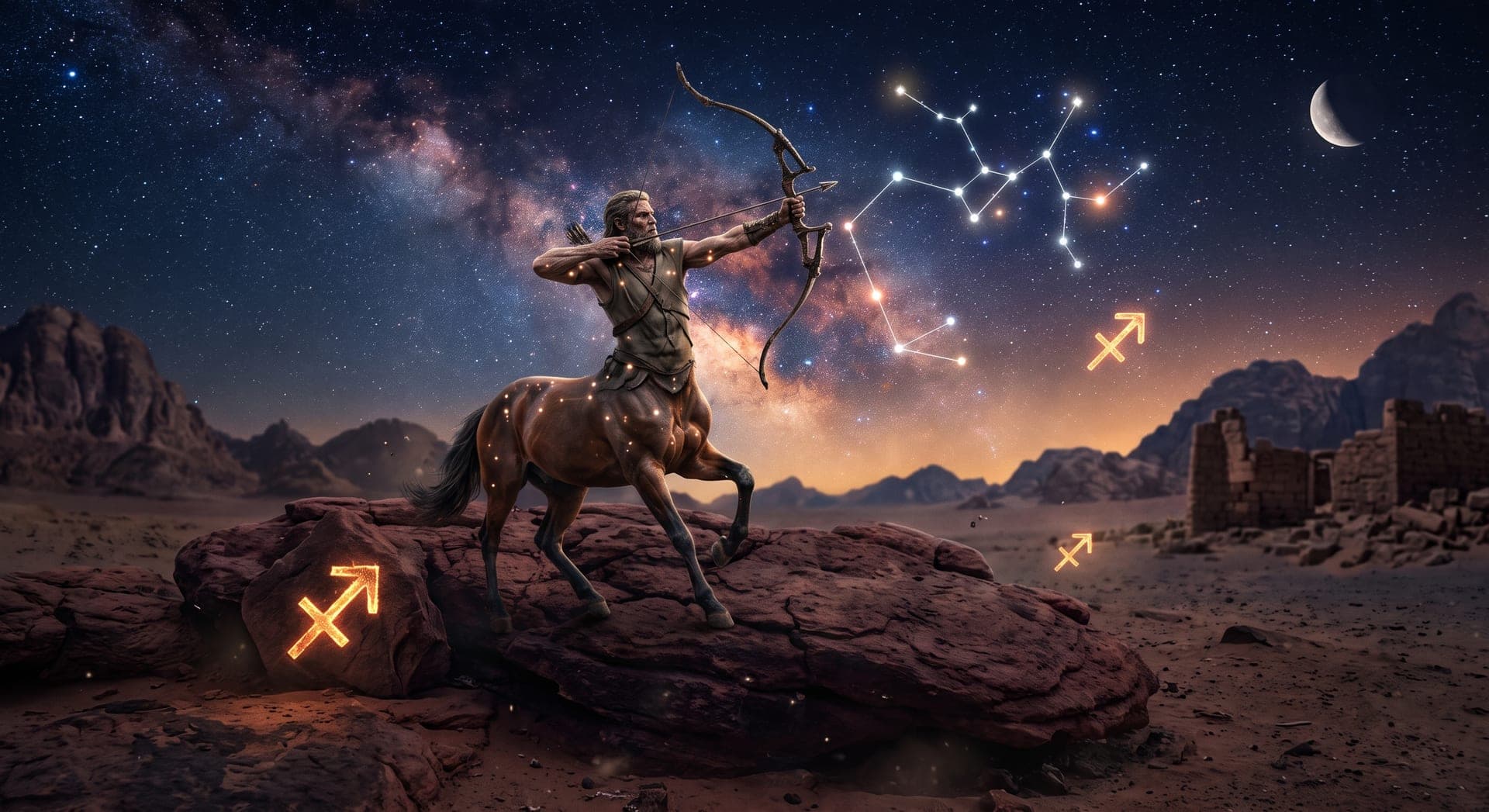
Born on December 13: Sagittarius ♐
Sagittarius, the ninth sign of the zodiac, spans November 22 to December 21 and is symbolized by the archer, typically depicted as a centaur drawing a bow, representing a restless pursuit of knowledge, adventure, and far-off horizons. Ruled by Jupiter, the largest planet in the solar system and a symbol of growth, luck, and abundance, Sagittarius is widely regarded as one of the most optimistic and freedom-loving signs of the zodiac. As a Fire sign, Sagittarius approaches life with enthusiasm and a genuine hunger for new experiences, whether through literal travel or intellectual and philosophical exploration. Its Mutable modality reflects a deep aversion to routine and confinement, always looking toward the next adventure rather than settling into fixed patterns. People born under this sign are often drawn to travel, higher education, philosophy, or any pursuit that broadens their horizons and understanding of the world. Sagittarius's honesty and optimism make it excellent company, though its blunt directness and restless need for freedom can sometimes come across as tactless or noncommittal to those seeking more stability.
Personality Traits
Strengths
- Adventurous and open to new experiences
- Optimistic and enthusiastic
- Honest and direct
- Philosophical and broad-minded
- Generous and good-humored
Weaknesses
- Tactlessly blunt
- Impatient with routine
- Prone to overpromising
- Restless and commitment-averse
- Careless with details
Compatible Signs
Fun Facts
- Sagittarius's symbol, a centaur drawing a bow and arrow, connects to the Greek myth of Chiron, a wise and scholarly centaur unlike the more unruly members of his kind.
- Jupiter, Sagittarius' ruling planet, is the largest planet in the solar system, reflecting the sign's association with expansion, abundance, and big-picture thinking.
- Sagittarius is one of two zodiac signs, along with Capricorn, represented by a hybrid creature combining human and animal features.
- Notable Sagittarians include Taylor Swift, Walt Disney, Winston Churchill, and Jimi Hendrix.
- Sagittarius season spans the lead-up to the winter solstice, a period historically associated with travel, feasting, and philosophical reflection in many cultures.
Born on December 13
- 1553
Henry IV of France
King of France who ended the French Wars of Religion
- 1585
William Drummond of Hawthornden
Scottish poet, the first Scot to gain a wide reputation as a writer of verse in English, remembered for his sonnets and for hosting Ben Jonson at Hawthornden Castle.
- 1640
Robert Plot
English naturalist and chemist who became the first keeper of Oxford's Ashmolean Museum and wrote pioneering natural histories of Oxfordshire and Staffordshire.
- 1797
Heinrich Heine
German poet and journalist
- 1816
Werner von Siemens
German industrialist who founded Siemens
- 1871
Emily Carr
Canadian painter and author
- 1906
Laurens van der Post
South African-born British soldier, explorer, and author whose writing on the Kalahari and Japan brought him wide fame, and who later became a close confidant of the British royal family.
- 1914
Alan Bullock
English historian best known for Hitler: A Study in Tyranny, one of the most influential biographies of the Nazi dictator, and for helping found St Catherine's College, Oxford.
- 1920
George P. Shultz
American statesman and U.S. Secretary of State
- 1925
Dick Van Dyke
American actor, singer, and dancer
- 1948
Lillian Board
British sprinter who won silver in the 400 metres at the 1968 Mexico City Olympics, one of Britain's most promising young athletes before her death from cancer at 22.
- 1967
Jamie Foxx
American actor, singer, and Academy Award winner
- 1989
Taylor Swift
American singer-songwriter
- 1995
Emma Corrin
English actor who rose to prominence playing Princess Diana in the fourth season of the Netflix series The Crown.

On This Day in History
- 1294
Pope Celestine V resigns the papacy, choosing to return to his previous life as an ascetic hermit.
Pope Celestine V's resignation, an almost unheard-of act at the time, came after he found himself overwhelmed by the political demands of the papacy, having been elected largely as a compromise candidate after a lengthy deadlock. His voluntary abdication established an important precedent later invoked when Pope Benedict XVI resigned in 2013, the first pope to do so in nearly six centuries.
- 1545
The Council of Trent convenes, becoming a central instrument of the Catholic Counter-Reformation.
The Council of Trent, convened across multiple sessions spanning nearly two decades, formulated the Catholic Church's definitive response to the Protestant Reformation, clarifying doctrine on issues including scripture, salvation, and the sacraments. Its decrees profoundly shaped Catholic theology, worship practices, and institutional discipline for centuries afterward, effectively defining Catholic identity into the modern era.
- 1577
Sir Francis Drake departs Plymouth, England on the voyage that would make him the first Englishman to circumnavigate the globe.
Francis Drake's departure from Plymouth marked the beginning of a voyage originally intended primarily as a raiding expedition against Spanish territories in South America, which unexpectedly evolved into a full circumnavigation of the globe. His return nearly three years later with substantial plundered treasure made him enormously wealthy and earned him a knighthood from Queen Elizabeth I.
- 1577
Sir Francis Drake sets sail from Plymouth, England, on the voyage that would make him the first English captain to circumnavigate the globe.
Commanding the Golden Hind and a small fleet, Drake's expedition combined exploration with plundering Spanish ships and settlements along the Pacific coast of the Americas. He returned to England in 1580 laden with treasure, and Queen Elizabeth I knighted him aboard his ship the following year.
- 1642
Dutch explorer Abel Tasman becomes the first recorded European to sight New Zealand.
Abel Tasman's sighting of New Zealand's coastline, during a voyage commissioned by the Dutch East India Company to explore the unknown southern Pacific, made him the first European known to have encountered the islands. His subsequent brief and violent encounter with Māori inhabitants led him to avoid landing, and Europeans would not return to New Zealand for over a century.
- 1642
Dutch navigator Abel Tasman becomes the first recorded European to sight New Zealand.
Sailing for the Dutch East India Company, Tasman spotted the western coast of the South Island during a voyage of exploration through the South Pacific. His hostile first encounter with Māori, in which several of his crew were killed, discouraged further European contact with New Zealand for more than a century.
- 1643
Parliamentarian forces defeat the Royalists at the Battle of Alton during the English Civil War.
Sir William Waller's Parliamentarian troops surprised the Royalist garrison in the Hampshire town, with fierce fighting spilling into the parish church, where the Royalist commander was killed near the altar. The victory helped secure central southern England for Parliament and blunted a Royalist advance toward London.
- 1758
The British transport ship Duke William sinks in a storm, killing more than 360 Acadian deportees aboard.
The vessel was carrying Acadians expelled from Île Saint-Jean, in present-day Prince Edward Island, to France as part of Britain's forced deportation of French-speaking settlers during the Seven Years' War. Community leader Noel Doiron reportedly urged the crew to save themselves in the lifeboats rather than the passengers; only a handful aboard survived.
- 1862
At the Battle of Fredericksburg, Confederate forces repulse repeated Union assaults, inflicting heavy casualties.
Confederate forces under General Robert E. Lee held strong defensive positions on high ground overlooking Fredericksburg, repelling repeated waves of Union assaults across open ground with devastating rifle and artillery fire. The lopsided battle, resulting in far heavier Union casualties, dealt a severe blow to Northern morale and confidence in the Union Army of the Potomac's leadership.
- 1862
Confederate General Robert E. Lee repulses repeated Union assaults at the Battle of Fredericksburg.
Union commander Ambrose Burnside ordered wave after wave of frontal attacks against entrenched Confederate positions on the high ground behind the Virginia town, suffering catastrophic casualties for no gain. The lopsided Confederate victory was among the most one-sided battles of the American Civil War.
- 1937
Japanese forces capture Nanjing, followed by the Nanking Massacre, killing hundreds of thousands of Chinese civilians and soldiers.
Following the fall of Nanjing, Japanese soldiers engaged in a systematic campaign of mass killing, rape, and looting against the city's civilian population and disarmed soldiers over a period of several weeks. The Nanking Massacre remains one of the most notorious atrocities of World War II, and its scale and legacy continue to affect Sino-Japanese relations to the present day.
- 1937
The Chinese city of Nanking falls to Japanese forces, and the Nanking Massacre begins.
Following weeks of fighting, Japanese troops entered the Chinese Nationalist capital and, over the following weeks, killed an estimated tens of thousands to over 300,000 civilians and disarmed soldiers, alongside widespread sexual violence. The massacre remains one of the most notorious atrocities of the Second Sino-Japanese War.
- 1939
The Battle of the River Plate takes place off Uruguay, the first major naval battle of World War II.
The Battle of the River Plate saw three British cruisers engage and severely damage the German pocket battleship Admiral Graf Spee, forcing it to seek refuge in neutral Uruguayan waters. Rather than face the British squadron he believed awaited him outside the harbor, the German captain scuttled his own ship and subsequently took his own life.
- 1939
Royal Navy cruisers engage the German pocket battleship Admiral Graf Spee off South America in the first major naval battle of the Second World War.
HMS Exeter, HMS Ajax, and HMNZS Achilles intercepted the German raider near the mouth of the River Plate, damaging it and forcing it to take refuge in neutral Montevideo. Days later, its captain scuttled the ship rather than face the British squadron again, handing Britain an early wartime propaganda victory.
- 1972
Apollo 17 astronauts conduct the mission's final moonwalk, the last time humans have set foot on the Moon.
Apollo 17's final moonwalk included astronauts collecting geological samples and conducting experiments before departing the lunar surface, an event that, more than five decades later, remains the most recent time humans have walked on the Moon. Eugene Cernan's final words before reentering the lunar module expressed hope that humanity would return, a hope not yet realized.
- 1974
Malta becomes a republic within the Commonwealth of Nations, replacing the British monarch as head of state.
A decade after gaining independence from Britain, the Mediterranean island nation completed its transition away from the Crown, with a president assuming the ceremonial head-of-state role formerly held by Queen Elizabeth II. Malta retained its Commonwealth membership and close ties with Britain, reflecting its long history as a British colony and strategic naval base.
- 1989
The Provisional IRA attacks a British Army checkpoint near Rosslea in Northern Ireland.
The attack was one of many carried out against security force positions along the border during the Troubles, the decades-long conflict over Northern Ireland's constitutional status. Border checkpoints like the one at Rosslea were frequent targets for republican paramilitaries throughout the period.
- 2003
Former Iraqi President Saddam Hussein is captured by U.S. forces in Operation Red Dawn.
Saddam Hussein was discovered hiding in a small underground bunker, known as a "spider hole," near his hometown of Tikrit, nearly nine months after the U.S.-led invasion of Iraq had toppled his government. His capture, achieved without resistance, marked a significant symbolic victory for coalition forces, though the ensuing insurgency in Iraq continued for years afterward.
- 2003
Former Iraqi President Saddam Hussein is captured by American forces near his hometown of Tikrit.
Hussein was found hiding in a small underground bunker, or 'spider hole,' on a farm after nearly nine months as a fugitive following the US-led invasion of Iraq. His capture, in Operation Red Dawn, was a major moment in the Iraq War, and he was later tried and executed by the new Iraqi government.
- 2007
European Union member states sign the Treaty of Lisbon, amending the bloc's constitutional foundations.
The Treaty of Lisbon amended the European Union's foundational treaties to streamline decision-making processes and strengthen the bloc's institutions, following the earlier rejection of a more comprehensive proposed EU constitution by French and Dutch voters. The treaty created the position of a permanent European Council president and expanded the powers of the European Parliament.