What’s Observed on November 7
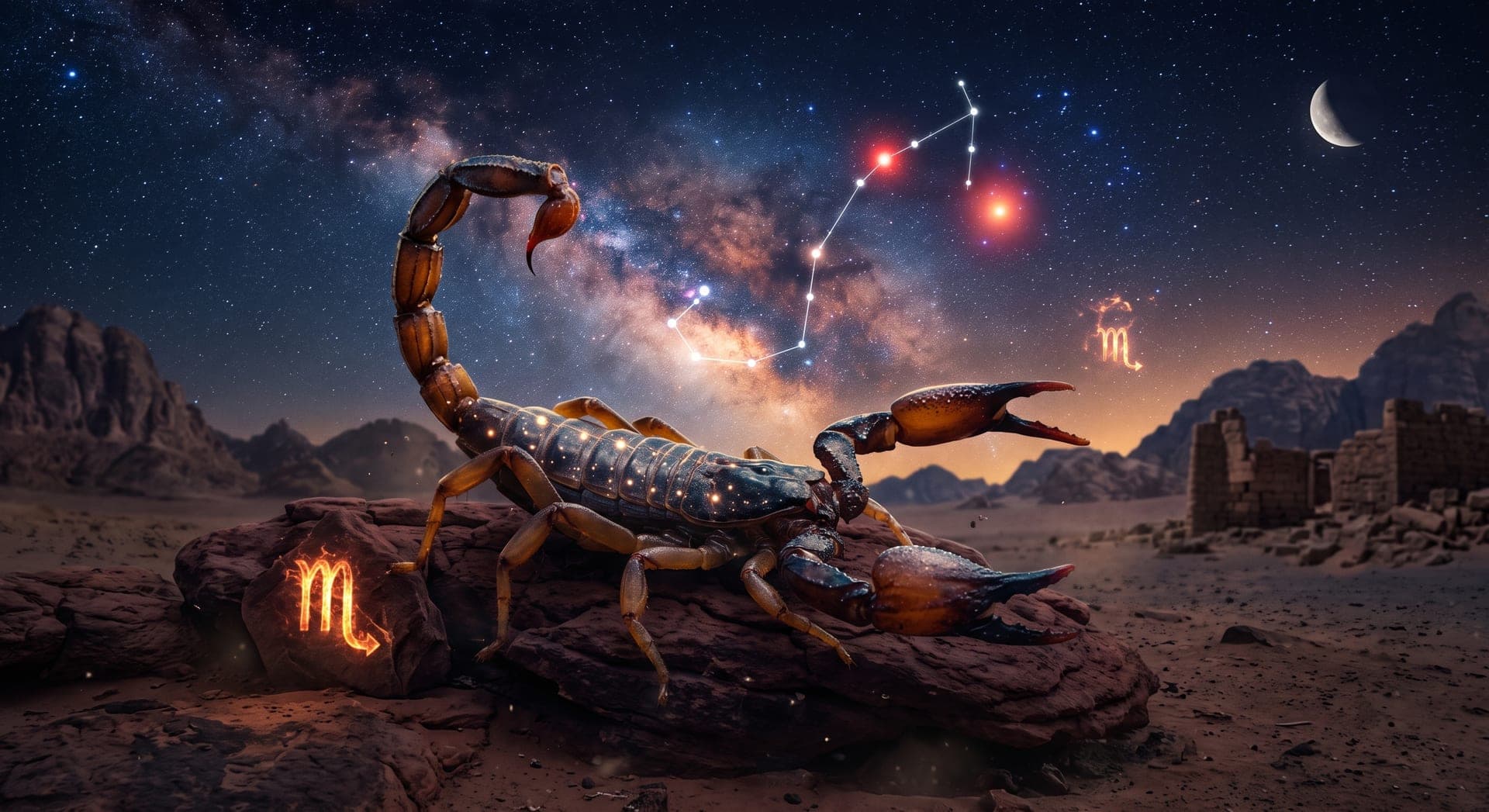
Born on November 7: Scorpio ♏
Scorpio, the eighth sign of the zodiac, spans October 23 to November 21 and is symbolized by the scorpion, a creature known for its defensive intensity and the sting it delivers when provoked. Traditionally ruled by Mars and, in modern astrology, by Pluto, the planet of transformation and the underworld, Scorpio carries a reputation as one of the most intense and emotionally powerful signs of the zodiac. As a Water sign, Scorpio experiences the world through deep, often hidden, emotion, guarding its inner life carefully while remaining acutely perceptive of others. Its Fixed modality gives Scorpio remarkable determination and resilience, able to endure hardship and pursue long-term goals with singular focus. People born under this sign are often drawn to work involving psychology, investigation, transformation, or anything requiring the ability to see beneath the surface. Scorpio's loyalty and passion run deep for those it trusts, but that same intensity can curdle into jealousy, suspicion, or an unwillingness to forgive when trust is broken.
Personality Traits
Strengths
- Deeply passionate and determined
- Fiercely loyal to those they trust
- Resourceful and strategic
- Highly perceptive
- Emotionally resilient
Weaknesses
- Prone to jealousy and possessiveness
- Secretive and guarded
- Can be vindictive when wronged
- Distrustful of others
- Prone to obsessiveness
Compatible Signs
Fun Facts
- Scorpio's scorpion symbol connects to the Greek myth of the scorpion sent by Gaia to kill the hunter Orion, with both later placed among the stars.
- Scorpio has two ruling planets: Mars in traditional astrology, and Pluto, discovered in 1930, in the modern system.
- Scorpio is often mistakenly grouped with the Fire signs due to its intensity, but it is actually a Water sign, driven by deep emotion rather than raw aggression.
- Notable Scorpios include Pablo Picasso, Marie Curie, Leonardo DiCaprio, and Hillary Clinton.
- Some astrological traditions associate Scorpio with a secondary, more elevated symbol, the eagle or phoenix, representing transformation and rebirth.
Born on November 7
- 1728
James Cook
English explorer, navigator and cartographer whose three Pacific voyages mapped vast stretches of the world's coastline, including New Zealand and the eastern coast of Australia.
- 1805
Thomas Brassey
English civil engineering contractor who built roughly one-twentieth of the world's railways during the Victorian era, from Britain to Canada, India and Argentina.
- 1867
Marie Curie
Polish-French physicist and chemist, Nobel Prize laureate in Physics and Chemistry
- 1879
Leon Trotsky
Russian revolutionary and founder of the Red Army
- 1903
Konrad Lorenz
Austrian zoologist and Nobel Prize laureate
- 1913
Albert Camus
French novelist and philosopher, Nobel Prize laureate in Literature
- 1920
Elaine Morgan
Welsh writer and television scriptwriter best known for popularizing the aquatic ape hypothesis of human evolution in her book The Descent of Woman.
- 1926
Joan Sutherland
Australian operatic soprano
- 1942
Jean Shrimpton
English model and actress who became one of the defining faces of 'Swinging London' and 1960s fashion.
- 1943
Joni Mitchell
Canadian singer-songwriter
- 1953
Lucinda Green
English equestrian and one of the most successful riders in the history of three-day eventing, winning the Badminton Horse Trials a record six times.
- 1963
John Barnes
Jamaican-born English footballer who starred as a winger for Liverpool and England before moving into football management and broadcasting.
- 1967
David Guetta
French DJ and record producer
- 1967
Sharleen Spiteri
Scottish singer-songwriter and actress best known as the lead vocalist of the rock band Texas.
- 1978
Rio Ferdinand
English footballer who won multiple Premier League titles as a centre-back for Manchester United and England before becoming a prominent television pundit.
On This Day in History
- 1492
A meteorite strikes a wheat field in Ensisheim, Alsace, becoming the oldest meteorite with a known date of impact.
The Ensisheim meteorite, a large stone that fell near an Alsatian village, was witnessed by numerous townspeople and preserved by local authorities almost immediately after impact. Its unusually well-documented fall date makes it a benchmark specimen in meteoritics, and fragments of the original stone remain preserved in a local museum and various scientific collections to this day.
- 1619
Elizabeth Stuart, daughter of King James I of England, is crowned Queen of Bohemia alongside her husband Frederick V.
Elizabeth's coronation followed her husband's controversial acceptance of the Bohemian crown from Protestant nobles rebelling against Habsburg rule, a decision that helped ignite the Thirty Years' War. Their reign proved brief; defeat at the Battle of White Mountain the following year forced the couple into exile, and Elizabeth became known as the 'Winter Queen'. She later became an important figure in Stuart family history as grandmother of Britain's future King George I.
- 1665
The London Gazette, the oldest surviving journal still in publication, is first printed.
Originally titled the Oxford Gazette because the royal court had relocated there to escape the Great Plague of London, the newspaper became the official journal of record for the British government upon returning to London. It has since published every official notice of the Crown, from royal proclamations to military honours, continuing uninterrupted publication for over 350 years.
- 1775
Lord Dunmore issues a proclamation offering freedom to enslaved people who join British forces, one of the first large-scale emancipation efforts in colonial North America.
Lord Dunmore, the last royal governor of Virginia, issued his proclamation offering freedom to enslaved people willing to fight for the British Crown against rebelling colonists, hoping to undermine the American war effort. Thousands of enslaved people fled to British lines in response, though many faced continued hardship, and the proclamation deepened Southern colonists' commitment to independence.
- 1811
The Battle of Tippecanoe is fought near present-day Indiana as part of Tecumseh's resistance to American expansion.
The battle occurred when U.S. forces under Governor William Henry Harrison attacked the Native American confederacy's headquarters while its leader Tecumseh was away seeking allies. Though tactically inconclusive, the battle destroyed the settlement and became politically significant decades later when Harrison's role helped propel him to the presidency under the campaign slogan referencing the battle.
- 1885
Canada's transcontinental railway is symbolically completed with the driving of the Last Spike in British Columbia.
The Canadian Pacific Railway's completion, marked by the ceremonial driving of the Last Spike at Craigellachie, fulfilled a promise made to British Columbia when it joined Confederation, linking the young nation's Pacific coast to its eastern provinces. The railway's completion was a monumental engineering achievement across difficult mountainous terrain and became a powerful symbol of Canadian unity.
- 1900
Canadian troops serving with British forces repel a Boer attack at the Battle of Leliefontein during the Second Boer War.
The engagement took place during the guerrilla phase of the war, as Canadian units serving alongside the British Army covered a retreating column against a Boer commando attack in the Transvaal. The stand became one of the most celebrated actions of Canadian participation in the war, and three of the defenders were awarded the Victoria Cross, the British Empire's highest gallantry honour.
- 1914
Japanese forces, supported by a British contingent, capture the German colonial port of Tsingtao in China after a two-month siege.
The joint operation, mounted under the Anglo-Japanese Alliance, saw a small British force of around 1,500 troops from Wales and India fight alongside a much larger Japanese army and navy against the German garrison at Kiaochow Bay. The Allied victory eliminated Germany's main naval base in East Asia and marked one of the few significant East Asian campaigns of the First World War.
- 1917
Bolshevik revolutionaries storm the Winter Palace in Petrograd, a pivotal moment of the October Revolution.
Bolshevik Red Guards and revolutionary sailors seized the Winter Palace in Petrograd with relatively little resistance, arresting members of the Provisional Government and effectively transferring power to Vladimir Lenin's Bolshevik party. The event, though less dramatic than later Soviet mythology portrayed it, marked the definitive beginning of Communist rule in Russia.
- 1917
British Empire forces capture Gaza from the Ottoman Empire, ending the Third Battle of Gaza.
After two earlier failed assaults on the city, General Edmund Allenby's Egyptian Expeditionary Force broke through Ottoman defenses in a combined infantry and cavalry offensive. The victory opened the way for the British advance into Palestine, leading within weeks to the capture of Jerusalem and marking a turning point in the Middle Eastern theatre of the First World War.
- 1917
Bolshevik revolutionaries storm the Winter Palace in Petrograd, seizing power in what became known as the October Revolution.
Led by Vladimir Lenin, the Bolsheviks overthrew Russia's Provisional Government with relatively little bloodshed, capitalizing on widespread war-weariness and political turmoil following the earlier February Revolution. The coup established Soviet Russia and set in motion a civil war and decades of Communist rule that would shape twentieth-century world history.
- 1940
The original Tacoma Narrows Bridge collapses in a windstorm just four months after opening.
The original Tacoma Narrows Bridge, nicknamed "Galloping Gertie" for its tendency to sway dramatically in wind, twisted apart and collapsed into Puget Sound during a moderate windstorm, an event famously captured on film. The dramatic failure, caused by aerodynamic instability, fundamentally changed how engineers approach bridge design and wind-related structural testing.
- 1940
The original Tacoma Narrows Bridge collapses in a windstorm just months after opening, becoming an iconic engineering case study.
Nicknamed 'Galloping Gertie' for the way its deck swayed and twisted even in modest winds, the suspension bridge in Washington state was destroyed when aerodynamic forces induced violent oscillations that tore it apart. No human lives were lost, but the dramatic, filmed collapse became one of the most studied failures in structural engineering history, reshaping how bridges are designed against wind-induced vibration.
- 1956
The UN General Assembly adopts a resolution calling on Britain, France and Israel to withdraw their forces from Egypt.
The vote came amid intense international pressure during the Suez Crisis, triggered by the Anglo-French-Israeli invasion following Egypt's nationalization of the Suez Canal. Facing this diplomatic isolation and a currency crisis engineered by the United States, Britain and France agreed to withdraw within weeks, a climbdown widely seen as accelerating the decline of British imperial power.
- 1967
Carl Stokes becomes the first African American elected mayor of a major U.S. city, Cleveland, Ohio.
Stokes' election as mayor of Cleveland made him the first African American to lead a major American city, a breakthrough achieved during a turbulent period of the civil rights movement. His victory, alongside that of Richard Hatcher in Gary, Indiana on the same day, marked a significant milestone in African American political representation nationwide.
- 1972
Richard Nixon is reelected President of the United States in one of the largest landslide victories in American history.
Nixon carried 49 of 50 states against Democratic challenger George McGovern, winning nearly 61 percent of the popular vote. The historic landslide came less than two years before Nixon would resign the presidency in disgrace over the Watergate scandal, a reversal of fortune that remains one of the starkest in American political history.
- 1989
Douglas Wilder is elected governor of Virginia, becoming the first elected African American governor in U.S. history.
Wilder's election as Virginia's governor made him the first African American elected to a state governorship in United States history, a landmark achievement in a former Confederate state. His narrow victory reflected significant social change in Southern politics and paved the way for greater African American representation in statewide elected office.
- 2000
The disputed U.S. presidential election eventually leads to the Supreme Court case Bush v. Gore.
The extraordinarily close 2000 presidential race between George W. Bush and Al Gore hinged on Florida's contested vote count, triggering weeks of recounts and legal battles that ultimately reached the U.S. Supreme Court. The Court's decision to halt further recounts effectively secured Bush's narrow victory, in one of the most controversial elections in American history.
- 2020
Joe Biden is projected as the winner of the U.S. presidential election, defeating incumbent Donald Trump.
News organizations projected Joe Biden as the winner of the 2020 presidential election several days after Election Day, once enough mail-in and absentee ballots had been counted in key battleground states. The extended vote-counting period, driven by pandemic-era voting changes, led to unprecedented legal challenges from the Trump campaign in the weeks that followed.
- 2020
Joe Biden is confirmed as the winner of the 2020 US presidential election, defeating incumbent Donald Trump.
Major media organizations declared Biden the president-elect after decisive results in key battleground states, capping a campaign held amid the COVID-19 pandemic. Trump refused to concede and made unsubstantiated claims of widespread fraud, setting off a prolonged legal and political dispute that culminated in the January 6, 2021 attack on the US Capitol.