What’s Observed on November 3
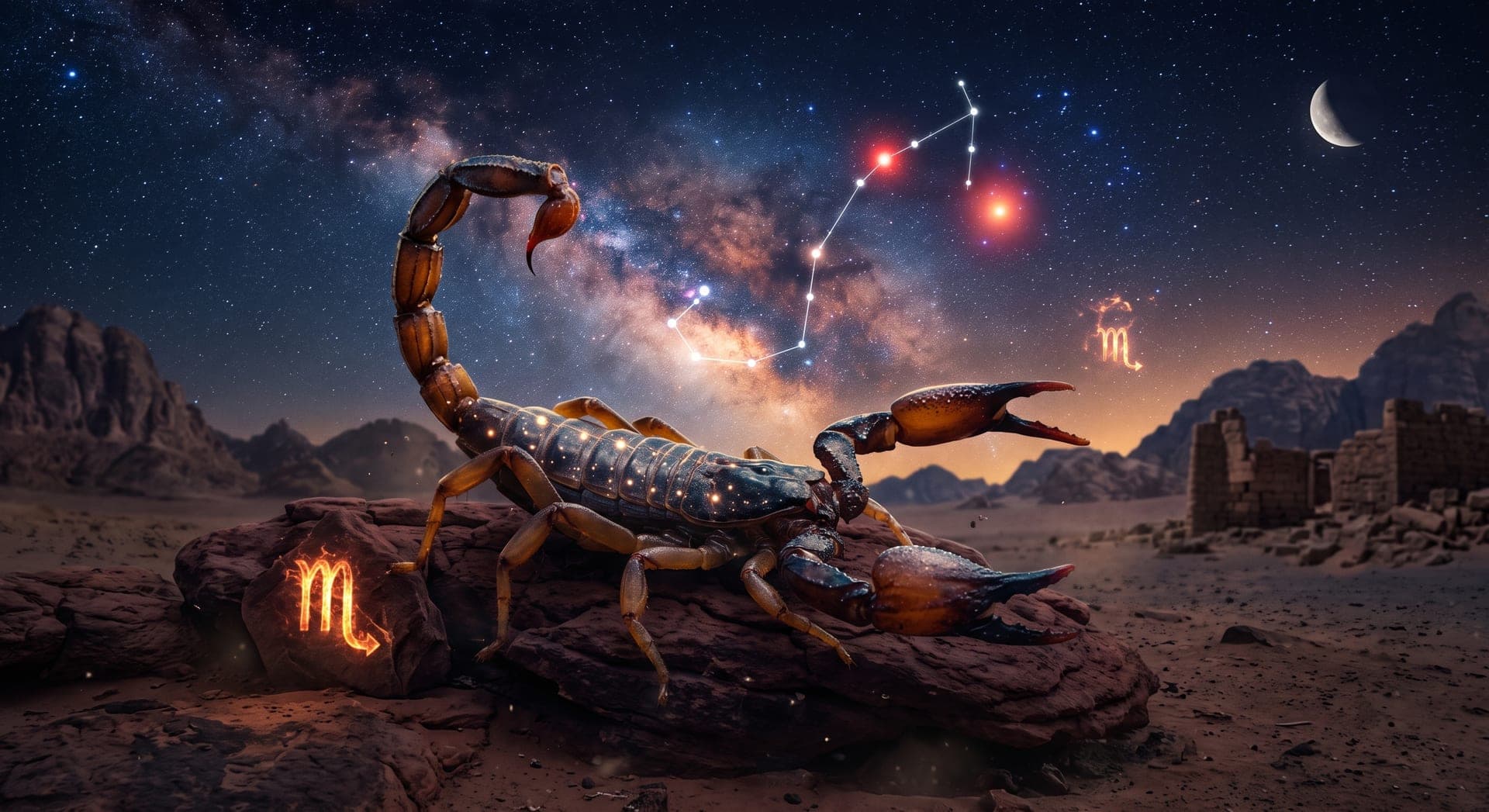
Born on November 3: Scorpio ♏
Scorpio, the eighth sign of the zodiac, spans October 23 to November 21 and is symbolized by the scorpion, a creature known for its defensive intensity and the sting it delivers when provoked. Traditionally ruled by Mars and, in modern astrology, by Pluto, the planet of transformation and the underworld, Scorpio carries a reputation as one of the most intense and emotionally powerful signs of the zodiac. As a Water sign, Scorpio experiences the world through deep, often hidden, emotion, guarding its inner life carefully while remaining acutely perceptive of others. Its Fixed modality gives Scorpio remarkable determination and resilience, able to endure hardship and pursue long-term goals with singular focus. People born under this sign are often drawn to work involving psychology, investigation, transformation, or anything requiring the ability to see beneath the surface. Scorpio's loyalty and passion run deep for those it trusts, but that same intensity can curdle into jealousy, suspicion, or an unwillingness to forgive when trust is broken.
Personality Traits
Strengths
- Deeply passionate and determined
- Fiercely loyal to those they trust
- Resourceful and strategic
- Highly perceptive
- Emotionally resilient
Weaknesses
- Prone to jealousy and possessiveness
- Secretive and guarded
- Can be vindictive when wronged
- Distrustful of others
- Prone to obsessiveness
Compatible Signs
Fun Facts
- Scorpio's scorpion symbol connects to the Greek myth of the scorpion sent by Gaia to kill the hunter Orion, with both later placed among the stars.
- Scorpio has two ruling planets: Mars in traditional astrology, and Pluto, discovered in 1930, in the modern system.
- Scorpio is often mistakenly grouped with the Fire signs due to its intensity, but it is actually a Water sign, driven by deep emotion rather than raw aggression.
- Notable Scorpios include Pablo Picasso, Marie Curie, Leonardo DiCaprio, and Hillary Clinton.
- Some astrological traditions associate Scorpio with a secondary, more elevated symbol, the eagle or phoenix, representing transformation and rebirth.
Born on November 3
- 1852
Emperor Meiji
Emperor of Japan during the Meiji Restoration
- 1900
Adolf Dassler
German businessman who founded Adidas
- 1901
Andre Malraux
French novelist and statesman
- 1903
Walker Evans
American documentary photographer
- 1918
Bob Feller
American Major League Baseball pitcher
- 1919
Ludovic Kennedy
Scottish journalist, broadcaster and author known for his BBC current affairs work and his campaigning against wrongful criminal convictions.
- 1921
Charles Bronson
American actor known for action films
- 1930
Brian Robinson
English road racing cyclist who became the first Briton to finish the Tour de France and to win a stage of the race.
- 1933
John Barry
English film composer celebrated for scoring eleven James Bond films as well as Born Free, Out of Africa and Dances with Wolves.
- 1933
Jeremy Brett
English actor best remembered for his definitive portrayal of Sherlock Holmes in the long-running Granada Television series.
- 1948
Lulu
Scottish singer and actress who found global fame with hits including 'Shout' and the Bond theme 'The Man with the Golden Gun'.
- 1949
Anna Wintour
English-American fashion journalist who has served as editor-in-chief of Vogue since 1988, becoming one of the most influential figures in fashion.
- 1963
Ian Wright
English footballer who starred as a prolific striker for Arsenal and England before becoming a leading television football pundit.
- 1973
Ben Fogle
English television presenter and adventurer known for wildlife and survival programmes including Ben Fogle: New Lives in the Wild.
On This Day in History
- 1333
The Arno River causes devastating floods in Florence, an event documented by chronicler Giovanni Villani.
Florentine chronicler Giovanni Villani provided one of the earliest detailed eyewitness accounts of a natural disaster in medieval European history, describing how the swollen Arno River tore through the city, destroying bridges and buildings. His meticulous record-keeping offers historians valuable insight into medieval urban life and the recurring vulnerability of Florence to catastrophic flooding, a pattern that would repeat centuries later in 1966.
- 1492
England and France sign a peace treaty easing diplomatic tensions between the two kingdoms.
The treaty between England and France came amid a broader realignment of European alliances as King Henry VII sought to stabilize his still-new Tudor dynasty following years of civil war. Peaceful relations with France allowed Henry to focus on consolidating domestic authority and building the financial and diplomatic foundations that his successors, including Henry VIII, would later inherit.
- 1492
The Peace of Etaples ends the brief war between England and France, with King Charles VIII agreeing to pay Henry VII a large indemnity.
Henry VII had invaded France in support of Brittany's independence, but after a short campaign both sides preferred a negotiated settlement. Under the treaty, France agreed to pay England a substantial pension and cease supporting pretenders to the English throne, most notably Perkin Warbeck. The peace secured much-needed funds for the still-new Tudor dynasty and avoided a costly prolonged war.
- 1493
Christopher Columbus sights the Caribbean island of Dominica during his second voyage.
Columbus encountered Dominica during his second voyage to the Americas, this time leading a much larger expedition intended to establish permanent Spanish settlements rather than simply explore. The island's rugged, mountainous terrain made European colonization difficult for centuries, and it remains one of the few Caribbean islands where the indigenous Kalinago people retained a continuous presence into the modern era.
- 1534
Parliament passes the Act of Supremacy, declaring King Henry VIII head of the Church of England instead of the Pope.
The Act of Supremacy formally established the monarch as the supreme head of the Church of England, completing Henry VIII's break from the authority of the Pope in Rome after his repeated requests to annul his first marriage were refused. This pivotal legislation reshaped English religious life for centuries and set the stage for ongoing conflict between Catholics and Protestants in Britain.
- 1534
The English Parliament passes the first Act of Supremacy, declaring King Henry VIII the supreme head of the Church of England.
The Act formally severed the English church from papal authority, a rupture triggered by Henry's desire to annul his marriage to Catherine of Aragon and marry Anne Boleyn. It laid the legal foundation for the English Reformation, reshaping religious and political life in England for centuries and setting the stage for decades of upheaval between Catholics and Protestants.
- 1783
The American Continental Army is formally disbanded following the conclusion of the Revolutionary War.
With the Revolutionary War concluded and the Treaty of Paris formally signed, the Continental Congress dissolved the army that had fought for American independence, retaining only a small force to guard remaining frontier posts and military stores. The disbanding reflected widespread American suspicion of standing armies, a sentiment that would shape U.S. military policy for generations afterward.
- 1898
France withdraws its forces from Fashoda in Sudan, ending a tense standoff with Britain over control of the Nile Valley.
The confrontation between French and British colonial expeditions at Fashoda had brought the two powers to the brink of war over rival ambitions in Africa. France's decision to back down confirmed British dominance over the Nile basin and Sudan, and the resolution paved the way for closer Anglo-French relations that culminated a few years later in the Entente Cordiale.
- 1903
Panama separates from Colombia with encouragement and support from the United States.
Panama's separation from Colombia was engineered with active American support, motivated by U.S. interest in securing rights to build a canal across the isthmus after Colombia's senate had rejected an earlier treaty proposal. Within weeks, the newly independent Panama granted the United States control over the Canal Zone, enabling construction of the Panama Canal.
- 1903
Panama declares independence from Colombia, backed by United States support for a canal treaty.
The secession, encouraged by the administration of President Theodore Roosevelt, followed Colombia's refusal to ratify a treaty granting the US rights to build a canal across the isthmus. Panama's new government swiftly signed the Hay-Bunau-Varilla Treaty, giving the United States control of the Panama Canal Zone, and the canal itself opened little more than a decade later, in 1914.
- 1918
Sailors of the German High Seas Fleet mutiny at Kiel, igniting the German Revolution that would topple the Kaiser.
Ordered into a final battle against the Royal Navy in the war's closing days, sailors refused to sail and seized control of the port, sparking uprisings that spread rapidly across Germany. Within days, workers' and soldiers' councils had formed nationwide, Kaiser Wilhelm II abdicated, and Germany was declared a republic, hastening the armistice that ended the First World War.
- 1946
Japan adopts its post-war constitution, renouncing war and establishing a parliamentary democracy under a symbolic emperor.
Drafted under the supervision of the Allied occupation following Japan's defeat in the Second World War, the new constitution replaced the Meiji-era charter, guaranteed civil liberties, and included the famous Article 9 renouncing the use of war as a means of settling international disputes. It came into effect the following May and has remained unamended ever since.
- 1957
The Soviet Union launches Sputnik 2, carrying the dog Laika into orbit.
Sputnik 2 followed the Soviet Union's groundbreaking Sputnik 1 launch by less than a month, this time carrying a living passenger, a stray dog named Laika, into orbit. Laika did not survive the flight, and her death drew significant international criticism regarding animal welfare, even as the mission demonstrated that living creatures could survive the stresses of spaceflight, paving the way for human spaceflight.
- 1957
The Soviet Union launches Sputnik 2, carrying the dog Laika into orbit as the first animal to circle the Earth.
Following the sensation of Sputnik 1 a month earlier, the Soviet space program rushed a second satellite into orbit to mark the anniversary of the Bolshevik Revolution. Laika, a stray dog from Moscow, survived the launch but died within hours from overheating, a fact concealed by Soviet authorities for decades. Her flight nonetheless proved that living creatures could survive rocket launch and orbital flight.
- 1964
Lyndon B. Johnson wins reelection as U.S. President with 61% of the popular vote and 44 states.
Johnson's landslide victory over conservative Republican Barry Goldwater came amid the aftermath of President Kennedy's assassination the previous year and reflected broad public support for Johnson's Great Society domestic agenda. The scale of the win gave Johnson a strong mandate to pursue sweeping civil rights and social welfare legislation during his subsequent term in office.
- 1978
The Commonwealth of Dominica becomes independent from the United Kingdom.
The small Caribbean island, a British colony since the 18th century, achieved full sovereignty after a period of internal self-government, becoming a republic within the Commonwealth rather than retaining the British monarch as head of state. Patrick John became its first prime minister, and the transition marked the end of nearly two centuries of direct British rule in the eastern Caribbean.
- 1992
Bill Clinton is elected President of the United States, defeating incumbent George H. W. Bush.
Running on a platform focused on the domestic economy amid a recession, Arkansas Governor Clinton ended twelve years of Republican control of the White House. Independent candidate Ross Perot's strong third-party showing split the vote, but Clinton secured a decisive Electoral College majority, becoming the first member of the Baby Boomer generation to win the presidency.
- 2014
One World Trade Center officially opens in New York City as a replacement for the original towers.
One World Trade Center rose at the site of the original Twin Towers destroyed in the September 11, 2001 attacks, becoming the tallest building in the Western Hemisphere upon completion. Its opening after years of construction and design debate represented a significant symbolic milestone in the ongoing rebuilding and revitalization of Lower Manhattan.
- 2014
One World Trade Center officially opens in Lower Manhattan, becoming the tallest building in the Western Hemisphere.
Built on the site of the original Twin Towers destroyed in the September 11, 2001 attacks, the skyscraper rises to a symbolic 1,776 feet, referencing the year of American independence. Its completion marked a major milestone in the long rebuilding of the World Trade Center site and stood as a statement of resilience after the terrorist attacks nearly thirteen years earlier.
- 2020
The U.S. presidential election is held between incumbent Donald Trump and Joe Biden.
The closely contested election between incumbent Donald Trump and challenger Joe Biden took place amid the ongoing COVID-19 pandemic, which prompted an unprecedented surge in mail-in and early voting across the country. The final results were not confirmed for several days after Election Day due to the scale of absentee ballot processing in key battleground states.