What’s Observed on November 27
Born on November 27: Sagittarius ♐
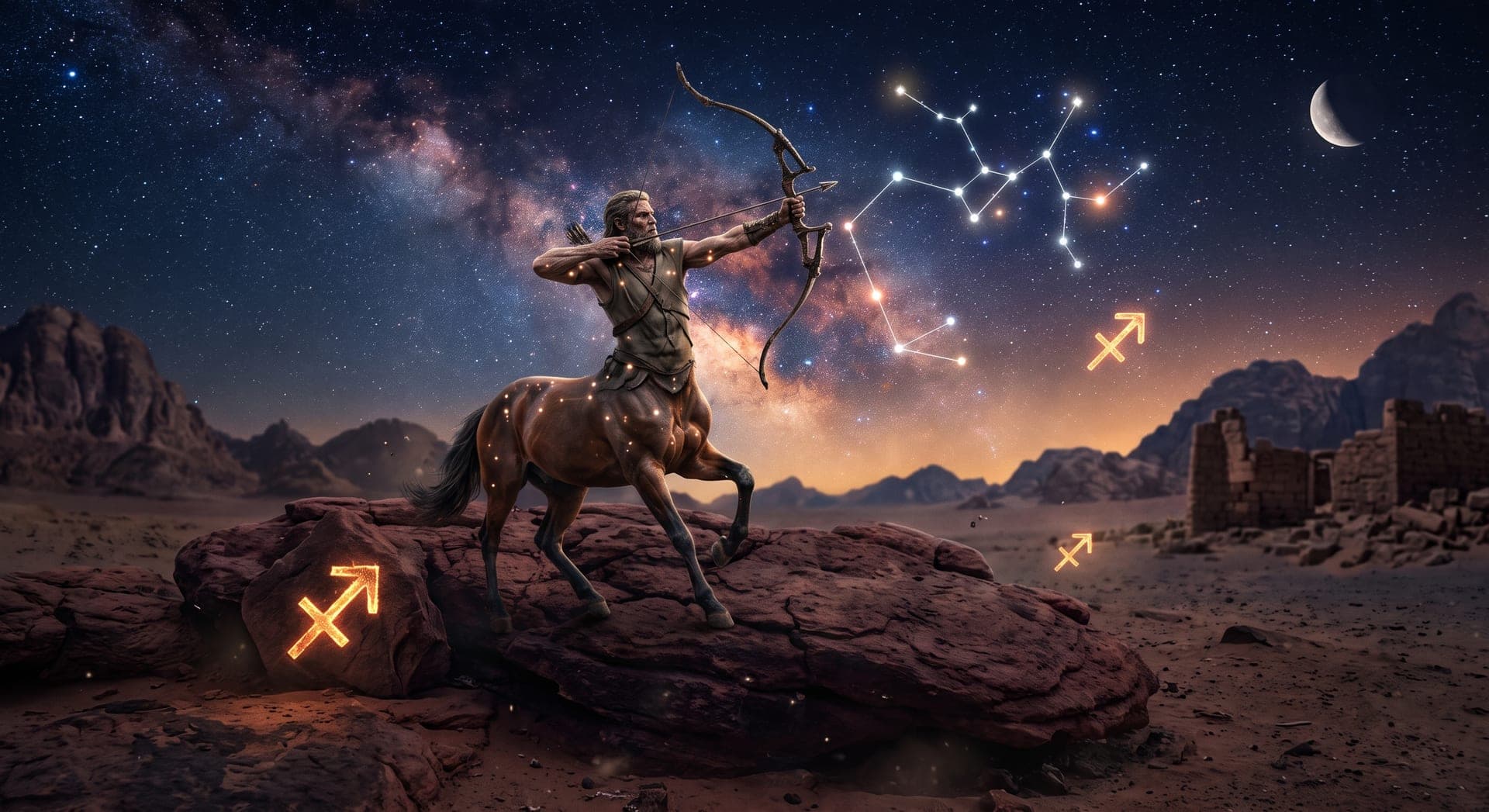
Sagittarius, the ninth sign of the zodiac, spans November 22 to December 21 and is symbolized by the archer, typically depicted as a centaur drawing a bow, representing a restless pursuit of knowledge, adventure, and far-off horizons. Ruled by Jupiter, the largest planet in the solar system and a symbol of growth, luck, and abundance, Sagittarius is widely regarded as one of the most optimistic and freedom-loving signs of the zodiac. As a Fire sign, Sagittarius approaches life with enthusiasm and a genuine hunger for new experiences, whether through literal travel or intellectual and philosophical exploration. Its Mutable modality reflects a deep aversion to routine and confinement, always looking toward the next adventure rather than settling into fixed patterns. People born under this sign are often drawn to travel, higher education, philosophy, or any pursuit that broadens their horizons and understanding of the world. Sagittarius's honesty and optimism make it excellent company, though its blunt directness and restless need for freedom can sometimes come across as tactless or noncommittal to those seeking more stability.
Personality Traits
Strengths
- Adventurous and open to new experiences
- Optimistic and enthusiastic
- Honest and direct
- Philosophical and broad-minded
- Generous and good-humored
Weaknesses
- Tactlessly blunt
- Impatient with routine
- Prone to overpromising
- Restless and commitment-averse
- Careless with details
Compatible Signs
Fun Facts
- Sagittarius's symbol, a centaur drawing a bow and arrow, connects to the Greek myth of Chiron, a wise and scholarly centaur unlike the more unruly members of his kind.
- Jupiter, Sagittarius' ruling planet, is the largest planet in the solar system, reflecting the sign's association with expansion, abundance, and big-picture thinking.
- Sagittarius is one of two zodiac signs, along with Capricorn, represented by a hybrid creature combining human and animal features.
- Notable Sagittarians include Taylor Swift, Walt Disney, Winston Churchill, and Jimi Hendrix.
- Sagittarius season spans the lead-up to the winter solstice, a period historically associated with travel, feasting, and philosophical reflection in many cultures.
Born on November 27
- 1640
Barbara Palmer, 1st Duchess of Cleveland
English noblewoman who became the most influential mistress of King Charles II, bearing five of his children and being created Duchess of Cleveland in her own right in 1670.
- 1701
Anders Celsius
Swedish astronomer who created the Celsius temperature scale
- 1809
Fanny Kemble
English actress from the celebrated Kemble theatrical dynasty who later became a prominent writer, publishing a journal documenting the brutality of slavery on her American husband's Georgia plantation that influenced abolitionist opinion.
- 1857
Charles Scott Sherrington
English neurophysiologist who coined the term 'synapse' and shared the 1932 Nobel Prize in Physiology or Medicine for discoveries about the functions of neurons, laying foundations for modern neuroscience.
- 1874
Chaim Weizmann
First President of Israel
- 1894
Konosuke Matsushita
Japanese businessman who founded Panasonic
- 1920
Buster Merryfield
English actor who, after an earlier career in banking, found late fame playing Uncle Albert in the hit BBC sitcom Only Fools and Horses.
- 1925
Ernie Wise
English comedian who, as one half of Morecambe and Wise with Eric Morecambe, formed one of the best-loved double acts in British comedy history, famed for their BBC television show and record-breaking Christmas specials.
- 1940
Bruce Lee
American-Chinese martial artist and actor
- 1942
Jimi Hendrix
American rock guitarist and singer-songwriter
- 1951
Kathryn Bigelow
American film director
- 1955
Bill Nye
American science educator and television host
- 1957
Caroline Kennedy
American lawyer, author, and diplomat
- 1961
Samantha Bond
English actress who played Miss Moneypenny in four James Bond films during the Pierce Brosnan era and later starred as Lady Rosamund Painswick in Downton Abbey.
- 1987
Lashana Lynch
English actress who became the first woman to carry the 007 designation on screen, playing agent Nomi in the James Bond film No Time to Die, alongside roles in Captain Marvel.
On This Day in History
- 1095
Pope Urban II delivers his famous sermon at the Council of Clermont, formally calling for the First Crusade.
Pope Urban II concluded the Council of Clermont with a fiery sermon urging European Christians to take up arms and march east to reclaim Jerusalem from Muslim control, promising spiritual rewards to those who joined the campaign. The enthusiastic response to his call launched the First Crusade, setting off nearly two centuries of recurring conflict between European and Middle Eastern powers.
- 1095
Pope Urban II declares the First Crusade at the Council of Clermont.
Urban's speech called on Western Christians to take up arms and reclaim Jerusalem and the Holy Land from Muslim rule, promising spiritual rewards to those who joined. Thousands answered the call, launching a series of military campaigns that would reshape relations between Europe and the Middle East for centuries.
- 1382
Sultan Al-Salih Hajji, the last Qalawunid ruler of Egypt, is deposed by the emir Barquq.
Sultan Al-Salih Hajji's brief and troubled reign over the Mamluk Sultanate of Egypt ended when the powerful emir Barquq deposed him, marking a significant transition in Mamluk leadership. Barquq's subsequent consolidation of power established a new ruling dynasty within the sultanate that would govern Egypt and the surrounding region for decades afterward.
- 1542
A group of palace women attempt to assassinate the Jiajing Emperor of Ming China, resulting in a brutal crackdown.
A group of palace women in Ming dynasty China, driven to desperation by the abusive treatment of the young Jiajing Emperor, attempted to strangle him in his sleep, an extraordinarily rare instance of a direct assassination attempt from within the imperial harem. Though the plot failed and its participants faced brutal execution, the episode revealed deep tensions within the imperial court.
- 1809
Theodore Hook perpetrates the elaborate "Berners Street hoax" in London, sending thousands of unwanted deliveries to a single address.
Theodore Hook orchestrated an elaborate practical joke by sending an overwhelming flood of deliveries, tradespeople, and even dignitaries to a single London address on a specific date, reportedly to win a wager with a friend. The resulting chaos became one of the most famous hoaxes in British history and a lasting example of elaborate Victorian-era pranksterism.
- 1809
Theodore Hook perpetrates the Berners Street hoax, one of history's most elaborate practical jokes, in London.
Hook had wagered he could make any house in London the most talked-about address within a week. He sent out thousands of letters requesting deliveries, tradesmen and dignitaries — including the Lord Mayor of London — to arrive at 54 Berners Street on the same day, and the resulting jam of furniture vans, coal carts and confused visitors clogged the street from dawn to dusk.
- 1835
James Pratt and John Smith are hanged in London, the last men executed for sodomy in England.
The two labourers were convicted after being observed through a keyhole in a London lodging house and sentenced to death under laws that had fallen out of common use but remained on the books. Public unease over their execution contributed to the gradual decline of capital punishment for the offence, though it was not formally abolished in England until 1861.
- 1895
Alfred Nobel signs his final will, establishing the fund that would create the Nobel Prizes.
Swedish industrialist and dynamite inventor Alfred Nobel signed his final will, directing that the bulk of his substantial fortune fund annual prizes recognizing outstanding achievements in physics, chemistry, medicine, literature, and peace. His decision surprised and initially troubled his family, but the resulting Nobel Prizes have since become among the most prestigious honors in their respective fields.
- 1895
Alfred Nobel signs his final will in Paris, setting aside his fortune to establish the Nobel Prizes.
The Swedish inventor of dynamite left the bulk of his estate to fund annual prizes in physics, chemistry, medicine, literature and peace. The will surprised his family and was legally contested before the first prizes were finally awarded in 1901, going on to become the world's most prestigious intellectual honours.
- 1896
Richard Strauss's tone poem Also sprach Zarathustra receives its premiere performance in Frankfurt.
Richard Strauss's ambitious orchestral tone poem, inspired by Friedrich Nietzsche's philosophical work of the same name, received its premiere performance in Frankfurt, showcasing the composer's mastery of large-scale orchestration. The piece later achieved widespread popular recognition decades afterward through its dramatic opening fanfare's prominent use in the film "2001: A Space Odyssey."
- 1924
The first Macy's Thanksgiving Day Parade is held in New York City.
The first Macy's Thanksgiving Day Parade featured department store employees, professional entertainers, and live animals borrowed from the Central Park Zoo marching through the streets of New York City to celebrate the holiday and the opening of the Christmas shopping season. The event proved immediately popular and has continued annually ever since, eventually adding its now-signature giant character balloons.
- 1940
The Royal Navy engages Italy's Regia Marina in the Mediterranean at the Battle of Cape Spartivento.
British warships escorting a convoy to Malta and Alexandria clashed with an Italian battle fleet south of Sardinia. Neither side inflicted decisive damage before the Italian ships withdrew toward their home ports, but the engagement affirmed British naval dominance in the Mediterranean during a critical phase of the North African campaign.
- 1944
An accidental explosion at the RAF Fauld underground ammunition depot in Staffordshire kills around 70 people.
The blast, at a disused gypsum mine used to store thousands of tonnes of bombs, was most likely triggered when a worker removed a detonator using a prohibited brass tool that struck a spark. The explosion detonated an estimated 3,500-4,000 tonnes of ordnance, remaining the largest ever to occur on British soil and destroying a nearby farm and reservoir.
- 1975
The Provisional IRA assassinates Ross McWhirter, co-founder of the Guinness Book of Records, at his London home.
McWhirter, who had recently offered a personal reward for information leading to the capture of IRA bombers active in England, was shot on his doorstep in Enfield days after making the offer public. His killing intensified public debate in Britain over the IRA's mainland bombing campaign during the mid-1970s Troubles.
- 1978
San Francisco Mayor George Moscone and Supervisor Harvey Milk are assassinated at City Hall.
San Francisco Mayor George Moscone and City Supervisor Harvey Milk, one of the first openly gay elected officials in the United States, were shot and killed at City Hall by former supervisor Dan White following his resignation and failed attempt to be reinstated. The assassinations and White's subsequently lenient sentencing sparked significant public outrage and riots.
- 1978
San Francisco Mayor George Moscone and City Supervisor Harvey Milk are assassinated by former supervisor Dan White.
White, who had recently resigned from the board of supervisors and been refused reinstatement, shot both men inside City Hall. Milk's death made him a martyr for the gay rights movement he had championed as one of the first openly gay elected officials in the United States, and the killings profoundly shaped San Francisco politics for years afterward.
- 1984
Britain and Spain sign the Brussels Agreement, agreeing to open talks on Gibraltar's future, including sovereignty.
The agreement, reached after Spain had reopened its border with Gibraltar earlier that year, committed both governments to negotiations covering sovereignty, cooperation and other disputed issues surrounding the British overseas territory. It set the framework for decades of subsequent, often contentious, diplomacy between London and Madrid over Gibraltar's status.
- 1989
An Avianca Boeing 727 explodes over Colombia after a bombing, killing all 107 people aboard and three on the ground.
An Avianca passenger jet exploded in mid-air over Colombia after a bomb planted by drug cartel operatives detonated, killing all 107 people aboard in an attack reportedly intended to assassinate a presidential candidate who was not actually on the flight. The bombing was one of numerous violent incidents during Colombia's intense conflict with drug trafficking organizations.
- 2001
The Hubble Space Telescope detects a hydrogen atmosphere around the extrasolar planet Osiris, the first atmosphere ever found on a planet outside the Solar System.
The discovery, made by observing the planet HD 209458 b, nicknamed Osiris, as it passed in front of its star, confirmed that exoplanets could be studied in detail by analyzing starlight filtered through their atmospheres. The technique opened a new era in the search for potentially habitable worlds beyond our Solar System.
- 2020
Iranian nuclear scientist Mohsen Fakhrizadeh is assassinated near Tehran.
Iranian nuclear scientist Mohsen Fakhrizadeh, considered a central figure in Iran's nuclear program, was killed in an ambush near Tehran using a remotely operated weapon, according to later reports. Iranian officials attributed the assassination to Israeli intelligence, and the killing significantly heightened regional tensions during an already fraught period.