
What’s Observed on November 10
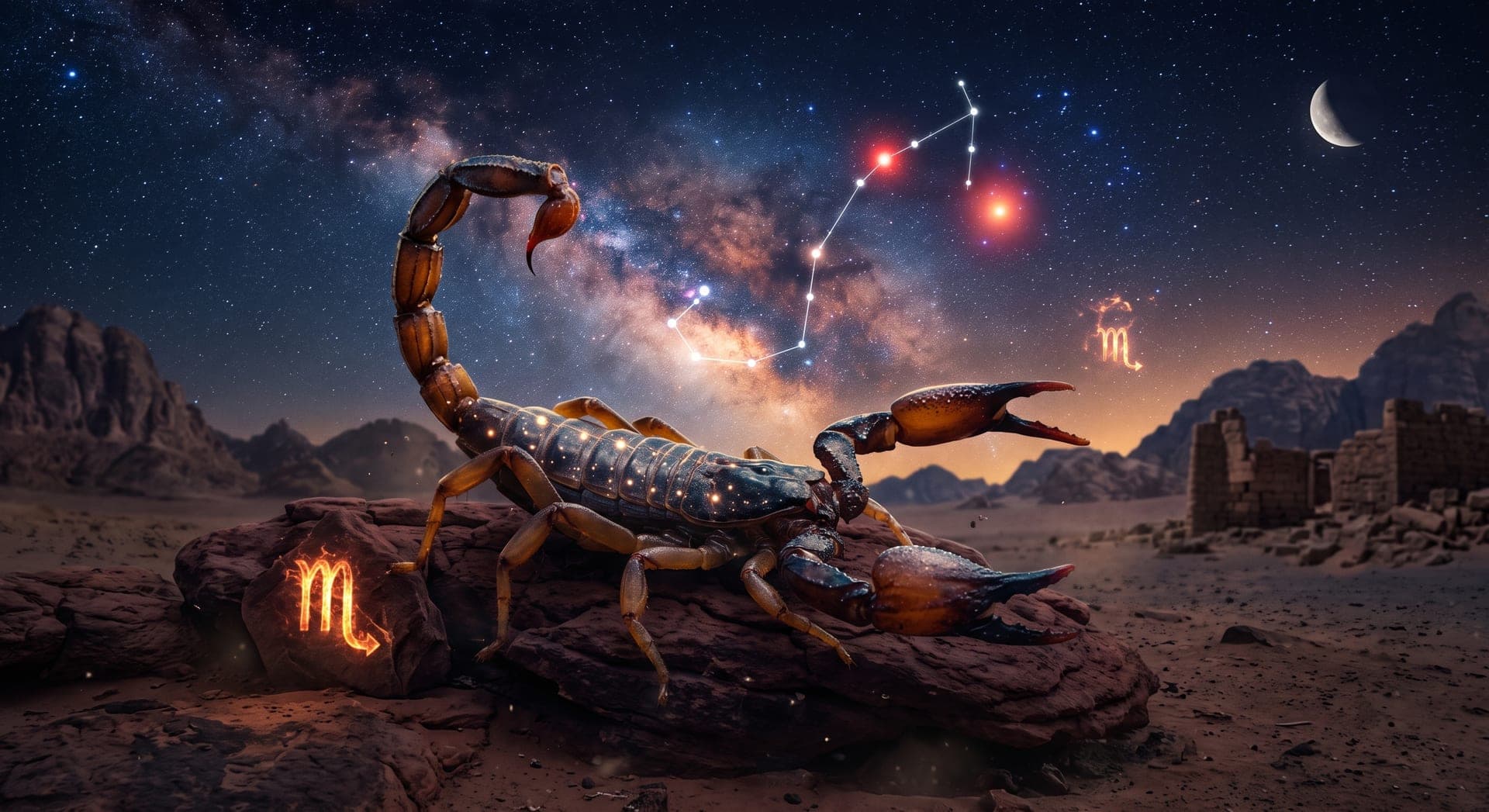
Born on November 10: Scorpio ♏
Scorpio, the eighth sign of the zodiac, spans October 23 to November 21 and is symbolized by the scorpion, a creature known for its defensive intensity and the sting it delivers when provoked. Traditionally ruled by Mars and, in modern astrology, by Pluto, the planet of transformation and the underworld, Scorpio carries a reputation as one of the most intense and emotionally powerful signs of the zodiac. As a Water sign, Scorpio experiences the world through deep, often hidden, emotion, guarding its inner life carefully while remaining acutely perceptive of others. Its Fixed modality gives Scorpio remarkable determination and resilience, able to endure hardship and pursue long-term goals with singular focus. People born under this sign are often drawn to work involving psychology, investigation, transformation, or anything requiring the ability to see beneath the surface. Scorpio's loyalty and passion run deep for those it trusts, but that same intensity can curdle into jealousy, suspicion, or an unwillingness to forgive when trust is broken.
Personality Traits
Strengths
- Deeply passionate and determined
- Fiercely loyal to those they trust
- Resourceful and strategic
- Highly perceptive
- Emotionally resilient
Weaknesses
- Prone to jealousy and possessiveness
- Secretive and guarded
- Can be vindictive when wronged
- Distrustful of others
- Prone to obsessiveness
Compatible Signs
Fun Facts
- Scorpio's scorpion symbol connects to the Greek myth of the scorpion sent by Gaia to kill the hunter Orion, with both later placed among the stars.
- Scorpio has two ruling planets: Mars in traditional astrology, and Pluto, discovered in 1930, in the modern system.
- Scorpio is often mistakenly grouped with the Fire signs due to its intensity, but it is actually a Water sign, driven by deep emotion rather than raw aggression.
- Notable Scorpios include Pablo Picasso, Marie Curie, Leonardo DiCaprio, and Hillary Clinton.
- Some astrological traditions associate Scorpio with a secondary, more elevated symbol, the eagle or phoenix, representing transformation and rebirth.
Born on November 10
- 1483
Martin Luther
German monk and leader of the Protestant Reformation
- 1697
William Hogarth
English painter, engraver, and satirist whose works like A Rake's Progress pioneered sequential narrative art and modern editorial cartooning.
- 1728
Oliver Goldsmith
Irish-English novelist, playwright, and poet best known for The Vicar of Wakefield and the comedy She Stoops to Conquer.
- 1735
Granville Sharp
English scholar and activist whose legal campaigning helped establish that slavery had no basis in English law, making him a founding figure of British abolitionism.
- 1759
Friedrich Schiller
German poet and playwright
- 1880
Jacob Epstein
American-born sculptor who became a naturalized British citizen and one of the most influential, and controversial, figures in early 20th-century British modernist art.
- 1919
Mikhail Kalashnikov
Russian engineer who designed the AK-47 rifle
- 1925
Richard Burton
Welsh actor renowned for his commanding stage and screen performances and celebrated theatrical voice, nominated for seven Academy Awards.
- 1944
Tim Rice
English lyricist who, with Andrew Lloyd Webber, wrote Jesus Christ Superstar and Evita, and later won an Oscar for The Lion King's 'Can You Feel the Love Tonight'.
- 1960
Neil Gaiman
English author of novels, comics, and screenplays including Sandman, Coraline, and American Gods, blending fantasy and mythology for wide acclaim.
- 1983
Miranda Lambert
American country music singer-songwriter
- 1989
Taron Egerton
Welsh actor who rose to fame in the Kingsman film series and won a Golden Globe for his portrayal of Elton John in Rocketman.

On This Day in History
- 1444
King Władysław III of Poland is defeated and killed by Ottoman forces at the Battle of Varna.
Wladyslaw III, king of both Poland and Hungary, died leading a crusading army against the expanding Ottoman Empire at the Battle of Varna, one of the last major European attempts to halt Ottoman advances into the Balkans. His death left both kingdoms without a monarch and dealt a significant setback to Christian resistance against Ottoman expansion for decades.
- 1674
The Netherlands formally cedes New Netherland to England through the Treaty of Westminster.
The Treaty of Westminster ended the third Anglo-Dutch War and formally transferred the colony of New Netherland, including the settlement of New Amsterdam, permanently to English control. The territory was subsequently renamed New York, and the treaty marked the definitive end of significant Dutch colonial ambitions in North America.
- 1674
The Third Anglo-Dutch War formally ends as the Dutch Republic cedes New Netherland to England under the Treaty of Westminster.
The peace confirmed English control of the colony seized a decade earlier and renamed New York, ending years of Anglo-Dutch rivalry over North American and Caribbean trade. In exchange, England ceded Suriname to the Dutch. The settlement secured England's hold on the eastern seaboard of North America for the following century.
- 1702
English colonists from the Province of Carolina, led by Governor James Moore, begin a siege of Spanish St. Augustine in Florida.
Fought as part of Queen Anne's War, the colonial extension of the War of the Spanish Succession, English forces burned the town but failed to take its fortified castillo before Spanish reinforcements arrived by sea. The costly, unsuccessful siege left Carolina deeply in debt and worsened English-Spanish tensions in the Southeast.
- 1775
The United States Marine Corps is founded at Tun Tavern in Philadelphia by Samuel Nicholas.
The Continental Congress authorized the raising of two battalions of Marines to serve as an infantry force capable of fighting both at sea and on land, establishing what would become one of the most storied branches of the U.S. military. The Marine Corps has celebrated this founding date as its official birthday ever since.
- 1775
The United States Marine Corps is founded at Tun Tavern in Philadelphia.
Established by a resolution of the Second Continental Congress, the Corps was created to serve as an amphibious infantry force aboard American warships during the Revolutionary War. Disbanded after the war, it was permanently reconstituted in 1798 and has since become one of the world's most storied military services.
- 1793
The French National Convention proclaims the Goddess of Reason, replacing Christian worship with a state-sponsored cult during the Revolution's most radical phase.
Staged with a ceremony at Notre-Dame Cathedral, the cult of Reason was part of a broader dechristianization campaign that closed churches and stripped clergy of official status. The movement proved short-lived, and within a year Robespierre had replaced it with his own Cult of the Supreme Being.
- 1847
The American packet ship Stephen Whitney wrecks in fog off West Calf Island, County Cork, killing 92 of the 110 aboard.
Bound from New York to Liverpool, the ship struck rocks off the Irish coast in dense fog, becoming one of the deadliest shipwrecks in Irish waters that century. The disaster, along with similar losses nearby, spurred calls for better lighthouse coverage along Ireland's treacherous southern coastline.
- 1871
Journalist Henry Morton Stanley locates missionary and explorer David Livingstone near Lake Tanganyika.
Journalist Henry Morton Stanley, sent by an American newspaper to locate the long-missing missionary explorer, found Livingstone gravely ill but alive near Lake Tanganyika, reportedly greeting him with the now-famous line "Dr. Livingstone, I presume?" Their meeting captivated the Victorian public and became one of the most celebrated episodes of the era's exploration journalism.
- 1871
Journalist Henry Morton Stanley locates the missing Scottish explorer David Livingstone in Ujiji, on the shore of Lake Tanganyika.
Livingstone had not been heard from for years while searching for the source of the Nile, prompting the New York Herald to fund Stanley's expedition to find him. Their meeting produced one of the most quoted lines in exploration history, apocryphally reported as 'Dr. Livingstone, I presume?', and turned both men into celebrities.
- 1898
White supremacist mobs violently seize control of the city government in Wilmington, North Carolina, killing an unknown number of Black residents.
The coup overthrew a legitimately elected biracial government, destroyed Black-owned businesses including the city's only Black newspaper, and forced thousands of Black residents to flee. It remains the only successful coup d'état in United States history and ushered in decades of Jim Crow disenfranchisement across the state.
- 1918
A coded message is received indicating that fighting in World War I will cease the following day.
As Allied and German negotiators finalized armistice terms in a railway carriage in France, word reached military commands that fighting would officially cease at 11 a.m. the following morning. The message set in motion the final hours of World War I, a conflict that had claimed millions of lives across more than four years of trench warfare.
- 1918
Western Union relays a coded message to the United States confirming that an armistice ending the First World War will take effect the next morning.
As negotiators finalised terms in a railway carriage at Compiègne, word raced across the Atlantic ahead of the formal signing. The agreement, reached in the early hours of 11 November, halted fighting on the Western Front at 11am that day, ending over four years of war in which Britain had lost roughly 880,000 lives.
- 1969
The children's television program Sesame Street debuts on National Educational Television in the United States.
Sesame Street debuted with an innovative format combining puppetry, animation, and live-action segments specifically designed using educational research to help prepare preschool-age children, particularly those from disadvantaged backgrounds, for school. The show's blend of entertainment and education proved enormously influential, becoming one of the longest-running and most internationally adapted children's programs ever produced.
- 1975
The 729-foot freighter SS Edmund Fitzgerald sinks in a storm on Lake Superior, killing its entire crew.
The SS Edmund Fitzgerald, a massive iron ore freighter, sank suddenly during a severe November storm on Lake Superior, taking its entire 29-member crew down with it without a distress call ever being received. The mysterious and sudden nature of the sinking captured public imagination and was later immortalized in Gordon Lightfoot's popular ballad about the disaster.
- 1975
The freighter SS Edmund Fitzgerald sinks in a severe storm on Lake Superior, killing all 29 crew members.
The 729-foot ore carrier went down suddenly near Whitefish Bay without a distress signal, in one of the worst disasters in Great Lakes shipping history. The wreck was later immortalised in Gordon Lightfoot's 1976 ballad 'The Wreck of the Edmund Fitzgerald,' cementing its place in American maritime folklore.
- 1983
Bill Gates and Microsoft publicly introduce the Windows operating system to the computing industry.
Bill Gates unveiled Windows as a graphical extension for the MS-DOS operating system, promising an easier, more visual way for users to interact with their computers using a mouse rather than typed commands. Though the initial version faced a lukewarm reception and delayed release, it laid crucial groundwork for Microsoft's eventual dominance of personal computing.
- 1989
Germans begin dismantling the Berlin Wall in the wake of East Germany's opened border.
Following the surprise opening of Berlin Wall checkpoints the previous night, jubilant Germans on both sides began physically chipping away at the concrete barrier with hammers and tools, in scenes broadcast around the world. The wall's dismantling, both symbolic and literal, became one of the most iconic images marking the end of Communist rule in Eastern Europe.
- 1989
Crowds of Germans begin physically tearing down sections of the Berlin Wall, a day after East Germany opened its checkpoints.
Following the surprise announcement that East Germans could freely cross into the West, jubilant citizens on both sides took hammers and chisels to the barrier that had divided the city for 28 years. The wall's fall became the defining image of the end of the Cold War and paved the way for German reunification.
- 2020
Armenia and Azerbaijan sign a Russian-brokered ceasefire ending the Second Nagorno-Karabakh War.
The ceasefire, brokered by Russia after intense fighting over the disputed Nagorno-Karabakh region, required Armenia to cede significant territory it had controlled since the early 1990s and allowed the deployment of Russian peacekeeping forces along the new line of contact. The agreement ended six weeks of intense conflict but left underlying tensions between the two nations largely unresolved.