What’s Observed on October 7
Born on October 7: Libra ♎
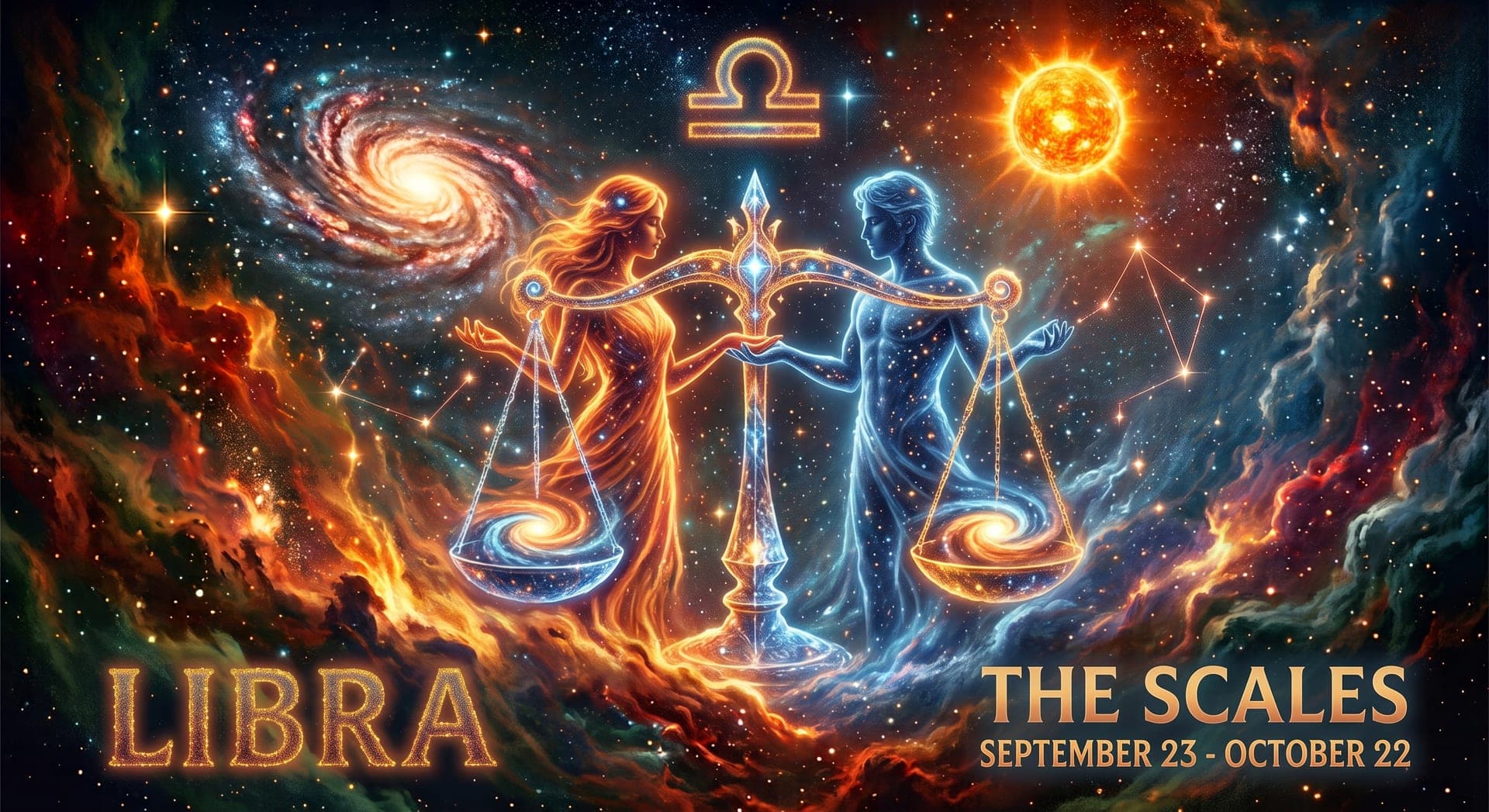
Libra, the seventh sign of the zodiac, spans September 23 to October 22 and is symbolized by the scales, the only zodiac symbol representing an inanimate object rather than a living creature, reflecting the sign's deep concern with balance, fairness, and justice. Ruled by Venus, the planet of love and beauty, Libra shares Taurus's appreciation for aesthetics and pleasure but channels it primarily through relationships, partnership, and social harmony. As an Air sign, Libra approaches the world intellectually and socially, valuing thoughtful conversation and diplomatic problem-solving over confrontation. Its Cardinal modality places it at the very start of autumn, beginning right at the equinox when day and night briefly achieve perfect balance. People born under this sign are often natural mediators, drawn to fairness and equilibrium in their relationships and surroundings, sometimes to the point of struggling to make decisions that might upset that balance. Libra's charm, diplomacy, and genuine desire to see all sides of an issue make it a valued friend and partner, even as its conflict-avoidance can occasionally leave real problems unresolved.
Personality Traits
Strengths
- Strong sense of fairness and justice
- Diplomatic peacemaker
- Charming and sociable
- Appreciates beauty and harmony
- Excellent at seeing multiple perspectives
Weaknesses
- Notoriously indecisive
- Conflict-avoidant to a fault
- Can be superficial
- People-pleasing tendencies
- Struggles with confrontation
Compatible Signs
Fun Facts
- Libra is the only zodiac sign represented by an inanimate object, the scales, rather than an animal or person.
- Libra's scales symbolize balance and justice, echoing the sign's association with fairness, harmony, and diplomacy.
- Venus, Libra's ruling planet, gives the sign its love of beauty, art, and romantic partnership, similar to Taurus but expressed through relationships rather than material comfort.
- As a Cardinal sign, Libra initiates autumn, beginning at the September equinox, when day and night are of equal length, fitting for a sign obsessed with balance.
- Notable Libras include Mahatma Gandhi, Kim Kardashian, John Lennon, and Will Smith.
Born on October 7
- 1573
William Laud
English Archbishop of Canterbury under Charles I whose rigid enforcement of religious conformity provoked deep opposition and contributed to the outbreak of the English Civil War; he was executed by Parliament in 1645.
- 1885
Niels Bohr
Danish physicist and Nobel laureate known for atomic structure theory
- 1917
June Allyson
American actress
- 1928
Lorna Wing
English psychiatrist whose research on autism spectrum conditions, including her work introducing Asperger syndrome to English-language medicine, reshaped clinical understanding of autism.
- 1931
Desmond Tutu
South African archbishop and anti-apartheid activist
- 1939
Harry Kroto
English chemist who shared the 1996 Nobel Prize in Chemistry for the discovery of buckminsterfullerene, the first known fullerene molecule.
- 1951
John Mellencamp
American singer-songwriter
- 1952
Vladimir Putin
President of Russia
- 1955
Yo-Yo Ma
American cellist
- 1957
Jayne Torvill
English figure skater who, with partner Christopher Dean, won Olympic gold in ice dance at the 1984 Winter Olympics with their celebrated Bolero routine.
- 1959
Simon Cowell
English television producer and music executive who created and judged talent shows including The X Factor, Britain's Got Talent and American Idol.
- 1968
Thom Yorke
English singer-songwriter and frontman of the rock band Radiohead, known for his distinctive falsetto and the band's genre-defying albums.
- 1996
Lewis Capaldi
Scottish singer-songwriter whose ballad "Someone You Loved" became one of the best-selling singles of the 2010s in the UK.
- 1998
Trent Alexander-Arnold
English footballer who came through Liverpool's youth academy to become a mainstay at right-back for club and country, renowned for his passing and crossing ability.
On This Day in History
- 1477
Uppsala University receives its corporate rights and is inaugurated in Sweden, becoming Scandinavia's oldest university.
Founded through papal authorization to serve Sweden's growing need for educated clergy and civil servants, Uppsala University became Scandinavia's first institution of higher learning, later producing renowned scholars including botanist Carl Linnaeus and continuing to rank among the region's most prestigious universities today.
- 1513
Spanish forces defeat Venice during the War of the League of Cambrai at the Battle of La Motta.
During the complex, multi-sided War of the League of Cambrai, Spanish forces allied with the Holy Roman Empire decisively defeated a Venetian army at La Motta, weakening Venice's regional influence as competing European powers vied for control over Italian territories during the broader Italian Wars.
- 1571
The Battle of Lepanto occurs, marking the Ottoman Navy's first major defeat at the hands of a Christian coalition fleet.
A massive Christian coalition fleet representing Spain, Venice, the Papal States, and other Italian states decisively defeated the Ottoman navy near the Gulf of Corinth, ending the long-standing perception of Ottoman naval invincibility. Though the victory did not permanently cripple Ottoman power, it provided a significant morale boost for Christian Europe and halted immediate Ottoman naval expansion westward.
- 1571
A fleet of Christian states from the Holy League decisively defeated the Ottoman navy at the Battle of Lepanto.
Fought in the Gulf of Patras off western Greece, the battle was the largest naval engagement between galley fleets in Western history and inflicted the Ottoman Empire's first major defeat, ending its naval dominance in the Mediterranean. Though the Ottomans rebuilt their fleet within a year, the victory boosted European morale and became a celebrated symbol of Christian resistance to Ottoman expansion.
- 1763
King George III issues the Royal Proclamation restricting colonial settlement west of the Allegheny Mountains.
Following Britain's victory in the French and Indian War, King George III's proclamation established a boundary line intended to reserve western territories for Native American nations and reduce costly frontier conflicts, a restriction that deeply angered American colonists eager to expand westward and became one of the grievances contributing to growing revolutionary sentiment.
- 1763
King George III issued the Royal Proclamation of 1763, establishing British administration of newly acquired North American territory and restricting colonial settlement of Indigenous lands west of the Appalachians.
Issued after Britain's victory in the Seven Years' War secured vast new territory from France, the proclamation aimed to stabilise relations with Indigenous nations and organise the governance of Quebec, East and West Florida, and Grenada. Colonial resentment at the restriction on westward expansion became one of the grievances that fed into the American Revolution, and the proclamation remains a foundational legal document in Canadian Indigenous rights law.
- 1777
American forces win the Second Battle of Saratoga, leading to British General Burgoyne's eventual surrender.
American forces decisively defeated British troops under General John Burgoyne near Saratoga, New York, a pivotal victory that convinced France to formally enter the war as an American ally, providing crucial military and financial support that proved essential to the eventual American victory in the Revolutionary War.
- 1777
American forces decisively defeated British troops under General John Burgoyne at the Second Battle of Saratoga.
The defeat forced Burgoyne's entire army to surrender ten days later, a catastrophic blow to British strategy that had aimed to sever New England from the rest of the rebellious colonies. The victory is widely regarded as the turning point of the American Revolutionary War, as it persuaded France to enter the conflict as an American ally against Britain.
- 1780
American militia defeat British-led Loyalist forces at the Battle of Kings Mountain in South Carolina.
American frontier militia, angered by a British officer's threats against their communities, pursued and decisively defeated a Loyalist force at Kings Mountain, a battle notable for having virtually no British regular troops present and demonstrating the significant role irregular colonial militia played in the Revolutionary War's southern campaign.
- 1800
French privateer Robert Surcouf captured the British East Indiaman Kent in a bold single-ship action in the Bay of Bengal.
Commanding the small privateer Confiance with a much smaller crew, Surcouf boarded and seized the far larger and better-armed British vessel, killing its captain in the fighting. The daring capture made Surcouf one of the most celebrated privateers of the Napoleonic Wars and a lasting thorn in British shipping interests in the Indian Ocean.
- 1826
The Granite Railway begins operations near Boston, the first chartered railway in the United States.
The Granite Railway, built primarily to transport granite blocks used in constructing the Bunker Hill Monument, began operations near Quincy, Massachusetts, using horse-drawn cars on iron rails, representing one of the earliest commercial railway operations in the United States and an important precursor to the nation's later extensive railroad network.
- 1868
Cornell University holds its opening ceremonies with a then-record enrollment of 412 students.
Cornell University opened with an unprecedented enrollment of 412 students, an extraordinarily large class for the era, reflecting founder Ezra Cornell's vision of an institution where "any person can find instruction in any study," a philosophy that made the university notably more accessible and less restrictive than many contemporary elite institutions.
- 1913
Ford Motor Company introduces the first moving vehicle assembly line, revolutionizing manufacturing.
Henry Ford's introduction of the continuously moving assembly line at his Highland Park factory dramatically reduced the time required to build a Model T automobile, from over twelve hours to roughly ninety minutes, a manufacturing innovation that slashed production costs and helped make automobile ownership accessible to average American families for the first time.
- 1949
The German Democratic Republic, known as East Germany, was formally established in the Soviet occupation zone.
Created five months after the Federal Republic of Germany was founded in the Western occupation zones, East Germany became a one-party socialist state closely aligned with the Soviet Union. The division of Germany into two rival states became one of the defining features of the Cold War until reunification in 1990.
- 1950
Mother Teresa founded the Missionaries of Charity, a Catholic religious congregation dedicated to caring for the poor and dying, in Calcutta.
Beginning with just over a dozen members, the order grew over subsequent decades into a global network of hundreds of missions serving the destitute, sick, orphaned and dying in dozens of countries. Mother Teresa's work brought her international recognition, including the 1979 Nobel Peace Prize, and made the Missionaries of Charity one of the best-known Catholic charitable orders in the world.
- 1959
The Soviet probe Luna 3 transmitted the first-ever photographs of the far side of the Moon.
Launched as part of the Soviet Union's early lunar exploration program, Luna 3 revealed a hemisphere of the Moon never before seen from Earth, showing a landscape with far fewer of the dark volcanic plains that dominate the near side. The images were a major propaganda and scientific triumph for the USSR during the early Space Race.
- 1987
Sikh nationalist leaders declared the independence of Khalistan, a proposed sovereign Sikh state in the Punjab region.
The declaration came amid an intense separatist insurgency in Indian Punjab following the Indian Army's 1984 storming of the Golden Temple and the assassination of Prime Minister Indira Gandhi that same year. The self-declared state was never recognised internationally or established on the ground, and the insurgency gradually subsided through the 1990s under sustained Indian government counter-operations.
- 2001
The United States invades Afghanistan following the September 11 attacks, beginning what became America's longest war.
Following the September 11 attacks, the United States and allied forces launched military operations against Afghanistan's Taliban government, which had provided safe haven to al-Qaeda leadership, beginning a conflict that continued for nearly twenty years before American forces withdrew in 2021, making it the longest war in American history.
- 2001
The United States and Britain launched an air assault against Taliban and al-Qaeda targets in Afghanistan, beginning Operation Enduring Freedom.
The campaign came less than a month after the September 11 attacks, with British Royal Navy submarines joining American vessels in firing the opening cruise missile strikes and RAF aircraft supporting subsequent operations. Britain became the leading coalition partner in the ensuing conflict, which toppled the Taliban government within weeks but evolved into a war lasting nearly two decades.
- 2023
Hamas and allied Palestinian militant groups launched a coordinated assault into Israel from the Gaza Strip, killing around 1,200 people, mostly civilians.
The attack, involving gunmen crossing the border by land, sea and air and firing thousands of rockets, was the deadliest single assault on Israel since its founding and included the taking of over 200 hostages. It triggered a prolonged and devastating Israeli military campaign in Gaza, reshaping the regional conflict and dominating world affairs for years afterward.