What’s Observed on October 6
Born on October 6: Libra ♎
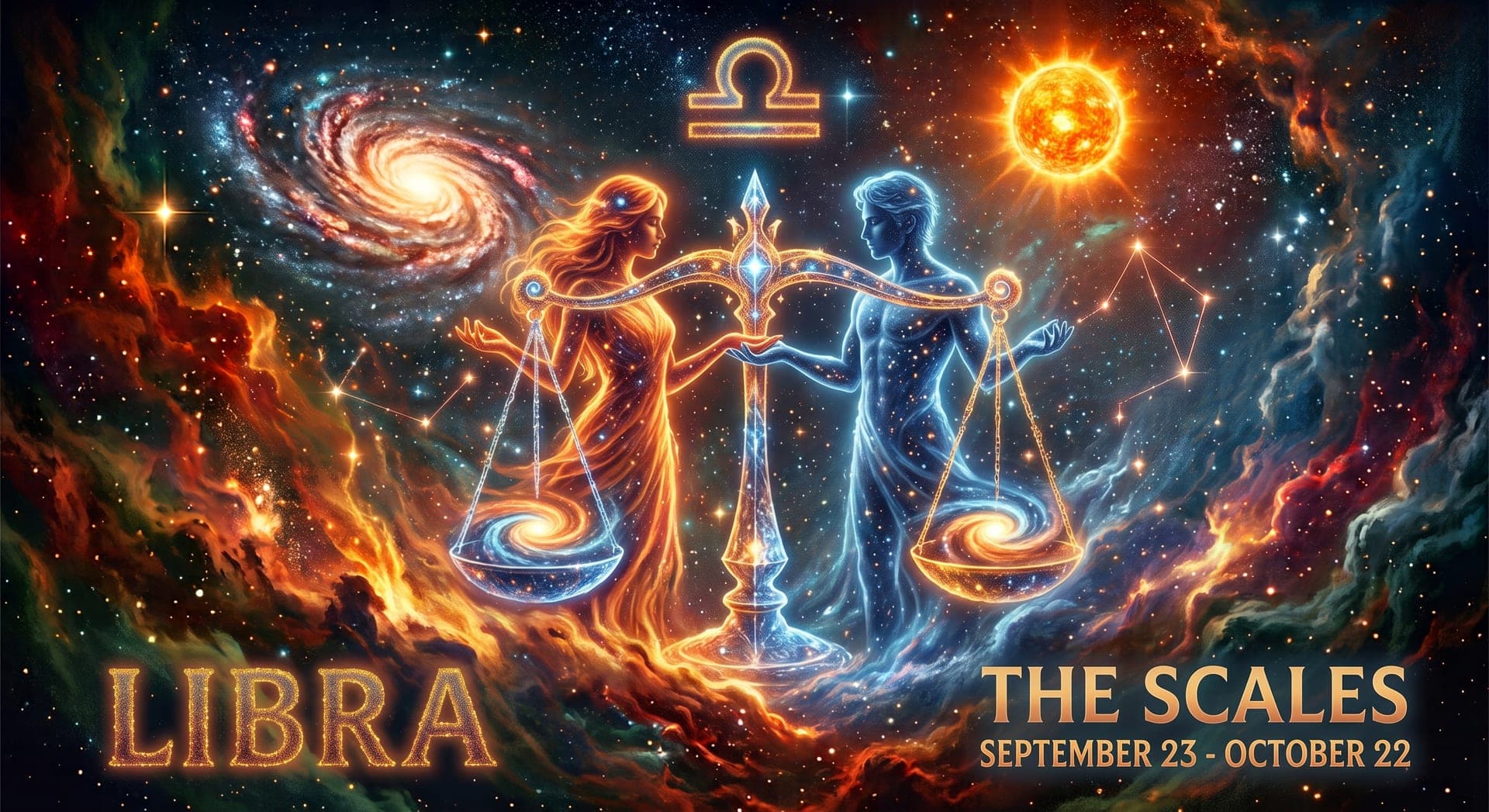
Libra, the seventh sign of the zodiac, spans September 23 to October 22 and is symbolized by the scales, the only zodiac symbol representing an inanimate object rather than a living creature, reflecting the sign's deep concern with balance, fairness, and justice. Ruled by Venus, the planet of love and beauty, Libra shares Taurus's appreciation for aesthetics and pleasure but channels it primarily through relationships, partnership, and social harmony. As an Air sign, Libra approaches the world intellectually and socially, valuing thoughtful conversation and diplomatic problem-solving over confrontation. Its Cardinal modality places it at the very start of autumn, beginning right at the equinox when day and night briefly achieve perfect balance. People born under this sign are often natural mediators, drawn to fairness and equilibrium in their relationships and surroundings, sometimes to the point of struggling to make decisions that might upset that balance. Libra's charm, diplomacy, and genuine desire to see all sides of an issue make it a valued friend and partner, even as its conflict-avoidance can occasionally leave real problems unresolved.
Personality Traits
Strengths
- Strong sense of fairness and justice
- Diplomatic peacemaker
- Charming and sociable
- Appreciates beauty and harmony
- Excellent at seeing multiple perspectives
Weaknesses
- Notoriously indecisive
- Conflict-avoidant to a fault
- Can be superficial
- People-pleasing tendencies
- Struggles with confrontation
Compatible Signs
Fun Facts
- Libra is the only zodiac sign represented by an inanimate object, the scales, rather than an animal or person.
- Libra's scales symbolize balance and justice, echoing the sign's association with fairness, harmony, and diplomacy.
- Venus, Libra's ruling planet, gives the sign its love of beauty, art, and romantic partnership, similar to Taurus but expressed through relationships rather than material comfort.
- As a Cardinal sign, Libra initiates autumn, beginning at the September equinox, when day and night are of equal length, fitting for a sign obsessed with balance.
- Notable Libras include Mahatma Gandhi, Kim Kardashian, John Lennon, and Will Smith.
Born on October 6
- 1820
Jenny Lind
Swedish opera soprano
- 1831
Richard Dedekind
German mathematician
- 1846
George Westinghouse
American engineer and founder of the Westinghouse Electric Company
- 1887
Le Corbusier
Swiss-French architect
- 1905
Helen Wills
American tennis champion
- 1908
Carole Lombard
American film actress
- 1910
Barbara Castle
English Labour politician who served as a senior Cabinet minister and pushed through Britain's first road safety breathalyser laws and the Equal Pay Act 1970.
- 1914
Joan Littlewood
English theatre director and pioneer of the Theatre Workshop company, celebrated for innovative, working-class productions including Oh, What a Lovely War!
- 1922
Joe Frazier
American Major League Baseball player and manager
- 1930
Hafez al-Assad
President of Syria
- 1931
Eileen Derbyshire
English actress who played Emily Bishop in the long-running soap opera Coronation Street for over five decades.
- 1939
Melvyn Bragg
English broadcaster, author and academic long associated with the arts programme The South Bank Show and the BBC Radio 4 series In Our Time.
- 1946
Tony Greig
South African-born English cricketer who captained the England Test team before becoming a leading television commentator on the sport.
- 1948
Gerry Adams
Irish republican politician and longtime president of Sinn Fein who played a central role in Northern Ireland's peace process leading to the 1998 Good Friday Agreement.
- 1971
Emily Mortimer
English actress known for films including Match Point and Lars and the Real Girl, and for television roles including The Newsroom.
- 1978
Ricky Hatton
English boxer who held world titles at light-welterweight and welterweight and became one of Britain's most popular fighters of his era.
On This Day in History
- 105 BCE
A Roman army suffers a catastrophic defeat by Germanic tribes at the Battle of Arausio during the Cimbrian War.
A Roman army suffered one of its worst defeats in history against invading Germanic Cimbri and Teutones tribes near the town of Arausio in southern Gaul, with tens of thousands of Roman soldiers killed due to poor coordination between rival Roman commanders. The catastrophic loss prompted significant military reforms under Gaius Marius that professionalized the Roman army.
- 69 BCE
Roman forces subdue Armenia during the Third Mithridatic War at the Battle of Tigranocerta.
Roman general Lucullus achieved a major victory over the Armenian king Tigranes the Great at Tigranocerta during the Third Mithridatic War, despite being significantly outnumbered, a triumph that extended Roman influence deep into Armenia and the broader Caucasus region during Rome's ongoing eastern military campaigns.
- 23
Rebels execute Wang Mang, the sole emperor of the short-lived Xin dynasty, after his capital falls during a peasant uprising.
Following the fall of the capital Chang'an to rebel forces, Wang Mang, the reformist usurper who had seized the Han throne and founded the short-lived Xin dynasty, was tracked down and executed, his death effectively ending the Xin dynasty and opening the path for the restoration of Han rule under Emperor Guangwu shortly afterward.
- 1600
"Euridice" premieres in Florence, widely regarded as the earliest surviving opera.
Composed by Jacopo Peri and first performed for a Florentine wedding celebration, "Euridice" retells the Greek myth of Orpheus and Eurydice using a new musical style emphasizing sung dialogue over more traditional polyphonic composition, representing one of the earliest surviving complete works in what became recognized as the opera genre.
- 1600
Euridice, the earliest surviving opera, received its premiere performance in Florence.
Composed by Jacopo Peri with a libretto by Ottavio Rinuccini, the work was staged as part of the wedding festivities for Henry IV of France and Maria de' Medici. Though earlier operatic experiments existed, Euridice is the oldest to survive complete, making it a foundational work in the history of Western musical theatre.
- 1683
German immigrant families establish Germantown, Pennsylvania, marking the first major wave of German immigration to America.
A group of German-speaking families, largely Mennonites and Quakers fleeing religious persecution, settled several miles from Philadelphia at the invitation of William Penn, establishing Germantown as one of the earliest organized German communities in colonial America and beginning a substantial pattern of German immigration that continued for centuries.
- 1762
British forces captured Manila from Spain and occupied the city during the Seven Years' War.
The expedition, launched from British India, seized the Spanish colonial capital of the Philippines and held it for nearly two years before returning it to Spain under the 1763 Treaty of Paris. The brief occupation demonstrated Britain's expanding global naval reach during the Seven Years' War, often described as history's first truly worldwide conflict.
- 1777
British forces captured Forts Clinton and Montgomery, key American defensive positions on the Hudson River.
The assault, led by General Sir Henry Clinton, aimed to relieve pressure on General Burgoyne's army further north by threatening the Hudson Highlands, but it arrived too late to prevent Burgoyne's surrender at Saratoga days later. The forts' capture briefly opened the river to British ships but had little lasting strategic effect on the American Revolutionary War.
- 1789
King Louis XVI is compelled by revolutionary crowds to relocate from Versailles to the Tuileries Palace in Paris.
Amid the ongoing bread shortages and popular unrest of the early French Revolution, a large crowd that had marched from Paris to Versailles compelled King Louis XVI and his family to relocate to the Tuileries Palace in central Paris, placing the royal family under much closer public scrutiny and revolutionary oversight than the isolated splendor of Versailles had allowed.
- 1854
A massive fire and explosion devastated Newcastle and Gateshead in north-east England, killing 53 people.
The disaster began with a fire at a worsted factory that spread to a chemical warehouse on the Gateshead riverside, triggering a huge explosion that hurled debris across the Tyne and set Newcastle's quayside ablaze. It remains one of the deadliest industrial disasters in English history and prompted reforms in the storage of hazardous chemicals.
- 1908
Austria-Hungary formally annexed Bosnia and Herzegovina, triggering the Bosnian crisis.
The annexation of the formerly Ottoman provinces angered Serbia and Russia, who saw it as a violation of earlier agreements, and pushed European alliances closer to the brink of war. Though a wider conflict was averted at the time, the crisis inflamed nationalist tensions in the Balkans that would help ignite the First World War six years later.
- 1927
"The Jazz Singer" opens, widely regarded as the first prominent "talkie" feature film.
Starring Al Jolson, "The Jazz Singer" featured limited synchronized dialogue and musical sequences amid an otherwise largely silent film, a technical innovation that captured enormous public attention and effectively launched Hollywood's rapid transition from silent films to "talkies," transforming the film industry within just a few years.
- 1927
The Jazz Singer, widely regarded as the first prominent feature film with synchronised dialogue, premiered in New York.
Starring Al Jolson, the film used the Vitaphone sound-on-disc system to combine musical numbers and spoken lines with a largely silent format, marking a turning point that accelerated Hollywood's transition to "talkies." Its success effectively ended the silent film era within a few years and reshaped the American film industry.
- 1973
Egypt and Syria launch coordinated military attacks against Israel, beginning the Yom Kippur War.
Egyptian and Syrian forces launched a coordinated surprise attack against Israeli positions on Judaism's holiest day, initially achieving significant early gains before Israeli forces regrouped and counterattacked. The war's outcome, along with the accompanying Arab oil embargo, significantly reshaped Middle Eastern geopolitics and eventually contributed to the Camp David peace process between Egypt and Israel.
- 1973
Egypt and Syria launched a coordinated surprise attack on Israel, beginning the Yom Kippur War.
Timed to coincide with the holiest day in the Jewish calendar, the offensive initially achieved major gains before Israeli forces counterattacked and reversed much of the early losses. The war's political aftermath reshaped Middle Eastern diplomacy, contributing to the 1973 oil crisis and eventually to the Camp David peace process between Israel and Egypt.
- 1976
The Gang of Four are arrested in China, effectively concluding the Cultural Revolution.
Following Chairman Mao Zedong's death weeks earlier, Chinese leaders arrested the radical faction known as the Gang of Four, including Mao's widow Jiang Qing, who had wielded enormous power during the tumultuous Cultural Revolution. Their arrest effectively ended the Cultural Revolution's most radical phase and opened the way for Deng Xiaoping's subsequent economic reforms.
- 1985
Police constable Keith Blakelock was killed during riots on the Broadwater Farm estate in Tottenham, north London.
The unrest erupted after Cynthia Jarrett, a local Black resident, died of a heart attack during a police search of her home, compounding long-standing tensions between the community and the Metropolitan Police. Blakelock's murder led to a lengthy and controversial legal process, and the riots remain a landmark episode in the history of British policing and race relations.
- 1987
Fiji became a republic, ending Queen Elizabeth II's role as head of state.
The change followed two military coups earlier in 1987 led by Sitiveni Rabuka, which had overthrown Fiji's elected government amid ethnic tensions between Indigenous Fijians and Indo-Fijians. Fiji's move to republic status led to its temporary expulsion from the Commonwealth, which it rejoined a decade later.
- 1995
Astronomers announced the discovery of 51 Pegasi b, the first confirmed planet found orbiting a sun-like star outside our solar system.
Detected by Swiss astronomers Michel Mayor and Didier Queloz using the radial velocity method, the hot Jupiter-type planet's discovery opened the modern era of exoplanet science. Mayor and Queloz were awarded the Nobel Prize in Physics in 2019 for the breakthrough, which has since led to the confirmed discovery of thousands of worlds beyond our solar system.
- 2010
Instagram launches, quickly growing into one of the world's most popular photo-sharing social media platforms.
Founders Kevin Systrom and Mike Krieger launched Instagram as a simple photo-sharing app with built-in filters, and the platform grew explosively in popularity, attracting a million users within just two months. Facebook acquired the company for approximately one billion dollars less than two years later, and Instagram has since become one of the world's most influential social media platforms.